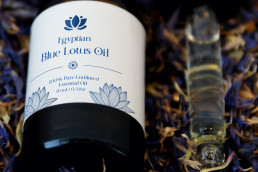
Blue lotus vs frankincense is one of the more interesting comparisons in the botanical world, because both oils share a reputation for sacred use, meditative depth, and centuries of ceremonial history, yet they behave quite differently on the skin, in the diffuser, and in the nervous system. This article is for readers who own one and are considering the other, or who are trying to decide which sacred oil best suits a specific ritual, skincare goal, or emotional state.
Table of Contents
- Two Sacred Oils, Two Different Plants
- Chemistry at a Glance
- Scent Profile Compared
- Blue Lotus
- Frankincense
- What Each Oil Does Best
- Blue Lotus Oil Excels At
- Frankincense Excels At
- Safety, Dilution, and Use in Pregnancy
- How to Choose Between Blue Lotus and Frankincense
- Blending Blue Lotus and Frankincense Together
- Cost, Sourcing, and Shelf Life
- When Neither Oil Is the Right Answer
- Complementary Oils to Consider
- Frequently Asked Questions
- Where to Go From Here
- Ready to Experience True Blue Lotus
It is written and clinically reviewed by Antonio Breshears, ND, CCA, a Bastyr-trained naturopathic doctor and certified clinical aromatherapist. For a broader orientation to the oil discussed here, see The Complete Guide to Blue Lotus Oil, which covers chemistry, sourcing, and safety in greater depth than this comparison piece allows.
Two Sacred Oils, Two Different Plants
Before comparing their effects, it helps to remember that blue lotus and frankincense come from entirely different botanical families and produce their aromatic material in entirely different ways. Blue lotus oil is extracted from the flowers of Nymphaea caerulea, the Egyptian blue water lily, a delicate aquatic bloom whose aromatic compounds live in the petals and are released primarily through solvent extraction, yielding an absolute. It takes roughly three to five thousand flowers to produce a single gram of absolute, which is why genuine blue lotus is priced accordingly.
Frankincense, by contrast, is the resin of a hardy desert tree in the genus Boswellia. The most commonly traded species are Boswellia carterii, Boswellia sacra, Boswellia frereana, and Boswellia serrata, each with slightly different chemistry and scent. The resin is tapped from the bark, allowed to harden into tears, and then steam distilled to produce an essential oil rich in monoterpenes such as alpha-pinene, limonene, and, depending on species, incensole acetate and boswellic acid traces. Frankincense is, in short, a tree resin. Blue lotus is a flower absolute. That single fact explains most of their differences.
Chemistry at a Glance
Blue lotus absolute contains a complex cocktail of aporphine alkaloids (chief among them nuciferine), flavonoids (apigenin, quercetin, kaempferol), aromatic aldehydes, and trace fatty acid esters. Aporphine shows weak dopamine agonist activity, nuciferine shows weak D2 antagonism and serotonin receptor activity, and apigenin is a well-characterised ligand at the central benzodiazepine site. The overall effect is subtly mood-modulating, gently relaxing, and mildly euphoric at moderate exposure, with no strong sedation.
Frankincense essential oil is dominated by monoterpenes, often forty to seventy percent alpha-pinene depending on species, plus limonene, sabinene, and various sesquiterpenes. The compound attracting the most research interest is incensole acetate, which has shown anxiolytic and antidepressant-like activity in animal models through TRPV3 channel activation in the brain. Frankincense is therefore chemically lighter, more volatile, and more obviously stimulating at the top note than blue lotus, but shares a grounding, contemplative quality at the base.
The practical takeaway is that blue lotus works primarily through flavonoid and alkaloid channels associated with gentle anxiolysis and mood lift, while frankincense works primarily through monoterpene and incensole pathways associated with clarity, focus, and a quieter form of emotional grounding.
Scent Profile Compared
Scent is where the two oils differ most obviously, and it is also where most people make their choice.
Blue Lotus
Blue lotus opens with a cool, watery-floral top note that sits somewhere between water lily, lotus pond, and fresh hay. The heart is deeply honeyed, lush, and distinctly floral, with an almost narcotic sweetness that some readers describe as wine-like. The base is balsamic, faintly smoky, and slightly earthy. It is a long-wearing scent, sensual rather than uplifting, and tends to feel introspective and intimate.
Frankincense
Frankincense opens with a bright, piney, citrus-touched top note that is unmistakably resinous. The heart is dry, warm, and slightly peppery, with the characteristic incense-hall quality that most people recognise from church or temple use. The base is woody and balsamic. It is a shorter-wearing scent than blue lotus on skin but tremendously diffusive in a room. Frankincense feels elevating and clarifying rather than sensual.
If you imagine blue lotus as the scent of twilight in a walled garden, frankincense is the scent of clean air in a high desert at dawn. They share balsamic depth but occupy different emotional registers.
What Each Oil Does Best
Blue Lotus Oil Excels At
Blue lotus is the stronger choice when the goal is emotional softening, sensual presence, evening wind-down, dream-state work, or skincare aimed at radiance and barrier calm. Its flavonoid and alkaloid content make it useful for people whose stress presents as a racing mind at bedtime, for those wanting a ritual scent for meditation or intimacy, and for mature or reactive skin that benefits from apigenin and quercetin applied topically in a correctly diluted formulation.
It is also the more rare and ceremonial of the two, which matters to some readers. Blue lotus was the sacred flower of ancient Egyptian ritual, associated with rebirth and altered states, and a single drop on the pulse at bedtime carries that lineage in a way few other oils do.
Frankincense Excels At
Frankincense is the stronger choice when the goal is clarity, grounded focus, respiratory support, or skincare aimed at firmness, scar care, and anti-ageing on a budget. Its monoterpene profile supports airway comfort when diffused during colder months, and its wide availability makes it a sensible everyday oil for meditation, yoga, and morning routines. It has a long tradition in Christian, Islamic, and Jewish ritual, and it holds a more public, architectural feeling than the private sensuality of blue lotus.
For skincare, frankincense is often included in anti-ageing blends because of its reputed effect on collagen support and skin tone. The evidence base is modest but the tradition is long and the oil is well tolerated at low dilutions.
Safety, Dilution, and Use in Pregnancy
Both oils require dilution for topical use, but the specifics differ.
Blue lotus absolute is typically used at one to two percent for facial application, two to three percent on the body, and three percent for targeted pulse point or ritual work. It is avoided in pregnancy and breastfeeding because of its alkaloid content, and caution is warranted for anyone taking dopaminergic medication, MAOIs, or strong sedatives. In the diffuser, two to four drops is usually sufficient.
Frankincense essential oil is generally considered one of the safer essential oils and is used at similar or slightly higher dilutions, typically one to three percent topically. It is widely regarded as acceptable in pregnancy at low dilutions after the first trimester, though conservative practitioners still recommend avoidance. Frankincense is less prone to photosensitivity or sensitisation than many citrus or spice oils, but old or oxidised frankincense can become more reactive on skin, so storage matters.
Neither oil should be applied neat to skin on a routine basis, and neither should be ingested without professional supervision.
How to Choose Between Blue Lotus and Frankincense
The cleanest way to decide is to match the oil to the state you want to move toward.
Choose blue lotus when you want to feel held, softened, and turned inward. It suits evening rituals, intimacy, sleep preparation, creative reverie, and skincare focused on calming reactive or tired-looking skin. It is the better companion for anyone whose anxiety is of the restless, overthinking, bedtime variety.
Choose frankincense when you want to feel clear, upright, and quietly focused. It suits morning meditation, breathwork, study sessions, respiratory comfort in winter, and skincare focused on tone and firmness. It is the better companion for anyone whose anxiety is of the foggy, scattered, unfocused variety, where the nervous system needs grounding rather than softening.
Many practitioners simply own both and reach for whichever matches the moment. They are not redundant with each other, and in certain blends they are genuinely complementary: a small amount of frankincense can lift the heaviness of blue lotus, and a small amount of blue lotus can deepen the architecture of frankincense.
Blending Blue Lotus and Frankincense Together
Because the two oils sit in different scent registers, they blend surprisingly well at specific ratios. A common ratio for meditation is three parts blue lotus to one part frankincense in the base carrier, which preserves the honeyed heart of the lotus while giving it a cleaner, more architectural lift from the frankincense top and heart notes.
For skincare, the reverse is often more useful: one part blue lotus to two parts frankincense in a jojoba or squalane base at a total of one to two percent essential oil content. This produces a serum that supports both barrier calm and tonal firmness, and the frankincense extends the working life of the more expensive blue lotus in the formula.
For a bedtime pulse blend, try two drops blue lotus, one drop frankincense, and ten millilitres of jojoba, applied lightly to wrists and the base of the throat before lying down. The frankincense opens the breath, the lotus softens the mind.
Cost, Sourcing, and Shelf Life
These two oils sit at very different price points. Frankincense is a mid-price essential oil in most markets, accessible at every level of the industry, with premium single-species offerings available at modest markups. Blue lotus absolute is, by any measure, expensive. The flower yield is low, the extraction process is labour intensive, and genuine material is rare in the global trade. A small bottle of true blue lotus absolute can easily cost five to ten times the price of a comparable bottle of frankincense.
Shelf life differs too. Frankincense, because of its high monoterpene content, oxidises faster than most resins and should be used within two to three years of opening and stored in dark glass in a cool place. Blue lotus absolute, with its heavier aromatic compounds and lower monoterpene content, is more stable and will hold its character for three to four years when stored properly.
If you want one oil that will serve many purposes at a reasonable price, frankincense is the sensible choice. If you want a signature ritual oil with sensual depth and rarity value, blue lotus earns its cost.
When Neither Oil Is the Right Answer
Both oils are lovely, but neither is a substitute for clinical care. If you are dealing with clinical depression, severe anxiety, diagnosed insomnia, or a medication-resistant mood disorder, aromatherapy sits alongside proper care, not in place of it. If you are pregnant, breastfeeding, taking psychiatric medication, or managing a serious skin condition, a short consultation with a qualified practitioner is worth more than any comparison article.
Equally, if you are looking for a strong sedative, neither oil will deliver. Blue lotus is gentler than its reputation, and frankincense is not sedating at all. For deeper sleep support, lavender, Roman chamomile, or valerian-containing formulations are better studied, though still not dramatic.
Complementary Oils to Consider
Readers working with blue lotus often pair it with sandalwood (for deepening the base), jasmine sambac (for amplifying the floral heart), or vetiver (for grounding). Readers working with frankincense often pair it with myrrh (the traditional partner), sandalwood (again), or lavender (for calming).
If you enjoy both oils, you will likely find that sandalwood bridges them beautifully, because it shares the balsamic register of each and holds them together in a blend without forcing either to compromise its character.
Frequently Asked Questions
Is blue lotus or frankincense better for meditation?
Both are excellent for meditation, but they support different styles. Frankincense suits upright, breath-focused, clarity-oriented practice. Blue lotus suits receptive, dream-state, emotionally open practice. Many people use frankincense in the morning and blue lotus in the evening.
Which oil is better for anxiety?
Blue lotus tends to be more effective for restless, overthinking, bedtime anxiety because of its flavonoid content. Frankincense tends to be more effective for scattered, foggy, unfocused anxiety because of its grounding monoterpene profile. Neither replaces professional care for clinical anxiety.
Can I use blue lotus and frankincense together?
Yes, and they blend well. For meditation try three parts blue lotus to one part frankincense. For skincare try one part blue lotus to two parts frankincense in a jojoba base at one to two percent total dilution.
Which oil is safer during pregnancy?
Neither is strongly recommended, but frankincense at low dilution after the first trimester is considered acceptable by many practitioners, while blue lotus is generally avoided throughout pregnancy because of its alkaloid content. Consult a qualified practitioner before using either.
Why is blue lotus so much more expensive than frankincense?
Blue lotus requires three to five thousand flowers per gram of absolute and is produced in small quantities through solvent extraction. Frankincense resin is harvested in bulk from hardy desert trees and distilled at industrial scale. The cost difference reflects yield, scarcity, and labour.
Do both oils help with sleep?
Blue lotus is the stronger sleep ally because of its gentle anxiolytic and mildly sedating flavonoids. Frankincense supports calm breathing and quiet presence but does not promote sleep directly. Many people combine the two for a wind-down blend.
Which oil is better for skincare?
Frankincense is better established for tone and firmness in anti-ageing blends. Blue lotus is better for calming reactive, tired, or dull skin because of its flavonoid content. In a combined serum, both contribute different benefits.
What does blue lotus smell like compared to frankincense?
Blue lotus is honeyed, floral, and sensual with balsamic depth. Frankincense is resinous, piney, and incense-like with a dry, warm heart. They share balsamic notes but occupy very different emotional registers.
Can either oil be ingested?
Neither should be ingested without professional supervision. Aromatherapy oils are formulated for external use and inhalation. Ingestion raises risks of mucosal irritation, drug interactions, and hepatic load.
Which oil should I buy first if I am new to aromatherapy?
Frankincense is the more practical first purchase because it is versatile, affordable, and broadly safe. Blue lotus is a signature oil to add once you know what you want from a ritual or ceremonial scent.
Where to Go From Here
If this comparison has clarified the choice between the two oils, the next step depends on your direction. If blue lotus is the oil you want to explore in more depth, begin with The Complete Guide to Blue Lotus Oil, which covers chemistry, authenticity, sourcing, and safety in far greater detail than a comparison article allows. If frankincense is where your interest lies, any reputable aromatherapy reference will serve you well, and you can return to blue lotus later when a ritual use calls for it.
Most experienced users, in the end, keep both. They are not competitors. They are complementary tools for different states of the nervous system, different moments of the day, and different kinds of attention.

Antonio Breshears
Antonio Breshears is a renowned expert in holistic medicine and beauty, with over 25 years of research experience dedicated to uncovering the secrets of nature's most powerful remedies. Holding a degree in Naturopathic Medicine, Antonio's passion for healing and well-being has driven him to explore the intricate connections between mind, body, and spirit.
Over the years, Antonio has become a respected authority in the field, helping countless individuals discover the transformative power of plant-based therapies, including essential oils, herbs, and natural supplements. He has authored numerous articles and publications, sharing his wealth of knowledge with a global audience seeking to improve their overall health and well-being.
Antonio's expertise extends to the realm of beauty, where he has developed innovative, all-natural skincare solutions that harness the potency of botanical ingredients. His formulations embody his deep understanding of the healing properties found in nature, providing holistic alternatives for those seeking a more balanced approach to self-care.
With his extensive background and dedication to the field, Antonio Breshears is a trusted voice and guiding light in the world of holistic medicine and beauty. Through his work at Pure Blue Lotus Oil, Antonio continues to inspire and educate, empowering others to unlock the true potential of nature's gifts for a healthier, more radiant life.