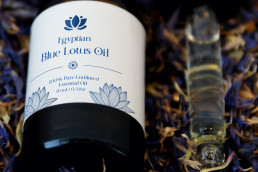
If you are trying to decide between blue lotus oil and melatonin for sleep, the honest answer is that they are not really competing products. They work on different parts of the sleep system, carry very different risk profiles, and suit different kinds of sleep trouble. This article breaks down the blue lotus vs melatonin comparison properly, so you can work out which fits your particular problem, or whether the two can sensibly be used together.
Table of Contents
- The Short Answer First
- How Each One Actually Works
- Melatonin: a timing signal
- Blue lotus oil: an arousal dampener
- Blue Lotus vs Melatonin: Side-by-Side
- When Melatonin Is the Right Choice
- When Blue Lotus Oil Is the Right Choice
- Safety and Side Effects Compared
- Melatonin side effect profile
- Blue lotus oil side effect profile
- Can You Use Them Together?
- Practical Protocols
- For jet lag (melatonin-led)
- For anxiety-driven sleep-onset insomnia (blue lotus-led)
- For mixed presentation (both phases off and mind racing)
- Realistic Timeframes
- When Neither Is the Right Answer
- Frequently Asked Questions
- Where to Go From Here
- A Gentler Path to Sleep
It is written and clinically reviewed by Antonio Breshears, ND, CCA, a Bastyr-trained naturopathic doctor and certified clinical aromatherapist. For a fuller picture of the oil’s chemistry, tradition, and clinical use, see The Complete Guide to Blue Lotus Oil, which sits as the parent reference behind this and the other comparison articles on the site.
The Short Answer First
Melatonin is a hormone. Your pineal gland makes it in response to darkness, and it signals to the rest of your body that it is night. Taking melatonin as a supplement is, in effect, sending that signal artificially. It is most useful when your circadian rhythm is out of phase with the clock on your wall: jet lag, shift work, delayed sleep phase, blind-sightedness, adolescents with late chronotypes.
Blue lotus oil is an aromatic botanical extract containing apigenin, nuciferine, aporphine, and a handful of other alkaloids and flavonoids. It does not tell your body what time it is. It nudges the nervous system towards parasympathetic dominance, dampens pre-sleep anxiety, and softens the mental chatter that keeps people awake. It is most useful when your sleep problem is really an arousal problem: you are tired, but your head will not switch off.
If you cannot fall asleep because your body thinks it is still daytime, melatonin is the more logical tool. If you cannot fall asleep because you are wound up, anxious, ruminating, or emotionally activated, blue lotus is the more logical tool. Both can be used carefully together, though we will come to that.
How Each One Actually Works
Melatonin: a timing signal
Melatonin binds to MT1 and MT2 receptors in the suprachiasmatic nucleus, the master clock in your hypothalamus. It does two things: it shifts the phase of your circadian rhythm (a chronobiotic effect) and, at higher doses, produces a modest soporific effect. The chronobiotic action is the reliable one. The sedative action is real but genuinely small; most of melatonin’s effect on sleep onset in healthy adults is measured in minutes, not tens of minutes.
It is not a sedative in the way a benzodiazepine is. It does not sit on GABA receptors. It does not quiet an anxious mind. What it does, beautifully well, is tell a circadian system that is out of phase to shift, which over several nights realigns sleep timing with the desired clock time.
Blue lotus oil: an arousal dampener
Blue lotus works through a more diffuse and gentler pharmacology. Apigenin, its most studied flavonoid, has affinity for central benzodiazepine receptor sites and produces mild anxiolytic effects at reasonable doses. Nuciferine has 5-HT2A and 5-HT2C activity, which is associated with mood modulation and a settling of mental overactivity. Aporphine is a weak dopamine agonist with a reputation for subtle euphoria and muscle relaxation.
When you inhale the oil from a diffuser or pillow mist, odour molecules reach the olfactory bulb and project directly into the limbic system, amygdala, hippocampus, and hypothalamus, which is the fastest route from the outside world to the emotional brain. The combined effect is a drop in sympathetic tone and a gentler entry into sleep. It is not a knockout. It is not a circadian signal. It is an off-ramp for an overactive nervous system.
Blue Lotus vs Melatonin: Side-by-Side
Comparing the two on the dimensions that matter clinically:
- Mechanism: melatonin is a hormonal circadian signal; blue lotus is a GABAergic and serotonergic arousal modulator delivered aromatically or topically.
- Best use case: melatonin for phase-shift problems (jet lag, shift work, delayed sleep phase); blue lotus for anxiety-driven sleep-onset problems and emotional wind-down.
- Onset: oral melatonin in 30 to 60 minutes; inhaled blue lotus in 5 to 20 minutes for the anxiolytic effect.
- Dependence risk: melatonin is non-addictive but can suppress endogenous production with chronic high-dose use in some people; blue lotus carries no recognised dependence profile at aromatic doses.
- Morning grogginess: moderate to significant with melatonin at higher doses (3 mg and above); rare with blue lotus used aromatically.
- Hormonal effects: melatonin interacts with reproductive hormones, thyroid, and prolactin at pharmacological doses; blue lotus has no recognised hormonal axis effect at aromatic use.
- Contraindications: melatonin interacts with anticoagulants, immunosuppressants, antihypertensives, and oral contraceptives; blue lotus is avoided in pregnancy, breastfeeding, and alongside dopaminergic medications, MAOIs, and heavy sedatives.
- Children: melatonin is used paediatrically under supervision; blue lotus is not recommended for children without professional guidance.
When Melatonin Is the Right Choice
Melatonin earns its reputation in a fairly narrow set of situations. It is the evidence-based tool for jet lag, particularly eastward travel across three or more time zones, where a small dose (0.3 to 0.5 mg) taken at the target bedtime for a few nights reliably accelerates adaptation. It is also useful for rotating shift workers trying to sleep during daylight, and for delayed sleep phase disorder, where bedtime has drifted later than is socially workable and needs to be shifted earlier.
It has a role in blind people who lack light entrainment, in some neurodevelopmental sleep disorders, and occasionally in older adults whose endogenous melatonin production has declined. Outside these specific scenarios, the evidence base thins considerably. Most of the large meta-analyses of melatonin for garden-variety insomnia show statistically significant but clinically modest effects: a few minutes faster to sleep, marginally better sleep efficiency.
The common mistake is to treat melatonin as a sleeping pill, take 5 or 10 mg at bedtime every night, and hope for the best. High doses can saturate receptors, cause vivid dreams and nightmares, produce morning grogginess, and in some people paradoxically worsen sleep. If you are going to use melatonin, the right dose for most adults is 0.3 to 1 mg, not 5 or 10.
When Blue Lotus Oil Is the Right Choice
Blue lotus suits a different insomnia phenotype entirely. If your sleep problem looks like this, consider it seriously:
- You are tired at bedtime but your mind will not switch off.
- You replay the day, plan tomorrow, or worry about things outside your control.
- You wake in the small hours with your heart a little fast and your thoughts racing.
- You feel emotionally activated rather than physically wired.
- You have a grief, a transition, or a low-grade chronic stress colouring the evenings.
This is anxiety-coloured insomnia, and it responds well to aromatic interventions that act on the limbic system. Blue lotus, used as a diffuser blend, a pillow mist, or a dilute pulse-point roller about 30 minutes before bed, gives the nervous system a cue to stand down. It pairs naturally with other wind-down behaviours such as dimmed lights, a warm shower, slow breathing, or gentle reading. It does not override a misaligned body clock, so if your real problem is that your circadian rhythm says it is still three in the afternoon, blue lotus will not fix that.
Safety and Side Effects Compared
Melatonin side effect profile
Melatonin is generally well tolerated at low doses but the side effect list is longer than most people realise. Commonly reported: next-day grogginess, headache, vivid or disturbing dreams, reduced alertness, and a slightly depressed mood the following morning. Less common but documented: transient effects on blood pressure, blood glucose, and seizure threshold in susceptible individuals. Interactions with warfarin and other anticoagulants, immunosuppressants, and oral contraceptives are real and worth knowing about.
There is also a quality problem in the supplement market: independent analyses have repeatedly found that melatonin products contain doses ranging from a fraction of the label claim to several times above it, with some batches contaminated with serotonin. If you use melatonin, buy from a reputable pharmaceutical-grade source.
Blue lotus oil side effect profile
Used aromatically or topically at sensible dilutions, blue lotus has a benign profile. Some people find the scent too heady or cloying, which is a preference issue rather than a safety one. Undiluted topical use can irritate sensitive skin. Ingestion is not recommended. The oil is avoided in pregnancy and breastfeeding because its alkaloid profile has not been studied in those contexts, and combining it with dopaminergic medications, MAOIs, or heavy sedatives is best avoided on precautionary grounds.
At the aromatic doses used for sleep, 2 to 4 drops in a diffuser or a 1 to 2 percent dilution in a roller, blue lotus does not produce next-day grogginess and does not interfere with normal sleep architecture in the way sedatives can.
Can You Use Them Together?
Yes, cautiously, if it makes sense for your particular problem. Someone who has genuine jet lag after a long eastward flight, and who also tends to anxiety around travel, might reasonably take a small dose (0.5 mg) of melatonin about 30 minutes before target bedtime and run a blue lotus diffuser in the bedroom at the same time. The melatonin addresses the circadian misalignment; the blue lotus addresses the activation.
Do not stack them as a blanket insomnia strategy. If you are using both every night indefinitely, you have not diagnosed your sleep problem; you are just throwing interventions at it. The better approach is to work out which system is misfiring, circadian or arousal, and aim the intervention precisely.
Practical Protocols
For jet lag (melatonin-led)
On the first three evenings after eastward travel, take 0.3 to 0.5 mg of melatonin about 30 minutes before your target local bedtime. Get bright light exposure in the local morning. Optional: diffuse 3 drops of blue lotus oil in the bedroom for the first hour of the wind-down to help with travel-related activation.
For anxiety-driven sleep-onset insomnia (blue lotus-led)
Run a diffuser with 3 to 4 drops of blue lotus oil in the bedroom for 30 to 45 minutes before bed. Apply a 1 to 2 percent roller blend (2 to 4 drops of blue lotus in 10 ml of jojoba) to wrists, inner elbows, and behind the ears. Pair with a slow breathing pattern (four seconds in, six seconds out) for five minutes. Expect a gentle settling, not a knockout. Review after two weeks.
For mixed presentation (both phases off and mind racing)
Try blue lotus alone for two weeks first, because many cases assumed to be circadian are really arousal problems in disguise. If sleep timing itself is genuinely drifted, add a low-dose melatonin (0.3 mg) timed to the target bedtime, keeping the aromatic routine in place.
Realistic Timeframes
Melatonin at the right dose and timing works within one to three nights for jet lag and within one to two weeks for phase-shift problems. If you have taken low-dose melatonin correctly for a fortnight and nothing has changed, it is probably not the right tool.
Blue lotus used as described typically produces a noticeable settling within the first few nights for the right kind of sleeper. The deeper effect, the sense that bedtime is no longer a battleground, builds over two to four weeks of consistent use. Track sleep-onset latency and night-waking frequency across that period to see whether the effect is real for you.
When Neither Is the Right Answer
Neither melatonin nor blue lotus oil is the right first-line tool for several important sleep problems. Chronic insomnia lasting more than three months responds best to cognitive behavioural therapy for insomnia (CBT-I), which has a stronger evidence base than any pharmaceutical or botanical intervention. Sleep apnoea needs diagnosis and treatment, not sedation; masking it with sleep aids is actively harmful. Depression-driven early morning waking usually needs the depression treated. Restless legs, parasomnias, and circadian rhythm disorders other than the ones mentioned above need specialist assessment.
If you have been sleeping badly for more than a few weeks, have daytime symptoms such as persistent fatigue or cognitive fog, or are using any sleep aid nightly, see a clinician. Blue lotus and melatonin are both tools; they are not diagnoses.
Frequently Asked Questions
Is blue lotus oil stronger than melatonin for sleep?
Not stronger, different. Blue lotus is usually better for anxiety-driven sleep-onset problems; melatonin is better for circadian phase problems such as jet lag. They address different mechanisms.
Can I take melatonin and use blue lotus oil on the same night?
Yes, and for some problems (jet lag plus travel anxiety) the combination is sensible. Do not make it a nightly habit without a clear reason; it usually means the underlying sleep problem has not been properly identified.
Does blue lotus oil affect melatonin production?
There is no evidence that blue lotus oil, used aromatically, alters endogenous melatonin synthesis. It acts on anxiety and arousal pathways rather than the pineal gland.
Which is safer for long-term use?
Blue lotus oil used aromatically at sensible doses has a very benign long-term profile. Melatonin long-term at low doses is reasonably safe for most adults, but high doses nightly for years are less well studied and worth avoiding.
Does blue lotus cause morning grogginess like melatonin can?
Not typically. Melatonin at doses above 1 to 3 mg commonly produces next-day grogginess in sensitive people; aromatic blue lotus rarely does.
Can children use either?
Melatonin is sometimes used paediatrically under medical supervision for specific indications. Blue lotus oil is not recommended for children without professional guidance, and aromatic use in a child’s bedroom should be discussed with a paediatrician or qualified aromatherapist first.
Is blue lotus oil a natural source of melatonin?
No. Blue lotus contains flavonoids and alkaloids that act on GABA and serotonin systems; it is not a melatonin-containing plant.
If melatonin has not worked for me, will blue lotus?
Possibly. If melatonin failed, there is a reasonable chance your sleep problem was arousal-driven rather than circadian-driven, in which case blue lotus is more likely to help. It is not guaranteed; no sleep aid is.
Can I use blue lotus oil to replace prescription sleep medication?
Do not stop prescription medication without speaking to the prescribing clinician. Blue lotus is not a pharmaceutical substitute and was not formulated to replace one.
What about blue lotus tea or ingestion instead of the oil?
That is a different product with a different safety and potency profile. This comparison specifically concerns the aromatic and topical oil, not ingested preparations.
Where to Go From Here
If your sleep problem looks circadian (travel, shift work, a consistent bedtime that is misaligned with social clock), melatonin at a small dose, correctly timed, is a reasonable first step. If it looks arousal-driven (anxious, ruminative, emotionally activated evenings), blue lotus oil used aromatically for two to four weeks is a sensible and low-risk thing to try. For the full background on the oil, its chemistry, its safety profile, and the other conditions it is genuinely useful for, see The Complete Guide to Blue Lotus Oil. And if sleep has been difficult for months rather than weeks, neither article is a substitute for a proper clinical assessment; please find one.

Antonio Breshears
Antonio Breshears is a renowned expert in holistic medicine and beauty, with over 25 years of research experience dedicated to uncovering the secrets of nature's most powerful remedies. Holding a degree in Naturopathic Medicine, Antonio's passion for healing and well-being has driven him to explore the intricate connections between mind, body, and spirit.
Over the years, Antonio has become a respected authority in the field, helping countless individuals discover the transformative power of plant-based therapies, including essential oils, herbs, and natural supplements. He has authored numerous articles and publications, sharing his wealth of knowledge with a global audience seeking to improve their overall health and well-being.
Antonio's expertise extends to the realm of beauty, where he has developed innovative, all-natural skincare solutions that harness the potency of botanical ingredients. His formulations embody his deep understanding of the healing properties found in nature, providing holistic alternatives for those seeking a more balanced approach to self-care.
With his extensive background and dedication to the field, Antonio Breshears is a trusted voice and guiding light in the world of holistic medicine and beauty. Through his work at Pure Blue Lotus Oil, Antonio continues to inspire and educate, empowering others to unlock the true potential of nature's gifts for a healthier, more radiant life.