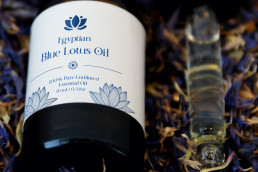
If you are choosing between two of the most storied florals in the perfumer’s cabinet, this guide on blue lotus vs rose oil will help you decide which one actually belongs in your bottle. Both have ancient credentials, both are expensive, both smell beautiful. But they do different things on the skin, in the nervous system, and on the emotional register, and understanding those differences is what separates a good purchase from a bottle that sits unused on the shelf.
Table of Contents
- What Each Oil Actually Is
- Chemistry: Alkaloids vs Terpenoid Alcohols
- Scent Profile Compared
- Blue Lotus
- Rose
- Effects on Mood and Nervous System
- Skincare Applications
- Practical Dilutions and Use
- Cost and Value
- Which One Should You Choose?
- When Neither Is the Right Choice
- Complementary Approaches
- Frequently Asked Questions
- Where to Go From Here
- Ready For A Bottle Of Your Own
It is written and clinically reviewed by Antonio Breshears, ND, CCA, a Bastyr-trained naturopathic doctor and certified clinical aromatherapist. For a fuller grounding in what blue lotus actually is and does, see The Complete Guide to Blue Lotus Oil, which sits above this comparison as the master reference.
What Each Oil Actually Is
Blue lotus oil is extracted from Nymphaea caerulea, the Egyptian blue water lily. It is, strictly speaking, almost always an absolute: a solvent extraction that captures the flower’s full aromatic profile, its alkaloid fraction, and its flavonoid content. True steam-distilled blue lotus essential oil exists but is rare and enormously expensive because the flower yields very little distillable oil. Each gram of absolute represents somewhere between three and five thousand hand-harvested flowers.
Rose oil is a different story with two dominant forms on the market. Rose otto is steam-distilled from Rosa damascena, most famously in Bulgaria, Turkey, and Iran. Rose absolute is solvent-extracted from the same flower and presents a richer, jammier profile. Both are made from a flower that, like blue lotus, requires extraordinary quantities of petals to produce a usable volume of oil: roughly sixty roses for a single drop of otto, which is why genuine rose oil has long been one of the most expensive aromatic materials in the world.
Both oils, then, share the distinction of being rare, labour-intensive, and historically associated with ritual, royalty, and the perfumer’s art. The similarities largely end there.
Chemistry: Alkaloids vs Terpenoid Alcohols
The chemistry is where blue lotus and rose part company most dramatically. Blue lotus contains a signature class of alkaloids, principally aporphine (which behaves as a weak dopamine agonist) and nuciferine (which shows weak dopamine antagonism and some activity at serotonin 5-HT2A and 5-HT2C receptors). Alongside these sit flavonoids including apigenin, quercetin, and kaempferol. Apigenin is notable because it binds to the central benzodiazepine receptor, which is part of why blue lotus has its characteristic gentle, unwinding effect on the nervous system.
Rose oil, by contrast, is a terpenoid-alcohol profile. The main constituents of rose otto are citronellol, geraniol, nerol, and phenylethyl alcohol (which is especially prominent in rose absolute). These molecules are what give rose its unmistakable green-sweet, fresh-floral character. They are not psychoactive in the way blue lotus alkaloids are. They act more on mood through the olfactory-limbic pathway, through a direct pleasure response in the brain’s emotional centres, and through well-documented skin benefits at the cellular level.
The practical implication is this: blue lotus acts on you somewhat pharmacologically, gently, but genuinely shifting neurotransmitter tone. Rose acts on you primarily through olfaction, emotion, and skin chemistry. Both are real effects. They are not the same effect.
Scent Profile Compared
Blue Lotus
Blue lotus opens cool, aquatic, almost watery-green at the top. Within a few minutes it deepens into a honeyed, spicy-floral heart that is unmistakably flower but never powdery. The base is balsamic, slightly smoky, and has a faint incense quality that lingers on skin and fabric for hours. It is not a loud scent. It is not what most people picture when they hear “floral”. There is something quiet and contemplative about it, the kind of fragrance that reveals itself slowly rather than announcing itself.
Rose
Rose, whether otto or absolute, is instantly recognisable. Otto is greener, fresher, more transparent, with a clean top note and a velvety heart. Absolute is denser, jammier, more overtly sweet, with a honey-rose character that can edge into richness. Both are unmistakably rose in a way that almost no other material can imitate. Rose is extroverted where blue lotus is introverted; it projects, it declares, it fills a room.
If you want a floral that draws attention, rose is the answer. If you want a floral that invites people closer to notice it, blue lotus is the answer.
Effects on Mood and Nervous System
This is where the distinction matters most for anyone using these oils for more than perfumery.
Blue lotus oil is best described as gently parasympathetic. The alkaloids nudge dopamine and serotonin pathways in subtle ways, apigenin contributes a mild anxiolytic tone through benzodiazepine-receptor activity, and the olfactory experience itself is calming. People who use blue lotus consistently describe a softening of mental chatter, a sense of being pleasantly unhurried, and easier access to meditative or contemplative states. It is not a sedative. It does not put you to sleep. It takes the edge off without flattening you.
Rose oil, by comparison, is mood-lifting rather than nervous-system-shifting. Research on rose inhalation consistently shows reductions in subjective stress and improvements in mood markers, but the mechanism is more olfactory-emotional than neurochemical. Rose is historically used to support grief, heart-centred emotional states, and feelings of isolation. It has a warming, opening quality that blue lotus does not share.
If the goal is to quiet an overactive mind or ease anxious tension, blue lotus tends to be the more directly useful oil. If the goal is to lift a low mood, support grief, or create a sense of emotional warmth and connection, rose is often the better match. Some people, of course, use both for different occasions.
Skincare Applications
Both oils have genuine skincare credentials, but they shine in different contexts.
Rose oil is one of the most thoroughly documented skincare actives in the aromatic world. It is anti-inflammatory, mildly astringent, and its phenylethyl alcohol content contributes antimicrobial activity. It supports barrier function, works well on mature skin, and has a long track record in treating redness, sensitivity, and uneven tone. Dermatologists and formulators have used rose in serums and creams for decades because it works across a broad range of skin types and concerns.
Blue lotus oil has a narrower but interesting skincare profile. The flavonoid content (apigenin, quercetin, kaempferol) gives it antioxidant activity, and the oil has a reputation for being particularly suited to stressed, reactive, or inflamed skin where the nervous-system-soothing quality pairs well with topical use. It is less well-studied than rose but is often preferred by people who find rose too rich or too floral-obvious for daily wear. Blue lotus on skin is subtle; it does not perfume the way rose does.
For someone building a skincare ritual from scratch, rose is the safer, more evidence-backed choice. For someone who already has a routine and is looking to add a meditative, calming layer, particularly one that soothes visible redness and reactivity, blue lotus is the more interesting addition.
Practical Dilutions and Use
Both oils are potent and should be used at low dilution.
For blue lotus, the guidelines are straightforward: 1 to 2 percent on the face, 2 to 3 percent on the body, up to 3 percent for targeted use, and 2 to 4 drops in a diffuser. It blends beautifully with jojoba, squalane, or a light rosehip-based serum.
For rose, dilutions are even lower because the material is so potent and so expensive: 0.5 to 1 percent on the face, 1 to 2 percent on the body is usually plenty. Rose goes a long way; more is not better. Two drops of rose absolute in a 30 ml facial oil is often enough to carry the scent and the therapeutic benefit.
Neither oil should be used neat on skin. Both should be avoided in pregnancy and breastfeeding without specialist guidance. Blue lotus specifically warrants caution with dopaminergic medications, MAOIs, and heavy sedatives because of its alkaloid content; rose has a cleaner safety profile pharmacologically but can still cause sensitisation in a small number of people.
Cost and Value
Rose otto is routinely one of the two or three most expensive essential oils on the market. Genuine Bulgarian rose otto can cost several hundred pounds for 5 ml, and that is before any retail margin. Rose absolute is cheaper per millilitre but still sits firmly in the luxury tier.
Blue lotus absolute is comparably expensive, sometimes more so at the high end, because the yield per flower is so low and genuine Egyptian material is increasingly hard to source at quality. Steam-distilled blue lotus essential oil, where it exists, is extraordinarily expensive; most reputable sellers work with the absolute.
Both markets are unfortunately rife with adulteration. Cheap “rose oil” is almost always reconstituted or blended with geranium. Cheap “blue lotus oil” is frequently a dilution, a synthetic, or a completely different water-lily species. If a price looks too good to be true for either oil, it is.
Which One Should You Choose?
The honest answer is that these oils solve different problems, and the right choice depends on what you are actually trying to do.
Choose rose if you want a well-documented skincare active for mature, sensitive, or reactive skin; if you are drawn to an openly romantic, unmistakably floral scent; if you are working with grief, low mood, or emotional warmth; or if you want something with an enormous evidence base and a long history in clinical aromatherapy.
Choose blue lotus if you want a genuinely calming oil with gentle neurochemical activity; if you meditate, do breathwork, or want something for evening unwinding; if you prefer a subtler, more contemplative scent that reveals itself slowly; or if you are drawn to the ritual and ancient-Egyptian heritage that blue lotus carries. Blue lotus is also the better choice if you find rose overwhelming or too overtly floral for daily wear.
Many people who can afford both end up owning both, because they simply do not overlap in function. Rose for mornings, skincare, and heart-opening moments. Blue lotus for evenings, meditation, and quieting the nervous system.
When Neither Is the Right Choice
If you are pregnant or breastfeeding, neither oil is appropriate without specialist guidance. If you are taking medication that affects dopamine or serotonin systems, blue lotus warrants caution specifically because of its alkaloid profile. If you have a history of fragrance sensitisation, rose can trigger reactions in susceptible people, though this is uncommon at low dilutions. If your primary concern is acute anxiety that interferes with daily functioning, or a depressive episode that is not lifting, neither oil is a substitute for proper clinical care; they are adjuncts, not treatments.
Complementary Approaches
Neither oil does its best work in isolation. Blue lotus pairs well with frankincense for meditation, with vetiver for grounding, and with sandalwood for evening rituals. Rose pairs beautifully with neroli, bergamot, and geranium for mood blends, and with rosehip seed oil or squalane as carriers in skincare.
Consider the wider context too. An oil cannot override poor sleep, chronic stress, or a dysregulated nervous system on its own. The people who get the most from either blue lotus or rose are generally people who use them as part of a deliberate practice: a morning skincare ritual, an evening wind-down, a meditation cue, a perfume that marks a transition from work to rest. The ritual is as important as the chemistry.
Frequently Asked Questions
Is blue lotus oil stronger than rose oil?
Stronger in what sense. Blue lotus has more pharmacological activity because of its alkaloids; rose has stronger olfactory projection and a deeper evidence base in skincare. Neither is objectively stronger; they act through different pathways.
Can I blend blue lotus and rose together?
Yes, and the combination can be beautiful. Rose brightens the honeyed depth of blue lotus while blue lotus adds a contemplative, incense-like quality that rose alone does not have. Keep total essential oil content within normal dilution ranges for the application.
Which is better for anxiety?
Blue lotus, generally. The apigenin content and alkaloid activity give it a more direct calming effect on the nervous system. Rose is more useful for low mood or grief than for anxiety specifically.
Which is better for mature skin?
Rose has the stronger evidence base for mature, dry, and sensitive skin. Its barrier-supporting and anti-inflammatory profile is well-documented. Blue lotus can complement rose in a routine but would not be my first choice as the sole skincare active for mature skin.
Which smells more “floral”?
Rose, unambiguously. Blue lotus is floral but with aquatic, honeyed, and balsamic elements that make it read as less stereotypically flower-shop floral.
Is rose oil psychoactive like blue lotus?
No. Rose works primarily through olfactory-emotional pathways. It does not contain alkaloids that act on neurotransmitter systems in the way blue lotus does. The mood effects of rose are real but mechanistically different.
Which is more expensive?
They are in the same tier. Rose otto is often the most expensive; blue lotus absolute is comparably priced, sometimes more at genuine-Egyptian quality. Both are luxury materials.
Can I use either oil neat on skin?
No. Both should be diluted in a carrier. Rose is typically used at 0.5 to 1 percent on the face; blue lotus at 1 to 2 percent on the face.
Which is safer in pregnancy?
Neither is recommended in pregnancy or breastfeeding without specialist guidance. Do not self-select either oil during those periods.
How do I know I am buying real oil?
For both oils, buy from sellers who disclose origin, extraction method, and ideally provide GC-MS documentation. Prices that seem too low for a genuine rose otto or blue lotus absolute almost certainly indicate adulteration or a different species.
Where to Go From Here
If blue lotus is the direction that fits your needs, the next step is to understand the full picture of the oil, its extraction, its applications across ritual and skincare, and how to use it well in daily practice. Start with The Complete Guide to Blue Lotus Oil, which brings together the botany, the chemistry, the safety information, and the practical guidance in one place. If rose is where you are headed, look for a reputable steam-distilled otto from Bulgaria, Turkey, or Iran, and treat it as a slow-use luxury rather than a daily workhorse. Most serious aromatherapy shelves end up holding both.

Antonio Breshears
Antonio Breshears is a renowned expert in holistic medicine and beauty, with over 25 years of research experience dedicated to uncovering the secrets of nature's most powerful remedies. Holding a degree in Naturopathic Medicine, Antonio's passion for healing and well-being has driven him to explore the intricate connections between mind, body, and spirit.
Over the years, Antonio has become a respected authority in the field, helping countless individuals discover the transformative power of plant-based therapies, including essential oils, herbs, and natural supplements. He has authored numerous articles and publications, sharing his wealth of knowledge with a global audience seeking to improve their overall health and well-being.
Antonio's expertise extends to the realm of beauty, where he has developed innovative, all-natural skincare solutions that harness the potency of botanical ingredients. His formulations embody his deep understanding of the healing properties found in nature, providing holistic alternatives for those seeking a more balanced approach to self-care.
With his extensive background and dedication to the field, Antonio Breshears is a trusted voice and guiding light in the world of holistic medicine and beauty. Through his work at Pure Blue Lotus Oil, Antonio continues to inspire and educate, empowering others to unlock the true potential of nature's gifts for a healthier, more radiant life.