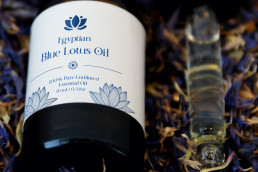
If you are weighing up blue lotus vs vetiver for an evening ritual, a sleep blend, or a grounding anxiety protocol, you are comparing two of the most genuinely useful calming oils in the aromatherapy cabinet, but they do quite different jobs. Blue lotus is a sophisticated floral-narcotic with light sedative and mood-lifting qualities; vetiver is a deep, earthy, unmistakably sedative root oil that pulls an overactive nervous system downward into the body. This article walks you through what each oil actually does, how the chemistry differs, where they overlap, and when to reach for one over the other (or both together).
Table of Contents
- What Each Oil Actually Is
- Blue Lotus (Nymphaea caerulea)
- Vetiver (Chrysopogon zizanioides)
- How Blue Lotus and Vetiver Differ in the Body
- Blue Lotus: Light Sedation with Mood Lift
- Vetiver: Deep Grounding and Genuine Sedation
- Blue Lotus vs Vetiver: Scent, Texture, and Blending
- When to Choose Blue Lotus
- When to Choose Vetiver
- How to Use Each Oil in Practice
- Blue Lotus Protocols
- Vetiver Protocols
- Blending Blue Lotus and Vetiver Together
- Realistic Timeframes and Expectations
- When Neither Oil Is the Right Choice
- Complementary Approaches
- Frequently Asked Questions
- Where to Go From Here
- Ready to Try Pure Blue Lotus Oil?
It is written and clinically reviewed by Antonio Breshears, ND, CCA, a Bastyr-trained naturopathic doctor and certified clinical aromatherapist. If you want the broader context on what blue lotus is and how it behaves, read The Complete Guide to Blue Lotus Oil alongside this comparison; the two together will give you a clearer picture of whether blue lotus, vetiver, or a thoughtful pairing of both suits your purpose.
What Each Oil Actually Is
Before comparing effects, it helps to be clear about what is in the bottle, because the two oils come from wildly different parts of the plant world and carry very different chemistries.
Blue Lotus (Nymphaea caerulea)
Blue lotus oil is extracted from the flower of the Egyptian blue water lily, Nymphaea caerulea. The vast majority of what is sold as “blue lotus oil” is technically a solvent-extracted absolute; true steam-distilled essential oils and supercritical CO2 extracts exist but are rare and expensive. It takes between three thousand and five thousand flowers to produce a single gram of absolute, which is why the oil is costly and why adulteration is common in the lower end of the market.
The chemistry is dominated by two classes of compounds. The alkaloids, chiefly aporphine (a weak dopamine agonist) and nuciferine (a weak dopamine antagonist with some 5-HT2A and 5-HT2C activity), account for the mood-lifting, mildly euphoric, slightly dreamy character. The flavonoids, including apigenin (which binds central benzodiazepine receptors), quercetin, and kaempferol, contribute the gentle anxiolytic and anti-inflammatory qualities. The scent is a cooler floral-aquatic top, a deep honeyed-floral heart, and a balsamic-smoky base.
Vetiver (Chrysopogon zizanioides)
Vetiver oil is steam-distilled from the root of Chrysopogon zizanioides, a tall tropical grass grown mostly in Haiti, India, Indonesia, and Madagascar. The roots are harvested, cleaned, aged, then distilled slowly over many hours to yield a thick, viscous, amber-to-dark-brown oil with an unmistakably earthy, smoky, woody scent.
Its chemistry is almost entirely sesquiterpenes and sesquiterpenols: khusimol, isovalencenol, vetiselinenol, alpha-vetivone, beta-vetivone, and khusimene, among many others. These are large, heavy molecules with pronounced sedative, grounding, and anti-inflammatory effects. Vetiver is often called “the oil of tranquillity” in classical aromatherapy literature, and unlike many calming claims in this field, it is reasonably well-attested clinically.
How Blue Lotus and Vetiver Differ in the Body
This is where the comparison becomes practically useful. Both oils calm, but they calm through different routes and produce different qualities of calm.
Blue Lotus: Light Sedation with Mood Lift
Blue lotus acts primarily through the olfactory-limbic pathway and, at higher exposures, through its alkaloid activity. The flavonoid apigenin provides a mild GABAergic calming effect similar in direction (though not in strength) to chamomile. The alkaloids add something that few other oils offer: a gentle lift in mood, a slight softening of obsessive thought, a mild dreamlike or reflective quality. People often describe blue lotus as “opening” rather than “pressing down”.
Be realistic: blue lotus is not a strong sedative. It will not knock you out. It will not overpower a racing mind that is fed by caffeine, blue light, and a stressful email thread. What it does well is take the edge off mild to moderate anxiety, lift a low evening mood, and set a meditative, slightly euphoric atmosphere.
Vetiver: Deep Grounding and Genuine Sedation
Vetiver presses the nervous system downward. The heavy sesquiterpenes appear to modulate parasympathetic tone, and human studies, including work on attention and arousal, suggest vetiver can reduce sympathetic nervous system activity in a way most essential oils cannot match. Clinically, it is one of the few oils I would describe as genuinely sedative rather than just “relaxing”.
Users often describe vetiver as feeling like gravity reasserting itself. Racing thoughts settle into the body. A jittery chest quietens. For people whose anxiety is “up in the head”, vetiver is often more effective than any floral. It is also one of the most studied oils for ADHD-related focus difficulties, where its grounding quality appears to help rather than sedate into uselessness.
Blue Lotus vs Vetiver: Scent, Texture, and Blending
These oils could not smell more different. Blue lotus is cool, floral, aquatic at the top, honeyed in the heart, with a faint resinous base. Vetiver is earthy, smoky, rooty, woody, almost medicinal, with no sweetness or brightness at all. In perfumery terms, blue lotus behaves as a heart note with long legs; vetiver is a pure base note that will anchor almost any blend.
Vetiver is also physically thick, sometimes syrupy, and can be difficult to work with straight from the bottle, particularly in cold weather. Blue lotus absolute is viscous but pourable, with a deep blue-green to brown colour depending on extraction. Both benefit from gentle warming in the hands or a carrier oil before use.
In blends, they pair beautifully. Blue lotus provides the floral brightness and emotional openness; vetiver provides the ground underneath. A two-to-one ratio of blue lotus to vetiver in a sleep blend, rounded out with a touch of lavender or Roman chamomile, is one of the most reliable combinations I recommend for anxious insomniacs who also need a mood lift.
When to Choose Blue Lotus
Reach for blue lotus when the dominant issue is mild anxiety layered with low mood, rumination, or a flat emotional tone. It is the better oil for:
- Meditation and contemplative practice, where you want an open, slightly dreamy quality without heavy sedation.
- Evening wind-down that also needs a mood lift, not just calm.
- Intimate or sensual rituals, where the floral-aphrodisiac character suits the purpose.
- Creative work at the edge of sleep, journaling, reflective practice.
- Skincare and facial ritual, where vetiver would simply smell wrong.
- People who find vetiver’s earthiness unpleasant or overwhelming.
Blue lotus is also the better choice if you are using aromatherapy socially; it wears as a recognisable perfume, whereas pure vetiver can read as quite heavy in company.
When to Choose Vetiver
Reach for vetiver when the dominant issue is overactivation: racing thoughts, sympathetic nervous system dominance, difficulty staying in the body, trauma-related dysregulation, or outright insomnia. Vetiver is the better oil for:
- Sleep-onset insomnia driven by mental overactivity.
- Grounding practices, somatic work, trauma-informed bodywork.
- ADHD-related difficulty settling or focusing (used during the day, diluted on wrists or soles of feet).
- Deep anxiety that floral oils do not touch.
- Muscular tension held in the jaw, neck, and shoulders.
- Cold, scattered, or “ungrounded” emotional states.
If your nervous system needs pressing downward rather than lifting, vetiver is the tool.
How to Use Each Oil in Practice
Both oils are safe for topical use at standard aromatherapy dilutions, but the numbers are a little different because vetiver is stronger-smelling and more potent per drop.
Blue Lotus Protocols
For a diffuser, two to four drops in a standard ultrasonic unit is plenty. For a rollerball blend, a 2 to 3 percent dilution in jojoba or fractionated coconut oil works well for pulse points at bedtime or during anxious moments. For facial use, drop to 1 to 2 percent. For a bath, three to five drops dispersed in a tablespoon of carrier or full-fat milk before adding to the water.
Vetiver Protocols
Vetiver is potent; less is more. One to two drops in a diffuser is often enough, especially when blended with other oils. For rollerballs, 1 to 2 percent is plenty, because any more and the scent becomes overwhelming. Applied to the soles of the feet (a traditional approach for its grounding effect) one drop diluted in a teaspoon of carrier is sufficient. For sleep, a single drop on the pillow edge or on a cotton pad nearby is often more useful than a full diffuser session.
Blending Blue Lotus and Vetiver Together
The classic ratio is two parts blue lotus to one part vetiver, which keeps the floral character forward while the vetiver anchors the blend. Add a third oil for complexity: lavender for relaxation, frankincense for meditation, Roman chamomile for sleep, sandalwood for sensuality. For a 10 ml rollerball at 3 percent total dilution, that is roughly four drops blue lotus, two drops vetiver, and two drops of your third oil, topped with a carrier.
Realistic Timeframes and Expectations
Neither oil is a pharmaceutical. Both work within the range of what aromatherapy can reasonably deliver, which is meaningful but not miraculous.
With blue lotus, expect a subtle shift in mood and tension within ten to twenty minutes of olfactory exposure or topical application. The effect is modest; think of taking the tension down a notch or two, not from ten to zero. Used consistently over two to three weeks as part of an evening ritual, most people report better transition into sleep and a small but real improvement in baseline mood.
With vetiver, the onset is often faster and the effect more obvious. Many people feel a distinct downward shift, a sense of settling into the body, within five to fifteen minutes. For insomnia and trauma-related dysregulation, a two to four week trial of nightly use is reasonable before deciding whether it is worth continuing. Vetiver tends to either “click” with a person or not; when it works, people tend to reach for it for years.
When Neither Oil Is the Right Choice
Both oils should be avoided in pregnancy and breastfeeding. Both should be used cautiously in people on heavy sedatives, and blue lotus specifically warrants caution in anyone taking dopaminergic medications (such as those for Parkinson’s disease) or MAOI antidepressants, because the alkaloids interact with those pathways in ways that are not fully characterised.
Neither oil replaces clinical care. Severe anxiety, major depressive disorder, PTSD, and chronic insomnia of more than a few months’ duration all warrant proper assessment. Aromatherapy sits alongside appropriate care, not instead of it. If your symptoms are disrupting work, relationships, or daily functioning, see a qualified practitioner.
Vetiver is also best avoided in very cold, depleted, or depressive states, because it can deepen heaviness rather than lift it. Blue lotus is the better choice for those presentations.
Complementary Approaches
Both oils work better as part of a wider evening or grounding practice, not in isolation. Reliable sleep hygiene (consistent bedtime, dimmed lights in the evening, no screens in the last hour), breathwork (a simple four-seven-eight pattern or coherent breathing at five to six breaths per minute), and a proper transition ritual between work and rest all multiply the effect of any essential oil.
For anxiety specifically, consider a short evening walk, a magnesium-rich supper, and a warm bath with one of these oils dispersed properly in carrier. For insomnia, a darkened bedroom, cool temperature, and a ten-minute body scan before sleep will do more than any oil, but the oil on the pillow or in a diffuser adds a useful olfactory cue that the body learns to associate with rest.
Frequently Asked Questions
Is blue lotus stronger than vetiver?
Not for sedation. Vetiver is the stronger sedative and the stronger grounding oil. Blue lotus is stronger for mood lift, mild euphoria, and sensual quality. They do different jobs, and “stronger” depends entirely on what you want.
Can I use blue lotus and vetiver together?
Yes, and they pair exceptionally well. A two-to-one ratio of blue lotus to vetiver in a sleep blend or evening rollerball is one of the most reliable combinations for people who want both grounding and mood lift.
Which is better for sleep, blue lotus or vetiver?
For sleep-onset insomnia driven by mental overactivity, vetiver is usually more effective. For difficulty winding down emotionally or mild anxiety with low mood, blue lotus can be enough. Many people find the combination outperforms either alone.
Which is better for anxiety?
Vetiver is the stronger anxiolytic in most cases, particularly for anxiety that manifests as racing thoughts or sympathetic overactivation. Blue lotus suits gentler, more mood-tinged anxiety, or anxiety with low emotional tone.
Does vetiver smell bad?
It is an acquired scent. Some people find it unpleasantly earthy or “dirty” on first sniff; others find it immediately grounding and comforting. Blended with florals or citrus, it becomes much more approachable. If you hate the smell neat, try it at 1 percent in a blend before writing it off.
Is blue lotus psychoactive?
Very mildly. The alkaloid content can produce a subtle lift in mood and a slightly dreamlike quality, particularly at higher internal doses of the flower itself, but topical and aromatic use of the oil produces nothing like a drug experience. It is calming and mood-lifting within the normal range of aromatherapy effects.
Is vetiver safe for children?
Vetiver is generally considered one of the safer oils for children over two years old when properly diluted (0.5 to 1 percent), and it is sometimes used for focus and sleep in older children. Blue lotus is better reserved for adults given its alkaloid content and the general principle of caution.
Can either oil help with trauma or PTSD?
Vetiver is the more useful of the two for trauma-related dysregulation, particularly when combined with somatic therapy or breathwork. It does not treat PTSD, but it can support the work of a proper trauma therapist. Blue lotus may help with the emotional numbness or low mood that sometimes accompanies trauma, but it is not the primary tool.
How long do these oils last once opened?
Blue lotus absolute, properly stored in dark glass in a cool, dark place, keeps well for three to four years. Vetiver is famously one of the essential oils that actually improves with age, becoming smoother and more rounded; a well-stored bottle can last a decade or more.
Are either of these oils legally restricted?
Blue lotus is restricted in Russia, Poland, Latvia, and the US state of Louisiana, with regulatory complexity in Australia. Vetiver has no significant legal restrictions worldwide.
Where to Go From Here
If your primary need is grounding, sedation, and settling a busy nervous system, vetiver is probably the right starting point. If your need is mood lift, gentle calming, ritual atmosphere, or sensual and meditative work, blue lotus is the better match. And if you find yourself wanting both at once, the blend of the two is often more useful than either alone. For the wider context on blue lotus itself, how it is extracted, how to recognise quality, and how it behaves across different uses, read The Complete Guide to Blue Lotus Oil next.

Antonio Breshears
Antonio Breshears is a renowned expert in holistic medicine and beauty, with over 25 years of research experience dedicated to uncovering the secrets of nature's most powerful remedies. Holding a degree in Naturopathic Medicine, Antonio's passion for healing and well-being has driven him to explore the intricate connections between mind, body, and spirit.
Over the years, Antonio has become a respected authority in the field, helping countless individuals discover the transformative power of plant-based therapies, including essential oils, herbs, and natural supplements. He has authored numerous articles and publications, sharing his wealth of knowledge with a global audience seeking to improve their overall health and well-being.
Antonio's expertise extends to the realm of beauty, where he has developed innovative, all-natural skincare solutions that harness the potency of botanical ingredients. His formulations embody his deep understanding of the healing properties found in nature, providing holistic alternatives for those seeking a more balanced approach to self-care.
With his extensive background and dedication to the field, Antonio Breshears is a trusted voice and guiding light in the world of holistic medicine and beauty. Through his work at Pure Blue Lotus Oil, Antonio continues to inspire and educate, empowering others to unlock the true potential of nature's gifts for a healthier, more radiant life.