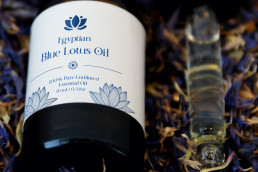
If you are standing between two bottles of floral oil trying to decide which one actually suits what you need, this guide on blue lotus vs ylang ylang will give you a straight answer. Both are deep, heady florals with a long history in perfumery and ritual, but they behave very differently on the nervous system, on the skin, and in a formulation. One is a rare aquatic absolute used for subtle cognitive and emotional shift; the other is a tropical distillate known for its pronounced sweetness and blood-pressure-lowering, relaxing effects.
Table of Contents
- The Short Answer First
- Botanical and Chemical Backgrounds
- Blue Lotus (Nymphaea caerulea)
- Ylang Ylang (Cananga odorata)
- Scent Profiles Compared
- Effects on Mood and the Nervous System
- What Ylang Ylang Does
- What Blue Lotus Does
- Which Matches Your Goal?
- Skin and Topical Use
- Ylang Ylang on Skin
- Blue Lotus on Skin
- Safety and Contraindications
- Practical Use: How to Work With Each
- Diffusion
- Rollerball for Tension
- Sleep
- Perfumery
- Cost, Availability, and Adulteration
- When to Choose Each, in One Line Each
- Frequently Asked Questions
- Where to Go From Here
- The Rarer Floral, Done Properly
It is written and clinically reviewed by Antonio Breshears, ND, CCA, a Bastyr-trained naturopathic doctor and certified clinical aromatherapist. For broader context on the oil discussed most here, see the complete guide to blue lotus oil, which covers chemistry, sourcing, and applications in depth.
The Short Answer First
Ylang ylang is the better choice if you want an obvious, sensory-forward floral that reliably calms the body, lowers a racing pulse, and perfumes a space with tropical sweetness. It is widely available, reasonably affordable, and well-studied for cardiovascular relaxation.
Blue lotus oil is the better choice if you want a quieter, more cerebral shift, a sense of settling inward rather than being wrapped in sweetness, and if you value ritual significance, rarity, and a more complex chemistry that touches dopaminergic and serotonergic pathways. It is expensive, less showy on the nose, and more nuanced in effect.
Neither oil replaces the other. Many people who know both end up using them for quite different occasions.
Botanical and Chemical Backgrounds
Blue Lotus (Nymphaea caerulea)
Blue lotus is an Egyptian aquatic water lily, sacred in pharaonic iconography and used in wine and oil infusions for ritual and presumed mood effects. The oil on the modern market is almost always a solvent-extracted absolute, occasionally a steam-distilled oil or a supercritical CO2 extract. It takes three to five thousand flowers to yield a single gram of absolute, which is why the price sits where it does.
The notable constituents are the aporphine alkaloids (including aporphine itself and nuciferine), plus the flavonoids apigenin, quercetin, and kaempferol. Aporphine has weak dopamine-agonist activity; nuciferine is a weak dopamine antagonist with some 5-HT2A and 5-HT2C serotonin receptor activity. Apigenin binds at central benzodiazepine sites. Practically, this chemistry produces a gentle anxiolytic, mild mood-lifting, and lightly dreamlike quality rather than overt sedation.
Ylang Ylang (Cananga odorata)
Ylang ylang is a tropical tree native to the Philippines, Indonesia, and Madagascar. Its flowers are steam-distilled in fractions, and the grade you buy (Extra, I, II, III, or Complete) reflects where in the distillation sequence the oil was collected. Extra and Complete are the most used in aromatherapy.
Chemically ylang ylang is dominated by esters (benzyl acetate, benzyl benzoate), ethers (methyl benzoate, para-cresyl methyl ether), sesquiterpenes (germacrene D, beta-caryophyllene), and linalool. This is a relaxing, parasympathetic-leaning profile. The oil has reasonable published evidence for lowering blood pressure, slowing heart rate, and reducing self-reported tension, particularly when inhaled in combination with bergamot or lavender.
Scent Profiles Compared
This is where most people feel the difference first.
Ylang ylang is unmistakably sweet. Ripe, creamy, tropical, a little banana-like in the top, with a rich floral heart that some people find seductive and others find cloying. It sits forward on the nose and is difficult to ignore. At high concentration it can feel heavy or even headachy; at low concentration it becomes warm, carnal, almost rounded.
Blue lotus is cooler and stranger. The top is slightly aquatic, a clean green-floral impression; the heart is honeyed and nectar-like, with something almost tea-like woven through it; the base slides into balsamic, faintly smoky territory. It is less obviously pretty than ylang ylang, but many people find it more interesting. It does not shout. It draws you closer.
If ylang ylang is a full tropical bloom pressed to your face, blue lotus is the scent of still water at dusk with lilies on the surface.
Effects on Mood and the Nervous System
What Ylang Ylang Does
Ylang ylang is a fairly reliable parasympathetic nudge. Inhaled, it tends to slow the breath, soften a tight chest, and reduce the felt sense of racing thought. Multiple small clinical studies have shown measurable drops in systolic blood pressure and self-reported anxiety after ylang ylang inhalation, often most pronounced in blends with bergamot and lavender. The effect is bodily and obvious.
The downside: some people feel sedated or slightly fuzzy after much of it, and the sweetness can tip into nausea or headache at higher doses, particularly in sensitive individuals.
What Blue Lotus Does
Blue lotus is subtler and more cognitive. The typical experience is a softening of background worry, a gentle lift in mood, and a sense of being slightly more inward and dreamy without feeling impaired. It is not a strong sedative; it will not reliably knock you out, and it is not the oil to reach for if your blood pressure is genuinely high and you want it down.
Where blue lotus earns its place is in emotional regulation and contemplative states: pre-sleep winding down, meditation, creative work, intimacy, and the kind of low-grade chronic anxiety where you want to feel present rather than switched off.
Which Matches Your Goal?
Racing heart, tight chest, situational tension, high blood pressure, need for an obvious shift in the body: ylang ylang. Looping thoughts, low mood, wanting a quieter inward turn, ritual or meditative work, subtle mood support: blue lotus.
Skin and Topical Use
Ylang Ylang on Skin
Ylang ylang has a long history in hair and skin care. It is often included in hair oils to balance scalp sebum (the evidence here is mostly traditional and anecdotal rather than robust) and in body oils for its scent and skin-softening reputation. However, ylang ylang is a known sensitiser. The IFRA and most reputable safety references cap it at around 0.8 percent in leave-on products applied to the face, and it features regularly in patch-test panels for contact dermatitis. It is not an oil to be casual with, especially on reactive skin.
Blue Lotus on Skin
Blue lotus absolute carries flavonoids with antioxidant activity and is generally well tolerated in the 1 to 2 percent range on the face and 2 to 3 percent on the body. It is not a dermatologically aggressive oil. Its skin reputation rests more on gentle anti-inflammatory behaviour and a luxurious scent in facial oils than on any dramatic clinical effect. It suits mature, dull, or stressed skin where you want something nourishing and not reactive.
For facial use on sensitive skin, blue lotus is the safer and more comfortable choice. For a richly scented body oil or a hair treatment, ylang ylang has more precedent, provided you respect the dilution cap.
Safety and Contraindications
Both oils require some care. The cautions are different in character.
Ylang ylang: recognised skin sensitiser, with dilution limits on leave-on products; can cause headache or nausea at higher inhaled concentrations; use cautiously in anyone with very low blood pressure; avoid during the first trimester of pregnancy and use only with professional guidance later in pregnancy.
Blue lotus: avoided in pregnancy and breastfeeding; caution alongside dopaminergic medications (because of aporphine/nuciferine activity), MAOIs, and heavy sedatives; legally restricted in Russia, Poland, Latvia, the US state of Louisiana, and with regulatory complexity in Australia. Generally gentle on the skin at sensible dilutions.
Neither oil is ingested in aromatherapy practice. Both should be kept away from eyes and mucous membranes, and both should be patch-tested on the inner forearm before broader use.
Practical Use: How to Work With Each
Diffusion
Ylang ylang is a forward scent and usually wants restraint: 1 to 2 drops in a 100 ml diffuser, often balanced with a citrus (bergamot or sweet orange) or lavender to soften the sweetness. More than that and the room becomes heavy.
Blue lotus diffuses at 2 to 4 drops in the same volume. It is a quieter oil; you can use slightly more without it feeling oppressive. It layers beautifully with sandalwood, frankincense, or a small amount of jasmine or rose.
Rollerball for Tension
For situational anxiety or blood-pressure-related tension, a ylang ylang blend at around 2 percent in jojoba (roughly 18 drops in 10 ml), often with bergamot and lavender, applied to the wrists and chest, is a classic and works.
For quieter worry, rumination, or pre-sleep settling, a blue lotus blend at 2 to 3 percent in jojoba on the inner wrists and behind the ears is the more elegant option. It will not hit you over the head; it will gradually soften the edges.
Sleep
Ylang ylang can assist sleep indirectly by lowering heart rate and calming the body, but its sweetness is polarising and some people find it stimulating rather than soothing at bedtime. Blue lotus is more reliably conducive to a dreamy, inward state, though, to be honest, neither oil is a sedative in the clinical sense. If you want actual hypnotic effect, you are looking at the wrong tools entirely.
Perfumery
Ylang ylang is a classic middle note in perfumery, historically central to Chanel No. 5 and a great many tropical-floral compositions. Blue lotus is a niche ingredient, more often found in artisan and attar-style perfumes, and valued for its unusual aquatic-honeyed character. They can actually be blended together at low ratios, with the blue lotus lending depth and strangeness to the sweetness of the ylang ylang.
Cost, Availability, and Adulteration
Ylang ylang is reasonably priced and widely available. Adulteration does happen, usually with synthetic esters or with cheaper Cananga oil (a related species), but reputable suppliers with GC-MS reports are not hard to find.
Blue lotus is expensive and frequently adulterated. The low-priced “blue lotus essential oils” flooding the market are, in the overwhelming majority of cases, either synthetic fragrance oils or jojoba infused with dried blue lotus petals and sold as absolute. If you are spending a small amount of money on blue lotus oil, you are almost certainly not buying blue lotus oil. Honest product descriptions, extraction method clearly stated, and price aligned with reality (the raw material costs what it costs) are the marks of a legitimate source.
When to Choose Each, in One Line Each
Choose ylang ylang when the issue lives in your body: racing heart, high blood pressure, tight chest, situational tension, and you want a bold, sweet, tropical-floral scent.
Choose blue lotus when the issue lives in your head: rumination, low-grade chronic worry, flatness of mood, need for ritual or meditative depth, and you want a cool, honeyed, more complex scent.
Choose both if you are building a thoughtful aromatherapy kit and want coverage across both registers. They are genuinely complementary rather than competing.
Frequently Asked Questions
Is blue lotus or ylang ylang better for anxiety?
It depends on how your anxiety presents. If it is physical (pounding chest, fast pulse, elevated blood pressure), ylang ylang has better evidence and a more obvious effect. If it is cognitive (looping thoughts, chronic worry, low mood), blue lotus tends to suit that register better, though the effect is subtler.
Which oil is stronger?
Ylang ylang is stronger on the nose and more obvious in its bodily effect. Blue lotus is more complex chemically but quieter in expression. “Stronger” is not really the right question; “more obvious” favours ylang ylang, “more nuanced” favours blue lotus.
Can I blend blue lotus and ylang ylang together?
Yes, and the result can be beautiful. A common ratio is 1 part ylang ylang to 2 or 3 parts blue lotus, which lets the blue lotus provide depth and keeps the ylang ylang from dominating. Add a small amount of bergamot or sandalwood to round the blend.
Which is safer for sensitive skin?
Blue lotus, by a clear margin. Ylang ylang is a recognised sensitiser with dilution caps on leave-on products. Blue lotus is generally well tolerated in the 1 to 2 percent range on facial skin.
Are either of these oils safe in pregnancy?
Neither oil is recommended in the first trimester. Blue lotus is generally avoided throughout pregnancy and breastfeeding. Ylang ylang may be used later in pregnancy with professional guidance, at low dilutions. When in doubt, consult a qualified aromatherapist or clinician.
Which one actually lowers blood pressure?
Ylang ylang has modest but reasonably replicated evidence for lowering systolic blood pressure when inhaled. Blue lotus does not have this evidence, and its mechanism is not primarily cardiovascular. If blood pressure is the target, ylang ylang is the right oil; clinical care still applies for meaningful hypertension.
Can I use either of these oils before bed?
Yes, both are used at bedtime, though neither is a sedative. Ylang ylang slows the body; blue lotus softens the mind. If you find ylang ylang too sweet at night, blue lotus is the quieter option.
Which is better for ritual or meditation work?
Blue lotus, fairly clearly. Its historical association with Egyptian temple practice, its introspective and slightly dreamy quality, and its cooler scent profile make it a more natural fit for contemplative use. Ylang ylang’s sweetness tends to pull attention outward, which is not always what you want in meditation.
Is ylang ylang cheaper because it is lower quality?
No. Ylang ylang is simply more abundant. The flowers yield oil more readily and the trees are cultivated at scale in tropical climates. Blue lotus is rare, yield-poor, and largely wild-harvested or carefully cultivated in Egypt, which accounts for the price.
If I could only own one, which should it be?
If your primary need is calming an obviously tense body, ylang ylang gives more bang for your money. If your primary draw is ritual, mood, and a more unusual sensory experience, blue lotus is worth the investment, provided you buy from a source that sells the real material.
Where to Go From Here
If this comparison has you leaning toward blue lotus, the next step is understanding what you are actually buying: extraction methods, authenticity markers, and sensible applications. The complete guide to blue lotus oil covers the material in depth and will save you from the large share of products on the market that are not what they claim to be.
If you are leaning toward ylang ylang, any reputable essential oil supplier with published GC-MS reports will serve you well; the oil is common enough that quality is not the central problem. The central question with ylang ylang is simply whether its register (sweet, forward, bodily) is the one you actually want.

Antonio Breshears
Antonio Breshears is a renowned expert in holistic medicine and beauty, with over 25 years of research experience dedicated to uncovering the secrets of nature's most powerful remedies. Holding a degree in Naturopathic Medicine, Antonio's passion for healing and well-being has driven him to explore the intricate connections between mind, body, and spirit.
Over the years, Antonio has become a respected authority in the field, helping countless individuals discover the transformative power of plant-based therapies, including essential oils, herbs, and natural supplements. He has authored numerous articles and publications, sharing his wealth of knowledge with a global audience seeking to improve their overall health and well-being.
Antonio's expertise extends to the realm of beauty, where he has developed innovative, all-natural skincare solutions that harness the potency of botanical ingredients. His formulations embody his deep understanding of the healing properties found in nature, providing holistic alternatives for those seeking a more balanced approach to self-care.
With his extensive background and dedication to the field, Antonio Breshears is a trusted voice and guiding light in the world of holistic medicine and beauty. Through his work at Pure Blue Lotus Oil, Antonio continues to inspire and educate, empowering others to unlock the true potential of nature's gifts for a healthier, more radiant life.