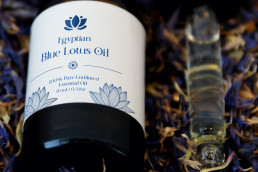
Blue lotus oil is an ancient Egyptian aromatic that has come back into modern use as a tool for sleep, stress, contemplative practice, and the broader work of nervous-system regulation. It is extracted from the flowers of Nymphaea caerulea, the blue water lily of the Nile basin, and sits in a tradition of aromatic and ritual use stretching back some five thousand years. This page is the short-form introduction to the oil: what it is, what it does, and where to go for the detail on any of its many applications.
Table of Contents
It is written and clinically reviewed by Antonio Breshears, ND, CCA, a Bastyr-trained naturopathic doctor and certified clinical aromatherapist. For the full long-form treatment, our complete guide to blue lotus oil is the fuller reference.
What Blue Lotus Oil Is
Blue lotus oil, almost always sold as an absolute rather than a true essential oil, is a concentrated aromatic extract of the blue lotus flower. The absolute captures the flower’s characteristic scent profile (a deep, honeyed floral with marine and green notes) along with the active alkaloids and flavonoids that give the oil its therapeutic character. Most high-quality product is Egyptian in origin, reflecting the historical and ecological home of the species.
Three extraction methods produce the oil: solvent extraction (the standard, yielding an absolute), steam distillation (rare, yielding a lighter true essential oil), and supercritical CO2 extraction (premium, intermediate profile). Our article on what is blue lotus oil covers the distinctions in detail.
What Blue Lotus Oil Does
The oil works through four converging mechanisms: the immediate olfactory-limbic shift that any evocative scent produces; mild dopaminergic modulation via the aporphine and nuciferine alkaloids; mild GABAergic support via the flavonoid apigenin (the same compound responsible for chamomile’s calming effect); and the ritual-conditioning effect that compounds over weeks of consistent use. Together these produce a gentle quieting of sympathetic arousal and a parasympathetic shift toward rest and emotional openness.
The practical applications divide into four main territories.
- Nervous system and emotional territory. Anxiety, stress, mood regulation, grief, and trauma-supportive work. The pillar reference is blue lotus oil health and wellness benefits.
- Sleep and dream work. General sleep quality, insomnia across its patterns, dream recall, and lucid dreaming. The pillar is blue lotus oil for sleep and dreams.
- Contemplative and ritual practice. Meditation, yoga, and the broader tradition of anointing with scented oils. See blue lotus oil in meditation and yoga practice.
- Hormonal and cycle-linked work. PMS, menstrual pain, menopause, and intimate-ritual use. Covered across the health and wellness cluster articles.
The chemistry detail is in our pillar on chemical composition and therapeutic properties.
How Blue Lotus Oil Is Used
Two main formats, each with its own applications.
Aromatic use. Diffusion in a room (two to four drops in an ultrasonic diffuser), direct inhalation from the bottle or a personal inhaler, or a pillow spray for bedtime use. Aromatic use is the fastest-acting format, engaging the olfactory-limbic pathway within a few breaths. Our guide to aromatherapy diffuser techniques covers the equipment and dosing; our pillow spray recipe covers the bedtime format.
Topical use. The oil is diluted to 2 to 3 percent in a carrier oil (jojoba for the face, fractionated coconut for rollerballs, sweet almond for massage) and applied to pulse points, specific areas, or the whole body. Topical use adds the alkaloid and flavonoid absorption pathways, delivering a slower but broader systemic effect. Our carrier oil pairings pillar covers the dilution mathematics and carrier selection.
Blue lotus oil is not taken internally. The concentrated essential oil and absolute are not formulated for ingestion.
Quality and Authenticity
The blue lotus oil market includes substantial product variation, from genuine Egyptian absolutes at one end to synthetic fragrance oils at the other. The characteristics of a high-quality product.
- Sourced from Egypt, from a reputable supplier with transparent provenance.
- Labelled as an absolute (not essential oil, in the strict technical sense) unless specifically steam-distilled or CO2-extracted.
- Viscous and slightly tacky, with a complex floral-honeyed-marine scent profile.
- Packaged in dark glass (amber or cobalt).
- Priced at a level that reflects the substantial botanical input: three to five thousand flowers are required to produce one gram of absolute.
Very low prices are a warning sign. Fragrance oils and synthetic products exist at a fraction of the cost of genuine absolute, but they carry none of the therapeutic properties of the real thing. Our guide to choosing high-quality blue lotus oil covers the authenticity question in detail.
Safety at a Glance
Blue lotus oil at aromatic and topical doses has a strong safety record. Key points to note.
- Avoided in pregnancy and breastfeeding.
- Not used internally.
- Diluted for topical use (2 to 3 percent in a carrier oil is the standard).
- Prescriber awareness is appropriate for users on dopaminergic medications, MAOIs, or high-dose sedatives.
- Legal restrictions apply in a small number of jurisdictions (Russia, Poland, Latvia, the US state of Louisiana, with regulatory complexity in Australia).
The full reference is in our article on blue lotus oil safety, side effects and precautions.
The Tradition Behind the Oil
Blue lotus was one of the most culturally central plants in ancient Egypt, associated with the god Nefertem, with creation cosmology, with funerary practice, and with the banquet and ritual traditions that combined wine, music, perfume, and the flower itself. The Egyptian tradition spread through Mediterranean and Near Eastern trade, was preserved in Islamic pharmacological literature through the medieval period, and was recovered in European scholarship from the late eighteenth century onwards. Contemporary aromatic use sits within this long lineage. Our pillar on the history and cultural significance of blue lotus oil is the fuller reference.
Frequently Asked Questions
What is blue lotus oil used for?
Most commonly for sleep support, anxiety and stress reduction, meditation and contemplative practice, and cycle-linked hormonal support (PMS, menopause). The oil is also used in skincare and hair care, and in intimate-ritual practice. Each application is covered in dedicated cluster articles.
Is blue lotus oil an essential oil or an absolute?
Usually an absolute, extracted by solvent rather than by steam distillation. Most products marketed as “blue lotus essential oil” are technically absolutes. True steam-distilled blue lotus essential oil exists but is rarer and has a different (lighter) profile.
How much does blue lotus oil cost?
Genuine Egyptian blue lotus absolute is expensive, reflecting the large number of flowers required to produce even a small quantity. Price varies widely by supplier, bottle size, and market; very cheap products should be treated with scepticism.
Is blue lotus oil legal?
Legal in most countries, with restrictions in Russia, Poland, Latvia, the US state of Louisiana, and with some regulatory complexity in Australia. Check your local regulations before importing or travelling with the oil.
Is blue lotus oil psychoactive?
Mildly, at aromatic and topical doses. The effect is best described as a gentle quieting and emotional opening rather than an intoxication. Stronger psychoactive effects reported in older literature usually refer to whole-flower wine infusions at much higher doses.
How should I use blue lotus oil?
Start with aromatic use: two to three drops in a diffuser in the evening, or a pillow spray at bedtime. Add topical use (a 2 to 3 percent blend in a carrier oil) once you have a sense of how your nervous system responds. The benefits compound with consistent daily use over three to four weeks.
Where does the best blue lotus oil come from?
Egypt, reflecting the historical and ecological home of the species. Other sources exist (India, Sri Lanka, and others covered in our geographic buying guides) and can produce acceptable product, but Egyptian origin with a transparent supply chain is the standard quality benchmark.
Can blue lotus oil help me sleep?
Yes, for most users with common sleep patterns. The aromatic and topical use supports both sleep onset and sleep continuity, and the oil has particular strengths in the dream-work adjacent territory. Our sleep and dreams pillar is the full protocol reference.
Is blue lotus oil safe to use every day?
Yes, at standard aromatic and topical doses. Daily use is in fact the pattern that produces the best cumulative results, through the olfactory-conditioning and nervous-system-regulation effects that require consistency over weeks.
What does blue lotus oil smell like?
A deep, slightly honeyed floral with marine and green notes. Rich and complex compared with lighter floral oils; some users describe it as reminiscent of a water-garden in high summer. Our article on what blue lotus oil smells like covers the scent profile in detail.
Where to Go From Here
For a full introduction, start with our complete guide to blue lotus oil. For specific applications, the pillars on health and wellness benefits, sleep and dreams, and meditation and yoga practice are the main reference points. For sourcing and authenticity, choosing high-quality blue lotus oil. For safety, the safety, side effects and precautions article. Everything on this site is hosted at Pure Blue Lotus Oil.

Antonio Breshears
Antonio Breshears is a renowned expert in holistic medicine and beauty, with over 25 years of research experience dedicated to uncovering the secrets of nature's most powerful remedies. Holding a degree in Naturopathic Medicine, Antonio's passion for healing and well-being has driven him to explore the intricate connections between mind, body, and spirit.
Over the years, Antonio has become a respected authority in the field, helping countless individuals discover the transformative power of plant-based therapies, including essential oils, herbs, and natural supplements. He has authored numerous articles and publications, sharing his wealth of knowledge with a global audience seeking to improve their overall health and well-being.
Antonio's expertise extends to the realm of beauty, where he has developed innovative, all-natural skincare solutions that harness the potency of botanical ingredients. His formulations embody his deep understanding of the healing properties found in nature, providing holistic alternatives for those seeking a more balanced approach to self-care.
With his extensive background and dedication to the field, Antonio Breshears is a trusted voice and guiding light in the world of holistic medicine and beauty. Through his work at Pure Blue Lotus Oil, Antonio continues to inspire and educate, empowering others to unlock the true potential of nature's gifts for a healthier, more radiant life.