Carrier oils serve as the foundation for topical essential oil applications, diluting concentrated actives, enhancing skin absorption, and delivering their own array of nutrients. When working with Blue Lotus Oil (Nymphaea caerulea), choosing the right carrier can amplify its soothing, anti‑inflammatory, and rejuvenating properties. This comprehensive guide explores carrier oil fundamentals, profiles ten of the most popular botanical oils, offers blending strategies tailored to skin types and wellness goals, and provides best practices for formulation, storage, and safety. Whether you’re crafting facial serums, massage blends, or body lotions, mastering carrier oil pairings will ensure you unlock the full potential of Blue Lotus Oil.
Table of Contents
- Understanding Carrier Oils
- Key Criteria for Selecting Carrier Oils
- Top 10 Carrier Oils for Blue Lotus Oil Blends
- Jojoba Oil (Simmondsia chinensis)
- Sweet Almond Oil (Prunus amygdalus dulcis)
- Fractionated Coconut Oil (MCT)
- Argan Oil (Argania spinosa)
- Grapeseed Oil (Vitis vinifera)
- Rosehip Seed Oil (Rosa rubiginosa)
- Avocado Oil (Persea americana)
- Marula Oil (Sclerocarya birrea)
- Hemp Seed Oil (Cannabis sativa)
- Camellia Seed Oil (Camellia oleifera)
- Blue Lotus Oil Blending Strategies by Skin Type
- Oily & Acne‑Prone Skin
- Dry & Mature Skin
- Sensitive & Eczema‑Prone Skin
- Combination Skin
- Muscle & Joint Support
- Formulation Best Practices
- Storage and Shelf‑Life
Understanding Carrier Oils
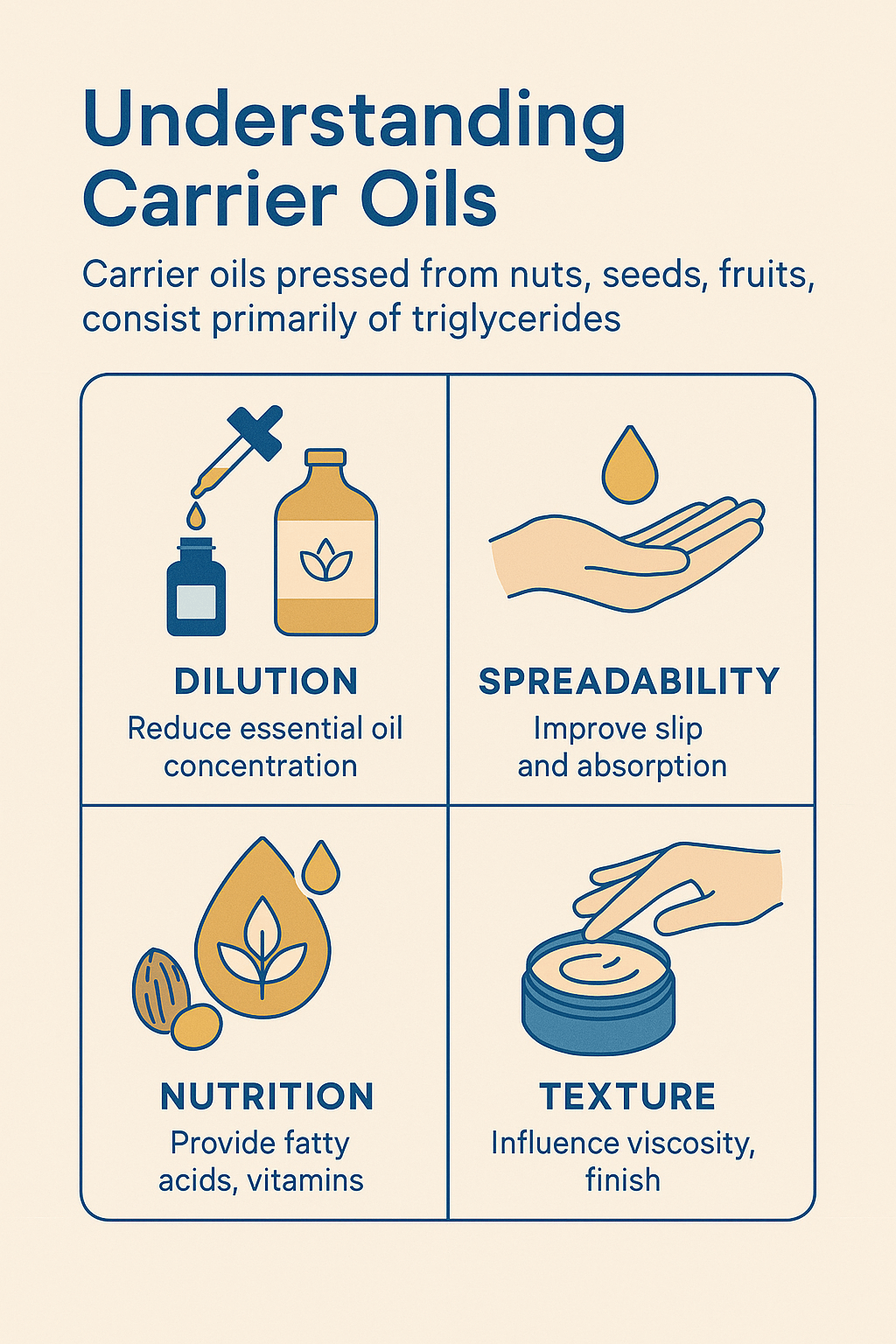
Carrier oils (also called fixed oils) are pressed from nuts, seeds, or fruits and consist primarily of triglycerides, fatty acids bound to glycerol. They serve multiple roles in skincare formulations:
- Dilution: Reduce essential oil concentration to safe levels for topical use.
- Spreadability: Improve slip and absorption of blends over skin.
- Nutrition: Provide fatty acids, vitamins, antioxidants, and phytosterols that support barrier repair, elasticity, and hydration.
- Texture: Influence viscosity, finish (dry vs. rich), and sensory experience of formulations.
Key Criteria for Selecting Carrier Oils
When pairing carrier oils with Blue Lotus Oil, consider these critical factors:
- Fatty Acid Profile: Oils high in linoleic acid (omega‑6) are lightweight and non‑comedogenic; oleic‑rich oils (omega‑9) are heavier and more emollient.
- Comedogenic Rating: Scale from 0 (won’t clog pores) to 5 (likely to clog); important for acne‑prone or sensitive skin.
- Viscosity and Absorption Rate: Fast‑absorbing oils prevent greasy residue; slower oils offer extended hydration.
- Phytochemical Benefits: Natural antioxidants (vitamin E, carotenoids), anti‑inflammatory sterols, and essential fatty acids add targeted skin support.
- Stability & Shelf‑Life: Oils with high levels of polyunsaturated fats can oxidize quickly; antioxidants and proper storage are essential.
Top 10 Carrier Oils for Blue Lotus Oil Blends
Jojoba Oil (Simmondsia chinensis)
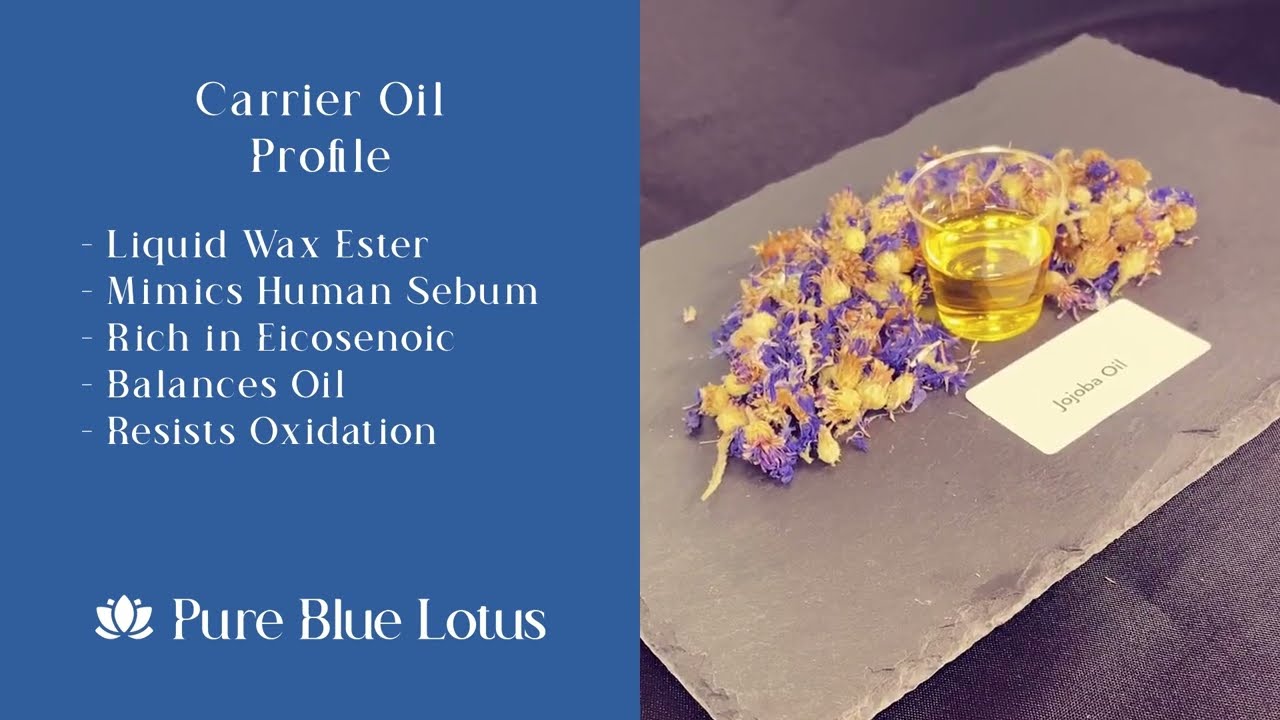
Profile: Technically a liquid wax ester, jojoba oil closely mimics human sebum. Rich in eicosenoic acid and natural waxes, it balances oil production and resists oxidation.
Comedogenic Rating: 2 (low risk).
Skin Types: All, especially oily, acne‑prone, and combination.
Benefits: Regulates sebum, soothes inflammation, enhances skin barrier without greasiness. Ideal for facial serums with Blue Lotus Oil at a 1–2% dilution.
Sweet Almond Oil (Prunus amygdalus dulcis)
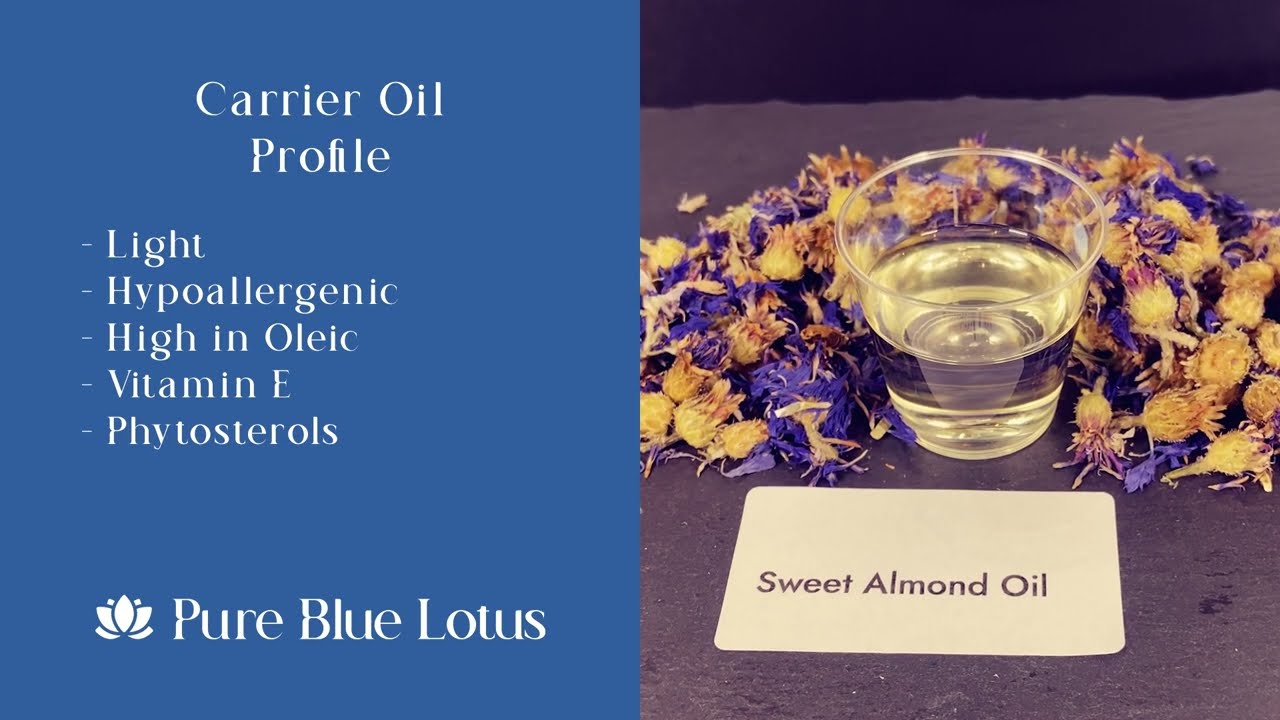
Profile: A light, hypoallergenic oil high in oleic and linoleic acids plus vitamin E and phytosterols.
Comedogenic Rating: 2.
Skin Types: Normal, dry, sensitive, stretch‑mark prone.
Benefits: Deeply moisturizing, improves tone and texture, gentle enough for everyday massage blends. Combine with Blue Lotus Oil at 2–5% for body care.
Fractionated Coconut Oil (MCT)

Profile: Medium‑chain triglycerides derived from coconut; colorless, odorless, with a thin consistency.
Comedogenic Rating: 0–1.
Skin Types: All, particularly sensitive and acne‑prone.
Benefits: Rapid absorption, non‑greasy, stable shelf‑life. Perfect for roller‑ball blends or children’s Blue Lotus Oil formulations at up to 3% dilution.
Argan Oil (Argania spinosa)
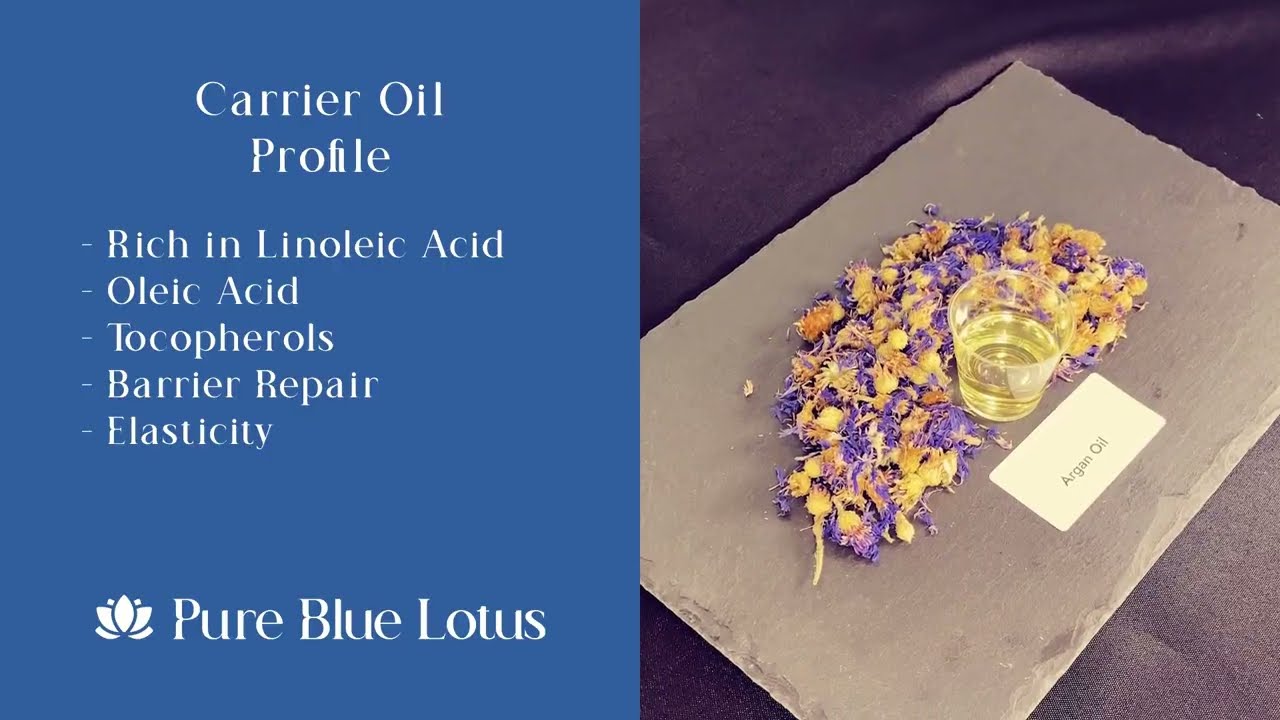
Profile: Rich in linoleic acid, oleic acid, tocopherols, and squalene. Supports barrier repair and elasticity.
Comedogenic Rating: 0–1.
Skin Types: Dry, mature, sensitive, eczema‑prone.
Benefits: Anti‑aging, antioxidant, improves skin firmness. Use at 1–2% Blue Lotus Oil for targeted facial treatments or night serums.
Grapeseed Oil (Vitis vinifera)
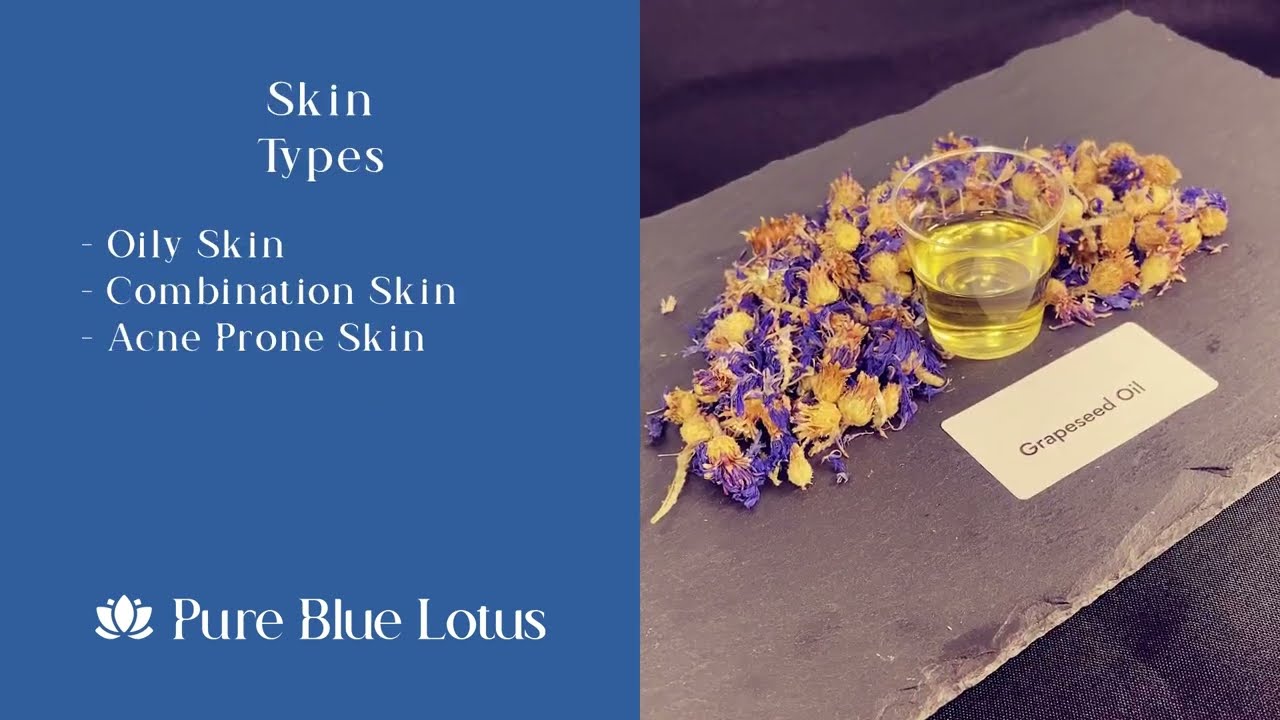
Profile: Lightweight, high in linoleic acid and polyphenols; a natural antioxidant and astringent.
Comedogenic Rating: 1.
Skin Types: Oily, combination, acne‑prone.
Benefits: Tightens pores, balances oil, protects from free radicals. Pair with Blue Lotus Oil at 1–3% for blemish‑fighting serums.
Rosehip Seed Oil (Rosa rubiginosa)
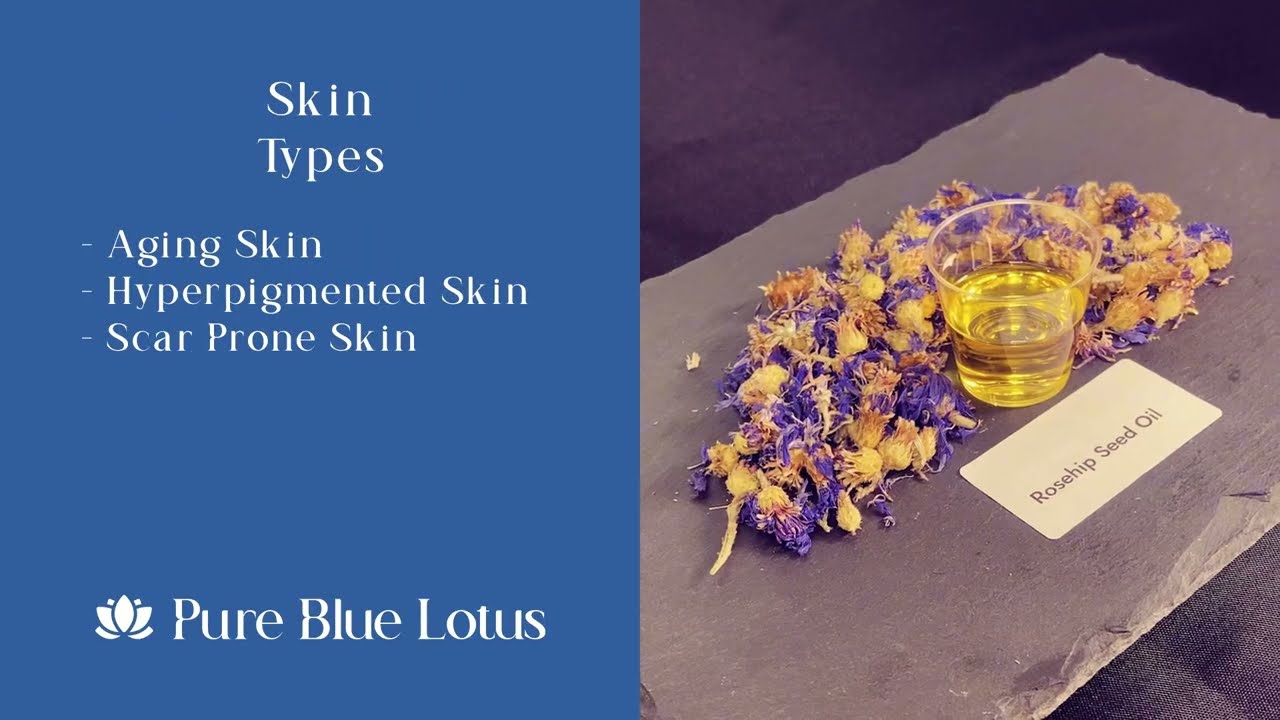
Profile: Abundant in linoleic and linolenic acids, natural retinoic acid precursors, vitamins A and C.
Comedogenic Rating: 1.
Skin Types: Aging, hyperpigmented, scar‑prone.
Benefits: Promotes cell turnover, fades scars and dark spots. Blend at 2% Blue Lotus Oil in nightly serums for rejuvenation.
Avocado Oil (Persea americana)
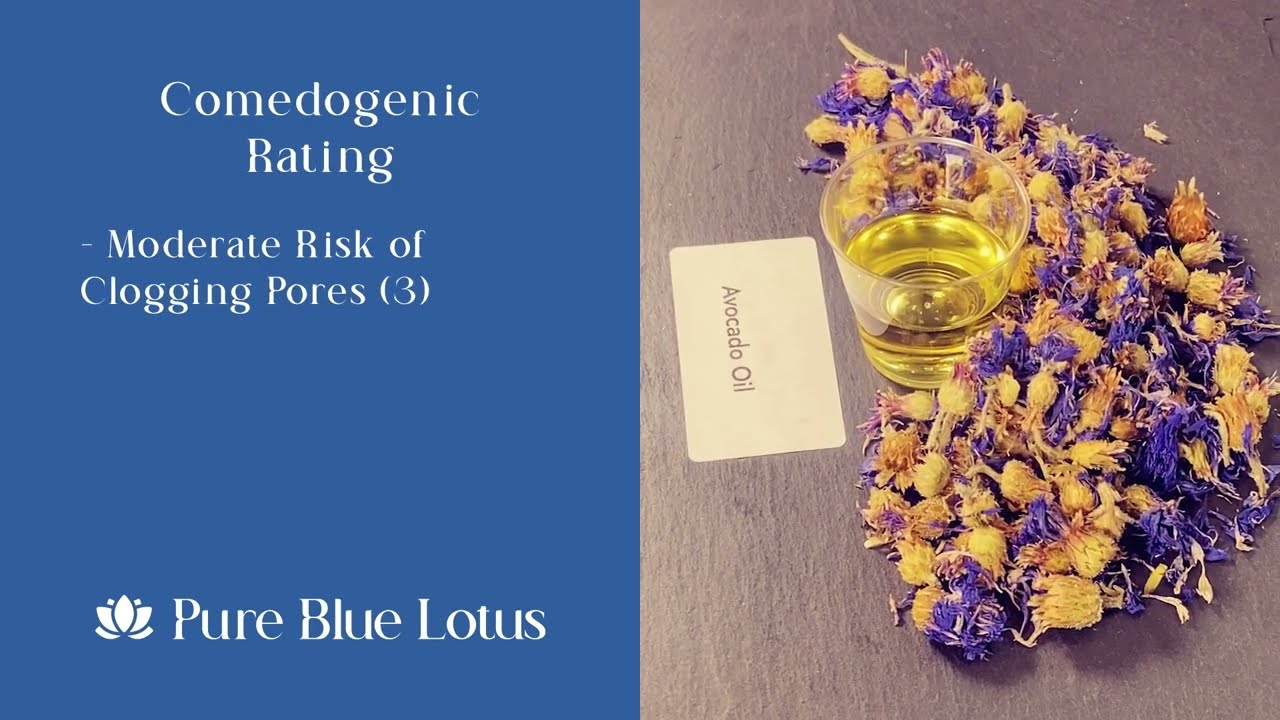
Profile: Dense, rich in oleic acid, monounsaturated fats, vitamins A, D, E, and lecithin.
Comedogenic Rating: 3 (moderate).
Skin Types: Very dry, mature, inflamed.
Benefits: Deeply nourishing, supports barrier repair, reduces redness. Use sparingly with Blue Lotus Oil at 1–2% for intensive body balms.
Marula Oil (Sclerocarya birrea)

Profile: High in oleic acid and antioxidants (vitamin C, flavonoids), lightweight but deeply hydrating.
Comedogenic Rating: 1.
Skin Types: Normal, dry, combination.
Benefits: Improves elasticity, reduces transepidermal water loss. Ideal for Blue Lotus Oil facial blends at 1–2% concentration.
Hemp Seed Oil (Cannabis sativa)

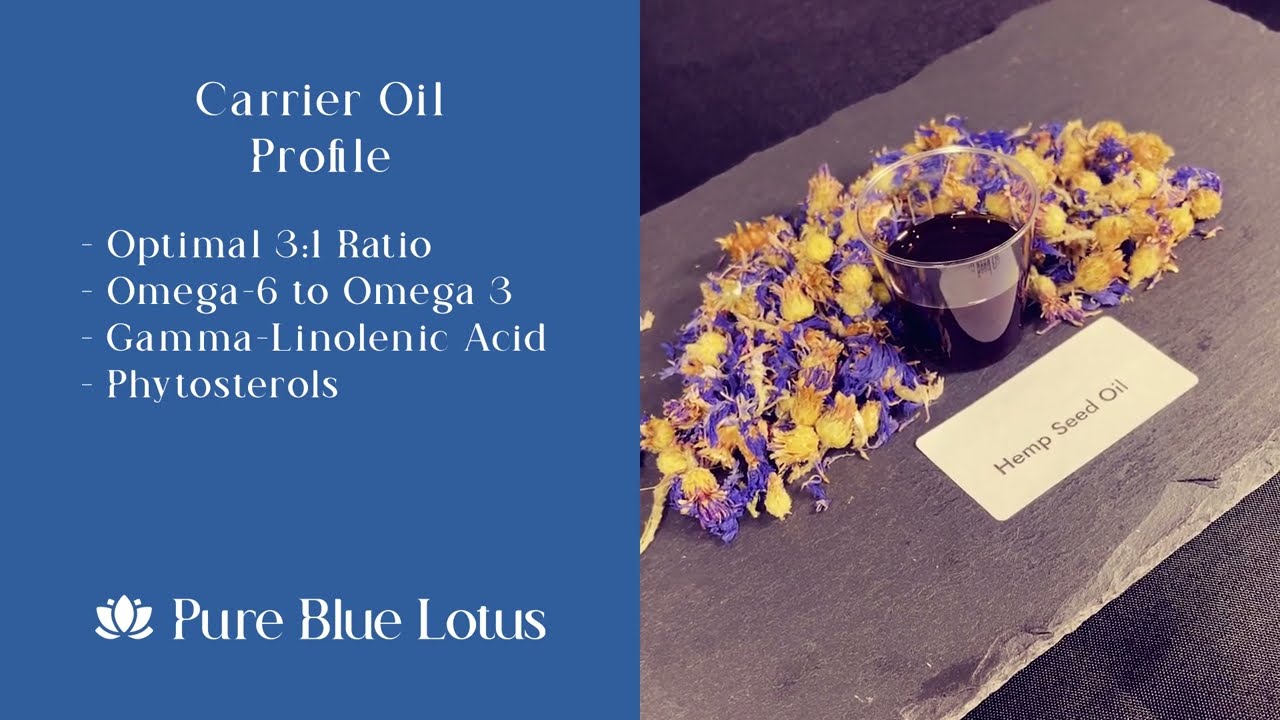
Profile: Optimal 3:1 ratio of omega‑6 to omega‑3 fatty acids, plus gamma‑linolenic acid (GLA) and phytosterols.
Comedogenic Rating: 0.
Skin Types: Eczema‑prone, oily, sensitive.
Benefits: Anti‑inflammatory, barrier‑strengthening, non‑comedogenic. Combine with Blue Lotus Oil at 2% for soothing eczema balms.
Camellia Seed Oil (Camellia oleifera)
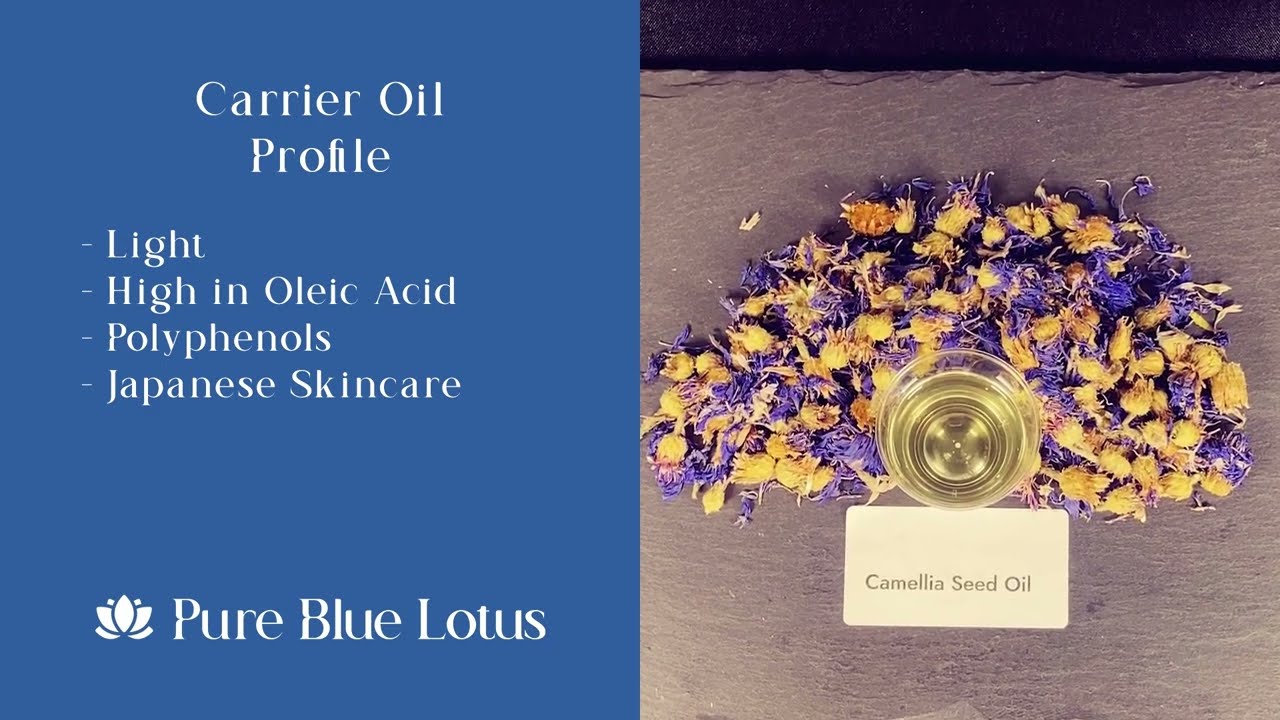
Profile: Light, high in oleic acid and polyphenols, historically used in Japanese skincare.
Comedogenic Rating: 0–1.
Skin Types: All, especially sensitive and mature.
Benefits: Softens, protects, smooths fine lines. Pair with 1% Blue Lotus Oil in luxury facial mists or serums.
Blue Lotus Oil Blending Strategies by Skin Type
Oily & Acne‑Prone Skin
Goal: Balance sebum, minimize breakouts, soothe inflammation.
Recommended Carriers: Jojoba, grapeseed, fractionated coconut.
Recipe: Blend 5 mL jojoba + 3 mL grapeseed + 2 mL fractionated coconut; add 10 drops Blue Lotus Oil (2%) and 5 drops tea tree oil. Apply nightly to cleansed face.
Dry & Mature Skin
Goal: Deep hydration, barrier repair, wrinkle reduction.
Recommended Carriers: Argan, rosehip, marula.
Recipe: Blend 10 mL argan + 5 mL rosehip + 5 mL marula; add 12 drops Blue Lotus Oil (2%) and 5 drops frankincense oil. Use as nightly facial oil.
Sensitive & Eczema‑Prone Skin
Goal: Calm irritation, restore lipids, reduce redness.
Recommended Carriers: Hemp seed, sweet almond, jojoba.
Recipe: Mix 8 mL hemp seed + 12 mL sweet almond; add 8 drops Blue Lotus Oil (1%) and 4 drops chamomile oil. Apply to affected areas twice daily.
Combination Skin
Goal: Hydrate dry zones, control oil in T‑zone.
Recommended Carriers: Camellia seed, grapeseed.
Recipe: Blend 10 mL camellia + 10 mL grapeseed; add 10 drops Blue Lotus Oil (1.5%) and 5 drops lavender oil. Use as morning serum.
Muscle & Joint Support
Goal: Soothe soreness, reduce inflammation, improve circulation.
Recommended Carriers: Sweet almond, fractionated coconut.
Recipe: Blend 15 mL sweet almond + 5 mL fractionated coconut; add 15 drops Blue Lotus Oil (3%) and 10 drops peppermint oil. Massage into sore areas post‑workout.
Formulation Best Practices
- Dilution Ratios: Keep Blue Lotus Oil at 1–3% for facial uses, 3–5% for body and targeted applications.
- Antioxidants: Add vitamin E or rosemary extract (0.5–1%) to stabilize polyunsaturated carrier oils.
- Patch Testing: Always test new blends on inner forearm 24 hours before full application.
- Hygiene: Use clean utensils and containers; avoid water contamination in oil blends.
Storage and Shelf‑Life

Store blended oils in dark glass bottles with airtight caps to protect from light and oxygen. Keep at cool room temperature (15–20 °C). Most carrier‑based blends last 6–12 months; watch for rancid odors or color changes as signs of oxidation.
Selecting the ideal carrier oil pairing for Blue Lotus Oil blends is a blend of science and artistry. By understanding fatty acid profiles, comedogenic ratings, and phytochemical benefits, you can tailor formulations for any skin type or wellness goal, from lightweight facial serums to soothing muscle‑relief massage oils. With careful dilution, antioxidant support, and diligent storage, your Blue Lotus carrier oil blends will deliver both the ancient magic of the sacred lotus and the nourishing power of botanical nutrition, creating transformative rituals for body, mind, and spirit.