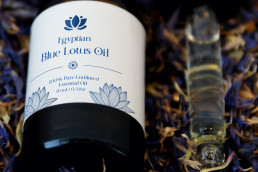
If you have searched for the blue lotus oil FDA status, you have probably noticed the internet gives you two contradictory answers: either “it is banned” or “it is unregulated, anything goes.” Neither is quite right. This article walks through exactly how the US Food and Drug Administration treats Nymphaea caerulea extracts, what legal category the oil sits in, what claims a seller is allowed to make, and what any of this actually means for you as a buyer.
Table of Contents
- What the FDA Actually Is, and Is Not
- Is Blue Lotus Oil FDA Approved?
- Not Approved, But Also Not Banned
- How the FDA Categorises Blue Lotus Oil
- Aromatherapy (Unregulated by the FDA as a Specific Category)
- Cosmetics
- Dietary Supplements
- Unapproved Drugs
- What Sellers Can and Cannot Legally Claim
- Allowed Language
- Not Allowed Language
- What Blue Lotus Oil FDA Status Means for You as a Buyer
- There Is No FDA Quality Guarantee
- Look for Voluntary Quality Signals
- Be Sceptical of Medical Claims
- Recognise That FDA Silence Is Not Endorsement
- Import, Shipping, and Customs Considerations
- When Blue Lotus Oil FDA Rules Are Not the Right Question
- Complementary Considerations
- Frequently Asked Questions
- Where to Go From Here
- Buy Blue Lotus Oil With Confidence
It is written and clinically reviewed by Antonio Breshears, ND, CCA, a Bastyr-trained naturopathic doctor and certified clinical aromatherapist. For broader context on this plant and its history, readers may want to start with The Complete Guide to Blue Lotus Oil, which covers botany, chemistry, and traditional use before the regulatory questions are layered on top.
What the FDA Actually Is, and Is Not
Before diagnosing the FDA status of any product, it helps to be precise about what the agency does. The US Food and Drug Administration regulates food, dietary supplements, cosmetics, drugs, medical devices, and tobacco products. It does not hold a master list of “approved” or “banned” plants in the way many people imagine. Instead, the FDA regulates products by category, and the same plant can be treated very differently depending on how it is sold and what is claimed about it.
This matters because blue lotus oil does not exist in a single regulatory bucket. A bottle of Nymphaea caerulea absolute on one shelf might be marketed as a cosmetic ingredient; on another, it might be sold as aromatherapy; on another, as an herbal tea or tincture; and occasionally, problematically, as something that “treats” insomnia or anxiety. Each framing triggers different FDA rules. So the honest answer to “what is the FDA status of blue lotus oil” is: it depends on how the seller positions it.
Is Blue Lotus Oil FDA Approved?
No essential oil, absolute, or botanical extract is “FDA approved” in the way a prescription medication is. That phrase gets misused constantly. The FDA approves specific drug products for specific medical indications after clinical trials. It does not approve plants, oils, or supplements as a general category.
So when a website claims its blue lotus oil is “FDA approved,” that statement is either meaningless marketing or outright misleading. There is no approval process for a bottle of blue lotus absolute to go through. The correct question is not whether it is approved but whether it is compliant, meaning: is it being sold legally under the FDA rules that apply to its category?
Not Approved, But Also Not Banned
On the federal level in the United States, Nymphaea caerulea is not a controlled substance. The Drug Enforcement Administration has not scheduled it. The FDA has not issued an import alert specifically banning blue lotus. It is not on the list of substances generally recognised as unsafe. You can legally buy, sell, possess, and use blue lotus oil in most of the country.
The single prominent US exception is the state of Louisiana, which passed Act 159 in 2005 restricting the sale of certain hallucinogenic plants for human consumption, and Nymphaea caerulea is named on that list. That restriction is state law, not an FDA action, and it applies only when the plant is intended for human consumption. Aromatic and ornamental use is not the target.
How the FDA Categorises Blue Lotus Oil
Whether the FDA pays attention to a given bottle of blue lotus oil depends entirely on how it is labelled and marketed. Four categories cover almost every scenario.
Aromatherapy (Unregulated by the FDA as a Specific Category)
Products sold purely for their scent, with no claims about treating medical conditions and no instructions for ingestion or application to the body, generally fall outside FDA authority. A diffuser oil sold with language like “floral fragrance for relaxation” or “traditionally used in ceremonial settings” sits in this space. The FDA is not scrutinising it closely because no medical claim is being made. This is where most reputable blue lotus oil brands operate.
Cosmetics
Once blue lotus oil is incorporated into a skincare product, perfume, bath oil, or body product, it enters cosmetic territory. The FDA regulates cosmetics under the Federal Food, Drug, and Cosmetic Act and the Fair Packaging and Labeling Act. Key requirements include accurate ingredient labelling, safe manufacturing, and not making drug claims. The FDA does not pre-approve cosmetics or their ingredients (with the exception of colour additives), but it can take action against products that are misbranded or adulterated.
In practical terms, blue lotus oil can legally be used as a cosmetic ingredient in the United States provided the finished product is properly labelled and safely manufactured.
Dietary Supplements
If a company sells blue lotus in capsule, tincture, tea, or liquid-for-ingestion form and makes any structure-function claim (“supports restful sleep,” “promotes calm”), it is selling a dietary supplement. Supplements are regulated under the Dietary Supplement Health and Education Act of 1994 (DSHEA). The FDA does not approve supplements before they reach market, but manufacturers must:
- Ensure the product is safe before selling it
- Follow current Good Manufacturing Practices (cGMP)
- Avoid disease treatment claims
- Include the standard “This statement has not been evaluated by the Food and Drug Administration” disclaimer on any structure-function claim
- For new dietary ingredients, file a pre-market safety notification
Whether Nymphaea caerulea qualifies as a “new dietary ingredient” under DSHEA (because it was not marketed in the US before October 1994) is a grey area that most sellers of ingestible blue lotus products have not formally addressed. This is one of the genuine ambiguities in the blue lotus oil fda picture.
Unapproved Drugs
The moment a seller claims that blue lotus oil “treats anxiety,” “cures insomnia,” “heals depression,” or “reduces blood pressure,” the product becomes, in the FDA’s eyes, an unapproved new drug. This is the fastest way for a brand to attract an FDA warning letter. It does not matter how traditional or natural the substance is; disease claims trigger drug regulation, and drug regulation requires clinical trials and formal approval. Essential oil sellers who make medical claims get warning letters regularly, and blue lotus is no exception.
What Sellers Can and Cannot Legally Claim
This is the part most buyers find useful, because it explains why honest brands use careful, slightly hedged language and why brands making bold promises are operating outside the rules.
Allowed Language
Reasonable, compliant language for blue lotus oil sounds like this:
- “Traditionally used in ancient Egyptian ceremonial practice”
- “May support a sense of calm and relaxation”
- “Floral, honeyed aroma prized in aromatherapy”
- “Appreciated for its grounding fragrance during meditation”
- “Historically associated with ritual and devotion”
These statements describe tradition, aroma, or general well-being impressions without claiming disease treatment.
Not Allowed Language
The following would cross into unapproved drug territory:
- “Cures insomnia”
- “Treats anxiety disorder”
- “Lowers blood pressure”
- “Eliminates depression”
- “Replaces prescription sleep medication”
- “Clinically proven to treat [any condition]”
When you see a blue lotus oil website using language like this, you are looking at a brand that either does not understand US regulation or is willing to ignore it. Neither is a good sign for product quality generally.
What Blue Lotus Oil FDA Status Means for You as a Buyer
The regulatory landscape has practical consequences for what you should expect and look for.
There Is No FDA Quality Guarantee
Because blue lotus oil is not pre-approved and is typically sold as aromatherapy or cosmetic material, there is no federal agency confirming that any given bottle is pure, unadulterated, correctly sourced, or accurately labelled. The burden falls entirely on the seller to do this well, and on the buyer to verify. The honest version of this is: you are relying on the brand’s internal quality controls and third party testing, not on an FDA stamp.
Look for Voluntary Quality Signals
In the absence of FDA oversight specific to blue lotus, the best indicators of a trustworthy product are voluntary: gas chromatography and mass spectrometry (GC-MS) reports showing the chemical profile, clear botanical identification (Nymphaea caerulea, not an ambiguous “lotus”), country of origin, extraction method disclosed, batch numbers, and accurate ingredient statements on cosmetic products.
Be Sceptical of Medical Claims
If a seller is willing to break FDA rules by making disease treatment claims, they are arguably willing to cut other corners too: dilution without disclosure, synthetic fragrance additions, or misidentified botanicals. Compliance with basic labelling rules is a baseline signal of professionalism.
Recognise That FDA Silence Is Not Endorsement
The fact that the FDA has not acted against blue lotus oil does not mean the agency considers it safe or effective. It simply means the agency has not found it to rise to the level of priority enforcement. Regulatory inaction is not approval. Buyers should still consider safety issues (pregnancy, dopaminergic medications, heavy sedatives) on their own merits.
Import, Shipping, and Customs Considerations
Blue lotus oil and absolute are routinely imported into the United States without issue. Customs and Border Protection does not treat it as a restricted substance at the federal level. International shipments sometimes get flagged for standard inspection, and shipments destined for Louisiana addresses can face state-level questions if declared as herbal material for consumption, but in ordinary commerce this is a straightforward import.
Travellers bringing small quantities of blue lotus oil into the US for personal use generally have no federal problem. The practical advice is to keep the product in its original labelled bottle, carry any documentation the seller provided, and declare it if asked. Do not attempt to bring it into or through Louisiana labelled for ingestion.
When Blue Lotus Oil FDA Rules Are Not the Right Question
Regulatory status tells you what is legal to sell and market. It does not tell you whether the product is right for you. The FDA status of blue lotus oil is essentially permissive: you can buy it, you can use it, and reputable sellers can offer it compliantly. What the FDA framework cannot tell you is:
- Whether the specific bottle you are considering is pure or adulterated
- Whether blue lotus is appropriate for your individual health context
- Whether it might interact with a medication you take
- Whether pregnancy, breastfeeding, or a specific condition makes it inadvisable
Those questions sit with you, with your clinician, and with the quality of the brand you choose. A product can be entirely FDA compliant and still be wrong for an individual user. Conversely, a product can be technically legal and still be poor quality. Regulatory status is a floor, not a ceiling.
Complementary Considerations
If you are thinking about the FDA question, you are probably also wondering about broader safety and legal context. A few adjacent points worth holding in mind:
Pregnancy and breastfeeding. Blue lotus oil is avoided during pregnancy and lactation. This is not an FDA ruling; it is a general aromatherapy safety position based on the alkaloid profile and the precautionary principle.
Medication interactions. The aporphine and nuciferine content gives blue lotus mild dopaminergic activity, which means caution is warranted with Parkinson’s medications, antipsychotics, MAOIs, and heavy sedatives. This is a clinical concern, not a regulatory one.
State and international law. Louisiana restricts Nymphaea caerulea for human consumption. Russia, Poland, and Latvia restrict it more broadly. Australia has regulatory complexity around it. These are separate from FDA status and matter if you are travelling or shipping across borders.
Workplace considerations. Blue lotus does not appear on standard workplace drug screens and is not a controlled substance federally, but unusual workplace testing regimes can produce unexpected results with any herbal product containing alkaloids.
Frequently Asked Questions
Is blue lotus oil FDA approved?
No, and that is not a meaningful category for essential oils, absolutes, or botanicals. The FDA does not pre-approve plant extracts. The correct question is whether a product is compliant with FDA rules for its category (cosmetic, aromatherapy, or supplement), not whether it is “approved.”
Is blue lotus oil illegal in the United States?
No. It is not a controlled substance federally, not scheduled by the DEA, and not subject to an FDA import ban. Louisiana state law restricts it for human consumption, but the rest of the country has no specific prohibition.
Can blue lotus oil be legally sold as aromatherapy in the US?
Yes. As long as the seller does not make disease treatment claims, aromatherapy use falls outside the main FDA regulatory categories. This is how most reputable blue lotus oil brands market their product.
Can blue lotus oil be used in cosmetics in the US?
Yes. It can be incorporated into skincare, perfume, bath products, and other cosmetic formulations provided the finished product follows FDA cosmetic labelling rules and is safely manufactured.
Why do some sellers claim their blue lotus oil is FDA approved?
They should not. Such claims are misleading because the FDA does not approve botanical extracts in that way. A brand using this language is either confused about regulation or willing to mislead buyers, and that is a signal to shop elsewhere.
Can a company legally claim blue lotus oil treats anxiety or insomnia?
No. Disease treatment claims convert a product into an unapproved new drug in FDA terms. Sellers making such claims regularly receive FDA warning letters. Compliant language describes tradition, aroma, and general well-being impressions without claiming to treat conditions.
Does the FDA test blue lotus oil for purity?
No. The FDA does not routinely test essential oils or absolutes. Purity verification relies on the seller’s voluntary quality controls, such as GC-MS testing, third party analysis, and transparent sourcing.
Can I ingest blue lotus oil legally in the US?
Federal law does not prohibit it, but most aromatherapy-grade oils are not manufactured as food-grade or supplement-grade products and should not be ingested. Tea and tincture preparations of the flower itself fall under supplement regulation, with the new dietary ingredient question sitting unresolved. Louisiana restricts consumption specifically.
Is blue lotus oil safe because the FDA has not banned it?
Regulatory inaction is not a safety endorsement. Blue lotus oil has specific contraindications, including pregnancy, breastfeeding, and interactions with dopaminergic medications. Safety decisions should be made on the clinical merits, not on the absence of an FDA ban.
Will I have problems importing blue lotus oil into the US?
For personal use, no. It is not a scheduled substance, not subject to an FDA import alert, and routinely clears customs. Keep it in original labelled packaging and, if asked, declare it honestly.
Where to Go From Here
The summary version: blue lotus oil exists in a permissive but unsupervised space under US federal regulation. It is not approved because no such approval category applies. It is not banned because it has not triggered prohibition. Responsible sellers operate within the cosmetic and aromatherapy frameworks and avoid disease claims. Irresponsible sellers make promises that are both illegal and misleading. As a buyer, your job is to look past the regulatory headline and focus on what actually indicates quality: botanical identification, extraction transparency, GC-MS testing, and honest marketing language.
For the full background on chemistry, history, sourcing, and clinical considerations, The Complete Guide to Blue Lotus Oil is the next step. It covers the foundations that make the FDA picture easier to interpret in context, and it frames the quality questions that no regulator is currently answering for you.

Antonio Breshears
Antonio Breshears is a renowned expert in holistic medicine and beauty, with over 25 years of research experience dedicated to uncovering the secrets of nature's most powerful remedies. Holding a degree in Naturopathic Medicine, Antonio's passion for healing and well-being has driven him to explore the intricate connections between mind, body, and spirit.
Over the years, Antonio has become a respected authority in the field, helping countless individuals discover the transformative power of plant-based therapies, including essential oils, herbs, and natural supplements. He has authored numerous articles and publications, sharing his wealth of knowledge with a global audience seeking to improve their overall health and well-being.
Antonio's expertise extends to the realm of beauty, where he has developed innovative, all-natural skincare solutions that harness the potency of botanical ingredients. His formulations embody his deep understanding of the healing properties found in nature, providing holistic alternatives for those seeking a more balanced approach to self-care.
With his extensive background and dedication to the field, Antonio Breshears is a trusted voice and guiding light in the world of holistic medicine and beauty. Through his work at Pure Blue Lotus Oil, Antonio continues to inspire and educate, empowering others to unlock the true potential of nature's gifts for a healthier, more radiant life.