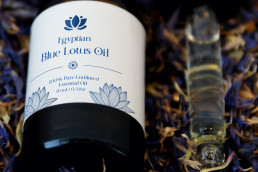
If you are researching blue lotus oil for acne, you are probably tired of the loop: a new serum, a short honeymoon of clear skin, then another flare along the jaw or cheeks. Blue lotus oil (Nymphaea caerulea) is not an acne cure, and anyone who tells you otherwise is selling a fantasy. What it can do, within realistic expectations, is calm inflamed skin, soothe reactive post-breakout redness, and support the kind of nervous system regulation that often sits quietly behind adult hormonal acne. This article walks through what the oil actually does for acne-prone skin, how to use it safely, and where its limits are.
Table of Contents
- Understanding Acne Before You Reach for an Oil
- How Blue Lotus Oil Helps With Acne
- Flavonoid-Driven Anti-Inflammatory Activity
- Nervous System Regulation, Which Matters More Than People Think
- Barrier Support When Formulated Correctly
- How to Use Blue Lotus Oil for Acne
- The Face Serum Protocol
- The Targeted Spot Approach
- The Evening Diffuser Ritual
- A Note on Patch Testing
- What to Expect: Realistic Timeframes
- When Blue Lotus Oil Is NOT the Right Choice
- Complementary Approaches for Acne-Prone Skin
- Sleep and Stress Hygiene
- A Minimal, Non-Irritating Core Routine
- Diet, Within Reason
- Supporting Essential Oils
- Clinical Care When Warranted
- Frequently Asked Questions
- Where to Go From Here
- Calm, Clearer Skin Starts Here
It is written and clinically reviewed by Antonio Breshears, ND, CCA, a Bastyr-trained naturopathic doctor and certified clinical aromatherapist. For broader context on the oil’s chemistry, extraction, and clinical profile, see The Complete Guide to Blue Lotus Oil, which serves as the master reference for every skincare and wellness article on this site.
Understanding Acne Before You Reach for an Oil
Acne is not one condition. It is a spectrum of follicular disorders that share a final common pathway: a blocked pore, an inflammatory response, and sometimes a bacterial (Cutibacterium acnes) overgrowth. The drivers, however, differ enormously between a fifteen-year-old with oily T-zone comedones, a thirty-two-year-old with cyclical jawline cysts, and a forty-year-old with rosacea-adjacent inflammatory papules. Before deciding whether blue lotus oil is the right choice, it helps to know which acne pattern you are actually dealing with.
Broadly, most adult acne falls into four overlapping categories. Comedonal acne is driven by sluggish cell turnover and clogged pores, presenting as blackheads and closed whiteheads. Inflammatory acne shows red, tender papules and pustules, often with post-inflammatory pigmentation. Hormonal acne follows the menstrual cycle, concentrates along the jawline and chin, and tends to produce deeper, slower-healing cysts. Stress-reactive acne flares with cortisol spikes, poor sleep, and periods of sustained anxiety, and it often overlaps with hormonal patterns.
Blue lotus oil is most relevant to the inflammatory, hormonal, and stress-reactive patterns. It is not a particularly useful tool for purely comedonal acne, where the therapeutic lever is exfoliation (salicylic acid, gentle retinoids) rather than anti-inflammatory support. Knowing this up front saves disappointment later.
How Blue Lotus Oil Helps With Acne
The case for blue lotus oil in acne care rests on three plausible mechanisms, none of them miraculous, but each of them genuinely useful when stacked together.
Flavonoid-Driven Anti-Inflammatory Activity
Blue lotus contains meaningful concentrations of apigenin, quercetin, and kaempferol, three flavonoids with reasonably well-attested anti-inflammatory activity in skin research. Apigenin in particular has been studied for its ability to downregulate inflammatory cytokines in cutaneous tissue, which translates, in practical terms, to calmer-looking skin after an active breakout. You will not see these flavonoids shrink an active cyst in twenty minutes, but applied consistently, they help skin recover more quickly from inflammatory episodes and reduce the red-purple stain that lingers for weeks after a papule has flattened.
Nervous System Regulation, Which Matters More Than People Think
The alkaloid fraction of blue lotus, principally aporphine and nuciferine, interacts with dopaminergic and serotonergic pathways in a mild, non-sedating way. Inhaling the oil shifts the olfactory-limbic axis toward parasympathetic dominance: slower breathing, lower perceived stress, easier sleep. Why does this matter for acne? Because cortisol is a known driver of sebum production and follicular inflammation. Chronically elevated evening cortisol, the kind that accompanies poor sleep and high anxiety, consistently correlates with flare-prone skin. Any intervention that genuinely lowers stress load is, indirectly, an acne intervention. Blue lotus oil is modestly effective here rather than dramatic, but modest effects compound when used nightly.
Barrier Support When Formulated Correctly
Most acne treatments, whether benzoyl peroxide, retinoids, or aggressive acids, compromise the skin barrier over time. A compromised barrier means more transepidermal water loss, more reactivity, and paradoxically more inflammation. Blue lotus absolute, blended at low dilution into a well-chosen carrier oil (jojoba or squalane are the sensible picks), can help restore comfort and resilience to skin that has been over-treated. It does not replace ceramide repair creams, but it plays well with them.
How to Use Blue Lotus Oil for Acne
This is where specificity matters. Acne-prone skin does not tolerate guesswork, and the wrong carrier or dilution will provoke the exact problem you are trying to solve.
The Face Serum Protocol
For inflammatory or hormonal acne, a low-dilution face oil used at night is the sensible starting point. Blend 1 percent blue lotus absolute (roughly 6 to 9 drops per 30ml) into jojoba oil, which is structurally similar to human sebum and has a long track record of being non-comedogenic. Squalane is an equally good choice for those who prefer a lighter feel. Avoid coconut oil, which is comedogenic on facial skin for most people, and avoid heavy butters like cocoa or shea on active breakouts.
Apply three or four drops to clean, slightly damp skin at night, after any water-based serums and before any ceramide cream if you use one. Press the oil in gently rather than rubbing. Use it every evening for at least four weeks before judging results.
The Targeted Spot Approach
For individual inflamed papules, a slightly stronger 2 percent blend (12 to 18 drops in 30ml carrier) can be dabbed onto the spot with a cotton bud twice daily. This is not a replacement for benzoyl peroxide or a prescription topical if your acne is genuinely severe, but as an adjunct it helps calm the redness and may shorten the lifespan of the lesion.
The Evening Diffuser Ritual
This is the use case people underestimate. Two to four drops of blue lotus oil in a diffuser in the hour before bed, combined with a genuine wind-down (screens off, low light, a hot shower) supports the kind of sleep and stress recovery that is structurally necessary for skin to heal. If you have stress-reactive or hormonal acne, treat the diffuser ritual as equal in importance to the topical serum, not as a nice-to-have.
A Note on Patch Testing
Always patch test. Apply a small amount of your finished blend to the inner forearm or behind the ear for three consecutive nights before committing it to facial use. Blue lotus absolute is a solvent-extracted product and, while generally well-tolerated, reactive skin occasionally objects to any new botanical.
What to Expect: Realistic Timeframes
Here is where I will be straight with you, because most skincare marketing will not be. Blue lotus oil does not clear acne in a week. It is not working on the same mechanism as a retinoid or an antibiotic. What you should realistically expect, used consistently at the dilutions above:
- Week 1 to 2: Skin feels calmer at night. Active papules may look less angry in the morning. No dramatic change in overall breakout frequency yet.
- Week 3 to 4: Post-inflammatory redness fades slightly faster. Barrier feels more comfortable. If you are using the diffuser ritual, sleep and evening anxiety are usually easier.
- Week 6 to 8: This is where hormonal and stress-reactive patterns start to shift, not because the oil is fixing hormones, but because the cumulative effect of better sleep, lower evening cortisol, and calmer skin is showing up in fewer deep cysts per cycle.
- Week 12: A realistic honest appraisal point. If nothing useful has happened by three months of consistent use, blue lotus oil is probably not the right tool for your particular acne pattern.
If your acne is severe (widespread cysts, scarring, significant distress), do not wait three months on an aromatherapy protocol. See a dermatologist.
When Blue Lotus Oil Is NOT the Right Choice
Honesty about limits is how you avoid wasting money and time. Blue lotus oil is not the right choice in several situations.
Severe nodulocystic acne. If you are dealing with deep, painful nodules that last weeks and leave scars, you need a dermatological evaluation and likely systemic treatment (isotretinoin, hormonal therapy, or similar). A facial oil will not address the underlying drivers of severe acne, and delaying proper treatment risks permanent scarring.
Pregnancy and breastfeeding. Blue lotus oil is avoided during pregnancy and breastfeeding due to its alkaloid content and insufficient safety data in these populations. Pregnancy acne is common and frustrating, but this is not the tool for it.
Pure comedonal acne. If your skin is characterised by blackheads and closed comedones without much inflammation, your therapeutic lever is exfoliation and cell turnover, not anti-inflammatory botanicals. Salicylic acid, gentle AHAs, and over time a well-tolerated retinoid will move the needle here.
Active medication interactions. Individuals taking MAOIs, strong dopaminergic medications, or heavy central nervous system sedatives should not use blue lotus oil, including topically on large areas, without first discussing it with their prescribing clinician. The systemic absorption from facial use is low, but caution is warranted.
Known fragrance sensitivity. Blue lotus absolute is aromatically rich and, like any botanical extract, contains natural compounds that a small percentage of people react to. If you have a documented history of allergic contact dermatitis to botanical skincare, this probably is not your oil.
Complementary Approaches for Acne-Prone Skin
Blue lotus oil is best thought of as one piece of a broader regimen, not a standalone solution. The approaches below stack well alongside it.
Sleep and Stress Hygiene
This is the most underrated acne intervention in modern dermatology. Seven to eight hours of actual sleep, a consistent bedtime, and an evening that is not saturated in screens and stimulation will do more for stress-reactive and hormonal acne than most topicals. Blue lotus oil supports this rather than replacing it.
A Minimal, Non-Irritating Core Routine
Gentle cleanser, hydrating serum, barrier-supportive moisturiser, mineral sunscreen during the day. That is the skeleton. Blue lotus face oil sits in at night, once the rest of the routine is stable. Resist the urge to layer seven active ingredients; acne-prone skin almost always does better with less.
Diet, Within Reason
The evidence for specific dietary triggers in acne is mixed, but high-glycaemic diets and, for some people, dairy do appear to worsen breakout frequency. This is worth experimenting with honestly over six to eight weeks rather than obsessing over in a disordered way.
Supporting Essential Oils
If you want to build out an aromatherapy kit for acne-prone skin, a few oils work well alongside blue lotus. Tea tree (Melaleuca alternifolia) has the strongest evidence base for direct antimicrobial activity against C. acnes, used at 1 to 2 percent spot treatment dilution. Lavender is soothing and well-tolerated. Helichrysum italicum supports the fading of post-inflammatory pigmentation. These complement rather than compete with blue lotus.
Clinical Care When Warranted
There is no shame in seeing a dermatologist. If your acne is painful, scarring, persistent despite sensible self-care, or affecting your mental health, a prescription pathway is appropriate. Aromatherapy and dermatology are not in opposition; they are tools at different levels of intervention.
Frequently Asked Questions
Does blue lotus oil clear acne on its own?
No. Blue lotus oil is an anti-inflammatory and nervous-system-supportive botanical that helps acne-prone skin in meaningful but modest ways. It is not a standalone treatment. Expect it to calm inflammation and support recovery, not to clear moderate or severe acne by itself.
Is blue lotus oil comedogenic?
Blue lotus absolute itself is used in such small quantities (1 to 2 percent of a blend) that its own comedogenicity is not the relevant issue. What matters far more is the carrier oil you blend it into. Jojoba and squalane are non-comedogenic for most people. Coconut oil on facial skin is commonly comedogenic and should be avoided.
Can I use blue lotus oil with retinoids or benzoyl peroxide?
Yes, but with spacing. Use your prescription or over-the-counter actives as directed, typically on clean skin, and layer the blue lotus face oil afterwards or on alternate nights if your skin is sensitive. Never mix active ingredients together in the palm of your hand; apply them sequentially.
How long until I see results?
Expect subtle calming within the first two weeks, more visible improvement in post-inflammatory redness by week four, and cumulative effects on breakout frequency, especially hormonal patterns, by weeks six to eight. Give it twelve weeks of consistent nightly use before deciding whether it is working for you.
Is it safe for teenage acne?
In principle, diluted blue lotus oil is reasonable for teenagers over sixteen with sensitive, inflamed, or reactive acne. It is not the right choice for severe teenage acne, which is better addressed with proper dermatological care. Always patch test, always dilute properly, and always involve a parent or guardian in the decision.
Can I use blue lotus oil on cystic acne?
Blue lotus oil can help calm the surrounding redness and support recovery, but it will not resolve a cyst. Deep cystic acne needs dermatological attention, often systemic treatment. Use the oil as adjunctive support, not primary care.
What about using blue lotus oil on acne scars?
There is a distinction worth making. Blue lotus oil may help fade post-inflammatory hyperpigmentation (the brown or red marks left behind after a spot heals) over several weeks. It will not resurface true atrophic or ice-pick scarring, which requires procedural intervention such as microneedling or laser.
Can I apply blue lotus oil to broken skin or popped pimples?
Avoid applying any essential oil blend directly to open, oozing, or freshly broken skin. Wait until the surface has closed and is in the healing phase, at which point the oil can help soothe redness and support recovery.
How should I store my blue lotus face oil blend?
In a dark glass bottle (amber or cobalt), in a cool, dark cupboard, away from direct sunlight and heat. A well-stored blend in jojoba or squalane remains stable for six to twelve months. Discard if the scent becomes rancid or sharp.
Will blue lotus oil help adult hormonal acne specifically?
It may help indirectly. Blue lotus does not alter hormones, but hormonal acne is consistently worsened by poor sleep, chronic stress, and elevated evening cortisol. The oil’s nervous system effects, particularly when used as an evening diffuser ritual, can reduce these aggravating factors. Pair it with attention to sleep, stress, and, if cycles are significantly disrupted, a proper clinical workup.
Where to Go From Here
If you are new to blue lotus oil generally and want to understand its chemistry, extraction methods, and broader clinical profile before committing to a skincare protocol, The Complete Guide to Blue Lotus Oil is the place to start. For acne specifically, the practical next step is simple: source a high-quality oil, blend it at 1 percent into jojoba or squalane, use it consistently at night for a month, and assess honestly. Skin does not lie. After four to eight weeks of proper use, you will know whether this is a keeper in your regimen or whether your particular acne pattern calls for a different approach.

Antonio Breshears
Antonio Breshears is a renowned expert in holistic medicine and beauty, with over 25 years of research experience dedicated to uncovering the secrets of nature's most powerful remedies. Holding a degree in Naturopathic Medicine, Antonio's passion for healing and well-being has driven him to explore the intricate connections between mind, body, and spirit.
Over the years, Antonio has become a respected authority in the field, helping countless individuals discover the transformative power of plant-based therapies, including essential oils, herbs, and natural supplements. He has authored numerous articles and publications, sharing his wealth of knowledge with a global audience seeking to improve their overall health and well-being.
Antonio's expertise extends to the realm of beauty, where he has developed innovative, all-natural skincare solutions that harness the potency of botanical ingredients. His formulations embody his deep understanding of the healing properties found in nature, providing holistic alternatives for those seeking a more balanced approach to self-care.
With his extensive background and dedication to the field, Antonio Breshears is a trusted voice and guiding light in the world of holistic medicine and beauty. Through his work at Pure Blue Lotus Oil, Antonio continues to inspire and educate, empowering others to unlock the true potential of nature's gifts for a healthier, more radiant life.