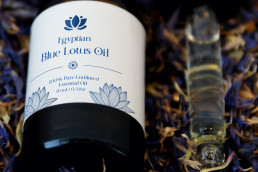
This article is for anyone considering blue lotus oil elderly aromatherapy, whether for yourself, a parent, or a patient in your care. Older adults respond differently to essential oils than younger adults, and the approach needs to be softer, slower, and more attentive to medication interactions. What follows is a practical, honest guide to using blue lotus oil with older skin, older noses, and older nervous systems, without overstating what a bottle of floral extract can actually do.
Table of Contents
- Why Ageing Changes How We Use Essential Oils
- What Blue Lotus Oil Actually Offers Older Adults
- A Quiet Shift Toward Parasympathetic Dominance
- Olfactory-Limbic Stimulation
- Skin Support
- Sleep Onset
- How to Use Blue Lotus Oil with Older Adults
- Diffusion
- Topical Application
- Patch Testing, Properly Done
- What to Expect: Realistic Timeframes
- When Blue Lotus Oil Is Not the Right Choice
- Complementary Approaches That Support Older Adults
- A Simple Starting Routine
- Frequently Asked Questions
- Where to Go From Here
- Gentle Aromatherapy for Later Life
It is written and clinically reviewed by Antonio Breshears, ND, CCA, a Bastyr-trained naturopathic doctor and certified clinical aromatherapist. For a broader grounding in the oil itself, its chemistry, and its wider uses, see the complete guide to blue lotus oil, which this article sits alongside within the wellness collection.
Why Ageing Changes How We Use Essential Oils
The skin of an eighty-year-old is not simply a thinner version of the skin of a thirty-year-old; it is structurally different. The stratum corneum is more permeable in places and paradoxically drier in others, dermal vasculature is reduced, sensory thresholds shift, and the liver and kidneys metabolise and clear compounds more slowly. These are ordinary features of healthy ageing, not signs of illness, but they matter when we apply aromatic compounds to the body.
Olfaction changes too. Roughly a quarter of adults over sixty-five experience some degree of olfactory decline, and the proportion rises with each subsequent decade. A scent that reads as softly honeyed to a forty-year-old may read as faint, flat, or even slightly unpleasant to someone whose olfactory bulb has quietly thinned. This is not a reason to avoid aromatherapy in older adults; it is a reason to choose oils with a rich, layered profile that still register when top notes fade. Blue lotus, with its deep honeyed-floral heart and balsamic-smoky base, tends to hold up reasonably well even when the brighter top notes no longer carry.
Then there is the matter of medication. Older adults are, on average, taking more prescriptions than any other demographic. Anticoagulants, antihypertensives, dopaminergic agents, benzodiazepines, antidepressants and sleep medications are common, and all of them deserve a moment’s consideration before adding an aromatic compound to the daily routine.
What Blue Lotus Oil Actually Offers Older Adults
The sensible way to think about blue lotus oil in later life is as a gentle, sensory support rather than a pharmacological intervention. It will not reverse dementia, treat depression, or replace a sleep medication. What it can reasonably do, within realistic expectations, is offer four things that genuinely matter in older age.
A Quiet Shift Toward Parasympathetic Dominance
The alkaloids in blue lotus, particularly aporphine and nuciferine, combined with flavonoids like apigenin which has affinity for central benzodiazepine receptors, appear to nudge the nervous system toward a more relaxed state. The effect is modest rather than dramatic, closer to the calm that follows a cup of chamomile than the sedation of a pharmaceutical. For an older person managing low-grade anxiety, the restlessness of early evening, or the agitation that sometimes accompanies cognitive change, a modest parasympathetic nudge can be genuinely useful.
Olfactory-Limbic Stimulation
Scent bypasses much of the usual cognitive processing and arrives directly at the limbic system, where memory and emotion are organised. For older adults, particularly those with early cognitive changes, familiar and pleasurable scents can act as anchors, softening transitions, cueing relaxation, and occasionally surfacing older memories in a way that feels orienting rather than disorienting. Blue lotus is unusual enough to act as a distinct signal, a scent associated with rest or ritual rather than a generic background pleasantness.
Skin Support
Older skin tends toward dryness, thinning, and slower repair. Blue lotus absolute diluted properly into a rich carrier such as jojoba or squalane can contribute to a sensory skincare ritual that is as much about touch and calm as it is about any measurable change in skin condition. The flavonoid content (quercetin, kaempferol, apigenin) offers some antioxidant value, though this should not be oversold; the main benefit is the combination of gentle massage, hydration from the carrier, and a scent that encourages the wearer to slow down.
Sleep Onset
Older adults often struggle not with total sleep hours but with fragmented sleep, early waking, and difficulty returning to sleep after nocturnal disturbances. Blue lotus is not a strong sedative and will not override the architectural changes in ageing sleep, but used as part of a consistent evening routine, it can help ease the transition to rest and make the bedroom a signal for winding down.
How to Use Blue Lotus Oil with Older Adults
The guiding principle for blue lotus oil elderly use is this: halve the standard dilution, extend the observation period, and prioritise diffusion and light topical application over anything more intense.
Diffusion
A diffuser is the safest and most flexible delivery method for older adults. Use 1 to 2 drops of blue lotus absolute in an ultrasonic diffuser rather than the standard 2 to 4 drops, and run it for 20 to 30 minutes rather than continuously. Intermittent diffusion is gentler on the olfactory system and avoids the habituation that occurs when a scent is present constantly.
For evening use, begin diffusion about thirty minutes before the intended wind-down time, so the scent is already a soft presence when the older adult settles. For daytime calm, a short diffusion session during a moment of agitation or transition often works better than background diffusion all afternoon.
Topical Application
For older skin, reduce topical dilutions to roughly half the standard:
- Face and neck: 0.5 to 1 percent (rather than 1 to 2 percent)
- Body and chest: 1 to 1.5 percent (rather than 2 to 3 percent)
- Pulse points or targeted areas: 1.5 to 2 percent (rather than 3 percent)
Jojoba oil is a good default carrier for older skin because it is structurally similar to human sebum and absorbs without leaving a film. Squalane is even lighter and may suit those who find oils too heavy. Avoid heavy mineral oil bases, which can trap moisture on the surface without nourishing the tissue beneath.
A practical entry point is a gentle hand or forearm massage in the evening, using a 1 percent dilution in jojoba. This gives the scent, the touch, and the moisturisation all at once, and it happens in a part of the body where the skin is relatively robust and where a carer can assist if needed.
Patch Testing, Properly Done
Every older adult should have a patch test before regular use. Apply a small amount of the intended dilution to the inner forearm, cover loosely, and leave for 24 hours. Watch for redness, itching, or any change in the skin over that window and also over the following 48 hours, since delayed reactions are more common in older skin. If in any doubt, wait another day or reduce the dilution further.
What to Expect: Realistic Timeframes
The honest answer is that the effects of blue lotus oil on an older adult tend to emerge gradually. The olfactory-limbic response is immediate, registering within a minute or two of inhalation, but the experience of genuine calm often takes repeated exposure over a week or two to become reliable. The skin effects accumulate over several weeks, not days. Sleep effects, when present, usually stabilise over two to four weeks of consistent evening use rather than appearing on the first night.
If nothing noticeable has happened after a month of consistent, appropriate use, it is reasonable to say that blue lotus is not a good match for this particular person, and that is fine. Aromatherapy is individual. Some older adults respond beautifully; others find the scent simply pleasant without any deeper effect.
When Blue Lotus Oil Is Not the Right Choice
There are situations in which blue lotus should be avoided or approached with considerable caution in older adults. These are not theoretical; they matter in practice.
Parkinson’s disease and related dopaminergic medication: Blue lotus alkaloids have activity at dopamine receptors (aporphine is a weak agonist, nuciferine a weak antagonist), and interactions with levodopa, pramipexole, ropinirole and similar medications are plausible even if not well documented. Avoid topical and concentrated inhalation use; incidental low-level diffusion in a shared space is generally fine, but clear this with the prescribing physician first.
Heavy sedative or benzodiazepine therapy: Additive sedation is not likely at aromatherapy doses, but older adults on high-dose lorazepam, diazepam, zolpidem or comparable agents should use blue lotus cautiously and watch for any increased grogginess, particularly at night when falls are a concern.
MAOI antidepressants: These are uncommon in modern practice but still prescribed to a small number of older patients. The theoretical interaction between blue lotus alkaloids and MAOIs warrants avoiding regular use.
Significant cognitive impairment with behavioural symptoms: In moderate to severe dementia with agitation or paranoia, introducing a new strong scent can occasionally worsen disorientation. Start with extremely low-level, brief diffusion, and stop immediately if the person becomes more unsettled rather than calmer.
Known allergies to floral absolutes or solvent-extracted oils: Solvent residues are minimal in reputable absolutes but not zero. For those with a history of reactions to floral absolutes (jasmine, tuberose, rose absolute), consider CO2-extracted blue lotus instead, or avoid topical use altogether.
Fragile, broken, or recently surgical skin: Wait until skin is fully healed before applying anything aromatic to it.
Complementary Approaches That Support Older Adults
Blue lotus oil works best as part of a wider approach rather than as a standalone intervention. For sleep, the basics matter more than any oil: consistent bedtime, limited afternoon caffeine, adequate daytime light exposure, and a dim, cool bedroom. For mood and calm, social connection, gentle movement, and time outdoors remain the foundation; aromatherapy is a useful adjunct, not a replacement.
For skin, a rich carrier oil used consistently will generally outperform any aromatic addition, so the blue lotus is there for the scent and the ritual as much as the chemistry. Pair blue lotus with gentle companions such as Roman chamomile (well tolerated by most older adults), lavender (classic, reliable, though some find it too familiar), or frankincense (particularly suited to older skin and contemplative routines). Avoid stimulating oils like rosemary or peppermint in the evening routine, since they tend to work against the purpose.
Where there is clinically significant anxiety, depression, insomnia, or cognitive change, aromatherapy should sit alongside proper clinical care rather than in place of it. A GP or geriatric specialist is the right first stop for anything new, worsening, or interfering with daily life.
A Simple Starting Routine
For an older adult new to blue lotus, the following four-week approach is a reasonable entry:
Week one: Patch test at 1 percent dilution on the inner forearm. Once cleared, add 1 drop of blue lotus to a diffuser in the living area for 20 minutes each evening around 7pm. Observe how the person responds to the scent itself.
Week two: Continue evening diffusion. Introduce a brief hand or forearm massage using 1 percent blue lotus in jojoba, two or three evenings in the week. Keep the session short, perhaps five minutes, and make it part of a gentle pre-bed ritual.
Week three: If well tolerated, extend the massage to most evenings, and consider adding a diffusion session in the late afternoon if there is a pattern of early-evening restlessness. Keep the dilution at 1 percent.
Week four: Assess honestly. Is sleep onset any easier? Is evening agitation softer? Is the person simply enjoying the ritual? Any of these is a worthwhile outcome. If nothing has shifted and the scent is not particularly loved, it is reasonable to stop.
Frequently Asked Questions
Is blue lotus oil safe for people over seventy?
Generally yes, with adjusted dilutions (roughly half the standard) and attention to medications. Diffusion is the safest starting point. Topical use should begin with a patch test and a conservative 1 percent dilution.
Can blue lotus oil help with dementia-related agitation?
It may help in mild to moderate cases, used as gentle, brief diffusion in the late afternoon or evening. In more advanced dementia with strong behavioural symptoms, introduce any new scent very cautiously and stop if it increases rather than reduces unsettledness.
Does blue lotus interact with common blood pressure medications?
No strong interactions are well documented, and aromatherapy doses are unlikely to affect blood pressure meaningfully. That said, if the person is on multiple cardiovascular medications, mention the new aromatherapy routine to the prescribing doctor as a courtesy.
Can someone on sleep medication still use blue lotus for sleep?
Usually yes, as a complementary part of the bedtime routine rather than a replacement. Watch for any increase in morning grogginess or unsteadiness and reduce exposure if either appears.
Is it safe for older skin that is thin and bruises easily?
Yes, with appropriate dilution and gentle application. Use 0.5 to 1 percent on face and neck, 1 to 1.5 percent on the body, in a rich carrier such as jojoba. Avoid vigorous massage; a light, attentive touch is both safer and more pleasant.
What is the best way to use it for an older adult with a poor sense of smell?
Blue lotus retains its heart and base notes even as brighter top notes fade, so it tends to remain perceptible when lighter florals go flat. Use it closer to the person, for example as a light wrist or pulse-point application, rather than relying on room-wide diffusion alone.
Can it be used in a care home or shared living environment?
Yes, but with consideration for other residents and staff. Personal diffusers or small inhaler sticks are often more appropriate than large room diffusers, and always confirm with the care team that it is permitted.
How long does a bottle last in light, occasional use?
For an older adult using blue lotus as described here, a small bottle typically lasts many months. Stored in dark glass in a cool, dark place, a good quality absolute keeps its character for three to four years.
Does the extraction method matter for elderly users?
CO2 extraction tends to be the cleanest, with no solvent residues, and is worth considering for anyone with sensitive skin or a history of reactions to floral absolutes. Solvent-extracted absolute from a reputable supplier is still suitable for most users.
Should I tell the doctor that my parent is using blue lotus oil?
Yes. Any aromatic or botanical product in regular use is worth mentioning, particularly if the person is on multiple medications or has neurological, hepatic, or kidney conditions. It rarely changes the prescribing decisions, but it gives the clinician a fuller picture.
Where to Go From Here
If you are caring for an older relative or thinking about your own routine in later life, the sensible next step is to read the complete guide to blue lotus oil for a fuller grounding in the chemistry, extraction methods, and wider applications. Then begin slowly: a patch test, a short evening diffusion, a gentle hand massage, observed honestly over a few weeks. The goal is not transformation; it is a small, genuine improvement in the texture of daily life, which, in later years, is often worth more than any dramatic claim.

Antonio Breshears
Antonio Breshears is a renowned expert in holistic medicine and beauty, with over 25 years of research experience dedicated to uncovering the secrets of nature's most powerful remedies. Holding a degree in Naturopathic Medicine, Antonio's passion for healing and well-being has driven him to explore the intricate connections between mind, body, and spirit.
Over the years, Antonio has become a respected authority in the field, helping countless individuals discover the transformative power of plant-based therapies, including essential oils, herbs, and natural supplements. He has authored numerous articles and publications, sharing his wealth of knowledge with a global audience seeking to improve their overall health and well-being.
Antonio's expertise extends to the realm of beauty, where he has developed innovative, all-natural skincare solutions that harness the potency of botanical ingredients. His formulations embody his deep understanding of the healing properties found in nature, providing holistic alternatives for those seeking a more balanced approach to self-care.
With his extensive background and dedication to the field, Antonio Breshears is a trusted voice and guiding light in the world of holistic medicine and beauty. Through his work at Pure Blue Lotus Oil, Antonio continues to inspire and educate, empowering others to unlock the true potential of nature's gifts for a healthier, more radiant life.