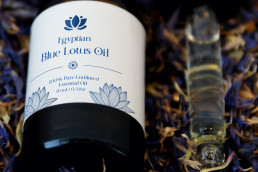
If your skin flushes at the merest hint of a new serum, stings when the wind changes, and seems to hold a grudge against half the bottles on your bathroom shelf, you are not alone, and you are right to be cautious about what you put on your face. This article looks honestly at blue lotus oil for sensitive skin: where it genuinely shines, where it does not belong, and how to introduce it without provoking the reactive response you are trying to calm in the first place.
Table of Contents
- Understanding Sensitive Skin (And Why It Matters Here)
- Is Blue Lotus Oil Actually Suitable for Sensitive Skin?
- How Blue Lotus Oil Helps Sensitive Skin
- Flavonoid-Mediated Inflammation Modulation
- Nervous System Input Via the Olfactory Pathway
- Gentle Hydration Support When Paired With Appropriate Carriers
- How to Use Blue Lotus Oil for Sensitive Skin: A Conservative Protocol
- Step One: Patch Test Properly (Not Optional)
- Step Two: Start at 0.5 Percent, Not Higher
- Step Three: Titrate Upward Only if Tolerated
- Choosing the Right Carrier
- What to Expect: Realistic Timeframes
- When Blue Lotus Oil Is NOT the Right Choice for Sensitive Skin
- Complementary Approaches for Sensitive Skin
- Frequently Asked Questions
- Where to Go From Here
- Gentle Enough For Reactive Skin
It is written and clinically reviewed by Antonio Breshears, ND, CCA, a Bastyr-trained naturopathic doctor and certified clinical aromatherapist. For foundational botanical, extraction, and safety context, see The Complete Guide to Blue Lotus Oil; this cluster assumes you have either read that or already know the basics and want to focus specifically on reactive, easily irritated skin.
Understanding Sensitive Skin (And Why It Matters Here)
“Sensitive skin” is a description, not a diagnosis. It covers a broad range of underlying patterns, and the distinction matters because each pattern responds differently to botanical ingredients.
At one end sits genuinely reactive skin: a compromised barrier, often with a history of atopic dermatitis or eczema, that flushes, stings, or itches in response to stimuli most skin tolerates without comment. At the other end sits sensitised skin, which is not intrinsically reactive but has been pushed into a reactive state by over-exfoliation, too many actives layered at once, harsh surfactants, or a compromised moisture barrier from retinoid over-use. In the middle sit conditions like rosacea, perioral dermatitis, and seborrhoeic dermatitis, each with their own triggers and their own tolerance thresholds.
Why does this matter for a blue lotus oil discussion? Because aromatic botanicals, as a class, carry a reputation for being tricky on reactive skin, and for good reason. Many essential oils contain monoterpenes and phenolic compounds that are genuinely irritating to a compromised barrier. Blue lotus absolute sits in a more unusual category, and its suitability for sensitive skin depends heavily on dilution, on which type of sensitivity you have, and on what else is in the formulation.
Is Blue Lotus Oil Actually Suitable for Sensitive Skin?
The honest answer is: yes, for most types of sensitive skin, when used correctly, but with important qualifications.
Blue lotus absolute is chemically gentler than many essential oils commonly used in skincare. It lacks the high monoterpene load of citrus oils, the cinnamaldehyde of cassia, or the thymol of red thyme, all of which are frequent culprits in sensitisation reactions. Its principal aromatic molecules are larger, heavier flavonoid and benzenoid compounds with a lower tendency toward irritation at reasonable dilutions. Its flavonoid fraction, particularly apigenin, quercetin, and kaempferol, has reasonably well-attested anti-inflammatory activity in dermatological research, which is a point in its favour for skin that runs hot.
That said, blue lotus is an absolute in most commercial preparations, meaning it is solvent-extracted from roughly 3,000 to 5,000 flowers per gram of finished oil. Absolutes, by nature, are intensely concentrated aromatic materials, and concentration matters enormously for reactive skin. A 0.5 percent dilution is a different product, pharmacologically speaking, from a 3 percent dilution, and sensitive skin responds accordingly.
The rough rule: blue lotus oil sensitive skin protocols work when you treat the absolute as a whisper, not a shout. Dilute low, introduce slowly, and pair with barrier-supporting carriers rather than stripping or active-heavy formulations.
How Blue Lotus Oil Helps Sensitive Skin
Flavonoid-Mediated Inflammation Modulation
The apigenin, quercetin, and kaempferol in blue lotus are not cosmetic flourishes. These flavonoids have documented activity on inflammatory signalling pathways relevant to reactive skin, including effects on mast cell degranulation (relevant for histamine-driven flushing) and on pro-inflammatory cytokine expression. In practice, this translates to a quietening effect on the low-grade, chronic inflammation that sits beneath much of what we call “sensitivity”.
This is not a dramatic effect. You will not apply a lotus-infused oil and watch redness vanish in minutes. It is more the kind of effect that shows itself over three to six weeks of consistent, gentle use, where the baseline reactivity gradually settles and the skin stops flaring at provocations that previously would have set it off.
Nervous System Input Via the Olfactory Pathway
This one is easy to overlook but genuinely relevant. A significant portion of skin sensitivity is neurogenic, driven or amplified by sympathetic nervous system tone. Stress flushes rosacea. Anxiety worsens eczema. Cortisol disrupts the barrier. Any intervention that shifts the nervous system toward parasympathetic dominance, even modestly, tends to show up in the skin over time.
Blue lotus oil’s aromatic signature, cooler floral aquatic over a deep honeyed heart, has a recognisable calming effect via the olfactory limbic pathway. For reactive skin, this matters because a calmer nervous system is a less reactive skin. The effect is subtle and not a replacement for addressing genuine stressors, but it is a real and useful part of the picture.
Gentle Hydration Support When Paired With Appropriate Carriers
Blue lotus absolute itself is not a moisturiser. It is an aromatic concentrate. But in a well-chosen carrier, squalane, jojoba, fractionated coconut, or a barrier-friendly oil blend, it contributes to the overall occlusive and emollient picture without adding irritation. For sensitive skin that has been pushed into a compromised barrier state by over-treatment, the combination of a bland, barrier-friendly carrier with a whisper of blue lotus can be genuinely useful.
How to Use Blue Lotus Oil for Sensitive Skin: A Conservative Protocol
Step One: Patch Test Properly (Not Optional)
For reactive skin, patch testing is not a formality. It is the single most important step. Dilute one drop of blue lotus absolute into roughly a teaspoon of jojoba or squalane, giving you a dilution around 0.5 percent. Apply a small amount to the inside of the forearm, and a second patch behind the ear or along the jawline (both are more facially representative than forearm skin alone). Leave it for 48 hours, ideally 72, without washing the area more than gently necessary.
If at any point you see redness, itching, small bumps, or a burning sensation, stop and wash the area with a mild cleanser. Blue lotus is not for everyone, and sensitised skin can react to things the majority tolerate. If the patch test passes cleanly, you can proceed.
Step Two: Start at 0.5 Percent, Not Higher
Standard facial dilutions for blue lotus oil run 1 to 2 percent for most adult skin. For sensitive skin, start lower: 0.5 percent, which is roughly one drop of blue lotus absolute per 10 ml of carrier oil. This is the quiet version. It still delivers the flavonoid and aromatic effects in meaningful amounts, but it dramatically reduces the chance of provoking a response.
Use this preparation once daily for the first two weeks, ideally in the evening after cleansing, applied to slightly damp skin to support penetration and reduce the ratio of oil to water on the surface. Watch for response: no redness, no stinging, no flaring of any existing condition.
Step Three: Titrate Upward Only if Tolerated
If after two weeks the skin is tolerating 0.5 percent cleanly, and only if, you can move to 1 percent (two drops per 10 ml of carrier). Most sensitive skin does well at the 0.5 to 1 percent range indefinitely. There is rarely a need to push higher for facial use, and the returns diminish while the irritation risk rises.
Choosing the Right Carrier
Carrier choice is at least as important as dilution for sensitive skin. My preferences, in rough order:
- Squalane (preferably plant-derived from olive or sugarcane): exceptionally bland, non-comedogenic, barrier-friendly, effectively zero allergenicity.
- Jojoba: structurally similar to human sebum, stable, very well tolerated.
- Fractionated coconut (MCT): light, odourless, stable, fine for most sensitive skin though occasionally not tolerated by those who react to coconut.
- Rosehip: useful for mature sensitive skin but oxidises readily and can sting compromised barriers; use only fresh, cold-pressed product.
Avoid sweet almond if you have any nut sensitivities, avoid olive oil as a facial carrier (too heavy, often comedogenic), and avoid any carrier that includes essential oils you have not separately tested.
What to Expect: Realistic Timeframes
Here is where I want to be plain. Blue lotus oil is not a topical steroid. It does not switch off inflammation in an hour. For sensitive skin used consistently at appropriate dilution, expect the following rough arc:
Days one to seven: your skin should tolerate the oil without complaint. No visible dramatic change yet. If you are seeing redness or irritation at this stage, the product or the dilution is wrong for you; stop and reassess.
Weeks two to four: subtle improvements begin. Texture may feel slightly softer, evening flushing may reduce in intensity, the skin may feel less “tight” after cleansing. Nothing dramatic. Consistency matters more than intensity.
Weeks four to eight: the fuller picture becomes visible. Baseline reactivity settles for many users. Provocations that previously triggered flaring (a glass of wine, a stressful week, a change in weather) may produce milder responses. The skin feels more predictable.
Beyond eight weeks: this is where you honestly assess whether it is worth continuing. Some people experience clear, sustained benefit; others find it a pleasant addition without transformative effects. Both are legitimate outcomes. Skin is individual.
If you have seen no change whatsoever by the eight week mark, blue lotus oil is probably not meaningfully helping your particular sensitivity pattern, and your time and money are better spent elsewhere.
When Blue Lotus Oil Is NOT the Right Choice for Sensitive Skin
Honest limits matter more than enthusiasm. Blue lotus oil is not the right choice in the following situations:
Active, acutely inflamed dermatitis or eczema flare. When the barrier is openly broken, weeping, or fissured, no aromatic product belongs on the skin. Get the acute phase under control first with bland emollients and, if needed, medical treatment. Introduce botanicals only once the skin is intact again.
Known fragrance sensitivity or contact allergy to floral absolutes. If you have previously reacted to rose absolute, jasmine absolute, ylang ylang, or similar materials, the likelihood of reacting to blue lotus is higher than average. Patch test with unusual care or skip it entirely.
Pregnancy and breastfeeding. Blue lotus oil is avoided in pregnancy and breastfeeding as a precautionary measure, regardless of skin type. This includes topical facial use.
Perioral dermatitis. This condition responds poorly to most topical products, including botanicals, and is often aggravated by them. It typically needs specific medical management. Do not use blue lotus oil on active perioral dermatitis.
Immediately post-procedure skin. After laser, microneedling, chemical peels, or any procedure that compromises the barrier, stick to the post-procedure protocol your practitioner recommended. Wait until the skin is fully intact before reintroducing any botanical.
If you simply dislike the scent. This is not a trivial point. If the aroma is unpleasant to you, the nervous system benefit is negated, and you will not use it consistently enough to see the skin benefit. Choose something you actually enjoy.
Complementary Approaches for Sensitive Skin
Blue lotus oil is a supporting player. For meaningful progress with reactive skin, it works best inside a broader approach.
Simplify the routine first. The single most effective intervention for sensitised skin is usually removing things, not adding them. A gentle non-foaming cleanser, a bland moisturiser, sunscreen in the morning, and nothing else for two to four weeks is a more powerful intervention than any botanical. Once the skin has settled, reintroduce carefully, one thing at a time.
Address barrier repair directly. Ceramides, cholesterol, and free fatty acids in physiological ratios (the so-called “3:1:1” or similar formulations) genuinely rebuild a compromised barrier in a way that aromatic oils alone cannot. Pair your blue lotus preparation with a ceramide-rich moisturiser for best effect.
Consider internal drivers. Chronic stress, poor sleep, alcohol, and high sugar intake all show up in the skin of reactive types. Blue lotus oil’s calming aromatic effect is a nice support, but it does not replace addressing the underlying drivers. If your sensitivity has flared recently, look at what changed in your life, not just your skincare shelf.
See a dermatologist if needed. Persistent flushing, papules, pustules, or eczema that is not responding to reasonable home care warrants professional assessment. Conditions like rosacea, perioral dermatitis, and contact dermatitis benefit from accurate diagnosis; botanical supports work best as adjuncts to appropriate clinical care, not as substitutes.
Frequently Asked Questions
Is blue lotus oil safe for rosacea-prone skin?
It can be tolerated, but with caution. Rosacea skin is neurovascularly reactive and sometimes flares with any warm or aromatic product. Start at 0.25 to 0.5 percent dilution, patch test thoroughly, and apply in the evening only. If flushing worsens within the first week, discontinue.
Can I use blue lotus oil on eczema-prone skin?
Only during quiescent periods, not during active flares. On intact eczema-prone skin, a low dilution in a barrier-supportive carrier can be a pleasant addition, but it should never replace the core emollient and medical management of the condition.
What dilution is safest to start with for sensitive skin?
0.5 percent, which is roughly one drop of blue lotus absolute per 10 ml of carrier oil. This is lower than the standard 1 to 2 percent facial dilution and gives reactive skin the best chance of tolerance.
How do I patch test blue lotus oil properly?
Dilute to 0.5 percent in a neutral carrier like squalane or jojoba. Apply to the inner forearm and behind the ear. Leave for 48 to 72 hours without washing aggressively. If no redness, itching, or burning develops, proceed cautiously to facial use.
Which carrier oil is best for sensitive skin?
Squalane is my first choice for reactive skin due to its bland profile and excellent tolerance. Jojoba is a close second. Avoid heavier oils like olive or unrefined sweet almond for facial use on sensitive skin.
Can blue lotus oil cause breakouts on sensitive skin?
The absolute itself is low in comedogenic potential, but the carrier oil can contribute to clogging if poorly chosen. If you experience breakouts after introduction, suspect the carrier first, the dilution second, and the product itself last.
How long should I wait before deciding if it works?
Give it a minimum of four weeks at consistent daily use, ideally six to eight. Botanical effects on chronic sensitivity develop gradually. If you see nothing at all by eight weeks, it is reasonable to stop.
Can I use blue lotus oil with retinoids or acids?
Technically yes, but not at the same time, and not on skin that is currently reactive from those actives. Use retinoids or acids on alternate evenings and blue lotus preparations on the off nights, at least until you are confident of tolerance.
Does the scent fade after application?
Yes. On skin, the top notes soften within 15 to 30 minutes, leaving a quieter honeyed floral base that most people find pleasant and unobtrusive. If the scent itself triggers headaches or nausea, discontinue regardless of skin response.
Can I use blue lotus oil on the eye area?
Not directly. The eye area is more delicate than general facial skin and is better served by purpose-formulated eye products. Keep your blue lotus preparation to the cheeks, jawline, neck, and chest.
Where to Go From Here
If you are considering blue lotus oil for sensitive skin, the honest summary is this: it is one of the gentler aromatic options available, it has genuine anti-inflammatory and nervous system calming effects that are relevant to reactive skin patterns, and it works best as a modest adjunct inside a simplified, barrier-supporting routine. It is not a miracle, and it is not for every type of sensitivity, but for the right person at the right dilution, it is quietly useful.
Start low. Patch test honestly. Give it six to eight weeks. Pay attention to what your skin tells you, and be willing to stop if the message is “no”. For a broader look at how blue lotus oil is extracted, how to tell quality product from mediocre, and how it fits into a wider wellness picture, the Complete Guide to Blue Lotus Oil is the natural next read.

Antonio Breshears
Antonio Breshears is a renowned expert in holistic medicine and beauty, with over 25 years of research experience dedicated to uncovering the secrets of nature's most powerful remedies. Holding a degree in Naturopathic Medicine, Antonio's passion for healing and well-being has driven him to explore the intricate connections between mind, body, and spirit.
Over the years, Antonio has become a respected authority in the field, helping countless individuals discover the transformative power of plant-based therapies, including essential oils, herbs, and natural supplements. He has authored numerous articles and publications, sharing his wealth of knowledge with a global audience seeking to improve their overall health and well-being.
Antonio's expertise extends to the realm of beauty, where he has developed innovative, all-natural skincare solutions that harness the potency of botanical ingredients. His formulations embody his deep understanding of the healing properties found in nature, providing holistic alternatives for those seeking a more balanced approach to self-care.
With his extensive background and dedication to the field, Antonio Breshears is a trusted voice and guiding light in the world of holistic medicine and beauty. Through his work at Pure Blue Lotus Oil, Antonio continues to inspire and educate, empowering others to unlock the true potential of nature's gifts for a healthier, more radiant life.