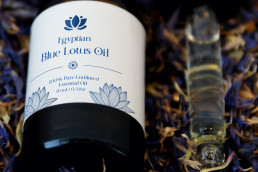
Stretch marks, clinically known as striae distensae, are one of the most common reasons people reach for a fancy botanical oil hoping for a miracle. This article takes an honest look at what blue lotus oil can realistically do for stretch marks, how to use it within a sensible skincare protocol, and where its limits lie. If you have arrived here looking for a cure, I will save you some time: no topical oil will fully erase mature stretch marks. But if you want to understand how blue lotus oil supports skin repair, softens the appearance of fresh striae, and fits into a broader strategy, read on.
Table of Contents
- What Stretch Marks Actually Are
- Striae Rubrae (Fresh, Red or Purple)
- Striae Albae (Mature, White or Silvery)
- How Blue Lotus Oil Helps With Stretch Marks
- 1. Flavonoid Antioxidant Support for Remodelling Tissue
- 2. Lipid-Friendly Barrier Support
- 3. A Sensory and Behavioural Benefit
- 4. Massage-Mediated Microcirculation
- How to Use Blue Lotus Oil for Stretch Marks
- The Base Blend
- The Daily Protocol
- Pregnancy Note
- What to Expect: Realistic Timeframes
- Fresh Striae Rubrae: 8 to 16 Weeks
- Mature Striae Albae: 6 to 12 Months for Modest Improvement
- What Counts as a Result
- When Blue Lotus Oil Is Not the Right Choice
- Complementary Approaches
- Topical Actives Worth Adding
- Procedures Worth Considering
- Lifestyle Factors
- Frequently Asked Questions
- Where to Go From Here
- Begin Your Daily Skin Ritual
It is written and clinically reviewed by Antonio Breshears, ND, CCA, a Bastyr-trained naturopathic doctor and certified clinical aromatherapist. For the full chemistry and safety background on this oil, see The Complete Guide to Blue Lotus Oil, which sits as the parent reference for this article.
What Stretch Marks Actually Are
Stretch marks form when the dermis, the middle layer of skin, is stretched beyond its elastic recovery capacity. The collagen and elastin fibres that give skin its tensile strength tear, and the body lays down scar-like tissue in their place. This is why stretch marks are structurally different from the surrounding skin: they are, at a histological level, a form of atrophic scarring.
There are two broad stages worth knowing about, because the stage determines what any topical treatment can realistically achieve.
Striae Rubrae (Fresh, Red or Purple)
Fresh stretch marks appear pink, red, or purplish. They are inflamed, the blood vessels underneath are dilated, and the tissue is still actively remodelling. This is the window where topical and procedural interventions have the most influence. Hydration, anti-inflammatory botanicals, and actives that support fibroblast activity can meaningfully change the final appearance.
Striae Albae (Mature, White or Silvery)
Over months to years, stretch marks fade to white or silvery. At this point the tissue is essentially mature scar tissue with reduced pigment, thinner dermis, and disorganised collagen. Topicals can soften their texture and improve surrounding skin quality, but they cannot rebuild normal dermal architecture on their own. Mature striae typically need procedural help (microneedling, fractional laser, radiofrequency) if significant reduction is the goal.
This distinction matters because the honest answer to “does blue lotus oil fade stretch marks” depends heavily on which kind you have.
How Blue Lotus Oil Helps With Stretch Marks
Blue lotus oil is not a dedicated scar treatment. It is not comparable to tretinoin, centella asiatica extract, or in-clinic procedures when it comes to remodelling striae. But it does bring several genuinely useful properties to a stretch mark blend, and that is worth understanding properly rather than overselling.
1. Flavonoid Antioxidant Support for Remodelling Tissue
The absolute contains apigenin, quercetin, and kaempferol, flavonoids with well-attested antioxidant and anti-inflammatory activity. Fresh stretch marks are inflamed, and inflammation that persists past the acute injury phase tends to produce messier, more visible scarring. Botanical flavonoids help quiet that low-grade inflammatory tone, which is a supportive, not a curative, role. Think of it as giving the skin a calmer environment in which to remodel.
2. Lipid-Friendly Barrier Support
Stretched skin is typically dry, itchy, and barrier-compromised. Blue lotus absolute, delivered in a well-chosen carrier oil, contributes to the occlusive and emollient layer that reduces transepidermal water loss. Hydrated skin remodels better than dehydrated skin. This is basic, unglamorous, and genuinely useful.
3. A Sensory and Behavioural Benefit
This sounds soft, but it matters: people who enjoy applying their stretch mark oil apply it consistently. Consistency, over months, is what actually produces visible change. Blue lotus oil has a rich, honeyed-floral scent that makes daily application feel like a ritual rather than a chore. If a pleasant smell and a luxurious texture keep you massaging the area twice a day for six months, you will get better results than from any clinically superior product that sits unused in a cupboard.
4. Massage-Mediated Microcirculation
Applying oil requires massage. Regular, firm massage of striae has been shown in small studies to modestly improve their appearance, likely through mechanical stimulation of fibroblasts and improved local circulation. Blue lotus oil, as part of a blend, is a vehicle for that massage practice. The oil itself is not doing all the work; your hands are doing a meaningful share of it.
How to Use Blue Lotus Oil for Stretch Marks
Here is a realistic, clinically sensible protocol. It is not magic, but it is the kind of daily practice that, combined with time, actually moves the needle on fresh striae and improves the look of mature ones.
The Base Blend
Blue lotus absolute is highly concentrated and expensive; it is not used neat. For stretch marks, I typically recommend a 2 to 3 percent dilution in a carrier oil chosen specifically for barrier repair and scar support.
A straightforward, effective base blend in a 30 ml bottle:
- 15 ml rosehip seed oil (rich in trans-retinoic acid precursors and linoleic acid)
- 10 ml sweet almond oil or jojoba oil (lightweight, absorbs well, supports barrier)
- 5 ml tamanu oil (traditional scar-support carrier, slightly heavier)
- 15 to 20 drops of blue lotus absolute (roughly 2.5 to 3 percent)
If you want a second botanical for its stretch-mark reputation, 5 to 8 drops of frankincense (Boswellia carterii or sacra) or helichrysum italicum work well alongside blue lotus and do not compete with its scent.
The Daily Protocol
Warm 4 to 6 drops of the blend in your hands. Apply to the affected area, whether that is the abdomen, thighs, hips, breasts, or upper arms. Massage in slow, firm, circular motions for two to three minutes per area. The goal is warmth and mild pinkness in the skin, which indicates improved local circulation.
Do this twice daily: once after your morning shower, once before bed. Post-shower application is particularly useful because slightly damp, warm skin absorbs oils more readily and the barrier is primed for occlusive support.
Pregnancy Note
Blue lotus oil is avoided during pregnancy and breastfeeding due to insufficient safety data on its alkaloid content. If you are looking at this article specifically for pregnancy-related stretch marks while still expecting, please use a pregnancy-safe blend instead (rosehip, sweet almond, and shea butter are all appropriate) and save the blue lotus oil for the postpartum period once you are no longer breastfeeding.
What to Expect: Realistic Timeframes
This is where most skincare content fails the reader, so I will be plain about it.
Fresh Striae Rubrae: 8 to 16 Weeks
For fresh, red or purple stretch marks, consistent twice-daily application of a well-formulated oil blend typically produces visible fading of the red tone within 8 to 16 weeks. The marks will not disappear, but they will become less angry, shorter in apparent length, and less textured. Do not expect dramatic changes in the first month; skin remodels on a timescale of months, not days.
Mature Striae Albae: 6 to 12 Months for Modest Improvement
Mature white stretch marks are a much harder target. Realistic expectations here are softer texture, improved surrounding skin quality, and a slight reduction in how much they catch the light. They will not return to matching skin tone through topical treatment alone. If this is your primary concern, honestly, the most effective strategy is to pair a daily oil ritual (which keeps the skin in the best possible shape) with in-clinic procedures such as microneedling, fractional non-ablative laser, or radiofrequency microneedling. Your oil blend makes those procedures work better, not the other way around.
What Counts as a Result
Take photographs under consistent lighting at week 0, week 8, week 16, and week 24. Progress on stretch marks is slow and incremental, and your eyes adapt to what you see in the mirror every day. Without photographs, you will summarise nothing is happening when in fact meaningful change has occurred. This is one of the most useful tricks in skincare.
When Blue Lotus Oil Is Not the Right Choice
There are several situations where I would not recommend blue lotus oil for stretch marks, and honesty here saves people money and disappointment.
During pregnancy and breastfeeding. The alkaloid profile of blue lotus (aporphine, nuciferine) has insufficient safety data in pregnancy. Avoid it entirely during these periods and revisit afterwards.
If you have a known sensitivity to floral absolutes. Solvent-extracted absolutes, including blue lotus, can occasionally trigger contact dermatitis in people reactive to residual extraction solvents or to specific floral compounds. Patch test on the inner forearm for 48 hours before applying to larger areas.
If your budget is limited and you want maximum results per pound spent. Blue lotus is a premium addition, not a front-line active. If you can only afford one thing, rosehip seed oil and a dedicated centella asiatica cream will give you more measurable stretch mark improvement per pound than blue lotus absolute on its own. Blue lotus earns its place in a blend you enjoy, not as a budget priority.
If you are on dopaminergic medications. This is a cautious flag more than an absolute contraindication for topical use, but if you take Parkinson’s medication, certain antipsychotics, or MAOIs, mention your intended use to your prescriber.
If you want results in weeks, not months. No oil, including this one, will give you dramatic visible change in under two months. If your timeline is very short (a wedding, a holiday), consider professional treatments and tinted body makeup instead.
Complementary Approaches
Blue lotus oil works best when it is one part of a thoughtful plan rather than a solo hero. Here is what pairs well.
Topical Actives Worth Adding
If you are not pregnant or breastfeeding, a retinoid (tretinoin 0.025 to 0.05 percent, prescription only in the UK) applied to fresh striae rubrae in the evening has the strongest evidence base of any topical for stretch marks. It is not compatible with every skin type and can be irritating, but if tolerated, it outperforms any botanical oil. Your blue lotus blend then becomes the morning and barrier-repair layer.
Centella asiatica (gotu kola) extract, in cream or gel form, has a long research history for stretch mark prevention and is well-tolerated in pregnancy. It complements an evening blue lotus massage nicely.
Procedures Worth Considering
For mature striae albae, microneedling (either at-home dermarolling with a 0.5 mm roller, used cautiously, or professional microneedling at 1.0 to 1.5 mm depth) produces genuine dermal remodelling. Six sessions spaced four to six weeks apart is a typical course. Your blue lotus blend is not applied during the microneedling itself, but a hydrating, supportive blend in between sessions improves recovery and outcome.
Fractional non-ablative laser is the gold standard for mature striae and delivers the most significant results, at the highest cost.
Lifestyle Factors
Skin remodels better when the whole body is in good metabolic shape. Adequate protein intake (around 1.2 grams per kilogram bodyweight for active adults), sufficient vitamin C for collagen synthesis, zinc, and hydration all matter more than most people realise. Weight changes, whether gain or loss, should be gradual where possible; rapid shifts are what create stretch marks in the first place and will also create new ones regardless of what oil you use.
Frequently Asked Questions
Does blue lotus oil actually remove stretch marks?
No topical oil fully removes stretch marks. Blue lotus oil can support the fading of fresh (red or purple) striae and improve the texture and appearance of mature (white) striae when used consistently over months. It works as part of a blend and a ritual, not as a standalone cure.
Can I use blue lotus oil on stretch marks during pregnancy?
No. Blue lotus oil is avoided during pregnancy and breastfeeding due to insufficient safety data on its alkaloids. Use a pregnancy-safe blend of rosehip, sweet almond, and shea butter instead, and introduce blue lotus oil postpartum once you are no longer breastfeeding.
How long until I see results on fresh stretch marks?
With twice-daily application of a well-formulated 2 to 3 percent blend, expect visible fading of red tone within 8 to 16 weeks. Meaningful change before week 8 is unusual; skin remodels on a timescale of months, not days.
What dilution should I use for stretch marks?
A 2 to 3 percent dilution of blue lotus absolute in a carrier oil blend is appropriate for body application on stretch marks. That translates to roughly 15 to 20 drops of absolute per 30 ml of carrier.
Which carrier oil works best with blue lotus for stretch marks?
A blend of rosehip seed oil, sweet almond or jojoba, and a small amount of tamanu works well. Rosehip brings its own skin repair actives, sweet almond or jojoba absorbs cleanly, and tamanu has a long traditional use in scar support.
Can blue lotus oil prevent stretch marks?
Prevention evidence for any topical is modest. Keeping skin well hydrated and supple during periods of rapid growth, weight change, or pregnancy reduces, but does not eliminate, stretch mark formation. Blue lotus oil can play a supportive role here, but centella asiatica cream and a pregnancy-safe base are more traditional prevention choices.
Is blue lotus oil safe to use on the abdomen and breasts?
Yes, at the dilutions recommended (2 to 3 percent in a carrier), blue lotus absolute is well-tolerated on the abdomen, hips, thighs, and breasts in non-pregnant, non-lactating adults. Patch test first and avoid broken or irritated skin.
Can I combine blue lotus oil with retinoids?
Yes, but separate them. Apply retinoid in the evening on clean skin, wait 20 to 30 minutes, then follow with a lighter moisturiser. Use your blue lotus oil blend in the morning. Combining retinoid and oil blend simultaneously tends to dilute the retinoid’s activity and can increase irritation.
Does blue lotus oil work on old stretch marks?
On mature white stretch marks, expect only modest improvement in texture and surrounding skin quality from topical application alone. For significant reduction of mature striae, procedural treatments (microneedling, fractional laser, radiofrequency microneedling) are needed. Blue lotus oil supports the skin in between and after such treatments.
How often should I apply the blend?
Twice daily, ideally once after a morning shower and once before bed. Two to three minutes of firm circular massage per area matters as much as the oil itself; the mechanical stimulation is part of the therapy.
Where to Go From Here
If you are new to blue lotus oil and want the broader picture of its chemistry, safety profile, and wider uses before committing to a stretch mark protocol, start with The Complete Guide to Blue Lotus Oil. If you have already read that and want to make your stretch mark blend today, the formulation in this article is a solid starting point. Take your first photographs this week, mark the date, and check back in at week 8.
Above all, be patient with your skin. It rebuilds on its own clock, not yours. The most effective thing you can do is commit to a simple, pleasant ritual and repeat it for longer than you think you need to.

Antonio Breshears
Antonio Breshears is a renowned expert in holistic medicine and beauty, with over 25 years of research experience dedicated to uncovering the secrets of nature's most powerful remedies. Holding a degree in Naturopathic Medicine, Antonio's passion for healing and well-being has driven him to explore the intricate connections between mind, body, and spirit.
Over the years, Antonio has become a respected authority in the field, helping countless individuals discover the transformative power of plant-based therapies, including essential oils, herbs, and natural supplements. He has authored numerous articles and publications, sharing his wealth of knowledge with a global audience seeking to improve their overall health and well-being.
Antonio's expertise extends to the realm of beauty, where he has developed innovative, all-natural skincare solutions that harness the potency of botanical ingredients. His formulations embody his deep understanding of the healing properties found in nature, providing holistic alternatives for those seeking a more balanced approach to self-care.
With his extensive background and dedication to the field, Antonio Breshears is a trusted voice and guiding light in the world of holistic medicine and beauty. Through his work at Pure Blue Lotus Oil, Antonio continues to inspire and educate, empowering others to unlock the true potential of nature's gifts for a healthier, more radiant life.