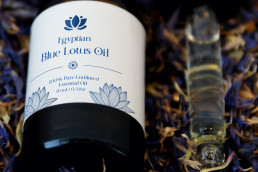
Blue lotus oil (Nymphaea caerulea) occupies an unusual regulatory position for a botanical product. It is legal to buy, sell and possess in most of the world, it has a long and well-documented ritual history, and it is sold openly as a perfume material, an aromatherapy oil and a skincare ingredient. But a handful of countries have restricted it, a handful more treat it with caution, and the safety profile, while broadly benign at sensible topical and olfactory doses, includes real considerations for pregnancy, certain medications and a few medical conditions. This pillar is the honest map of that territory: what is legal where, what the actual risks are, who should avoid it, and how to travel with it without unpleasant surprises.
Table of Contents
- Why Blue Lotus Oil Sits in a Grey Zone
- How This Guide Is Organised
- Legal Status by Country
- United States (and the Louisiana Exception)
- United Kingdom and European Union
- Russia
- Australia, Canada and Elsewhere
- The Pharmacology, Briefly
- Who Should Avoid Blue Lotus Oil
- Pregnancy and Breastfeeding
- Medication Interactions
- Travelling with Blue Lotus Oil
- Dilution and Topical Safety
- Patch Testing
- Photosensitivity
- Pets and Household Safety
- Children, the Elderly and Medically Complex Users
- Buying Safely: Adulteration and Authenticity
- Storage and Shelf Life
- What Blue Lotus Oil Does Not Do (From a Safety Perspective)
- How to Think About Risk for Your Own Use
- Frequently Asked Questions
- Where to Go From Here
- Sourced Honestly, Labelled Clearly
It is written and clinically reviewed by Antonio Breshears, ND, CCA, a Bastyr-trained naturopathic doctor and certified clinical aromatherapist. If you are new to blue lotus generally and want the broader context before diving into regulatory detail, start with the complete guide to blue lotus oil, then return here for the legal and safety specifics that sit beneath responsible use.
Why Blue Lotus Oil Sits in a Grey Zone
Most aromatic plants are unregulated: lavender, rose, frankincense, ylang ylang and their oils move freely across borders and draw no regulatory attention. Blue lotus is different for two historical reasons. The first is its documented use in ancient Egyptian ritual as an intoxicant, a reputation preserved in tomb iconography and in the recreational literature of the last twenty years. The second is the presence of two minor alkaloids in the flower, aporphine and nuciferine, which have weak central nervous system activity. Neither alkaloid is a controlled substance in most jurisdictions, and the quantities present in a topical or olfactory dose of absolute are small, but the combination of reputation and pharmacology has been enough for a few governments to restrict the plant on precautionary grounds.
The practical effect is that in the vast majority of countries blue lotus oil is a legal botanical product that can be sold, shipped and used like any other aromatic absolute. In a small number of jurisdictions it is restricted, and in one or two more there is regulatory ambiguity that has not been tested in practice. A responsible user simply needs to know which is which.
How This Guide Is Organised
The guide works outward from the core legal picture to the practical realities of safe use. First, the country-by-country legal status. Then the safety profile: what the oil actually does in the body, who should avoid it, and what the known interactions are. Then travel, shipping and customs. Then the application-specific safety considerations that matter most for daily use: dilution, patch testing, photosensitivity, pets, children and the elderly. Each subsection below is a short summary of a dedicated cluster article; follow the link at the end of any subsection to go deeper on that specific question.
Legal Status by Country
The short version: blue lotus oil is legal in the United States (except Louisiana), Canada, the United Kingdom, most of the European Union, most of Asia, and most of Latin America. It is restricted in Russia, Poland and Latvia. Louisiana is the only US state with a specific prohibition. Australia treats it with regulatory complexity rather than outright ban. Everywhere else, you should treat the answer as “probably legal, confirm before shipping” and actually confirm.
United States (and the Louisiana Exception)
At the federal level, blue lotus is not a scheduled substance and is not regulated by the DEA. It is sold openly as a perfumery ingredient, an aromatherapy material and a botanical curiosity across all fifty states except one. Louisiana State Act 159, passed in 2005, specifically prohibits the cultivation, sale and possession of Nymphaea caerulea for human consumption, alongside a long list of other psychoactive plants. The wording leaves some theoretical room for ornamental or decorative use, but in practice sellers do not ship to Louisiana and users in that state should not assume personal possession is safe.
United Kingdom and European Union
Blue lotus is legal throughout the UK. In the EU, the picture is mostly permissive but with two firm exceptions: Poland includes Nymphaea caerulea on its list of controlled psychoactive substances, and Latvia has similar restrictions. France, Germany, Italy, Spain, the Netherlands and the Nordic countries treat it as an unregulated botanical. Cosmetic regulations (EU 1223/2009) apply to any product sold as a cosmetic, meaning properly formulated skincare and perfumery is subject to the standard rules on safety assessment and labelling rather than to any specific lotus prohibition.
Russia
Russia added blue lotus to its list of controlled narcotic and psychotropic substances. Import, sale and possession are not legal. Travellers should not carry the oil into the country.
Australia, Canada and Elsewhere
Australia has a complicated regulatory structure in which blue lotus sits under scrutiny from the TGA but is not clearly banned for topical or perfumery use. Canada treats it as an unregulated botanical. Japan, South Korea, Singapore and most of Southeast Asia permit it. In the Middle East, the picture is mixed and import rules vary: the UAE and Saudi Arabia apply strict controls to anything perceived as psychoactive and travellers should confirm before shipping.
The Pharmacology, Briefly
Understanding the safety profile is easier if you know what is actually in the oil. Blue lotus absolute contains two minor alkaloids of interest: aporphine (a weak dopamine agonist) and nuciferine (a weak dopamine antagonist with mild 5-HT2A and 5-HT2C receptor activity). It also contains the flavonoids apigenin, quercetin and kaempferol. Apigenin binds at the central benzodiazepine receptor at modest affinity and is the component most credibly responsible for the oil’s gentle calming effect.
At the doses used topically, in diffusion, or in perfumery, the systemic exposure to these actives is small. That is why the safety profile is benign for most adults. The safety considerations that do exist are concentrated at the edges: pregnancy, specific medications, certain medical conditions, and populations (young children, frail elderly, pets) that process botanicals differently.
Who Should Avoid Blue Lotus Oil
The honest short list of people who should not use blue lotus oil, or who should use it only with professional guidance:
- Anyone pregnant or trying to conceive. The alkaloid profile has not been shown safe in pregnancy, and the responsible default for any psychoactive plant in pregnancy is avoidance.
- Anyone breastfeeding. Same logic: lack of safety data plus presence of alkaloids equals avoidance.
- Anyone taking MAOI antidepressants. The theoretical interaction with monoamine oxidase is small but real, and MAOIs demand extreme caution with any plant containing alkaloids.
- Anyone taking dopaminergic medication for Parkinson’s disease or related conditions. The mixed D-agonist/antagonist profile of the alkaloids creates unpredictable interaction risk.
- Anyone taking strong sedatives, benzodiazepines or sleep medications at a level where additive CNS effects could be problematic.
- Children under six, for whom the general rule with psychoactive botanicals is simple avoidance.
This list is conservative by design. Most adults outside these categories can use blue lotus oil topically, in diffusion and in perfumery with no issue whatsoever, provided they follow sensible dilution and patch testing guidelines.
Pregnancy and Breastfeeding
This deserves its own section because it is the most common serious question. Blue lotus oil should be avoided throughout pregnancy and during breastfeeding. The reasons are cumulative rather than any single dramatic risk: the oil contains alkaloids with central nervous system activity, the safety data in pregnancy is effectively zero (no studies exist), there is a long historical tradition of using lotus in contexts related to female reproduction which is suggestive rather than prohibitive but worth noting, and the cost of avoidance is low (you will not miss it for nine months) while the cost of being wrong is not acceptable. The same reasoning applies to breastfeeding. If you are planning conception, consider stopping use during the trying-to-conceive window as well.
Medication Interactions
The clinically relevant interactions to flag are narrow but important. MAOI antidepressants (phenelzine, tranylcypromine, selegiline at higher doses) should not be combined with any alkaloid-containing plant without explicit prescriber guidance; this includes blue lotus. Dopaminergic medications for Parkinson’s disease (levodopa, pramipexole, ropinirole) have a theoretical interaction with the aporphine and nuciferine content that is hard to predict because the two alkaloids pull in opposite directions. Strong sedatives and benzodiazepines raise the possibility of additive CNS depression, though at topical and diffused doses this is usually theoretical rather than practical. SSRIs, SNRIs, most blood pressure medications, statins and the vast majority of everyday prescriptions have no known interaction with blue lotus oil at the doses relevant to aromatherapy and skincare. If you take a medication you are uncertain about, ask your prescriber, or at minimum use the oil only olfactorily until you have confirmation.
Travelling with Blue Lotus Oil
Most travel is straightforward. Within the United States (excluding Louisiana), within the UK, within most of the EU (excluding Poland and Latvia), and within Canada, carrying a sealed bottle of blue lotus oil in cabin or hold luggage raises no issue. The oil is a botanical extract, it is labelled as such, and customs agents treat it as perfume or cosmetic.
Complications arise when crossing into restricted jurisdictions (Russia, Poland, Latvia, Louisiana) or into countries with strict import controls on anything perceived as psychoactive (parts of the Middle East, Singapore’s strict but inconsistent enforcement, China’s case-by-case approach). The safe default for international travel into any jurisdiction you are unsure about is: do not pack it. Ship a new bottle to your destination on arrival, or simply go without for the trip. For hand luggage, observe the standard 100ml liquid rule; a 10ml or 30ml bottle of oil is well within allowance.
Dilution and Topical Safety
For the vast majority of users, the most relevant safety question is not legal but practical: how much oil do I put on my skin, and for what. The short answers, all of which assume a properly produced absolute or CO2 extract in a carrier oil or formulation:
- Face: 1 to 2 percent dilution in a suitable carrier (squalane, jojoba, light serum base).
- Body: 2 to 3 percent dilution for routine use; up to 4 percent for short-term targeted application.
- Targeted spot use (temples, pulse points, sore muscle): 3 percent.
- Diffusion: 2 to 4 drops in a standard room diffuser.
- Bath: 4 to 6 drops dispersed in a tablespoon of carrier oil or unscented dispersant, never dropped directly into the water.
Neat application (undiluted oil directly on skin) is not recommended for routine use. Blue lotus absolute is potent, expensive and often contains residual solvent (ethanol or hexane) depending on extraction method; dilution protects the skin, extends the oil, and reduces sensitisation risk.
Patch Testing
Anyone with reactive skin, a history of perfume or essential oil sensitivity, or a tendency to contact dermatitis should patch test before broader use. The protocol is straightforward: apply a small amount of the oil at the intended use concentration to the inner forearm, cover with a plaster, and leave for 24 to 48 hours. Redness, itching, burning or rash means stop. A clean result means you can proceed with confidence to the intended application site.
Photosensitivity
Blue lotus absolute is not considered strongly photosensitising in the way that expressed citrus oils are (bergamot, lime, lemon). It does not contain the furanocoumarins that drive citrus-induced photodermatitis. However, a freshly applied perfume or skincare layer of any fragranced oil can mildly increase UV sensitivity in the short term, and leave-on products on the face should be paired with daily sunscreen regardless of what is in them. If you are using a blue lotus facial oil, apply it in the evening or apply it in the morning underneath a broad-spectrum SPF 30 or higher.
Pets and Household Safety
Cats metabolise essential oils and absolutes poorly because they lack the glucuronyl transferase enzymes that break down many of the phenolic and terpenoid constituents. This is a category-wide caution with aromatherapy and it applies to blue lotus as well. Diffusing blue lotus oil in a home with cats should be done in a ventilated space that the cat can leave freely; avoid closed rooms with a cat present, and do not apply the oil topically to a cat. Dogs tolerate aromatics better than cats but the same ventilation principle applies. Birds and small mammals are particularly sensitive to airborne volatiles; keep cages out of diffusion rooms. For households with pets, low-intensity diffusion in open rooms, or topical use on the human that is allowed to dry before pet contact, is the sensible compromise.
Children, the Elderly and Medically Complex Users
Children under six should not be exposed to blue lotus oil topically or by direct diffusion. Older children can be around ambient diffusion at low levels. Frail elderly users metabolise botanicals more slowly and should start at half the usual dilution, observing tolerance over a few days before building up. Users with liver or kidney impairment, anyone in active cancer treatment, and anyone on a complex medication regimen should run the oil past their clinician before routine use. None of this is specific to blue lotus; it is the standard caution for any potent botanical product.
Buying Safely: Adulteration and Authenticity
The legal and safety landscape includes one category of risk that does not show up in any regulatory document: adulteration. Genuine blue lotus absolute requires 3,000 to 5,000 flowers to produce a single gram, which makes it one of the more expensive aromatic materials on the market. That cost creates commercial incentive for dilution with cheaper florals (ylang ylang, jasmine sambac), synthetic fragrance compounds, or outright misidentified plant material (white or pink water lily, which is a different species with a different constituent profile). Buying from a supplier who discloses extraction method, country of origin, and batch-level analytical data is the single most effective step against this. A bottle that smells vaguely floral and costs an implausibly low price almost certainly is not what it claims to be.
Storage and Shelf Life
Blue lotus absolute stored in dark glass, in a cool dark cupboard away from temperature swings, holds its quality for three to four years. Refrigeration extends this somewhat but causes the absolute to thicken to a solid at fridge temperatures, requiring gentle warming before each use. Oxidation, heat and light are the three enemies; a well-sealed amber bottle on a cool shelf is sufficient. If the oil develops a sour or sharply chemical note over time, that is oxidation and the product is past its best.
What Blue Lotus Oil Does Not Do (From a Safety Perspective)
Part of responsible use is naming the things the oil is not, so that expectations match reality:
- It does not sedate strongly. If you are expecting a pharmaceutical-level sleep aid, you will be disappointed, and you should not combine it with other sedatives hoping to boost the effect.
- It is not a substitute for medical treatment of anxiety, depression, insomnia or any diagnosed condition. It can be a gentle adjunct within a broader plan.
- It is not safe simply because it is natural. Plants have pharmacology; blue lotus has specific cautions listed above.
- It is not legal everywhere. Confirm your jurisdiction before shipping, carrying or using at scale.
- It does not justify neat undiluted application. Dilution is non-negotiable for routine topical use.
- It is not appropriate in pregnancy, breastfeeding, or with the specific medications listed above, regardless of how gentle the dose appears.
How to Think About Risk for Your Own Use
For a healthy adult, not pregnant, not on the listed medications, living in a jurisdiction where the oil is legal, using a properly sourced product at standard dilution on intact skin or in diffusion: the risk profile of blue lotus oil is low. It is comparable to any well-made aromatic absolute. The reason this pillar is long is not that the oil is dangerous, it is that the questions people have about it are specific and deserve clear answers. The short answer for most readers is: check the legal status for your country, skip it if you are pregnant or breastfeeding, check your medication list against the short exclusion set above, dilute properly, patch test if your skin is reactive, and you are done.
Frequently Asked Questions
Is blue lotus oil legal in the United States?
At the federal level, yes. It is not a scheduled substance and is not regulated by the DEA. The single exception is Louisiana, which prohibits Nymphaea caerulea under state law. Elsewhere in the US, it is sold and used legally as a perfumery and aromatherapy ingredient.
Is blue lotus oil legal in the UK and EU?
Yes in the UK. Mostly yes in the EU, with the firm exceptions of Poland and Latvia, both of which list it as a controlled psychoactive substance. Most other EU member states treat it as an unregulated botanical.
Where is blue lotus oil illegal?
Russia, Poland, Latvia and the US state of Louisiana have clear prohibitions. Australia, some Middle Eastern countries, and a handful of strict import jurisdictions treat it with enough regulatory complexity that travellers should confirm before carrying it across borders.
Can I travel internationally with blue lotus oil?
Within unrestricted jurisdictions, yes. Into or through restricted jurisdictions, no. The safe default for any international trip where you are unsure of the destination’s rules is to not pack it; ship a new bottle to your destination or go without for the trip.
Is blue lotus oil safe in pregnancy?
No. It should be avoided throughout pregnancy. The safety data is absent, the alkaloid profile is not appropriate in pregnancy, and the responsible default for any psychoactive plant during pregnancy is avoidance. The same applies to breastfeeding.
Does blue lotus oil interact with medications?
The clinically important interactions are with MAOI antidepressants, dopaminergic medications for Parkinson’s disease, and strong sedatives or benzodiazepines at levels where additive CNS effects are a concern. Most everyday prescriptions (SSRIs, statins, blood pressure medication) have no known interaction at topical or olfactory doses.
Is blue lotus oil photosensitising?
Not significantly. It does not contain the furanocoumarins that make citrus oils photosensitising. Standard SPF practice on the face is still recommended, as with any leave-on product.
Can I use blue lotus oil neat on my skin?
Not for routine use. Blue lotus absolute should be diluted in a carrier: 1 to 2 percent for face, 2 to 3 percent for body, up to 3 percent for short-term targeted use. Dilution protects the skin, extends the oil, and reduces sensitisation risk.
Is blue lotus oil safe around cats and dogs?
With standard aromatherapy precautions, yes. Diffuse in ventilated rooms that pets can leave freely, do not apply topically to cats, and avoid closed rooms with pets present. Birds and small mammals are more sensitive and should be kept out of diffusion spaces.
How can I tell if my blue lotus oil is authentic?
Check the supplier for extraction method disclosure, country of origin, and batch-level analytical data. Authentic absolute costs a lot to produce (3,000 to 5,000 flowers per gram), and prices that seem implausibly low almost always indicate dilution or substitution with other florals or synthetics.
How long does blue lotus oil keep?
Three to four years stored in dark glass in a cool, dark cupboard. Refrigeration extends shelf life further but thickens the absolute to a solid; gentle warming restores fluidity. Watch for sour or sharply chemical notes, which indicate oxidation.
Is blue lotus oil addictive?
No. There is no evidence of dependence or withdrawal with olfactory or topical use. The active alkaloids are present in small amounts and the central effects are mild. This is categorically not an addictive product in normal use.
Where to Go From Here
If you are new to blue lotus oil in general and want the broader introduction to what it is, how it is made, what it does and how to use it, the complete guide to blue lotus oil is the parent reference. If you came here with a specific question (can I take this on a flight to Paris, can I use it while trying to conceive, is my current medication a problem), the sections above should have given you a clear answer or a clear direction. The short rule is simple: confirm your jurisdiction, check against the short avoidance list, dilute properly, buy from a source that discloses what is in the bottle, and the rest takes care of itself.

Antonio Breshears
Antonio Breshears is a renowned expert in holistic medicine and beauty, with over 25 years of research experience dedicated to uncovering the secrets of nature's most powerful remedies. Holding a degree in Naturopathic Medicine, Antonio's passion for healing and well-being has driven him to explore the intricate connections between mind, body, and spirit.
Over the years, Antonio has become a respected authority in the field, helping countless individuals discover the transformative power of plant-based therapies, including essential oils, herbs, and natural supplements. He has authored numerous articles and publications, sharing his wealth of knowledge with a global audience seeking to improve their overall health and well-being.
Antonio's expertise extends to the realm of beauty, where he has developed innovative, all-natural skincare solutions that harness the potency of botanical ingredients. His formulations embody his deep understanding of the healing properties found in nature, providing holistic alternatives for those seeking a more balanced approach to self-care.
With his extensive background and dedication to the field, Antonio Breshears is a trusted voice and guiding light in the world of holistic medicine and beauty. Through his work at Pure Blue Lotus Oil, Antonio continues to inspire and educate, empowering others to unlock the true potential of nature's gifts for a healthier, more radiant life.