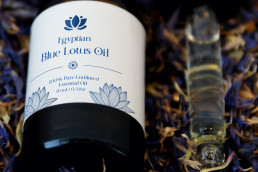
If you share your home with a cat, a dog, a bird, or any small companion animal, you need to think carefully before you diffuse anything in a shared space, including blue lotus oil. This article looks specifically at diffusing blue lotus oil pets question: whether it is safe, how species differ in their tolerance for aromatic compounds, what a sensible household protocol looks like, and when you should simply skip the diffuser altogether. The honest position here is that blue lotus is not among the worst offenders for pet safety, but it is also not unconditionally safe, and the details matter.
Table of Contents
- Why Essential Oils and Pets Are a Real Concern
- How Blue Lotus Oil Behaves in Diffused Air
- Species-by-Species: What the Evidence and Clinical Experience Suggest
- Cats
- Dogs
- Birds
- Small mammals, reptiles, and fish
- A Sensible Household Protocol for Diffusing Blue Lotus Oil with Pets
- Signs of Essential Oil Exposure in Pets
- What to Expect in a Pet-Sharing Household
- When Diffusing Blue Lotus Oil Around Pets Is Not the Right Choice
- Safer Alternatives to Whole-Room Diffusion
- Frequently Asked Questions
- Where to Go From Here
- Artisan-Crafted Blue Lotus for the Mindful Home
It is written and clinically reviewed by Antonio Breshears, ND, CCA, a Bastyr-trained naturopathic doctor and certified clinical aromatherapist. For a broader grounding in the oil itself, its chemistry, and its safe use, readers may wish to consult The Complete Guide to Blue Lotus Oil alongside this piece.
Why Essential Oils and Pets Are a Real Concern
Companion animals are not small humans. Their livers, their respiratory tracts, their grooming behaviours, and their body size all affect how they respond to volatile aromatic compounds. A diffuser running for an hour in a ventilated living room delivers a dose that most adult humans barely register, and yet that same airborne load can be meaningfully different for a four-kilogram cat sitting on the sofa.
Cats in particular lack robust glucuronidation pathways in the liver, which means they metabolise many phenols, monoterpenes, and related compounds more slowly than humans or dogs. Oils rich in those constituents (tea tree, wintergreen, clove, cinnamon bark, pennyroyal, pine, citrus at high concentration) are the classic offenders. Dogs tolerate more than cats but are still vulnerable to respiratory irritation and to concentrated topical exposure. Birds have extremely efficient gas-exchange systems and are the most sensitive of all common pets to airborne aromatic compounds. Small mammals, reptiles, and fish each have their own considerations.
Blue lotus oil is not a high-phenol, high-monoterpene oil in the way that the classic problem oils are. Its chemistry is dominated by aporphine-type alkaloids (aporphine, nuciferine) and flavonoids (apigenin, quercetin, kaempferol), together with a complex floral, balsamic, slightly smoky base. That chemistry places it in a gentler profile overall, but “gentler than tea tree” is not the same as “safe for unrestricted diffusion in a small flat with a cat”.
How Blue Lotus Oil Behaves in Diffused Air
When you put two to four drops of blue lotus absolute into a water-based ultrasonic diffuser, what actually enters the air is a very dilute mist of aromatic molecules, some of which are the fragrance-active constituents humans perceive, and some of which are the alkaloids and flavonoids responsible for its psychoactive and calming effects. Most of the alkaloid load remains in the oil phase; what disperses is largely the aromatic top, heart, and base fragrance.
That matters for pet safety because the airborne dose of the pharmacologically active alkaloids is low. The more relevant exposure for pets is the olfactory and respiratory load of the fragrance itself, plus the possibility of direct contact with condensed droplets on fur or surfaces that a cat or dog might later groom off and ingest.
In a well-ventilated room with an intermittent diffuser setting, a healthy adult dog is unlikely to show any adverse response to blue lotus diffusion at normal use rates. Cats require more caution, and birds require avoidance as a default.
Species-by-Species: What the Evidence and Clinical Experience Suggest
Cats
The general aromatherapy consensus is that cats should be exposed to diffused essential oils sparingly, in well-ventilated spaces, with the cat having free access to leave the room. Blue lotus absolute is not on the published lists of oils known to cause feline toxicity, but there are no controlled studies in cats specifically on Nymphaea caerulea either. In the absence of data, the sensible approach is caution rather than enthusiasm.
Practical rule: if you live with a cat, diffuse blue lotus only in rooms the cat can leave, for no longer than thirty to sixty minutes at a time, and do not diffuse near food bowls, water bowls, or the cat’s resting area. Do not apply the oil topically to yourself and then allow the cat to groom your skin.
Dogs
Dogs tolerate diffused aromatics better than cats, largely because their metabolism is closer to the human pattern. A diffuser running for an hour with two to four drops of blue lotus absolute in a room where a healthy adult dog has space to move away is, in clinical experience, unremarkable. Watch for behavioural signs of discomfort: a dog who leaves the room, who paws at their face, who sneezes repeatedly, or who seems restless is telling you the oil is bothering them. Respect that signal.
Brachycephalic breeds (pugs, French bulldogs, boxers) with compromised airways, and dogs with pre-existing respiratory conditions, should be treated as more sensitive cases.
Birds
Do not diffuse blue lotus oil, or any essential oil, in a room shared with a bird. Avian respiratory anatomy is extraordinarily efficient at extracting airborne compounds from inhaled air, which is why canaries were historically used to detect mine gases. Birds can die from airborne exposures that a human in the same room would not notice. This is not a blue-lotus-specific caution; it is a general rule for all aromatherapy households.
Small mammals, reptiles, and fish
Rabbits, guinea pigs, rats, and mice are small enough that their inhaled dose per kilogram of body weight is proportionally much higher than a human’s. Err strongly on the side of not diffusing in their rooms. Reptiles, whose respiratory systems are more primitive and more vulnerable to irritation, should likewise not share airspace with an active diffuser. Fish are unaffected by airborne aromatics in any practical sense, but oils should never reach the water surface.
A Sensible Household Protocol for Diffusing Blue Lotus Oil with Pets
The following protocol applies to a home with an adult dog or an adult cat with no respiratory or hepatic conditions. Adjust downward for any sensitivity.
- Diffuser choice: Use an ultrasonic water-based diffuser rather than a heat or nebulising diffuser. Water dispersion is gentler and the output concentration is lower.
- Dose: Two to three drops of blue lotus absolute per standard 100 ml reservoir. Do not go higher just because the scent is subtle; blue lotus is naturally understated.
- Duration: Run for thirty minutes, then pause for at least sixty minutes. Continuous diffusion is not necessary and raises the cumulative exposure for pets who cannot leave.
- Room choice: Diffuse in a room the pet does not need to occupy. Avoid bedrooms if the pet sleeps there, avoid kitchens where food and water bowls sit, and never diffuse in an enclosed space like a bathroom that a pet might be shut in.
- Ventilation: Open a window or door. This is the single most important variable for pet safety; it keeps airborne concentration low and allows dilution.
- Access: The pet must always be able to leave the room. If they choose to stay, they are telling you they are comfortable. If they leave, let them.
- Observation: Watch for drooling, sneezing, coughing, watery eyes, unusual lethargy, tremors, loss of coordination, or vomiting. Any of these means stop diffusing immediately, ventilate the room, and contact a veterinarian if symptoms persist.
Signs of Essential Oil Exposure in Pets
Most pets will show no response at all to sensibly diffused blue lotus. A small minority may show mild sensitivity, and a very small number (typically those with undiagnosed respiratory or hepatic conditions) may show more serious reactions. Know the signs:
- Drooling or pawing at the mouth (more common in cats)
- Sneezing, coughing, or laboured breathing
- Watery eyes or nasal discharge
- Vomiting or loss of appetite
- Lethargy or unusual quietness
- Unsteady gait, tremors, or difficulty walking (serious; veterinary attention required)
- In birds: fluffed feathers, open-mouth breathing, falling from the perch (emergency)
If you see any of the more serious signs, stop diffusion immediately, move the pet into fresh air, and contact your veterinarian or a pet poison helpline. Bring the oil bottle or its label with you to the appointment.
What to Expect in a Pet-Sharing Household
Realistically, most households where someone diffuses blue lotus occasionally, using the protocol above, will have entirely unremarkable experiences. The cat will remain on the sofa or will wander off. The dog will carry on sleeping. No symptoms will appear. The human gets the benefit of the oil; the pet is unaffected.
The problem scenarios tend to be preventable ones: the diffuser left running continuously for eight hours in a closed studio flat with an elderly cat, or the diffuser placed directly next to a parrot’s cage, or the oil accidentally spilled onto fur that the animal then grooms off. Respect the protocol and these scenarios do not arise.
You should not expect any behavioural benefit for the pet itself. Blue lotus oil is not a veterinary anxiolytic and should not be used to try to calm an anxious animal. Products designed for canine or feline calming (species-appropriate pheromone diffusers, for example) exist for that purpose and have species-specific safety data. Do not repurpose human aromatherapy as pet medicine.
When Diffusing Blue Lotus Oil Around Pets Is Not the Right Choice
There are households where the honest answer is: do not diffuse, full stop.
- Homes with birds. No diffusion of any essential oil, anywhere in the shared airspace.
- Homes with pets who have respiratory disease. Feline asthma, canine chronic bronchitis, collapsing trachea, and similar conditions mean the airway is already irritated. Adding aromatic compounds is a poor idea.
- Homes with pets who have liver or kidney disease. Metabolic clearance is already compromised; do not add a metabolic load.
- Very small spaces with no ventilation. A studio flat with no windows that open, shared with a cat, does not permit the ventilation the protocol requires.
- Pets who show any sensitivity. If your animal has ever reacted to a diffused oil, do not test blue lotus to see whether it is different. It may not be.
- Pregnant or nursing animals. As in humans, pregnancy is a period where precaution dominates.
In any of these cases, you can still enjoy blue lotus personally. Use it as a worn perfume, in a closed-room evening ritual while the pet is elsewhere, in a bath, or on skin. The question is only whether to put it into shared air.
Safer Alternatives to Whole-Room Diffusion
If you love blue lotus but live with sensitive animals, there are several ways to enjoy the oil without exposing the pet to diffused aerosols.
- Personal inhaler: A blank aromatherapy inhaler with a few drops of blue lotus on the wick delivers the scent to you alone, with no airborne load.
- Topical perfume: A 1 to 2 percent dilution on pulse points gives you the scent throughout the day without diffusion.
- Scented jewellery: Lava-stone or felt-pad diffuser necklaces keep the oil close to your face and away from the room.
- Time-shifted diffusion: Diffuse in a room while the pet is out for a walk, at daycare, or otherwise not at home; ventilate thoroughly before the pet returns.
- Dedicated space: If you have a home office or meditation room the pet does not enter, diffuse there with the door closed.
These approaches let you keep blue lotus in your life without asking the animal to share the exposure.
Frequently Asked Questions
Is blue lotus oil toxic to cats?
There is no specific published evidence that blue lotus absolute is toxic to cats in the way that tea tree, pennyroyal, or wintergreen are. However, absence of evidence is not evidence of safety, and cats metabolise aromatic compounds poorly. Treat it as “use with caution and proper ventilation” rather than “safe for cats”.
Can I diffuse blue lotus oil if my dog is in the room?
Yes, with a sensible protocol: two to three drops, thirty minutes on and sixty off, good ventilation, and the dog free to leave. Watch for signs of discomfort and stop if they appear. Brachycephalic breeds and dogs with respiratory issues require more caution.
Is it safe to diffuse blue lotus oil around birds?
No. Birds should not share airspace with any active essential oil diffuser. Their respiratory anatomy makes them uniquely vulnerable to airborne aromatic compounds. This applies to all oils, not just blue lotus.
What if my cat walks into the room while the diffuser is on?
If the cat is free to leave again and ventilation is good, brief exposure is not a concern. If the cat chooses to stay, observe for any sign of discomfort. You do not need to panic; you do need to pay attention.
Can blue lotus oil help calm my anxious pet?
No. Blue lotus is not a veterinary anxiolytic and should not be used as one. Species-appropriate calming products exist with proper safety data. Do not use human aromatherapy as pet medication.
How long should I wait after diffusing before letting my pet back in a room?
Open windows for fifteen to thirty minutes after the diffuser stops. The airborne concentration drops quickly once dispersion ends and ventilation continues.
Is a nebulising diffuser safe to use around pets?
Nebulising diffusers produce much higher airborne concentrations than ultrasonic ones because they dispense undiluted oil. For households with pets, an ultrasonic water-based diffuser is the clearly better choice.
What should I do if my pet drinks the water from a diffuser?
Contact a veterinarian. Bring the oil bottle and the diffuser. Ingestion of undiluted or water-diluted essential oil requires professional assessment, even if the pet seems fine.
Does blue lotus oil affect fish?
Airborne diffusion at normal rates is not a concern for fish. Avoid any scenario where the oil could reach the water surface, whether by spill, splash, or droplets settling on the tank.
Can I wear blue lotus oil as perfume around my cat?
Yes, in a normal 1 to 2 percent dilution on pulse points. The dose transferred to a cat by casual contact is negligible. Do not let the cat groom oil directly off your skin, and avoid applying near where the cat habitually rubs its face on you.
Where to Go From Here
The practical shape of this is straightforward. Blue lotus oil is not among the essential oils that pose the greatest risks to pets, but responsible use in a shared household still requires ventilation, sensible dosing, intermittent rather than continuous diffusion, free access for the animal to leave the room, and complete avoidance in households with birds or respiratory-compromised pets. If those conditions cannot be met, use the oil on yourself rather than in shared air. To go deeper into the oil’s chemistry, safety profile, and broader use patterns, The Complete Guide to Blue Lotus Oil is the starting point; it sets the context within which these specific pet-household questions make sense.

Antonio Breshears
Antonio Breshears is a renowned expert in holistic medicine and beauty, with over 25 years of research experience dedicated to uncovering the secrets of nature's most powerful remedies. Holding a degree in Naturopathic Medicine, Antonio's passion for healing and well-being has driven him to explore the intricate connections between mind, body, and spirit.
Over the years, Antonio has become a respected authority in the field, helping countless individuals discover the transformative power of plant-based therapies, including essential oils, herbs, and natural supplements. He has authored numerous articles and publications, sharing his wealth of knowledge with a global audience seeking to improve their overall health and well-being.
Antonio's expertise extends to the realm of beauty, where he has developed innovative, all-natural skincare solutions that harness the potency of botanical ingredients. His formulations embody his deep understanding of the healing properties found in nature, providing holistic alternatives for those seeking a more balanced approach to self-care.
With his extensive background and dedication to the field, Antonio Breshears is a trusted voice and guiding light in the world of holistic medicine and beauty. Through his work at Pure Blue Lotus Oil, Antonio continues to inspire and educate, empowering others to unlock the true potential of nature's gifts for a healthier, more radiant life.