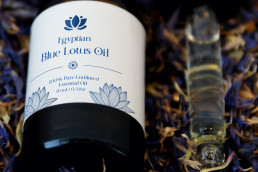
This recipe produces roughly 220 grams of whipped blue lotus oil body butter: a silky, lightly honeyed, deeply nourishing balm designed for dry limbs, post-bath ritual, and evening self-care. It is formulated at a safe 1.5 percent dilution, uses a shea and mango butter base with jojoba and sweet almond, and is suitable for most adult skin types outside pregnancy and breastfeeding.
Table of Contents
- What You Will Need
- Equipment
- Ingredients
- Why This Formulation Works
- Step-by-Step Instructions
- How to Use Blue Lotus Oil Body Butter
- Storage and Shelf Life
- Variations
- Sensitive Skin Version (1 percent dilution)
- Extra Calming Evening Blend
- Richer Winter Formulation
- Lighter Summer Whip
- Common Mistakes to Avoid
- Frequently Asked Questions
- Where to Go From Here
- Start With Authentic Blue Lotus
It is written and clinically reviewed by Antonio Breshears, ND, CCA, a Bastyr-trained naturopathic doctor and certified clinical aromatherapist. If you are new to working with this oil and want to understand why these choices matter, start with the complete guide to blue lotus oil, which covers the botany, chemistry and safety context that underpins every formulation on this site.
What You Will Need
Equipment
- A heat-safe glass bowl (Pyrex or similar), 500 ml minimum
- A small saucepan to create a bain-marie (water bath)
- A digital kitchen scale accurate to 1 gram
- An electric hand mixer or stand mixer with whisk attachment
- A silicone spatula
- A sterilised 250 ml amber or cobalt glass jar with a well-fitting lid (or two smaller 125 ml jars)
- A glass dropper or pipette for measuring the blue lotus oil
Ingredients
- 100 g unrefined shea butter (ivory, cold-pressed)
- 50 g mango butter
- 40 g sweet almond oil
- 25 g jojoba oil (technically a liquid wax, which stabilises the emulsion)
- 66 drops (approximately 3.3 ml) pure blue lotus absolute, Nymphaea caerulea
- Optional: 10 drops vitamin E (tocopherol) as an antioxidant
These weights produce a final yield of roughly 220 grams, which fills one standard 250 ml jar with a little headroom for whipping expansion. The blue lotus sits at approximately 1.5 percent of the total formulation, which is the upper end of comfortable for an all-over body product and the lower end for a targeted treatment balm.
Why This Formulation Works
Body butters live or die on the ratio of hard butters to soft oils. Too much shea and the finished product feels waxy and drags on the skin; too much liquid oil and the butter fails to whip, weeping oil at the edges of the jar within a week. The 3:1 ratio of solid butters (shea plus mango) to liquid oils (almond plus jojoba) used here produces a butter that scoops cleanly at room temperature, melts on contact with warm skin, and holds its whipped texture for months.
Shea butter provides the structural backbone and a high concentration of unsaponifiables that support the skin barrier. Mango butter is included because it is harder and less grainy than cocoa butter, which helps prevent the crystalline texture that shea alone sometimes develops. Sweet almond oil is light enough to avoid greasiness on the chest and inner arms. Jojoba mimics human sebum closely, which is why it integrates into the skin surface without leaving a film; it also extends the shelf life of the whole formulation because it is oxidatively stable.
The blue lotus sits at 1.5 percent because this is a genuinely therapeutic dose in an aromatherapy sense (enough to deliver the olfactory-limbic effect during application) without pushing into territory where sensitisation becomes a concern on large skin surfaces. Blue lotus absolute is precious, and at 1.5 percent you get an honest, honeyed-floral scent trail without wasting the oil.
Step-by-Step Instructions
- Sterilise your jar. Wash the glass jar and lid in hot soapy water, rinse, and either run it through a dishwasher on a hot cycle or place it in a 110 C oven for ten minutes. Allow it to cool completely before use. Lids should be air-dried, not oven-heated.
- Weigh your butters. Place the glass bowl on the scale, tare to zero, and weigh in 100 g shea butter and 50 g mango butter. Chop any large lumps so they melt evenly.
- Melt gently over a bain-marie. Bring an inch of water to a gentle simmer in the saucepan, then place the glass bowl on top so it sits above (not in) the water. Stir occasionally with the silicone spatula. The butters should be fully liquid within 6 to 8 minutes. Do not allow the water to boil vigorously; shea butter becomes grainy if overheated.
- Add the liquid oils. Once the butters are fully melted, remove the bowl from the heat. Weigh in 40 g sweet almond oil and 25 g jojoba oil. Stir gently to combine.
- Cool until cloudy. Place the bowl in the refrigerator for 45 to 60 minutes, or until the mixture is opaque, thick around the edges, and still slightly soft in the centre. This is the critical window: too liquid and it will not whip; fully solid and it will seize. You want the texture of very soft butter.
- Add the blue lotus. Using a glass dropper, add 66 drops of blue lotus absolute to the cooled mixture. If you are using vitamin E, add the 10 drops now as well. Absolutes are heat-sensitive; adding them at this stage preserves the top notes.
- Whip. Using an electric hand mixer on medium-high, whip the mixture for 4 to 6 minutes. It will transform from pale yellow cream to a fluffy, ivory-coloured butter that doubles in volume. Stop when it holds soft peaks like whipped cream.
- Jar immediately. Use the spatula to transfer the whipped butter into your sterilised jar, tapping gently to remove air pockets but without pressing the butter flat. Leave 1 cm of headspace at the top. Seal and label with the date.
How to Use Blue Lotus Oil Body Butter
Apply a scant teaspoon to slightly damp skin after a warm bath or shower, when the skin is receptive and the product melts most readily. Focus on drier areas: shins, forearms, elbows, decolletage, and the tops of the feet. Massage in using slow upward strokes, which supports lymphatic flow and gives the scent time to settle into your personal scent space.
For evening use, this butter pairs beautifully with a slow wind-down ritual: apply after your evening shower, then sit quietly for a few minutes before dressing. The combination of warm skin, slow breath and the honeyed floral note encourages parasympathetic dominance more reliably than simply diffusing the oil. Most people find one application per day sufficient; some prefer a lighter second application to hands and wrists in the morning.
Avoid applying to broken skin, freshly shaved areas, or the face (the formulation is too rich for facial pores on most skin types). A 220 g jar should last 6 to 10 weeks with daily use.
Storage and Shelf Life
Store the sealed jar in a cool, dark cupboard, ideally below 20 C. The shelf life is 9 to 12 months when made with the optional vitamin E, and 6 to 9 months without it. In warm climates or if your bathroom regularly exceeds 24 C, the butter may soften and lose its whipped texture; this does not spoil the product, but it will become a dense balm rather than a fluffy cream. Refrigeration re-firms it but also makes it harder to scoop, so a consistent room-temperature storage location is preferable.
Discard the butter if it develops a rancid or crayon-like odour, visible mould, or a colour shift toward grey or green. Always scoop with clean, dry hands or a small wooden spatula to prevent water contamination, which is the single most common cause of premature spoilage in anhydrous (water-free) formulations.
Variations
Sensitive Skin Version (1 percent dilution)
Reduce the blue lotus to 44 drops (approximately 2.2 ml). This is a sensible starting point for anyone new to essential oils, for older skin, or for use across very large surface areas. The scent is softer but still clearly present.
Extra Calming Evening Blend
Reduce blue lotus to 44 drops and add 15 drops Roman chamomile and 10 drops lavender (true Lavandula angustifolia). This pushes the formulation firmly into bedtime territory and layers gently sedating constituents alongside the blue lotus.
Richer Winter Formulation
Replace 20 g of the shea butter with 20 g of cocoa butter for a firmer, more protective texture suited to very cold, dry climates. Expect a warm chocolate undertone beneath the blue lotus, which some find beautiful and others find competing. Test a small batch first.
Lighter Summer Whip
Reduce shea to 70 g and mango to 40 g, and increase jojoba to 50 g. The finished butter is softer, absorbs faster, and feels less occlusive in humid weather. It will need to be stored somewhere reliably cool.
Common Mistakes to Avoid
The most frequent error is whipping while the mixture is still too warm. If it looks even slightly translucent, put it back in the fridge for another 15 minutes. Whipping a warm mixture produces a thin cream that collapses within hours and weeps oil in the jar.
The second most common error is the opposite: letting the mixture go fully solid before whipping. If this happens, place the bowl back over the bain-marie for 20 to 30 seconds, stir to soften the edges, then try again. Do not fully re-melt; you only want to take the chill off.
Adding the blue lotus to hot oils destroys the delicate top notes and wastes expensive absolute. Always add it at the end, once the mixture has cooled to body temperature or below.
Finally, skipping the sterilisation step invites contamination. Even though this is an anhydrous product and bacterially stable, mould spores and yeasts introduced from an unsterile jar can still take hold over several months.
Frequently Asked Questions
Can I use refined shea butter instead of unrefined?
Yes, and many people prefer it because refined shea has almost no scent of its own, which lets the blue lotus come through more cleanly. You lose some of the vitamin A and E content, but the functional performance is very similar.
Why does my body butter feel grainy?
Shea butter contains stearic acid that can recrystallise if the butter is cooled slowly or warmed and re-cooled. Prevent this by chilling quickly in the fridge during step 5, and by storing the finished product at a stable temperature. If your batch is already grainy, gently warm it, stir thoroughly, and chill rapidly in a shallow container before re-whipping.
Can I substitute coconut oil for one of the butters?
Coconut oil changes the texture significantly. It melts at around 24 C, which makes the finished butter unstable in summer and in warm bathrooms. If you want to use it, replace no more than 20 g of the mango butter with coconut oil, and store the finished product in a cool cupboard.
Is 1.5 percent safe for daily whole-body use?
For healthy non-pregnant adults, yes. Blue lotus absolute is not a known sensitiser at this concentration, and the formulation falls within standard aromatherapy safety guidance for leave-on body products. If you have reactive skin, start with the 1 percent sensitive skin version and patch test on the inner forearm for 24 hours before wider use.
Can I use this during pregnancy or while breastfeeding?
No. Blue lotus oil is avoided in pregnancy and breastfeeding because its alkaloid profile has not been adequately studied in these populations. Use a plain unscented version of this recipe (omit the blue lotus) during these periods.
Why does my butter smell faintly of blue lotus but look almost white?
This is normal and desirable. At 1.5 percent, the deep amber colour of the absolute is heavily diluted by the ivory butters, and the whipping process incorporates air that lightens the visual colour further. The scent will bloom as the butter warms on your skin.
Can I make a larger batch?
Yes. Double or triple the quantities proportionally. Beyond triple, the cooling step becomes awkward because the centre of a large bowl cools much more slowly than the edges, leading to uneven texture. For large batches, divide the mixture between two bowls during step 5.
How does this compare to a lotion or cream?
Body butter is anhydrous, meaning it contains no water. This makes it shelf-stable without preservatives, more occlusive, and richer feeling. Lotions and creams are water-in-oil or oil-in-water emulsions that absorb faster but require proper preservation. Body butter is the better choice for very dry skin, winter climates, and evening use; lotion is better for daily all-over summer use.
Can I add essential oils other than those listed in the variations?
Yes, within safe dilution limits. The total essential oil content should not exceed 2 percent of the finished formulation, which is approximately 88 drops in this recipe size. Suitable companions for blue lotus include Roman chamomile, true lavender, frankincense, sandalwood, and vetiver. Avoid adding citrus oils, which are phototoxic and shorten shelf life.
What if I do not own a digital scale?
You can approximate with volume, but the texture will be less reliable. As a rough guide: 100 g shea butter is roughly 110 ml, 50 g mango butter is roughly 55 ml, 40 g sweet almond oil is 44 ml, and 25 g jojoba is 28 ml. A cheap 0.1 g kitchen scale is one of the best investments a home formulator can make.
Where to Go From Here
This body butter is one of the most forgiving ways to work with blue lotus absolute at home. Once you are comfortable with the method, the same ratio and technique translate beautifully to other formulations: a lighter body oil, a targeted shoulder balm, a bedtime foot cream. If you want to understand more about why the blue lotus responds the way it does to heat, carrier oils and skin application, the complete guide to blue lotus oil walks through the underlying chemistry and clinical context in detail, and will help you adjust the recipe with confidence for your own skin and climate.

Antonio Breshears
Antonio Breshears is a renowned expert in holistic medicine and beauty, with over 25 years of research experience dedicated to uncovering the secrets of nature's most powerful remedies. Holding a degree in Naturopathic Medicine, Antonio's passion for healing and well-being has driven him to explore the intricate connections between mind, body, and spirit.
Over the years, Antonio has become a respected authority in the field, helping countless individuals discover the transformative power of plant-based therapies, including essential oils, herbs, and natural supplements. He has authored numerous articles and publications, sharing his wealth of knowledge with a global audience seeking to improve their overall health and well-being.
Antonio's expertise extends to the realm of beauty, where he has developed innovative, all-natural skincare solutions that harness the potency of botanical ingredients. His formulations embody his deep understanding of the healing properties found in nature, providing holistic alternatives for those seeking a more balanced approach to self-care.
With his extensive background and dedication to the field, Antonio Breshears is a trusted voice and guiding light in the world of holistic medicine and beauty. Through his work at Pure Blue Lotus Oil, Antonio continues to inspire and educate, empowering others to unlock the true potential of nature's gifts for a healthier, more radiant life.
Related Guides
COA Required for Cosmetic Batch Record Blue Lotus Oil: 2026
COA Required for Cosmetic Batch Record Blue Lotus Oil—what to verify: identity,…