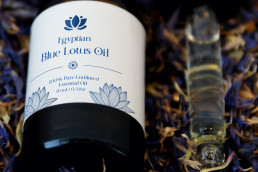
This recipe produces a rich, nourishing hair and scalp mask built around pure blue lotus absolute, a blend of argan and jojoba oils, and a small amount of castor oil for slip and weight. It is designed for dry, brittle, or chemically treated hair; for anyone whose scalp feels tight, flaky, or stressed; and for readers who want a genuinely pleasurable weekly ritual rather than a quick cosmetic fix. The finished mask yields roughly 60 ml, enough for six to eight treatments depending on hair length.
Table of Contents
- What You'll Need
- Equipment
- Ingredients
- Why This Formulation Works
- Step-by-Step Instructions
- How to Use the Mask
- Storage and Shelf Life
- Variations
- Lighter version for fine or oily hair
- Richer version for very dry or Afro-textured hair
- Gentler version for sensitive or reactive scalps
- Pre-shampoo scalp treatment only
- Common Mistakes to Avoid
- Frequently Asked Questions
- Where to Go From Here
- Begin Your Hair Ritual
It is written and clinically reviewed by Antonio Breshears, ND, CCA, a Bastyr-trained naturopathic doctor and certified clinical aromatherapist. For a fuller picture of how blue lotus absolute behaves on skin and scalp, and the reasoning behind the dilution choices used here, readers may want to start with the Complete Guide to Blue Lotus Oil.
What You’ll Need
Equipment
- One 60 ml amber or cobalt glass bottle with a narrow dropper or disc cap
- A small glass beaker or measuring jug (50 to 100 ml)
- A glass stirring rod or clean stainless steel teaspoon
- A small funnel that fits the bottle neck
- Optional: a 0.1 gram kitchen scale for precision
- A warm bowl of water for gentle warming (no direct heat)
Ingredients
- 30 ml cold-pressed argan oil (the backbone carrier)
- 20 ml golden or clear jojoba oil (for scalp compatibility)
- 10 ml cold-pressed castor oil (for weight and slip)
- 18 drops pure blue lotus absolute (Nymphaea caerulea), giving a 3 percent dilution
- Optional: 3 drops rosemary antioxidant extract (CO2 extract, not the essential oil) to extend shelf life
Quantities are given by volume because most readers will measure at the kitchen counter rather than on a microbalance. If you prefer weight, assume the combined carrier mass is roughly 55 grams and the absolute contributes around 0.8 to 0.9 grams, which lands cleanly in the 2.5 to 3 percent range.
Why This Formulation Works
Hair itself is biologically inert once it has left the follicle; the shaft cannot be repaired in the strict medical sense. What a well-designed mask can do is temporarily smooth the cuticle, reduce friction, restore lipid content lost to washing and heat styling, and, more importantly, condition the scalp, which is living skin and does respond to what you put on it. Everything in this recipe is chosen with that distinction in mind.
Argan oil provides oleic and linoleic acids with a reasonably light feel and a strong track record in hair care. Jojoba is technically a liquid wax ester, not an oil, and its structure is close to human sebum, which makes it unusually well tolerated on scalps that tend toward either dryness or reactive oiliness. Castor oil contributes ricinoleic acid, adds weight and slip so the mask actually coats the length of the hair rather than running off, and has a long folk reputation for scalp comfort. Blue lotus absolute is used at 3 percent because this is a rinse-off product with limited skin contact time, and because the absolute’s flavonoid and alkaloid profile seems to sit well on tense, itchy, or stress-reactive scalps without being sensitising at this strength. The scent is the other reason: a warm, honeyed-floral aura that clings lightly to clean hair for hours afterwards.
Step-by-Step Instructions
- Sterilise your equipment. Wash the bottle, beaker, stirring rod, and funnel in hot soapy water, rinse thoroughly, then dry upside down on a clean cloth. A quick final rinse with isopropyl alcohol and air drying gives extra security, particularly for anyone making this in a humid kitchen.
- Warm the blue lotus absolute gently. Blue lotus absolute is viscous at room temperature and can be difficult to drop. Stand the sealed bottle in a bowl of warm (not hot) water for three to five minutes until it flows more easily. Never apply direct heat and never microwave it.
- Measure the carrier oils into the beaker. Pour 30 ml argan, 20 ml jojoba, and 10 ml castor into the beaker in that order. Castor is the most viscous, so adding it last keeps your measurements clean.
- Stir the carriers briefly. Use the glass rod or teaspoon to combine the three oils. Castor is noticeably heavier, so give it twenty to thirty seconds of gentle stirring until the mixture looks uniform.
- Add the blue lotus absolute drop by drop. Count 18 drops into the beaker. Pause after every six drops to stir, because the absolute is dense and tends to sink. If you are using the optional rosemary CO2 extract, add 3 drops now.
- Stir thoroughly for one minute. The blend should look glossy, uniformly golden, and slightly amber-tinged from the absolute. Any streaks or visible droplets mean it needs more stirring.
- Decant into the amber bottle. Place the funnel in the bottle neck and pour slowly. Cap tightly, label with the date of making and the dilution (3 percent), and let the finished mask rest for 24 to 48 hours before first use. This resting period allows the absolute’s scent to marry properly with the carriers.
How to Use the Mask
Use this mask once a week, or once a fortnight for finer or oilier hair types. Shake the bottle gently before each use to redistribute the absolute.
On dry, unwashed hair, warm roughly 8 to 10 ml (about one and a half to two teaspoons) between your palms for a medium length head of hair; use up to 15 ml for long, thick, or coarse hair. Section the hair and apply first to the mid-lengths and ends, then work a smaller amount into the scalp with fingertips, massaging in slow circles for two to three minutes. The scalp massage is not optional. It is where the parasympathetic, genuinely calming part of this ritual lives, and where the scent does its real work.
Wrap the hair in a warm towel or a silk scarf and leave the mask in for 30 to 60 minutes. For deep conditioning after bleaching or heat damage, leave it in overnight with the hair loosely wrapped to protect your pillowcase. Rinse with warm water first, then shampoo twice with a gentle sulphate-free cleanser. A single shampoo rarely removes castor oil cleanly. Condition as usual or skip it entirely if the hair feels sufficiently soft.
Storage and Shelf Life
Stored in dark glass in a cool cupboard away from direct sunlight, this mask will keep well for 9 to 12 months. Argan and jojoba are both reasonably stable, and jojoba in particular resists rancidity better than most plant oils. Adding the optional rosemary CO2 extract pushes the upper limit closer to 12 months. If the scent becomes sharp, waxy, or reminds you of old crayons, the carriers have begun to oxidise and the mask should be discarded.
Do not store the mask in the bathroom long term. Humidity and temperature swings shorten the life of any oil blend. A bedroom drawer, linen cupboard, or kitchen cabinet away from the cooker works well.
Variations
Lighter version for fine or oily hair
Drop the castor oil entirely and replace it with an additional 10 ml of jojoba, giving you 30 ml argan and 30 ml jojoba. Keep the blue lotus at 18 drops. This version rinses out with a single shampoo and suits readers who find the original formulation too heavy.
Richer version for very dry or Afro-textured hair
Replace 10 ml of the argan with 10 ml of unrefined cold-pressed avocado oil, and increase the castor to 15 ml by reducing the jojoba to 15 ml. The result is a denser, slower-absorbing mask that copes well with coily hair and severely dehydrated lengths. Leave it on overnight for best results.
Gentler version for sensitive or reactive scalps
Reduce the blue lotus absolute to 12 drops, giving a 2 percent dilution, and omit the rosemary CO2 extract. This is also the version to use if you are unsure whether your scalp tolerates blue lotus; if the 2 percent version sits well over three or four uses, you can move up to 3 percent.
Pre-shampoo scalp treatment only
For anyone who wants the scalp benefit without dressing the lengths, halve the recipe and apply only to the scalp in small sections, massaging for five minutes and leaving for twenty before a full wash. This is a good option during summer or in humid climates where a full-length oil mask feels excessive.
Common Mistakes to Avoid
The most frequent problem is under-mixing. Blue lotus absolute is heavy and will settle toward the bottom of the bottle if the initial blend is rushed. If the first application smells faint and the last one smells overwhelming, this is why. Stir thoroughly, and shake gently before each use.
The second is applying to wet hair. Water blocks oil penetration into the shaft, and a wet-hair application mostly coats the outside, wasting product. Dry or barely damp hair gives much better results.
The third is skipping the second shampoo. Castor oil in particular is tenacious, and rinsing with conditioner alone leaves a greasy weight at the roots that most people then blame on the recipe rather than the rinse. Two short, gentle shampoos solve this cleanly.
The fourth is using hot water to warm the absolute. Excessive heat degrades the aromatic profile and can damage the more delicate flavonoids. Warm tap water in a bowl is sufficient.
Finally, do not apply this mask to broken, inflamed, or actively infected scalp skin. Treat the underlying issue first, then return to the ritual once the skin is intact.
Frequently Asked Questions
Can I use this mask if I have a sensitive scalp?
Use the 2 percent sensitive variation and patch test a small amount behind the ear for 24 hours before a full application. Blue lotus absolute is generally well tolerated, but any botanical can produce reactions in a small number of people.
How often should I use the mask?
Once a week is the standard cadence for dry, coloured, or textured hair. Fortnightly is better for finer or oilier hair. Using it more often than weekly rarely produces additional benefit and can weigh the hair down.
Will it help with hair growth?
Honestly, no direct evidence supports blue lotus absolute as a hair-growth agent. What the mask genuinely does is improve scalp comfort, reduce friction and breakage along the shaft, and support the weekly ritual of scalp massage, which itself has modest evidence for circulation. Treat growth claims with scepticism.
Can I use this mask while pregnant or breastfeeding?
Blue lotus absolute is best avoided during pregnancy and breastfeeding as a precaution. Substitute a neutral carrier-only version (argan, jojoba, castor) during these periods, or use a pregnancy-appropriate essential oil in place of the blue lotus.
Does it work on coloured or bleached hair?
Yes, and it is arguably most useful here. The richer avocado variation is particularly well suited to bleached hair that has lost lipid content. The mask will not strip dye from properly processed colour, though anyone with very fresh vivid colour should wait 48 to 72 hours after colouring before applying any oil mask.
Why blue lotus specifically rather than lavender or rosemary?
Lavender and rosemary are both fine choices and have their own evidence base. Blue lotus is chosen here for its scent profile, which is warmer and longer-lingering on clean hair, and for the calming atmosphere the ritual produces. If you prefer a classic hair-care aromatic, lavender substitutes cleanly at the same dilution.
Can I add essential oils to this recipe?
Yes, but keep the total aromatic content at or below 3 percent for a rinse-off product. A reasonable combination is 12 drops blue lotus, 4 drops lavender, and 2 drops cedarwood atlas, which gives a deeper, more grounding scent profile without exceeding safe levels.
What if I only have jojoba oil?
A jojoba-only version at 60 ml with 18 drops of blue lotus works perfectly well as a lighter scalp-focused treatment. You lose the weight and slip of castor and the oleic content of argan, but the mask is still effective and is genuinely the simplest starting point.
How do I know if my blue lotus absolute is real?
Genuine absolute is viscous, deeply coloured (amber to dark brown), and has a complex scent with honeyed-floral depth rather than a one-note floral sweetness. Thin, bright blue liquids sold at low prices are almost always fragrance oils or dilutions and will not perform in this recipe as expected.
Can children use this mask?
For children over six, use the 2 percent sensitive variation and leave the mask on for no more than 20 minutes. Under six, stick to a plain argan and jojoba blend without the blue lotus.
Where to Go From Here
If this is your first serious home formulation, the Complete Guide to Blue Lotus Oil is worth reading alongside this recipe: it covers extraction methods, how to evaluate an absolute’s quality, and the reasoning behind the dilution percentages used throughout the site. From there, readers often move toward a matching face serum or sleep-ritual roller, both of which share the same base ingredient and extend the ritual from hair to skin. As with any home-made preparation, keep notes on what you change and what you notice; small adjustments, tracked carefully, are how a recipe stops being a set of instructions and starts being your own.

Antonio Breshears
Antonio Breshears is a renowned expert in holistic medicine and beauty, with over 25 years of research experience dedicated to uncovering the secrets of nature's most powerful remedies. Holding a degree in Naturopathic Medicine, Antonio's passion for healing and well-being has driven him to explore the intricate connections between mind, body, and spirit.
Over the years, Antonio has become a respected authority in the field, helping countless individuals discover the transformative power of plant-based therapies, including essential oils, herbs, and natural supplements. He has authored numerous articles and publications, sharing his wealth of knowledge with a global audience seeking to improve their overall health and well-being.
Antonio's expertise extends to the realm of beauty, where he has developed innovative, all-natural skincare solutions that harness the potency of botanical ingredients. His formulations embody his deep understanding of the healing properties found in nature, providing holistic alternatives for those seeking a more balanced approach to self-care.
With his extensive background and dedication to the field, Antonio Breshears is a trusted voice and guiding light in the world of holistic medicine and beauty. Through his work at Pure Blue Lotus Oil, Antonio continues to inspire and educate, empowering others to unlock the true potential of nature's gifts for a healthier, more radiant life.