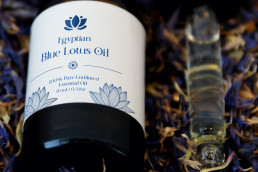
A blue lotus room spray is one of the simplest ways to bring this oil into daily life without committing it to your skin. A few generous mists before meditation, before bed, or when a room needs its atmosphere softened, and you have transformed the space with minimal fuss. This recipe produces a 100 ml spray that is genuinely fragrant, properly preserved, and will carry the honeyed floral-aquatic signature of Nymphaea caerulea rather than a thin, alcoholic afterthought of it.
Table of Contents
It is written and clinically reviewed by Antonio Breshears, ND, CCA, a Bastyr-trained naturopathic doctor and certified clinical aromatherapist. If you want the broader context on this botanical before you start formulating, the complete guide to blue lotus oil covers its chemistry, history, and full range of applications in depth.
What You’ll Need
Room sprays are forgiving, but the small details matter. Glass is preferable to plastic because the absolute will lightly stain clear plastic and can slowly degrade thin-walled bottles. A proper atomiser nozzle, rather than the cheap plastic trigger you get on household spray bottles, produces a fine mist that disperses into the air instead of falling in wet droplets.
Equipment:
- One 100 ml amber or cobalt glass bottle with a fine-mist atomiser spray top
- A small glass beaker or measuring jug (50 ml minimum)
- A glass stirring rod or stainless steel spoon
- A small funnel that fits the bottle neck
- A label and waterproof pen
Ingredients:
- 20 drops blue lotus absolute (approximately 1 ml)
- 4 drops lavender essential oil (optional, for a calmer profile)
- 2 drops frankincense essential oil (optional, for depth)
- 20 ml high-proof unflavoured vodka or perfumer’s alcohol (ideally 95 percent, minimum 70 percent)
- 79 ml distilled or deionised water
- A pinch (roughly 3 drops) of a natural solubiliser such as polysorbate 20, if you want the spray fully clear and stable (optional)
Why This Formulation Works
There are three quiet decisions inside this recipe, and each one is there for a reason. The first is the alcohol ratio. Essential oils and absolutes do not dissolve in water; they simply float on top and separate. Alcohol at around 20 percent of the final volume acts as a solubiliser, thinning the oils so they disperse evenly when the bottle is shaken, and helping them flash off into the air when sprayed rather than landing as sticky droplets. High-proof vodka works domestically; perfumer’s alcohol is cleaner if you can find it.
The second decision is distilled water rather than tap water. Tap water carries minerals and microbes that will, over weeks, cloud the spray and grow things you do not want to mist into your bedroom. Distilled water plus alcohol is effectively self-preserving for several months. The third decision is the optional addition of lavender and frankincense. Blue lotus absolute alone is beautiful but introverted in a room spray, its top notes can get lost in the air. A whisper of lavender gives it lift, and a touch of frankincense anchors the base so the scent lingers for fifteen or twenty minutes rather than vanishing in three.
Step-by-Step Instructions
- Prepare your workspace. Clean and dry the bottle, beaker, funnel, and stirring rod. Work on a surface that can tolerate a spilled drop of absolute, which will stain pale wood and fabric.
- Warm the absolute gently. Blue lotus absolute is thick and slow to pour at room temperature. Sit the bottle in a mug of warm (not hot) tap water for two or three minutes until it flows more freely. Do not overheat it.
- Combine the oils with alcohol first. Pour 20 ml of vodka or perfumer’s alcohol into the glass beaker. Add 20 drops of blue lotus absolute, 4 drops of lavender, and 2 drops of frankincense. Stir thoroughly for at least 30 seconds. You are dissolving the oils into the alcohol before any water is introduced. This step is the most important one in the whole recipe; skipping it is the commonest cause of a separated spray.
- Add the solubiliser if using. If you want a crystal-clear spray rather than a slightly cloudy one, add 3 drops of polysorbate 20 to the alcohol-oil mixture and stir again.
- Add the distilled water slowly. Pour 79 ml of distilled water into the beaker in a steady stream, stirring continuously. The mixture may go faintly cloudy, which is normal; it should not show a separate oily layer on top.
- Decant into the bottle. Place the funnel in the neck of the amber bottle and pour the finished spray in. Screw the atomiser on firmly.
- Label it. Write the contents, the date made, and “shake before use”. You will not remember in three weeks what is in the unlabelled bottle on the shelf.
- Rest for 24 hours. The scent integrates noticeably after a day. Fresh from the beaker it smells alcoholic and sharp; by the next evening the lotus comes forward properly.
How to Use Blue Lotus Room Spray
Shake the bottle firmly before every use. Hold it about 30 to 40 centimetres from where you want the mist to land, aim slightly upward into the middle of the room rather than at fabric, and give two or three full pumps. The scent will build as the mist falls, reaching its fullest expression after a minute or two.
Good moments for it: before a meditation or yoga session, as a gentle sleep cue pressed onto the pillow area (from distance, not soaking the fabric) about twenty minutes before bed, on returning home from a long day, in the bathroom before a long bath, or in any space that feels stale and needs its atmosphere reset. Avoid spraying directly onto polished wood, leather, silk, or artwork. Two to four pulses in a small bedroom is plenty; a larger open-plan space may want six to eight.
Storage and Shelf Life
Stored in dark glass in a cool cupboard away from direct sunlight, this spray will keep its scent and remain microbially stable for approximately 4 to 6 months. If you notice cloudiness becoming pronounced, any separation that does not resolve with shaking, or a change in aroma towards something sour or musty, make a fresh batch. The absolute itself is stable for 3 to 4 years in its neat form; it is the dilute aqueous mixture that has the shorter life, because water is always the limiting factor in any preservation.
Do not refrigerate it unless your room is very warm; the cold can precipitate some of the waxier fractions of the absolute and you will need to let it return to room temperature before they redissolve.
Variations
Sleep-focused variant. Keep the 20 drops of blue lotus absolute, increase the lavender to 8 drops, and add 3 drops of Roman chamomile. This gives a softer, more overtly sedative profile for bedroom use. Skip the frankincense; the chamomile takes its place as the base note.
Meditation and ritual variant. Keep the blue lotus at 20 drops, reduce lavender to 2 drops, and add 4 drops of frankincense plus 2 drops of sandalwood. This is drier, more resinous, more contemplative, closer to the temple atmosphere the flower was originally associated with.
Lighter, brighter variant for daytime. Use 15 drops of blue lotus, 4 drops of bergamot (make sure it is FCF, furocoumarin-free, if you will be spraying near skin or clothing), and 2 drops of neroli. Keeps the lotus recognisable but adds a morning lift.
Alcohol-free variant. If you prefer to avoid alcohol entirely, replace it with 20 ml of witch hazel (which contains some alcohol but in a gentler form) plus 1 ml of polysorbate 20 as a solubiliser. The scent throw is slightly weaker and the shelf life drops to 2 to 3 months, so make smaller batches.
Common Mistakes to Avoid
Skipping the alcohol-first step. Adding the absolute directly to water will give you an oily film floating on top and a thin scent in the air. The alcohol must pre-dissolve the oils before water is introduced.
Using tap water. Tap water will cloud within weeks and can develop visible growth. Distilled, deionised, or previously boiled and cooled water is worth the small effort.
Overloading the blue lotus. More is not better. Beyond about 25 drops in 100 ml, the absolute starts to smell muddy in a spray format and the oils are more likely to separate out. Twenty drops is the sweet spot.
Using a cheap plastic trigger sprayer. These produce coarse wet droplets rather than mist, which fall onto surfaces and leave residue. A proper fine-mist atomiser makes the spray feel luxurious rather than damp.
Spraying onto fabric and fine finishes directly. Blue lotus absolute is pigmented and can leave faint marks on pale silk, linen, or unsealed wood. Mist into the air, not onto the pillow.
Frequently Asked Questions
Can I use blue lotus essential oil instead of the absolute?
Yes, if you have access to a true steam-distilled or CO2-extracted blue lotus oil. Use the same drop count. The scent profile will be slightly cooler and less honeyed, because the absolute carries more of the heavier aromatic molecules. Both work well in a room spray; the absolute gives a fuller, more traditional scent.
Why does my spray smell mostly of alcohol at first?
Fresh from mixing, the ethanol dominates because it is the most volatile component in the bottle. Give it 24 to 48 hours resting at room temperature and the alcohol mellows as the oils integrate. This is normal and happens with almost every alcohol-based spray.
Is this safe to spray in a bedroom with children or pets?
Used occasionally and mist into the air rather than onto bedding, it is generally fine in shared spaces. That said, cats metabolise essential oils poorly and should not be in a small enclosed room while it is being sprayed; ventilate before they return. Avoid spraying directly at or near the face of anyone, human or animal. If anyone in the household has asthma or significant fragrance sensitivity, test with a single pump first.
Can I use this during pregnancy?
Blue lotus is traditionally avoided during pregnancy and breastfeeding due to its alkaloid content and insufficient safety data. If you are pregnant, skip this recipe and use a simple lavender and bergamot spray instead, or consult a qualified aromatherapist for pregnancy-safe alternatives.
How many sprays does a 100 ml bottle give?
Depending on the atomiser, roughly 600 to 800 pulses. At two to four pulses per use, that is several months of regular daily use.
Why is my spray slightly cloudy?
A faint cloudiness is normal and indicates the oils are dispersed, not separated. If you want it crystal clear, add polysorbate 20 at the oil-alcohol stage. If the cloudiness becomes heavy or you see distinct oil droplets floating on top, the alcohol-first step was likely rushed; pour the spray back into the beaker, add another 5 ml of alcohol, and stir thoroughly before returning it to the bottle.
Can I use witch hazel instead of vodka?
Yes, but witch hazel has lower alcohol content (typically 14 percent), so it is a weaker solubiliser. You will need slightly more of it (around 30 ml instead of 20 ml) and the shelf life will be shorter. The scent is also not quite as clean as with vodka or perfumer’s alcohol.
Will this stain my pillowcases if I spray it on them?
Potentially yes, especially on pale or delicate fabrics, because blue lotus absolute carries natural pigments. Mist into the air above the bed rather than onto the pillow directly, and let the droplets settle.
Can I make a larger batch?
You can, but larger batches sit for longer and the water-based portion has a limited life. A 250 ml batch is reasonable if you are a heavy user; anything beyond that is better made in smaller batches every couple of months to keep the scent fresh.
Does the spray lose potency over time?
Gradually, yes. The top notes (lavender, bergamot if used) fade first, then the mid notes. After about six months the scent becomes quieter and flatter even if the spray is still microbially sound. Making fresh batches every few months keeps it at its best.
Where to Go From Here
A room spray is a low-commitment way to get to know blue lotus in daily rhythm. Once you have lived with this one for a few weeks, you will notice which variant suits your space and routine, and you can refine the formula to taste. If you want to move from scenting rooms to scenting skin, a simple 2 percent rollerball in jojoba is the natural next step, and the complete guide to blue lotus oil covers the full range of applications, dilutions, and safety considerations in one place. The same bottle of absolute that makes this spray will make a perfume oil, a bath blend, a massage oil, and a diffuser base, so treat it as a small investment that works across the whole apothecary shelf.

Antonio Breshears
Antonio Breshears is a renowned expert in holistic medicine and beauty, with over 25 years of research experience dedicated to uncovering the secrets of nature's most powerful remedies. Holding a degree in Naturopathic Medicine, Antonio's passion for healing and well-being has driven him to explore the intricate connections between mind, body, and spirit.
Over the years, Antonio has become a respected authority in the field, helping countless individuals discover the transformative power of plant-based therapies, including essential oils, herbs, and natural supplements. He has authored numerous articles and publications, sharing his wealth of knowledge with a global audience seeking to improve their overall health and well-being.
Antonio's expertise extends to the realm of beauty, where he has developed innovative, all-natural skincare solutions that harness the potency of botanical ingredients. His formulations embody his deep understanding of the healing properties found in nature, providing holistic alternatives for those seeking a more balanced approach to self-care.
With his extensive background and dedication to the field, Antonio Breshears is a trusted voice and guiding light in the world of holistic medicine and beauty. Through his work at Pure Blue Lotus Oil, Antonio continues to inspire and educate, empowering others to unlock the true potential of nature's gifts for a healthier, more radiant life.