Blue Lotus Oil (Nymphaea caerulea), revered since antiquity for its calming aroma and subtle psychoactive properties, offers a rich profile of benefits, from anxiety reduction and sleep enhancement to skin nourishment and mild analgesia. However, as with any potent botanical extract, responsible use is essential to maximize benefits and minimize risks. This comprehensive guide, spanning chemistry, toxicology, population‑specific considerations, documented side effects, drug interactions, safe usage protocols, first‑aid measures, and regulatory perspectives, equips you with the knowledge to integrate Blue Lotus Oil into your wellness routine safely and effectively.
Table of Contents
- Understanding the Chemistry and Toxicology
- Chemical Constituents and Their Actions
- Acute and Chronic Toxicity
- Documented Side Effects
- Dermal Reactions
- Respiratory & Neurological Effects
- Gastrointestinal & Systemic Reactions
- Contraindications & Special Populations
- Pregnancy & Lactation
- Pediatrics
- Elderly
- Neurological & Psychiatric Conditions
- Allergy & Asthma
- Drug and Botanical Interactions
- CNS Depressants & Stimulants
- Antidepressants & Antipsychotics
- Other Botanicals & Supplements
- Safe Usage Guidelines & Dosing Protocols
- Diffusion & Inhalation
- Topical Application
- Internal Use
- Patch Testing & First‑Aid Measures
- Patch Test Protocol
- Managing Adverse Reactions
- Regulatory and Quality Considerations
- Long‑Term Risk Mitigation & Monitoring
Understanding the Chemistry and Toxicology
Chemical Constituents and Their Actions
Blue Lotus Oil’s primary bioactives include:
- Aporphine Alkaloids (nuciferine, apomorphine): Dopamine‑modulating compounds with mild anxiolytic and aphrodisiac effects.
- Flavonoids (quercetin, kaempferol): Antioxidants that mitigate oxidative stress in skin and neural tissue.
- Monoterpenes (linalool, limonene): Volatile aroma compounds that engage GABA receptors to promote relaxation.
- Sesquiterpene Alcohols (farnesol, nonanol): Provide depth to the scent and contribute anti‑inflammatory and skin‑soothing actions.
Acute and Chronic Toxicity
Extensive animal studies indicate that acute oral toxicity of steam‑distilled Blue Lotus Oil is low; LD50 values in rodents exceed 5 g/kg body weight. Chronic dermal and inhalation studies are limited but suggest minimal systemic absorption at typical aromatherapeutic and topical doses (<5%). No evidence of hepatotoxicity, nephrotoxicity, or carcinogenicity has been reported in standard sub‑chronic models. Nevertheless, most safety data derive from related Nymphaea species, underscoring the need for cautious human use and further clinical research.
Documented Side Effects
Dermal Reactions
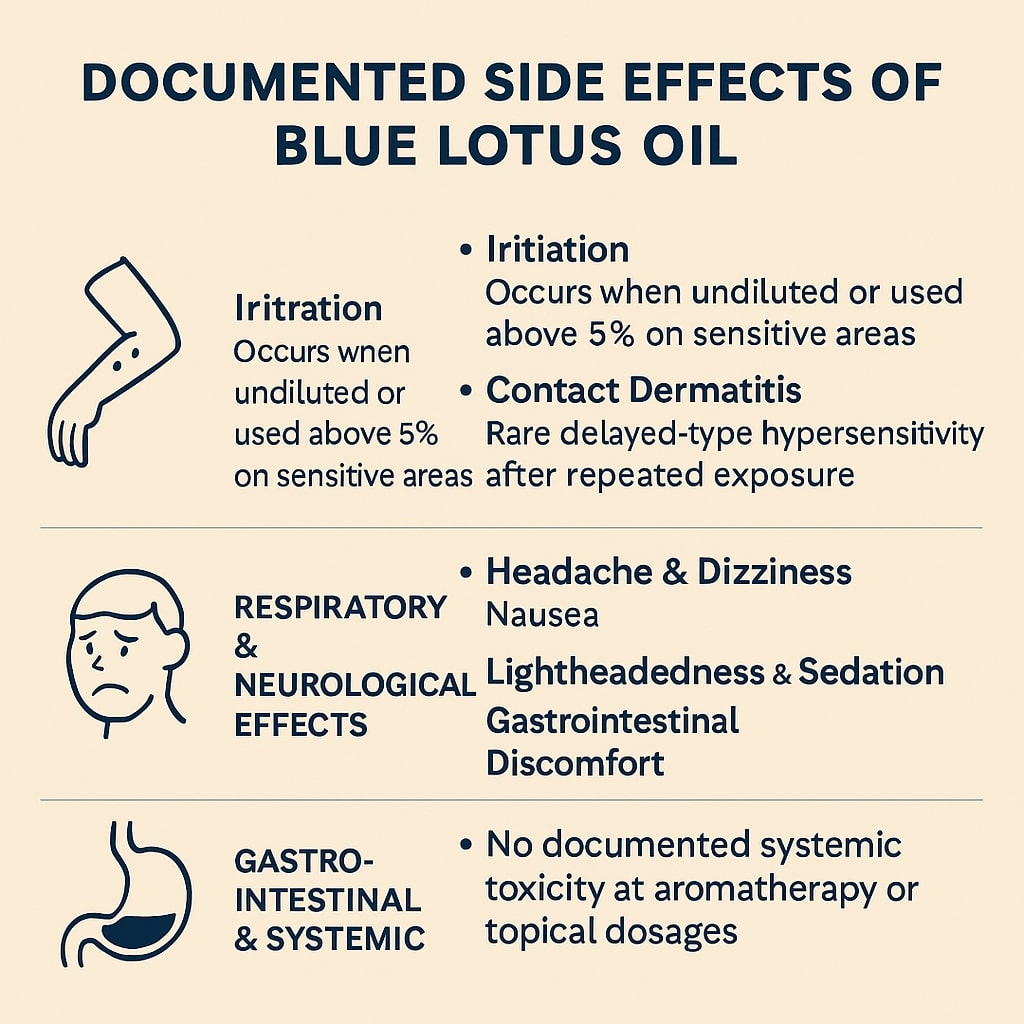
- Irritation: Occurs when undiluted or used above 5% on sensitive areas, manifesting as erythema, itching, or mild burning.
- Contact Dermatitis: Rare delayed‑type hypersensitivity after repeated high‑concentration exposure; typically resolves 1–2 weeks post‑cessation.
Case Example: A 42‑year‑old user applying 10% Blue Lotus cream nightly developed pruritic papules on the forearms within 5 days; patch testing confirmed sensitivity to the oil but not to the carrier.
Respiratory & Neurological Effects
- Headache & Dizziness: Reported in 2–5% of diffuser users when oil is aerosolized undiluted or continuously for over an hour in a confined space.
- Nausea: Associated with overexposure to the psychoactive alkaloids via inhalation, particularly in sensitive individuals prone to motion sickness or with low gastric tolerance.
- Lightheadedness & Sedation: While mild sedation is often desired, excessive use can impair coordination, caution advised before driving or operating machinery.
Case Example: A meditation retreat attendee inhaled nebulized Blue Lotus Oil for 90 minutes and experienced transient hypotension and syncope upon standing; symptoms resolved within 15 minutes of rest and hydration.
Gastrointestinal & Systemic Reactions
- Gastrointestinal Discomfort: Anecdotal reports of mild stomach cramps and diarrhea when Blue Lotus petal infusions or tinctures are ingested without professional dosing guidance.
- Systemic Effects: No documented systemic toxicity at aromatherapy or topical dosages; internal use remains off‑label and is discouraged without medical supervision.
Contraindications & Special Populations
Pregnancy & Lactation
Due to limited human data and the presence of bioactive alkaloids, internal ingestion is contraindicated. Topical or inhalation use at low dilutions (≤0.5–1%) may be acceptable after consulting an obstetric professional, particularly avoiding trigeminal application (face, neck) in the first trimester when embryo sensitivity to exogenous compounds is highest.
Pediatrics
Children’s metabolic and enzymatic pathways differ from adults, heightening sensitivity:
- Infants & Toddlers (0–5 years): Avoid topical and inhalation use unless under pediatric aromatherapy guidance. Their skin barrier and respiratory systems are immature.
- Children (6–12 years): If used, restrict dilutions to ≤0.25% (1–2 drops per 10 mL neutral carrier) and limit inhalation sessions to 5–10 minutes.
Elderly
Aging skin and reduced hepatic/renal clearance necessitate caution:
- Start at ≤0.5% topical dilution.
- Monitor for prolonged sedation or altered gait when diffused.
Neurological & Psychiatric Conditions
Blue Lotus Oil’s dopaminergic modulation may interact with central nervous system disorders:
- Epilepsy: Avoid due to potential lowering of seizure threshold in susceptible individuals.
- Bipolar Disorder: Risk of mood destabilization if combined with mood‑stabilizing medications.
- Parkinson’s Disease & Psychosis: Consult neurologist before use; aporphine alkaloids may interfere with dopaminergic therapies.
Allergy & Asthma
Those with known fragrance or pollen allergies should perform patch and sniff tests. Asthmatics may experience bronchospasm if exposed to high concentrations; always diffuse in well‑ventilated areas and start with minimal doses.
Drug and Botanical Interactions
CNS Depressants & Stimulants
- Additive Sedation: Blue Lotus Oil may enhance the effects of benzodiazepines, barbiturates, alcohol, and certain antihistamines, reduce dosages or avoid concurrent use.
- Stimulant Interaction: The stimulatory aspect of apomorphine alkaloids could theoretically counteract sedative prescriptions; consult a pharmacist.
Antidepressants & Antipsychotics
Potential for pharmacodynamic interactions:
- MAO Inhibitors & SSRIs: Mild MAO‑inhibitory effects of flavonoids may augment serotonergic activity, monitor for serotonin syndrome in polypharmacy.
- Dopamine Agonists/Antagonists: Nuciferine’s D2 receptor activity could alter efficacy of antipsychotics or Parkinson’s medications.
Other Botanicals & Supplements
- Other Sedative Herbs (Valerian, Kava): Combined use increases risk of excessive drowsiness and coordination impairment.
- St. John’s Wort: Induces hepatic enzymes; may reduce bioavailability of orally ingested alkaloid tinctures (though ingestion is not recommended).
Safe Usage Guidelines & Dosing Protocols
Diffusion & Inhalation
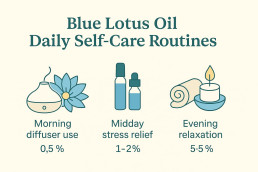
- Ultrasonic Diffuser: 3–5 drops in 100 mL water, 20–30 minutes per session, maximum 2–3 sessions per day with 15‑minute breaks.
- Nebulizer: 3 drops of pure oil, 10 minutes per session, ensure adequate ventilation.
- Personal Inhaler: 1–2 drops on wick, inhale gently up to 10 times per hour.
Topical Application
- Facial Use: Start at 0.5–1% dilution (3–6 drops per 30 mL carrier), increase to 2% if well tolerated.
- Body Massage: 2–3% dilution (12–18 drops per 30 mL carrier). For targeted relief (joints, muscles), up to 5% under professional supervision.
- Baths: 5–10 drops in dispersant (½ cup milk or solubilizer), soak 15–20 minutes, limit to once daily.
Internal Use
Not recommended without clinical oversight. Historical texts describe petal infusions or wine macerations, modern clinical data are lacking and potential for unpredictable systemic effects is high.
Patch Testing & First‑Aid Measures
Patch Test Protocol
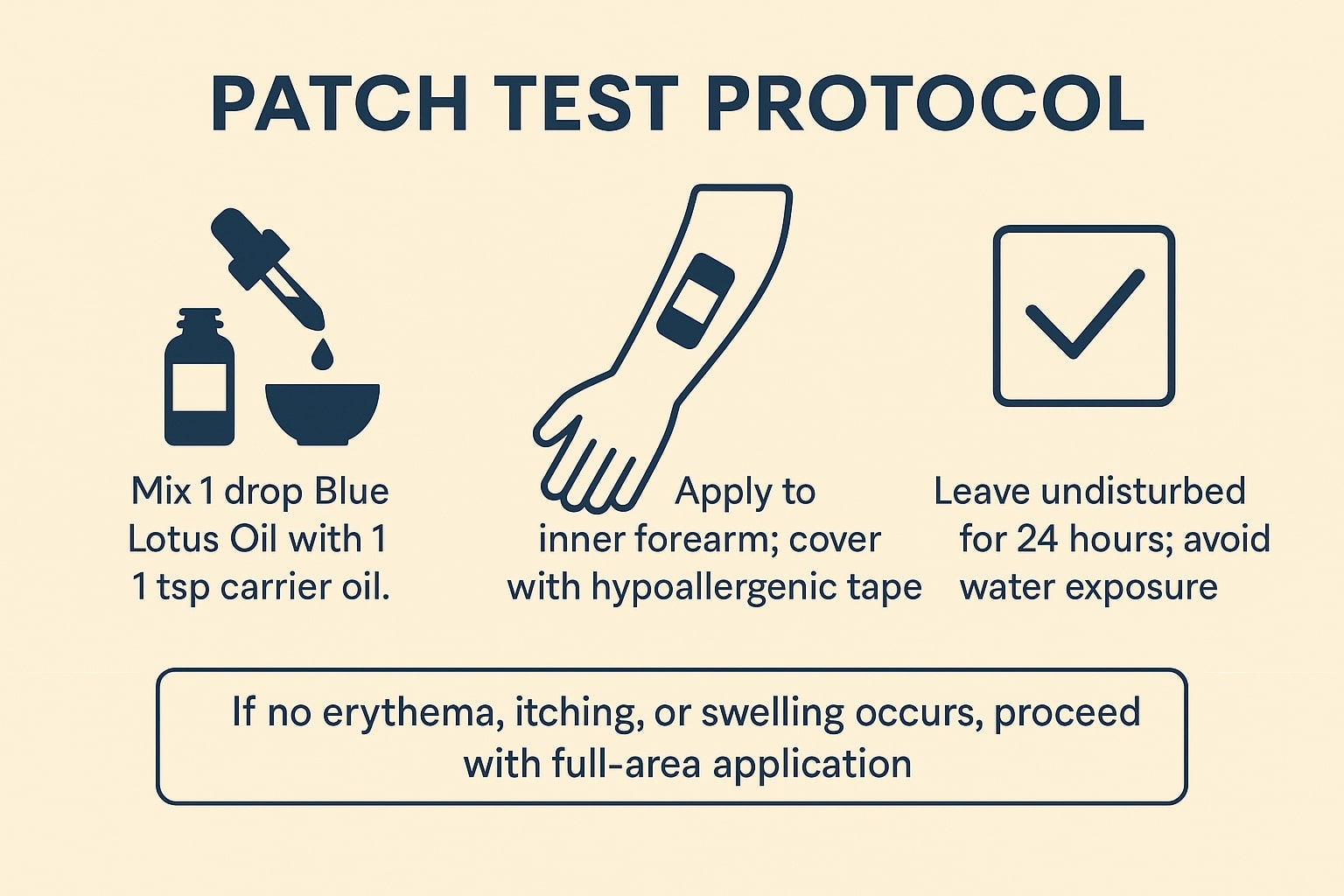
- Mix 1 drop Blue Lotus Oil with 1 tsp carrier oil. Apply to inner forearm; cover with hypoallergenic tape.
- Leave undisturbed for 24 hours; avoid water exposure.
- If no erythema, itching, or swelling occurs, proceed with full‑area application.
Managing Adverse Reactions
Skin Irritation
- Immediately rinse with gentle soap and lukewarm water.
- Apply a calming emollient, unscented aloe vera or jojoba oil.
- If symptoms persist beyond 48 hours, seek dermatological advice.
Respiratory Distress
- Exit diffusion area; breathe fresh air.
- Use a cool compress on forehead; sit upright.
- If wheezing or chest tightness continues, use prescribed bronchodilator and seek medical attention.
Excessive Sedation or Dizziness
- Lie down with feet elevated; hydrate with water.
- Avoid driving or operating machinery until fully alert.
- Reduce future exposure by lowering dosage or switching application method.
Ingestion Incidents
If accidental ingestion occurs:
- Do not induce vomiting.
- Rinse mouth; offer small sips of water.
- Contact local poison control center or seek emergency care if symptoms develop (nausea, confusion).
Regulatory and Quality Considerations
Blue Lotus Oil is regulated as a cosmetic ingredient in many jurisdictions and is not approved as a drug. Key quality standards include:
- ISO 9235: International standard for essential oil terminology and purity criteria.
- GMP & ISO 22716: Good Manufacturing Practices for cosmetics to ensure consistent quality and hygiene.
- Organic Certification: USDA Organic, EU Organic to verify absence of synthetic agrochemicals.
Purchase from suppliers who provide batch‑specific Certificates of Analysis (CoA) and GC‑MS reports to verify authenticity and absence of contaminants.
Long‑Term Risk Mitigation & Monitoring
For regular users, implement these strategies:
- Rotate aromatherapy oils to prevent sensitization.
- Limit continuous use, cycle Blue Lotus with other oils on a weekly basis.
- Maintain a usage journal noting dose, method, and any reactions.
- Consult healthcare professionals annually if using long‑term, especially with concurrent medications.
Blue Lotus Oil offers a unique combination of calming, sleep‑promoting, skin‑nourishing, and mild analgesic properties rooted in its diverse phytochemistry. By understanding its toxicity profile, documented side effects, contraindications, drug interactions, and safe usage protocols, you can harness its benefits while minimizing risks. Whether you diffuse a few drops for evening relaxation, blend a topical massage oil for muscle recovery, or explore advanced formulations in skincare, adherence to dilution guidelines, patch testing, proper storage, and vigilant monitoring ensures that your journey with the Sacred Blue Lily remains both enjoyable and safe.