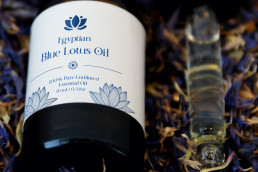
If you travel with a small bottle of blue lotus oil in your wash bag, the question of whether it will pass security, and whether it is legal at your destination, is worth a careful answer. This guide covers blue lotus oil flying TSA rules, international airline regulations, customs considerations across the countries most likely to matter to a Western traveller, and the practical packing choices that keep your bottle intact and your journey uneventful.
Table of Contents
- The Short Answer First
- What TSA Actually Says About Essential Oils
- Checked Luggage: Different Rules, Different Risks
- Pressure and Temperature
- Breakage
- Heat Exposure
- International Customs: The Actual Constraint
- Countries Where Blue Lotus Is Restricted or Banned
- Countries Where It Is Clearly Legal
- How to Check Before You Travel
- How to Pack Blue Lotus Oil for a Flight
- For Carry-On
- For Checked Luggage
- For a Pre-Diluted Roller
- Diffusers, Ultrasonic Devices, and Airline Rules
- Using Blue Lotus Oil to Manage Flight Anxiety
- A Simple Travel Protocol
- When Flying With Blue Lotus Oil Is Not Worth It
- Frequently Asked Questions
- Where to Go From Here
- Travel-Ready Blue Lotus Oil
It is written and clinically reviewed by Antonio Breshears, ND, CCA, a Bastyr-trained naturopathic doctor and certified clinical aromatherapist. If you want the broader picture of what the oil is and how it is used, start with The Complete Guide to Blue Lotus Oil; this cluster article focuses narrowly on the logistics of taking your bottle through an airport.
The Short Answer First
In most cases, yes, you can fly with blue lotus oil. In the United States, the Transportation Security Administration treats essential oils and botanical absolutes as ordinary liquids, subject to the same 100 millilitre (3.4 ounce) rule that governs every other liquid in your carry-on. A standard 5 millilitre, 10 millilitre, or even 50 millilitre bottle sits comfortably within that limit. In checked luggage, the oil is effectively unregulated from a security standpoint, though airlines impose their own quantity caps on flammable liquids and you will want to pack defensively against pressure changes and breakage.
The complications are not about security screening. They are about customs at the destination country, because blue lotus (Nymphaea caerulea) is regulated or restricted in a small but important list of places. Russia, Poland, and Latvia prohibit it outright. The US state of Louisiana bans the plant material. Australia treats it as a regulated substance with import implications. Everywhere else in the common traveller’s map, it is legal and unremarkable, but the onus is on you to know before you board.
What TSA Actually Says About Essential Oils
The TSA’s published guidance on essential oils is straightforward: they fall under the general liquids, gels, and aerosols rule. That means anything larger than 100 millilitres (roughly 3.4 fluid ounces) is not permitted in carry-on baggage, regardless of how full the bottle is. A half-empty 150 millilitre bottle is refused; a full 100 millilitre bottle passes.
All liquid containers in your carry-on must fit inside a single, transparent, resealable plastic bag of approximately one litre capacity (the familiar quart-sized zip bag). Your blue lotus oil counts as one of those containers. Pull it out with your toiletries at the checkpoint, place it in the tray, and you are done.
A few points that come up repeatedly at the checkpoint:
- Labelling. TSA officers are not botanists. A bottle clearly labelled “Blue Lotus Absolute” or “Nymphaea caerulea essential oil” with a reputable brand name is far less likely to trigger questions than an unlabelled amber dropper bottle of mysterious liquid. Keep the original packaging where you can.
- Roller bottles and dilutions. A 10 millilitre rollerball you have pre-diluted for travel is treated identically to the neat oil. Same rule, same bag.
- Dark glass. Amber and cobalt bottles are fine. You are not required to decant into clear plastic.
- Quantity across multiple bottles. You can carry several bottles, each under 100 millilitres, provided the total fits in your one-litre bag with any other liquids.
Checked Luggage: Different Rules, Different Risks
If you want to take a larger bottle, say a 100 millilitre or 250 millilitre supply for a long trip, checked luggage is the answer. TSA does not impose the 100 millilitre limit on checked bags. What does apply is the FAA’s rule on personal care and medicinal liquids containing alcohol or flammable solvents, which caps the total at approximately 2 litres per passenger, with individual containers under 500 millilitres. You will not come close to this with a realistic supply of blue lotus oil.
The real risks in checked luggage are not regulatory. They are physical:
Pressure and Temperature
Cargo holds are pressurised but not to sea-level pressure, and temperatures drop considerably at cruising altitude. A dropper bottle filled to the brim can seep past the rubber bulb as internal pressure shifts. Fill bottles to about 80 percent capacity, wrap the neck in a layer of cling film before screwing the cap on, and you will rarely have a leak.
Breakage
Glass bottles are thrown into holds by baggage handlers who do not share your sentimentality about your apothecary. Wrap each bottle in a sock, a face flannel, or bubble wrap, and pack it in the middle of your suitcase surrounded by soft clothing. A small padded toiletry pouch designed for fragrance bottles is a worthwhile investment if you travel often.
Heat Exposure
Tarmac temperatures in summer can exceed 50 degrees Celsius. Prolonged heat accelerates oxidation of the aromatic compounds in blue lotus absolute, dulling the scent over time. One flight will not ruin a bottle, but repeated exposure across a long trip in a hot climate will degrade quality. Store the oil in the coolest part of your luggage, away from direct sun if your bag sits in a car boot.
International Customs: The Actual Constraint
Security screening is almost never the problem. Customs at the destination is where flying with blue lotus oil can go wrong, and it is entirely avoidable with a little research.
Countries Where Blue Lotus Is Restricted or Banned
The following jurisdictions have specific restrictions on Nymphaea caerulea or its extracts as of the most recent guidance available to this author. Regulations change, so verify before you travel:
- Russia: Blue lotus is listed as a controlled psychoactive plant. Do not carry it in, do not post it in.
- Poland: Restricted under psychoactive substances legislation.
- Latvia: Restricted similarly to Poland.
- United States, state of Louisiana: Louisiana State Act 159 prohibits the plant material for human consumption. The absolute and essential oil for aromatherapy use sit in a legal grey zone locally; if you are transiting or staying in Louisiana, it is prudent to avoid carrying the oil.
- Australia: Regulated under the Therapeutic Goods Administration. Import for personal use is complicated, and commercial import requires licensing. Declare it on your incoming passenger card and expect questions.
Countries Where It Is Clearly Legal
The United Kingdom, most of the European Union (excluding Poland and Latvia as noted), Canada, most US states, Japan, most of Southeast Asia, the UAE, and Egypt itself treat blue lotus as a legal botanical. Essential oils and absolutes move across these borders without special requirements, other than ordinary customs declarations of goods above personal-use thresholds.
How to Check Before You Travel
A five-minute search on your destination country’s customs website, using both “Nymphaea caerulea” and “blue lotus”, is the minimum due diligence. If you cannot find clear guidance, the country’s embassy or consulate in your home country will often respond to an email enquiry within a few days. For commercial quantities (more than a personal supply, roughly more than 100 millilitres), consult a customs broker.
How to Pack Blue Lotus Oil for a Flight
Here is the practical protocol I use for my own travel, refined over a decade of carrying aromatherapy supplies across borders.
For Carry-On
- Choose a bottle 10 millilitres or smaller. A 5 millilitre bottle is ideal for a one or two week trip.
- Keep the original labelled packaging, or at minimum a clearly printed label on the bottle itself showing the common name (blue lotus), the botanical name (Nymphaea caerulea), and the volume.
- Wrap a strip of cling film around the neck of the bottle before screwing on the cap. This creates a seal against cabin pressure changes.
- Place the bottle upright in your resealable liquids bag.
- At security, remove the liquids bag from your carry-on and place it in the tray.
For Checked Luggage
- Fill bottles to no more than 80 percent capacity to allow for pressure expansion.
- Wrap cling film around the neck before capping.
- Place each bottle inside a small zip-seal freezer bag as a secondary containment layer.
- Wrap the bagged bottle in soft clothing (a rolled T-shirt or a wool sock works well).
- Pack it in the centre of your case, away from the hinges and the wheel end, where impacts are heaviest.
- If you are travelling with several bottles, use a padded toiletry pouch rather than relying solely on clothing.
For a Pre-Diluted Roller
If you only need blue lotus for personal use during the trip, pre-dilute into a 10 millilitre rollerball at roughly 3 to 5 percent (six to ten drops of neat oil in jojoba or fractionated coconut carrier). This is the easiest format to travel with, poses zero risk of leaking onto clothing, and avoids any doubt about the liquids rule.
Diffusers, Ultrasonic Devices, and Airline Rules
A portable USB diffuser or a personal inhaler stick is perfectly legal in carry-on and checked luggage. Ultrasonic diffusers contain no prohibited components. Battery-powered diffusers with lithium-ion cells are subject to the same rules as any other lithium battery device: under 100 watt-hours they travel in carry-on; larger batteries require airline approval.
A word of restraint: do not run a diffuser in your hotel room to the point that housekeeping or the next guest notices. Many chain hotels have explicit policies against scent-modifying devices because of allergen liability. A personal inhaler held under the nose is invisible and imposes on no one.
Using Blue Lotus Oil to Manage Flight Anxiety
Ironically, one of the most common reasons someone wants to fly with blue lotus oil is to help manage the stress of flying itself. The chemistry of blue lotus, particularly the apigenin content acting at central benzodiazepine receptors and the nuciferine acting at serotonin sites, is modestly effective for the kind of low-grade anticipatory anxiety that makes air travel unpleasant for many people.
Realistic expectations matter. Blue lotus is not a substitute for a prescription anxiolytic if you have a genuine flying phobia. It is not a sedative in the pharmaceutical sense. What it does well is soften edges. Applied to the wrists or sternum thirty minutes before boarding, it supports the parasympathetic shift that makes the body willing to settle. Inhaled from a personal inhaler during taxi and take-off, it gives the nervous system something aromatic and grounding to focus on instead of the cabin environment.
A Simple Travel Protocol
- Pre-flight (one hour before departure): apply a 3 percent dilution to the inner wrists and behind the ears. Breathe through the wrist for several slow cycles.
- Boarding and take-off: hold a personal inhaler or dab of diluted oil on a tissue near the face. Slow nasal breathing, four counts in, six counts out.
- Mid-flight: reapply once if needed. Pair with hydration; cabin air is dehydrating and worsens anxiety.
- Landing: a final inhalation as the aircraft begins descent helps with the physical discomfort of pressure changes.
When Flying With Blue Lotus Oil Is Not Worth It
There are situations where, realistically, you should leave the bottle at home:
- You are flying into or transiting through Russia, Poland, Latvia, or making a connection in Louisiana where a bag check could surface it.
- You are flying into Australia without the time or inclination to navigate a declaration.
- Your trip is short enough that a pre-mixed roller or inhaler stick would do everything you need.
- You are flying on a tiny regional carrier with strict baggage rules and limited space; the risk of crushed glass outweighs the benefit.
In any of these cases, buy or make a diluted rollerball for your trip, or simply go without. The oil works well at home and will be waiting when you return.
Frequently Asked Questions
Can I bring blue lotus oil through TSA security?
Yes. TSA treats blue lotus oil as a standard liquid subject to the 100 millilitre carry-on rule. A bottle of 100 millilitres or less, placed in your one-litre liquids bag, passes through screening without issue.
Is blue lotus oil legal to fly internationally?
In most countries, yes. The exceptions are Russia, Poland, Latvia, and Australia (which regulates it), plus the US state of Louisiana. Always check your destination country’s customs regulations before travelling.
Do I need to declare blue lotus oil at customs?
For personal quantities (a single small bottle) in countries where it is legal, no special declaration is required beyond the ordinary personal effects statement. For Australia, declare it. For commercial quantities anywhere, consult a customs broker.
Can I pack blue lotus oil in checked luggage?
Yes, and this is the right choice for bottles larger than 100 millilitres. Fill bottles to 80 percent capacity, seal the neck with cling film, bag the bottle in a zip-seal, and wrap it in soft clothing in the centre of your suitcase.
Will the oil leak due to cabin pressure?
Unlikely if you prepare it properly. Filling bottles to 80 percent, wrapping the neck in cling film before capping, and using a secondary zip-seal bag virtually eliminates leaks in both carry-on and checked luggage.
Can I bring a diffuser on a plane?
Yes. Portable USB or battery-powered diffusers travel in both carry-on and checked luggage. Lithium batteries under 100 watt-hours are unrestricted; larger batteries require airline approval.
What about essential oil rollerballs for travel?
Pre-diluted rollerballs are the easiest and most secure format for air travel. A 10 millilitre roller at 3 to 5 percent dilution covers a typical trip, sits well within carry-on liquid limits, and poses negligible leak risk.
Is blue lotus oil allowed in the UK and EU?
Yes, in the UK and most EU countries. Poland and Latvia are the exceptions, where it is restricted under psychoactive substance legislation.
Can I post blue lotus oil internationally?
The same country-by-country rules apply to postal shipments as to personal carriage. Do not post into Russia, Poland, Latvia, Louisiana, or Australia without understanding the local regulations. Most other destinations accept it as an ordinary cosmetic or aromatherapy product.
Does flying damage the oil?
A single flight does not meaningfully degrade blue lotus absolute. Repeated exposure to high cabin hold temperatures across a long trip, particularly in summer, will gradually dull the aromatic profile. Store the bottle in the coolest part of your luggage and avoid leaving it in hot cars or direct sun.
Where to Go From Here
If you want to understand the oil’s chemistry and uses more deeply before deciding what to pack, start with The Complete Guide to Blue Lotus Oil. For the broader safety picture around legality and responsible use, the Legal, Safety and Travel category on this site is the right next stop. Travel well, and enjoy the ritual of a small bottle of blue lotus arriving with you wherever you go.

Antonio Breshears
Antonio Breshears is a renowned expert in holistic medicine and beauty, with over 25 years of research experience dedicated to uncovering the secrets of nature's most powerful remedies. Holding a degree in Naturopathic Medicine, Antonio's passion for healing and well-being has driven him to explore the intricate connections between mind, body, and spirit.
Over the years, Antonio has become a respected authority in the field, helping countless individuals discover the transformative power of plant-based therapies, including essential oils, herbs, and natural supplements. He has authored numerous articles and publications, sharing his wealth of knowledge with a global audience seeking to improve their overall health and well-being.
Antonio's expertise extends to the realm of beauty, where he has developed innovative, all-natural skincare solutions that harness the potency of botanical ingredients. His formulations embody his deep understanding of the healing properties found in nature, providing holistic alternatives for those seeking a more balanced approach to self-care.
With his extensive background and dedication to the field, Antonio Breshears is a trusted voice and guiding light in the world of holistic medicine and beauty. Through his work at Pure Blue Lotus Oil, Antonio continues to inspire and educate, empowering others to unlock the true potential of nature's gifts for a healthier, more radiant life.