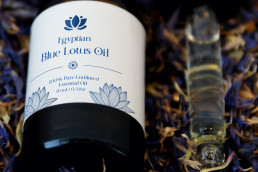
If you are searching for a straight answer on whether blue lotus oil is legal in Australia, the short version is this: the flower, the absolute, and the essential oil are not explicitly prohibited for possession or topical aromatherapy use, but Australia’s regulatory landscape around Nymphaea caerulea is more complicated than in most Western countries, and one of its key alkaloids sits in a restricted category. This article walks through what Australian regulators actually say, what that means for buyers and travellers, and how to stay on the right side of the rules while still enjoying a beautifully made oil.
Table of Contents
- The Short Answer for Australian Readers
- Understanding Australia's Regulatory Framework
- The Poisons Standard and Scheduling
- TGA and Therapeutic Claims
- State and Territory Differences
- Is Blue Lotus Oil Legal to Buy in Australia?
- What to Look for in an Australian-Compliant Seller
- Is Blue Lotus Oil Legal to Import into Australia?
- Travelling into Australia with Blue Lotus Oil
- Why the Confusion Exists
- Confusion with Apomorphine
- Confusion with International Prohibitions
- Conflation with Other Restricted Plants
- Practical Guidance for Australian Buyers
- Buying
- Using
- Storing and Declaring
- What Australian Regulators Have Actually Said
- When to Seek Professional Advice
- Frequently Asked Questions
- Where to Go From Here
- Australian-Ready, Artisan-Made
It is written and clinically reviewed by Antonio Breshears, ND, CCA, a Bastyr-trained naturopathic doctor and certified clinical aromatherapist. For broader context on what the oil is, how it is produced, and how it is used around the world, see the complete guide to blue lotus oil, which functions as the parent reference for this and other legal and safety articles.
The Short Answer for Australian Readers
Blue lotus (Nymphaea caerulea) is not named as a prohibited plant in the Australian Poisons Standard, and dried flower, absolute oil, and essential oil are sold by Australian retailers under perfumery and aromatherapy categories. You can, in practice, buy blue lotus oil in Australia and have it delivered by Australian vendors. What complicates the picture is that one of the plant’s minor alkaloids, apomorphine (closely related to the aporphine family blue lotus contains), is a Schedule 4 prescription-only substance under the Therapeutic Goods Administration, and any product that makes therapeutic claims falls under TGA regulation.
Put differently: owning and using a bottle of blue lotus absolute as a perfume or aromatherapy oil is legal. Selling it with claims that it treats anxiety, insomnia, or depression moves into regulated territory. Importing large quantities, concentrated extracts, or anything marketed as an ingestible or recreational substance is where Australian customs and state authorities may take an interest.
Understanding Australia’s Regulatory Framework
Australia regulates substances through a layered system, and it is worth briefly understanding how this works before examining where blue lotus sits within it.
The Poisons Standard and Scheduling
The Poisons Standard (formally the Standard for the Uniform Scheduling of Medicines and Poisons, or SUSMP) classifies substances into schedules from 2 (pharmacy medicine) up to 10 (prohibited). Schedule 4 means prescription-only. Schedule 8 means controlled drug. Schedule 9 means prohibited substance, and Schedule 10 means substances of such danger they cannot be sold, supplied, or used.
Nymphaea caerulea, the whole plant and its preparations, is not named in the Poisons Standard at the time of writing. Neither is nuciferine or apigenin (two compounds commonly discussed in blue lotus chemistry). However, apomorphine, a pharmaceutical dopaminergic compound that shares structural kinship with the aporphine alkaloids in blue lotus, is Schedule 4. This is a source of confusion, because some commentators conflate apomorphine (the pharmaceutical) with aporphine (the natural alkaloid family), and the two are related but distinct.
TGA and Therapeutic Claims
The Therapeutic Goods Administration regulates anything sold with therapeutic claims. A bottle of blue lotus oil sold as a perfume or ritual fragrance sits outside TGA jurisdiction. The same bottle sold with a label saying “treats anxiety” or “promotes sleep” becomes a therapeutic good and must be listed on the Australian Register of Therapeutic Goods, which almost no blue lotus product is. This is why reputable Australian sellers keep their language firmly in the perfumery, ceremonial, and aromatherapy traditions rather than in clinical claim territory.
State and Territory Differences
Australia’s states and territories can add their own restrictions, particularly around plants with psychoactive reputations. Blue lotus is not currently listed under state drug schedules, unlike certain ayahuasca admixtures or kratom. The practical position is that no Australian state prohibits possession of blue lotus flowers or oil.
Is Blue Lotus Oil Legal to Buy in Australia?
Yes, for personal aromatherapy, perfumery, and ritual use, blue lotus oil is legal to buy in Australia. Multiple Australian retailers list the absolute and the essential oil. International sellers routinely ship to Australian addresses, and the product is not flagged by the Australian Border Force as a restricted import under ordinary circumstances.
Where buyers should pay attention is to the form and marketing of the product. Whole dried flowers, tea cuts, absolute oil in small volumes for perfumery, and essential oil for diffusion all move through customs without issue. Products marketed as “recreational”, “psychoactive”, “smoking blends”, or anything claiming to replace prescription medicines draw scrutiny. Concentrated tinctures sold with dosing instructions for internal use occupy a grey zone that sensible buyers avoid.
What to Look for in an Australian-Compliant Seller
A seller operating cleanly within Australian rules will typically describe the oil in perfumery and aromatherapy terms, include botanical identification (Nymphaea caerulea), state the country of origin (Egypt for authentic material), provide extraction method (solvent-extracted absolute, steam-distilled essential oil, or CO2 extract), and decline to make clinical treatment claims. If a website promises blue lotus will cure your depression or replace your sleeping tablets, that vendor is playing fast and loose with TGA rules, which is a reasonable proxy for how carefully they handle the rest of their business.
Is Blue Lotus Oil Legal to Import into Australia?
For personal use in ordinary quantities, yes. The Australian Border Force and the Department of Home Affairs do not list Nymphaea caerulea as a prohibited or restricted import. A small bottle of blue lotus oil (say, 5 to 30 ml) posted from an overseas supplier for personal use generally clears customs without incident.
A few sensible considerations apply:
- Declare the item accurately on incoming customs paperwork if asked. “Perfume oil” or “aromatherapy oil” describes it correctly.
- Avoid importing unusually large commercial quantities without an import licence and proper business registration.
- Avoid products that combine blue lotus with other plants that are scheduled in Australia (some “dream tea” blends include plants that fall under drug control).
- Be aware that biosecurity rules cover dried plant material (flowers, leaves) more strictly than finished oils. Raw flowers may be inspected or held; finished oil products generally are not.
Travelling into Australia with Blue Lotus Oil
If you are returning from overseas with a bottle of blue lotus oil in your luggage, the same logic applies. Declare it honestly as perfume or aromatherapy oil on your incoming passenger card. Keep the bottle in its original labelled packaging. Bottles under 100 ml comply with cabin liquid rules on international flights, and oils in checked luggage rarely draw questions. Dried flowers are the more awkward item to travel with because of biosecurity, not because of drug law.
Why the Confusion Exists
If blue lotus oil is legal in Australia, why do so many articles online suggest otherwise? Several threads of misinformation tangle here, and it is worth separating them.
Confusion with Apomorphine
As noted above, apomorphine is a Schedule 4 pharmaceutical. Some older articles, including a few widely republished blog posts, claim that blue lotus is “banned in Australia because it contains apomorphine”. The biochemistry is shaky: blue lotus contains aporphine and related natural alkaloids, not the pharmaceutical apomorphine in any meaningful quantity. Even if trace amounts existed, the schedule applies to apomorphine as a therapeutic substance, not to plants containing structurally related compounds at negligible concentrations. This is analogous to the way poppy seeds are legal despite containing trace morphine precursors.
Confusion with International Prohibitions
Blue lotus is genuinely restricted in a handful of jurisdictions, notably Russia, Poland, Latvia, and the US state of Louisiana. Articles written for international audiences sometimes lump Australia into that list by mistake, or conflate “regulated” with “prohibited”. Regulatory complexity is not the same as prohibition. Australia has stricter labelling and claim rules than, say, the UK, but it does not ban the plant.
Conflation with Other Restricted Plants
Australia does restrict certain psychoactive plants (kratom, some ayahuasca components, specific Salvia species). Blue lotus sometimes gets grouped with these in online “restricted ethnobotanicals” lists, even though it does not share their regulatory status. The mild, subtle nature of blue lotus’s chemistry (weak receptor activity, no classical psychedelic or opioid action) is part of why it has not attracted the regulatory attention stronger plants have.
Practical Guidance for Australian Buyers
If you are an Australian reader wanting to buy, use, or gift blue lotus oil, here is the sensible path.
Buying
Choose a seller, Australian or international, that describes the product clearly as an absolute or essential oil for perfumery, aromatherapy, or ritual use. Look for botanical name, country of origin, and extraction method on the listing. Avoid any product that markets psychoactive or recreational effects, as these sellers attract regulatory attention and often misrepresent what is in the bottle. Expect to pay a genuine price: authentic Egyptian blue lotus absolute is expensive to produce (roughly 3,000 to 5,000 flowers per gram of absolute), and implausibly cheap oils are almost always diluted or synthetic reconstructions.
Using
Standard aromatherapy practice applies. Dilute to 1 to 2 percent for facial application, 2 to 3 percent for body oils, and use 2 to 4 drops in a diffuser. Do not ingest the oil: Australian regulators, like most regulators internationally, do not treat blue lotus absolute as a food-grade or ingestible product, and internal use sits outside responsible aromatherapy practice regardless of jurisdiction.
Storing and Declaring
Keep the oil in its original labelled bottle, stored cool and dark in amber or cobalt glass. Shelf life for a properly stored absolute is roughly 3 to 4 years. If you travel with it, declare it as perfume or aromatherapy oil. If you are asked by a customs officer what it is, the truthful answer is simply: a solvent-extracted floral absolute used for perfumery and aromatherapy, botanical name Nymphaea caerulea. That description is accurate, uncontroversial, and matches what the regulatory framework already understands.
What Australian Regulators Have Actually Said
The TGA has not issued any specific public guidance on Nymphaea caerulea as a banned or restricted substance. The Poisons Standard, which is updated regularly and published openly, does not list the plant. The Department of Home Affairs does not list it among prohibited imports. State health authorities have not issued prohibition notices. In the absence of any of these, the default position in Australian law is that the substance is legal to possess and use, and that commercial activity around it is governed by general consumer protection, trade practices, and therapeutic claims law rather than by drug scheduling.
This is a meaningful distinction. Some plants occupy genuine regulatory grey zones where the legality depends on how you use them. Blue lotus is not in that category. It is, legally speaking, an ordinary botanical perfumery ingredient in Australia, subject to the same rules as any other floral absolute or essential oil, with an additional layer of caution around therapeutic claims that applies to all wellness products rather than to this plant specifically.
When to Seek Professional Advice
If you are importing large commercial quantities, formulating a product for Australian retail sale, or planning to make therapeutic claims, you should speak to a regulatory affairs specialist familiar with TGA listing and complementary medicines law. For personal use, buying a bottle of oil for your own aromatherapy or perfumery practice, no legal advice is needed; this is ordinary consumer activity. If you have a health condition and are considering blue lotus as part of managing it, speak to a qualified naturopath, aromatherapist, or your GP, particularly if you take dopaminergic medication, MAOIs, or strong sedatives, as these are the theoretical interaction concerns regardless of jurisdiction.
Frequently Asked Questions
Is blue lotus oil legal in Australia?
Yes. Nymphaea caerulea is not named in the Poisons Standard, is not a prohibited import, and is sold by Australian aromatherapy and perfumery retailers. The legal considerations relate to therapeutic claims (regulated by the TGA) rather than to possession or personal use.
Can I order blue lotus oil from an overseas seller to Australia?
Yes, for personal use in ordinary quantities. Small bottles of absolute or essential oil posted from overseas suppliers clear Australian customs without issue when accurately declared as perfume or aromatherapy oil. Commercial-scale imports require proper business registration and, depending on intended use, possibly TGA involvement.
Is blue lotus oil classified as a drug in Australia?
No. It is not listed as a scheduled substance under the Poisons Standard. The occasional online claim that it is banned under apomorphine scheduling confuses the natural aporphine alkaloid family with the pharmaceutical apomorphine, which is a distinct compound.
Do Australian retailers sell blue lotus oil?
Yes. Multiple Australian aromatherapy and perfumery retailers stock the absolute, and some carry steam-distilled or CO2-extracted versions. The product is typically described in perfumery or ritual terms rather than with clinical claims, which reflects responsible compliance with TGA labelling rules.
Can I bring blue lotus oil into Australia in my luggage?
Yes. Declare it honestly on your incoming passenger card as perfume or aromatherapy oil, keep it in labelled original packaging, and comply with ordinary liquid rules for cabin baggage. Finished oils clear customs more easily than dried flower material, which is subject to biosecurity inspection.
Is it legal to use blue lotus oil in massage or beauty products I sell?
You can use it as a fragrance or cosmetic ingredient in products that make cosmetic claims (scent, skin feel) rather than therapeutic claims (treating anxiety, curing insomnia). Therapeutic claims move the product into TGA jurisdiction and require listing on the Australian Register of Therapeutic Goods, which almost no small-batch aromatherapy product carries.
Are blue lotus flower and blue lotus oil treated the same way legally?
Mostly yes, in terms of drug law. Both are unscheduled. The practical difference is biosecurity: dried flower material is subject to quarantine inspection when imported, whereas finished oils are not. Domestically, possession and use of either form is legal.
Why do some websites say blue lotus is banned in Australia?
Usually one of three reasons: confusion between the pharmaceutical apomorphine (Schedule 4) and the natural aporphine alkaloid family; repetition of outdated or inaccurate international “restricted plants” lists; or conflation of “regulated for therapeutic claims” with “banned for possession”. None of these reflect the actual legal position.
Can I drink blue lotus tea or ingest the oil in Australia?
Drinking blue lotus tea from dried flowers is legal, as the plant is unscheduled. Ingesting the essential oil or absolute is not recommended under any circumstances, in Australia or elsewhere, as these products are not formulated or regulated as food, and internal use sits outside responsible aromatherapy practice.
Does the TGA require a prescription for blue lotus oil?
No. Blue lotus oil is not a prescription substance in Australia. It is sold over the counter through aromatherapy and perfumery retailers without any prescription requirement. Prescription rules would only come into play if a product were formulated as a registered therapeutic good, which blue lotus products currently are not.
Where to Go From Here
If you have read this far and want to understand the oil itself more deeply, its chemistry, its history, and its genuine uses rather than its legal status, the complete guide to blue lotus oil covers all of that in proper depth. For Australian readers specifically, the practical summary is that you can buy, use, and travel with blue lotus oil within the country without legal concern, provided you treat it as what it is: a beautiful botanical oil with a long ceremonial history, not a pharmaceutical, not a recreational substance, and not a replacement for proper medical care when that is what a situation calls for.

Antonio Breshears
Antonio Breshears is a renowned expert in holistic medicine and beauty, with over 25 years of research experience dedicated to uncovering the secrets of nature's most powerful remedies. Holding a degree in Naturopathic Medicine, Antonio's passion for healing and well-being has driven him to explore the intricate connections between mind, body, and spirit.
Over the years, Antonio has become a respected authority in the field, helping countless individuals discover the transformative power of plant-based therapies, including essential oils, herbs, and natural supplements. He has authored numerous articles and publications, sharing his wealth of knowledge with a global audience seeking to improve their overall health and well-being.
Antonio's expertise extends to the realm of beauty, where he has developed innovative, all-natural skincare solutions that harness the potency of botanical ingredients. His formulations embody his deep understanding of the healing properties found in nature, providing holistic alternatives for those seeking a more balanced approach to self-care.
With his extensive background and dedication to the field, Antonio Breshears is a trusted voice and guiding light in the world of holistic medicine and beauty. Through his work at Pure Blue Lotus Oil, Antonio continues to inspire and educate, empowering others to unlock the true potential of nature's gifts for a healthier, more radiant life.