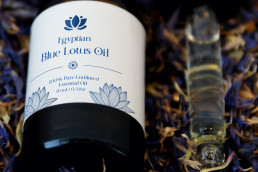
If you are weighing up blue lotus oil vs Gritman, you are probably trying to work out whether the premium, small-batch Egyptian absolute sold at Pure Blue Lotus Oil is genuinely different from the more widely available blue lotus offerings on sites like Gritman Essential Oils, or whether the price gap simply reflects marketing. This article gives you an honest, side-by-side look at sourcing, extraction, scent character, intended use, price structure and the situations where each makes sense, so you can buy with realistic expectations rather than guesswork.
Table of Contents
- Why This Comparison Comes Up So Often
- Sourcing: Where the Flowers Come From
- Pure Blue Lotus Oil
- Gritman
- Extraction: Absolute, Essential Oil or Pre-Diluted?
- What Pure Blue Lotus Oil Offers
- What Gritman Typically Offers
- Scent Profile: The Honest Comparison
- Intended Use: What Each Is Built For
- Price: What the Gap Actually Represents
- Side-by-Side: Practical Summary
- When Gritman Is Actually the Right Choice
- When Pure Blue Lotus Oil Is Worth the Step Up
- A Note on Both Brands' Honesty
- Frequently Asked Questions
- Where to Go From Here
- Experience the Real Egyptian Absolute
It is written and clinically reviewed by Antonio Breshears, ND, CCA, a Bastyr-trained naturopathic doctor and certified clinical aromatherapist. If you are new to this plant, start with the complete guide to blue lotus oil, which covers the botany, chemistry and safety framework that underlies every comparison on this site.
Why This Comparison Comes Up So Often
Gritman Essential Oils is a long-running American essential oil retailer with a broad catalogue. They carry blue lotus as one product among hundreds, usually offered as an absolute diluted into a carrier oil at a relatively accessible price point. Pure Blue Lotus Oil, by contrast, is a single-focus apothecary; blue lotus is not one product among many, it is the entire premise of the brand. That structural difference shapes almost everything downstream: sourcing relationships, batch size, quality control, presentation and price.
Buyers typically arrive at the blue lotus oil vs Gritman question for one of three reasons. They have tried a mass-market or unknown-source blue lotus and found it thin or unimpressive, and they want to know whether a premium offering smells and performs differently. They have heard Gritman recommended as a reliable budget option and want to know what the trade-offs are. Or they are simply comparing suppliers the way any careful buyer would before spending money on a specialist botanical.
Sourcing: Where the Flowers Come From
Authentic Nymphaea caerulea is an Egyptian water lily. The finest absolutes come from flowers harvested in Egypt, where the plant has grown along the Nile and its associated wetlands for millennia. Other regions, India and parts of Southeast Asia in particular, produce related blue water lilies that are sometimes sold under the same common name but belong to different species or hybrids, with meaningfully different alkaloid and flavonoid profiles.
Pure Blue Lotus Oil
Pure Blue Lotus Oil sources exclusively from Egyptian Nymphaea caerulea, working directly with artisan distillers who harvest at flowering peak and process in small batches. Because the entire brand depends on the authenticity of this one plant, there is no financial incentive to substitute cheaper material or blend in related species. Batches are tracked, the absolute is bottled by hand, and the supply chain is short enough to answer specific questions about harvest and extraction.
Gritman
Gritman’s blue lotus listings typically describe the product as blue lotus absolute without always specifying the country of origin in detail. Gritman’s model is that of a general aromatherapy retailer sourcing from a range of suppliers to keep a large catalogue filled. That is not a criticism, it is simply the nature of a broad-catalogue business, but it does mean the buyer has less visibility into whether the specific batch in front of them is Egyptian-grown, Indian-grown or of mixed provenance.
Extraction: Absolute, Essential Oil or Pre-Diluted?
Blue lotus is almost never sold as a true steam-distilled essential oil, because the flower yields very little volatile material through distillation. The commercial reality is that the overwhelming majority of blue lotus on the market is an absolute, extracted with food-grade solvent (usually hexane or ethanol) which is then evaporated off to leave a thick, fragrant, dark resin. A smaller premium tier uses supercritical CO2 extraction. And a very large segment of the market sells the absolute already diluted into jojoba or another carrier oil, at dilution rates ranging from around 5 percent up to 25 percent.
What Pure Blue Lotus Oil Offers
Pure Blue Lotus Oil supplies the undiluted absolute, letting the buyer choose their own carrier and their own dilution. This matters for two reasons. First, you are paying for the actual botanical, not for jojoba bulked out with a splash of absolute. Second, you retain flexibility: the same bottle can become a 1 percent facial serum, a 3 percent pulse-point blend or a diffuser oil, depending on what you need that week.
What Gritman Typically Offers
Gritman’s blue lotus is commonly listed as an absolute, and depending on the specific product it may be pre-diluted. Pre-dilution makes the product cheaper per millilitre and easier for a beginner to apply directly, but it restricts what you can do with it. If you want to use the material in a skincare formulation at a specific percentage, a pre-diluted oil forces you to back-calculate the maths and accept that a portion of the bottle is already carrier.
Scent Profile: The Honest Comparison
This is where the difference is most immediate and most difficult to fake. A high-quality Egyptian blue lotus absolute opens with a cool, slightly aquatic floral note, moves into a deep honeyed and waxy floral heart, and settles into a warm, slightly balsamic, almost smoky base. The overall impression is meditative rather than sweet, serious rather than perfumed. It is the kind of scent that slows your breathing on the first inhalation.
Lesser blue lotus material, whether from unclear sourcing, clumsy extraction or over-dilution, tends to smell flatter. You get a generic floral top that reads as “nice” rather than distinctive, little of the honeyed middle, and almost no smoky-balsamic base. It is not unpleasant, but it is not transporting either.
Pure Blue Lotus Oil is formulated and selected to preserve the full arc of that scent profile. Gritman’s material, in my direct experience and in the experience of clients who have compared the two, tends to sit in the “pleasant but thin” zone, which is consistent with a broader-catalogue retailer rather than a specialist source. Neither is dishonest; they are simply aiming at different price points and different buyers.
Intended Use: What Each Is Built For
Pure Blue Lotus Oil
The product is designed for buyers who want blue lotus as a serious ingredient: in meditation practice, in facial skincare formulation, in sleep and pulse-point rituals, in bespoke natural perfumery. The presentation (amber glass, hand-bottled, clearly labelled) and the price reflect that positioning. You are buying the material you would want if blue lotus is going to be a keystone of a ritual or a formulation, not a novelty.
Gritman
Gritman’s product is positioned more as a general aromatherapy supply. If you want to try blue lotus at low cost, add it to a diffuser occasionally, or include a small quantity in a general-purpose blend, it will do that job. It is an entry-level option, and there is no shame in starting there. What it is less suited to is demanding use cases: precise skincare formulation at a stated percentage, serious perfumery work, or ritual practice where the scent itself is doing much of the work.
Price: What the Gap Actually Represents
At the time of writing, Gritman’s blue lotus listings tend to sit at a noticeably lower price per millilitre than Pure Blue Lotus Oil’s undiluted absolute. That is real and worth naming directly. But the comparison is not quite like-for-like, for three reasons.
First, pre-diluted oils are cheaper per millilitre because a large fraction of what you are paying for is carrier oil, typically jojoba, which costs a fraction of what the absolute itself costs. A 10 ml bottle of 10 percent blue lotus in jojoba contains roughly 1 ml of absolute. When you recalculate on an absolute-equivalent basis, the price gap narrows considerably.
Second, sourcing transparency and small-batch artisan distillation carry real costs: direct producer relationships, tighter quality control, smaller runs, hand bottling. A broad-catalogue retailer cannot absorb those costs at scale and would not try to, because their business model is different.
Third, scent quality is not linear with price. A thin, unmemorable blue lotus at half the price still leaves you with a thin, unmemorable blue lotus. If the purpose of the purchase is to actually use the material in a way where its scent and character matter, a cheaper product that does not deliver is not a saving, it is a waste of whatever you did spend.
Side-by-Side: Practical Summary
- Sourcing clarity: Pure Blue Lotus Oil specifies Egyptian Nymphaea caerulea from known artisan producers. Gritman’s sourcing is less specific in public listings.
- Form: Pure Blue Lotus Oil sells the undiluted absolute. Gritman commonly sells absolute and, depending on the product, a pre-diluted version.
- Scent: Pure Blue Lotus Oil delivers the full aquatic-to-honeyed-to-balsamic arc. Gritman’s material tends toward the lighter, more generic floral end of that arc.
- Best use: Pure Blue Lotus Oil for skincare formulation, meditation, ritual, serious perfumery. Gritman for casual diffusion, beginner experimentation, low-stakes blending.
- Price: Gritman is cheaper per millilitre at face value. On an absolute-equivalent basis, and factoring in scent quality, the effective gap is smaller than the sticker suggests.
When Gritman Is Actually the Right Choice
I will not pretend that Pure Blue Lotus Oil is the right answer for every buyer. If you are curious about blue lotus, have never smelled it, and simply want to know whether it is a plant you want to live with before you commit to a premium bottle, a lower-cost entry point is entirely reasonable. If you already know you want a very casual, occasional diffuser addition and you have no interest in skincare formulation or ritual practice, a cheaper general-catalogue product will cover that use.
Where that logic breaks down is the moment you want to use blue lotus for its actual character: the meditative scent, the skincare-active flavonoid profile, the presence it brings to a blend. At that point the difference between a specialist absolute and a general-catalogue one becomes the difference between “this is why people have written about this flower for three thousand years” and “that’s nice, I suppose”.
When Pure Blue Lotus Oil Is Worth the Step Up
The premium tier earns its price in specific situations. Facial serum formulation at a measured 1 to 2 percent dilution, where the active flavonoids (apigenin, quercetin, kaempferol) and the scent itself both matter. Evening meditation or breathwork practice, where the full scent arc supports a parasympathetic shift in a way a thinner oil does not. Natural perfumery, where blue lotus sits in a composition and has to hold its own against other serious materials. Pulse-point rollerballs intended for daily ritual use, where you want every inhalation to reward the ritual.
In each of those, the difference between a specialist absolute and a general one is not subtle. It is the reason people spend the money.
A Note on Both Brands’ Honesty
Nothing in this comparison is an accusation of dishonesty against Gritman. They are a long-standing retailer with a broad catalogue, they sell blue lotus at a reasonable price for what it is, and for many buyers that is genuinely the right match. What I am asking you to do is match your purchase to your actual use case. A cheap bottle that does not do what you need it to do is not a bargain, and a premium bottle bought for a use case that does not require it is money spent on a distinction you will not notice.
Frequently Asked Questions
Is Gritman’s blue lotus fake?
No, and that is not the claim being made here. Gritman sells blue lotus absolute at a general-catalogue price point. The question is not fake versus real, it is thin and generic versus full-spectrum and distinctive, which is the difference between a broad-catalogue product and a specialist one.
Why is Pure Blue Lotus Oil more expensive?
Because the entire brand is built around a single botanical, sourced directly from Egyptian producers, processed in small batches and hand bottled. Those choices cost more at every stage and that cost is reflected in the price. You are not paying for a marketing markup, you are paying for a shorter, more transparent and more selective supply chain.
Is a pre-diluted blue lotus oil a rip-off?
Not automatically. Pre-dilution is convenient for beginners and for casual users who do not want to mix their own blends. The caveat is simple: you are paying partly for carrier oil. If you want flexibility across multiple applications (face, body, diffuser, perfumery), an undiluted absolute gives you more per pound spent on the actual botanical.
Can I use Gritman’s blue lotus on my face?
You can use any genuine blue lotus absolute on your face if you dilute it correctly, typically 1 to 2 percent into jojoba or squalane. Whether it will deliver the skincare result you are hoping for depends on the strength of the actual absolute in the bottle, which is where specialist sourcing tends to outperform general-catalogue sourcing.
Which one smells better?
In my direct experience and in the experience of clients who have compared them side by side, Pure Blue Lotus Oil delivers the fuller honeyed-to-balsamic scent arc that is characteristic of high-quality Egyptian absolute. Gritman’s material tends to read as a lighter, more generic floral. Scent is subjective, but that pattern is consistent enough to name.
Is blue lotus oil safe in pregnancy?
No, and this applies regardless of brand. Blue lotus absolute is avoided during pregnancy and breastfeeding as a precaution, because its alkaloid profile has not been adequately studied in those contexts. Brand choice does not change the safety picture.
Will Gritman’s oil work for meditation?
It can, particularly if you are new to blue lotus and have nothing to compare it with. The experience tends to be quieter and less transporting than what a higher-quality absolute delivers, which for some buyers is fine, and for others becomes a reason to upgrade once they realise what they have been missing.
How long does an undiluted absolute last?
A properly stored Egyptian blue lotus absolute, kept in dark glass in a cool cupboard, remains usable for around three to four years. Pre-diluted products have a shorter effective life because the carrier oil itself oxidises, typically giving you twelve to eighteen months of peak quality.
Should I start with Gritman and upgrade later?
That is a perfectly reasonable path, particularly if you have never smelled blue lotus before and want a low-stakes introduction. Many buyers do exactly that. The honest caveat is that a thin first impression can sometimes convince people that blue lotus is not for them, when the reality is that they have not yet smelled a good one.
Is there a meaningful chemistry difference?
Yes, in principle. Egyptian Nymphaea caerulea has a well-characterised alkaloid and flavonoid profile (aporphine, nuciferine, apigenin, quercetin, kaempferol). Material sourced from related species, or processed carelessly, can have a weaker or altered profile. General-catalogue retailers do not always publish batch-level analysis, which makes it harder to verify the chemistry of any given bottle.
Where to Go From Here
If you want to understand the botanical, chemical and practical framework behind every comparison on this site, start with the complete guide to blue lotus oil. From there, you will be better equipped to read any retailer’s product description and work out, for yourself, whether the material is the real thing and whether it matches what you intend to do with it. The goal of this comparison has never been to tell you what to buy; it has been to give you the frame of reference to buy the right thing for you.

Antonio Breshears
Antonio Breshears is a renowned expert in holistic medicine and beauty, with over 25 years of research experience dedicated to uncovering the secrets of nature's most powerful remedies. Holding a degree in Naturopathic Medicine, Antonio's passion for healing and well-being has driven him to explore the intricate connections between mind, body, and spirit.
Over the years, Antonio has become a respected authority in the field, helping countless individuals discover the transformative power of plant-based therapies, including essential oils, herbs, and natural supplements. He has authored numerous articles and publications, sharing his wealth of knowledge with a global audience seeking to improve their overall health and well-being.
Antonio's expertise extends to the realm of beauty, where he has developed innovative, all-natural skincare solutions that harness the potency of botanical ingredients. His formulations embody his deep understanding of the healing properties found in nature, providing holistic alternatives for those seeking a more balanced approach to self-care.
With his extensive background and dedication to the field, Antonio Breshears is a trusted voice and guiding light in the world of holistic medicine and beauty. Through his work at Pure Blue Lotus Oil, Antonio continues to inspire and educate, empowering others to unlock the true potential of nature's gifts for a healthier, more radiant life.