The journey from delicate blue lotus bloom to the precious amber oil that captivates connoisseurs worldwide is an alchemy of time-honored tradition, botanical expertise, and modern quality control. Understanding the extraction and production processes behind Blue Lotus Oil not only reveals the craftsmanship that preserves its vibrant fragrance and therapeutic potential, but also underscores the importance of ethical sourcing, sustainability, and rigorous purity testing. In this comprehensive guide, we delve into the techniques, best practices, and standards that define world–class Blue Lotus Oil production.
Table of Contents
- Steam Distillation vs. Solvent Extraction
- Principles of Steam Distillation
- Solvent Extraction and Absolute Production
- Comparing Yields, Aromas, and Applications
- Sourcing & Sustainable Farming
- Geographic Origins and Cultivar Selection
- Organic Practices and Water Management
- Harvesting Techniques and Timing
- Quality Standards & Purity Testing
- Good Manufacturing Practices (GMP) and Certification
- Analytical Techniques: GC-MS and HPTLC
- Adulteration Risks and Authentication Strategies
- Storage, Stability, and Shelf Life
- Innovations & Future Trends in Extraction
- Cryogenic Distillation and Vacuum Techniques
- Green Solvents and Supercritical CO₂ Extraction
- Blockchain and Supply‑Chain Transparency
Steam Distillation vs. Solvent Extraction
Principles of Steam Distillation
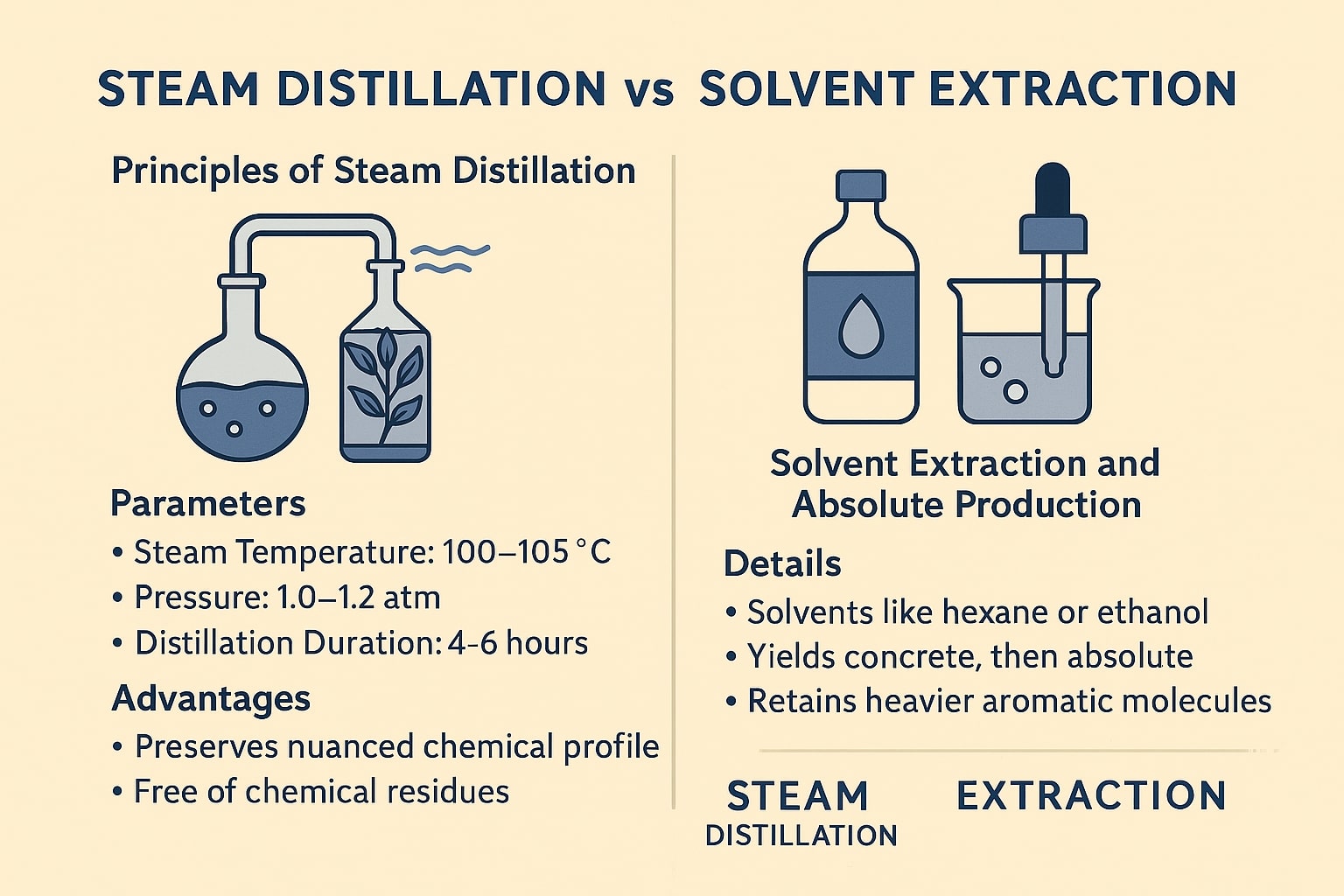
Steam distillation remains the gold standard for extracting essential oils from delicate flowers like Blue Lotus. In this gentle, water‑based process, live steam passes through a bed of freshly harvested petals and stamens. Heat and humidity cause aromatic compounds (primarily aporphine alkaloids and flavonoids) to vaporize along with water vapor. The vapor mixture then cools in a condenser, separating into hydrosol and pure essential oil. Key advantages include preservation of the oil’s nuanced chemical profile and absence of chemical residues.
Optimal parameters, steam temperature (around 100–105 °C), pressure (1.0–1.2 atm), and distillation duration (4–6 hours per batch), are carefully controlled to maximize yield without damaging fragile compounds. Over‑exposure to heat can degrade the top notes and mask the signature blue‑petal aroma, while insufficient time leaves valuable constituents behind.
Solvent Extraction and Absolute Production
Solvent extraction, often using food‑grade hexane or ethanol, offers an alternative when steam distillation yields are too low for commercial viability. In this process, dried flower parts are immersed in solvent to dissolve aromatic lipids and waxes. After filtration, the solvent is evaporated under reduced pressure, leaving behind a fragrant concrete. Further alcohol washing and fractionation produce the Blue Lotus absolute, a viscous, richly scented extract that retains heavy molecules less amenable to steam distillation.
While absolutes capture deeper, heavier notes and can enhance perfumery blends, they may contain residual solvent trace amounts if not meticulously purified. Buyers seeking an “absolute” should verify GC‑MS reports and solvent‑residue tests. Many ethical producers combine both methods, distilling a light essential oil for aromatherapy and recovering the concrete for high‑end perfumery and topical formulations.
Comparing Yields, Aromas, and Applications
Typical yields for steam‑distilled Blue Lotus Oil are extremely low, often 0.01–0.03% (100–300 mg of oil per kilogram of fresh petals). Solvent extraction can boost yields to 0.1–0.3%, but at the expense of introducing non‑volatile constituents. From an olfactory standpoint, steam oil conveys the bright, ethereal top notes and a subtle honeyed sweetness, whereas absolute brings out deep floral‑spice undertones and a richer mouthfeel on the skin. Producers tailor extraction methods according to end‑use: therapeutic aromatherapy, perfumery, or premium skincare.
Sourcing & Sustainable Farming
Geographic Origins and Cultivar Selection
Blue Lotus (Nymphaea caerulea) thrives in tropical and subtropical wetlands. Renowned fields along Egypt’s Nile Delta, Madagascar’s river lagoons, and select East African marshes yield flowers with distinct chemotypes. Soil composition, rainfall patterns, and altitude all influence alkaloid profiles and aromatic intensity. Ethical producers partner with smallholder farmers to cultivate certified organic strains, selecting tubers propagated through tissue culture or controlled division to ensure genetic consistency and disease resistance.
Organic Practices and Water Management
Sustainable cultivation emphasizes minimal chemical inputs and careful water stewardship. Blue Lotus thrives in shallow, nutrient‑rich ponds with gentle water circulation. Organic fertilizers, compost teas, fish emulsion, and seaweed extracts, nourish plants without synthetic pesticides. Farmers employ integrated pest management (IPM) strategies: beneficial insects, trap crops, and biopesticides like neem oil to deter aphids and mites while preserving aquatic biodiversity. Rainwater harvesting and solar‑powered pumps reduce reliance on municipal supplies, ensuring local communities share in long‑term water security.
Harvesting Techniques and Timing
Harvesters hand‑pick blossoms at first light, when petals are fully open but dew has evaporated, this peak aroma window ensures maximum essential‑oil concentration. Care is taken to snip stems without disturbing tubers or roots, preserving aquatic flora and allowing for subsequent harvests. Flowers are transported in shade‑lined baskets to on‑site processing units within two hours, minimizing volatile loss. Prompt processing, distillation or drying, locks in fragrance, avoiding fermentation that can sour delicate essences.
Quality Standards & Purity Testing
Good Manufacturing Practices (GMP) and Certification
Top-tier Blue Lotus Oil producers adhere to international Good Manufacturing Practices (GMP) and maintain organic certification (USDA Organic, EU Organic). Traceability systems document every stage, from tuber sourcing and farm audits to extraction logs and batch records. ISO 9001 quality management, along with ISO 9235 terminology standards for essential oils, further reinforce consistency. Brands that achieve Fair for Life or Rainforest Alliance certification demonstrate not only product purity but also social and environmental responsibility.
Analytical Techniques: GC-MS and HPTLC
Gas Chromatography–Mass Spectrometry (GC‑MS) stands as the definitive test for essential‑oil composition. By comparing chromatograms against authenticated reference libraries, chemists confirm the presence and relative abundance of marker compounds like nuciferine, aporphine alkaloids, and key monoterpenes. High‑Performance Thin‑Layer Chromatography (HPTLC) provides a cost‑effective fingerprint assay, detecting adulterants such as synthetic aroma chemicals or cheaper citrus oils. Leading suppliers make full GC‑MS reports available to clients along with retention‑index data for transparency.
Adulteration Risks and Authentication Strategies
Due to its rarity and high value, Blue Lotus Oil faces significant adulteration risk. Unscrupulous vendors may dilute pure oil with carrier oils, blend it with other absolutes, or label synthetic fragrances as genuine. Consumers should look for batch‑specific GC‑MS chromatograms, certificates of analysis (CoA), and third‑party microauthentication using DNA barcoding of plant residues. Some innovators embed molecular tags, benign isotopic markers, into their supply chains, ensuring that any deviation in isotope ratios flags counterfeiting.
Storage, Stability, and Shelf Life
Once extracted, Blue Lotus Oil is sensitive to light, heat, and oxygen. Producers recommend storage in dark amber or cobalt‑blue glass bottles with airtight caps and optional argon or nitrogen headspace flushing. Ideal conditions, cool (15–20 °C), dark, and dry, extend shelf life to 2–3 years with minimal oxidative changes. Visible signs of degradation include darkening color, off‑notes (rancid or “green” aroma), and increased viscosity. Periodic GC‑MS re‑testing ensures that active constituents remain within specified ranges.
Innovations & Future Trends in Extraction
Cryogenic Distillation and Vacuum Techniques
Emerging technologies like cryogenic steam distillation, where steam is pre-cooled to preserve heat‑sensitive compounds, and vacuum-assisted distillation are gaining traction. By lowering boiling points under reduced pressure, these methods extract delicate alkaloids at cooler temperatures, retaining bright top notes that conventional distillation might diminish. Though still cost‑intensive, such innovations promise boutique‑grade oils with unmatched aroma fidelity.
Green Solvents and Supercritical CO₂ Extraction
Environmental concerns drive interest in supercritical CO₂ extraction, a solvent‑free technique using liquid CO₂ at high pressure to solubilize aromatic components. The process yields a full‑spectrum extract without petrochemical residues, with tunable parameters to isolate specific fractions. While initial investment is substantial, supercritical CO₂ offers scalability, solvent‑free purity, and the ability to recover non‑volatile constituents in co‑products like botanical waxes.
Blockchain and Supply‑Chain Transparency
Cutting‑edge producers pilot blockchain platforms to record every transaction, from tuber planting and harvest GPS coordinates to processing timestamps and lab results. Consumers can scan QR codes on each bottle to access immutable, verifiable data covering origin, extraction method, and purity tests. This digital provenance enhances consumer trust, supports premium pricing, and helps combat illegal wild harvesting.
From the tranquil ponds where Blue Lotus emerges at dawn to the meticulous laboratory analyses that guarantee its purity, the extraction and production of Blue Lotus Oil epitomize the union of ancient wisdom and modern science. Whether steam‑distilled for therapeutic aromatherapy, solvent‑extracted for perfumery absolutes, or captured through supercritical innovation, each drop reflects a commitment to quality, sustainability, and ethical stewardship. As consumers increasingly seek transparency and authenticity, Pure Blue Lotus Oil’s dedication to rigorous farming practices, responsible sourcing, and cutting‑edge extraction ensures that the legacy of the Sacred Blue Lily thrives, bottle after bottle, generation after generation.

Related Guides
COA Required for Cosmetic Batch Record Blue Lotus Oil: 2026
COA Required for Cosmetic Batch Record Blue Lotus Oil—what to verify: identity,…

Essential Oil Blends 2026: Blue Lotus Recipes & Ratios
Master essential oil blends with Blue Lotus recipes, safe dilution ratios, and…