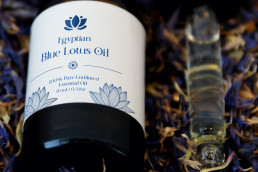
If you have been researching where to buy authentic blue lotus oil, you have almost certainly landed on two names: Pure Blue Lotus Oil and Eden Botanicals. Both sell legitimate Nymphaea caerulea extracts, which already puts them ahead of the sea of counterfeits circulating online. The question readers keep asking is the obvious one: blue lotus oil vs Eden Botanicals, which is actually the better choice? This article compares the two honestly, covering sourcing, extraction method, scent profile, price, intended use, and the kind of buyer each one genuinely suits.
Table of Contents
- Two Legitimate Vendors, Two Different Philosophies
- Sourcing and Authenticity
- Extraction Method: Absolute Versus Absolute
- Scent Profile: Side by Side
- Price and Value
- Intended Use: Who Each Suits Best
- Eden Botanicals Suits You If
- Pure Blue Lotus Oil Suits You If
- Practical Considerations
- A Note on Therapeutic Use
- Frequently Asked Questions
- Where to Go From Here
- Try Our Egyptian Blue Lotus Oil
It is written and clinically reviewed by Antonio Breshears, ND, CCA, a Bastyr-trained naturopathic doctor and certified clinical aromatherapist. For general grounding in what blue lotus is and how it behaves in the body, readers may find it useful to first read The Complete Guide to Blue Lotus Oil, which covers chemistry, history, and safety in more depth than this comparison can.
Two Legitimate Vendors, Two Different Philosophies
Before getting into specifics, a word about why this comparison matters at all. The blue lotus market is notoriously murky. A great deal of what is sold online as “blue lotus essential oil” is either heavily diluted, adulterated with synthetic floral fragrance, or not Nymphaea caerulea at all but a related lily with none of the interesting chemistry. Against that backdrop, Eden Botanicals and Pure Blue Lotus Oil both occupy the small, honest end of the market. They are not competing with counterfeits; they are competing with each other for the attention of serious buyers.
They differ in philosophy, however. Eden Botanicals is a large, well-established California-based aromatic supplier with an enormous catalogue spanning hundreds of essential oils, absolutes, and CO2 extracts. Blue lotus is one item among many. Pure Blue Lotus Oil, by contrast, is a specialist. The entire business is built around a single botanical, which means sourcing, batch selection, and quality control are all oriented toward that one flower rather than spread across a catalogue.
Neither approach is inherently better. A generalist vendor gives you breadth and the reassurance of a long trading history. A specialist gives you depth, focus, and, if done well, a more considered product. Which one serves you best depends on what you want from the oil.
Sourcing and Authenticity
Both vendors sell genuine Nymphaea caerulea. That is the baseline. Eden Botanicals typically lists its blue lotus absolute as originating from Egypt or India, depending on the current batch, and provides GC-MS documentation on request. They have a long-standing reputation in the aromatherapy community and their authenticity is not seriously questioned by anyone who has worked with aromatic materials.
Pure Blue Lotus Oil sources exclusively from Egypt, which matters more than it may appear. Egyptian Nymphaea caerulea is the historical reference material: the flower depicted in tomb paintings, referenced in the Ebers Papyrus, and carried through the traditional perfumery lineage of the Nile delta. Indian-grown blue lotus is chemically similar but not identical; soil, water, and climate produce subtle shifts in the alkaloid and flavonoid profile. For buyers who care about provenance and authenticity in the traditional sense, Egyptian origin carries weight.
Neither vendor sells adulterated product, as far as the available evidence suggests. Both will provide batch information if you ask. If you are coming from a history of disappointing online purchases, you can relax on the question of whether you are getting real blue lotus from either source.
Extraction Method: Absolute Versus Absolute
Here is where the comparison gets interesting, because both vendors primarily sell an absolute rather than a true steam-distilled essential oil. This is almost unavoidable with blue lotus. The flower is too delicate and too low-yielding for steam distillation to be commercially viable at scale; the result is that “blue lotus essential oil” as a category is, with very rare exceptions, actually blue lotus absolute.
An absolute is produced by solvent extraction, typically using hexane or ethanol, followed by careful removal of the solvent. The finished product retains a fuller aromatic profile than steam distillation would capture, because heat-sensitive aromatic molecules survive the process. The trade-off is that trace solvent residues are a theoretical concern, which is why reputable producers test their finished material.
Eden Botanicals lists solvent extraction and is transparent about it. Pure Blue Lotus Oil uses solvent extraction for its standard offering and has experimented with supercritical CO2 extraction for its premium line; CO2 extraction avoids petroleum solvents entirely and is generally considered the cleanest method for delicate florals, though it is considerably more expensive. If solvent residue is a concern for you, ask either vendor what they test for and request documentation.
Scent Profile: Side by Side
This is where subjective preference enters, and where readers often make up their minds. Both oils are recognisably blue lotus: a cooler, aquatic-floral top note, a deep honeyed-floral heart, and a balsamic, slightly smoky base that lingers on skin for hours. But there are differences.
Eden Botanicals’ blue lotus absolute tends toward the slightly greener, herbaceous end of the spectrum, particularly in its Indian-sourced batches. There is a tea-like quality to it, a dry, almost hay-adjacent freshness underneath the floral sweetness. It blends exceptionally well with other florals and works cleanly in perfumery applications where you want blue lotus to sit beneath jasmine or neroli without overwhelming them.
Pure Blue Lotus Oil leans toward the honeyed, resinous end. The Egyptian origin comes through in a warmer, more ambered profile with pronounced balsamic depth. It feels more meditative and less crisp, which some readers will prefer and others will find too rich. For solo diffusion, ritual use, or skin-anointing where you want the oil to be the centrepiece rather than a supporting note, this warmer profile tends to be more satisfying.
There is no objectively correct answer here. If you have ever smelled blue lotus absolute from more than one producer, you already know how much batch variation matters. The safest approach, if scent matters to you, is to try a small quantity of each before committing to a larger bottle.
Price and Value
Blue lotus absolute is expensive everywhere, for the unavoidable reason that it takes thousands of flowers to produce a single gram of finished absolute. Both vendors price in the range that legitimate blue lotus commands; anyone selling it significantly cheaper is almost certainly selling something else.
Eden Botanicals prices their blue lotus absolute competitively for the serious-hobby perfumery market, with smaller sizes available that make initial experimentation accessible. Their pricing reflects their efficient, high-volume operation. Pure Blue Lotus Oil prices toward the premium end, reflecting single-origin Egyptian sourcing, smaller batch sizes, and more intensive quality control per unit. The bottling is also different: Pure Blue Lotus Oil uses dark apothecary glass with a presentation oriented toward the end user, while Eden Botanicals’ packaging is utilitarian in a way that suits the perfumer’s workbench.
Cost per millilitre is not the only measure of value. If you are buying blue lotus as a raw material for formulating your own products, Eden Botanicals’ pricing and sizing will suit you. If you are buying a finished oil to use as-is, for ritual, self-care, or gifting, Pure Blue Lotus Oil’s presentation and single-focus curation may feel worth the premium.
Intended Use: Who Each Suits Best
Eden Botanicals Suits You If
You are a perfumer, soap-maker, or natural product formulator who needs blue lotus as one ingredient among many. You value a large catalogue from a single supplier so you can order multiple materials at once. You are comfortable working with absolutes and understand how to dilute them for different applications. Scent versatility matters more to you than single-botanical focus. You appreciate a business that has been around for decades and has deep roots in the aromatherapy community.
Pure Blue Lotus Oil Suits You If
You are buying blue lotus for its own sake: for ritual, meditation, sleep preparation, skin anointing, or as a signature scent. You want Egyptian provenance specifically, with the historical and traditional weight that carries. You prefer buying from a specialist whose entire expertise is oriented around this one flower. You value presentation and want something that feels considered when you open the package. You are willing to pay somewhat more for single-focus curation.
Practical Considerations
A few smaller points worth raising. Eden Botanicals offers a wider range of sample sizes, which is genuinely useful for first-time buyers. Pure Blue Lotus Oil tends to focus on standard retail sizes in a ready-to-use format. Eden Botanicals ships internationally from the United States, which works well for some destinations and poorly for others depending on customs and restrictions; blue lotus is restricted or prohibited in Russia, Poland, Latvia, and the US state of Louisiana, with regulatory complexity in Australia, and this affects both vendors equally.
Shelf life is the same for both, approximately three to four years for a blue lotus absolute stored properly in dark glass, somewhere cool and dark. Eden Botanicals’ simple dropper bottles and Pure Blue Lotus Oil’s apothecary glass both protect the oil adequately; storage conditions matter more than the specific bottle.
Both vendors can be relied on for responsive customer service, though the tone differs. Eden Botanicals feels like a large, well-run business with knowledgeable staff. Pure Blue Lotus Oil feels smaller and more personal, which some buyers prefer and others find less reassuring. Neither is better in absolute terms; they are different experiences.
A Note on Therapeutic Use
Whichever vendor you choose, the therapeutic properties of the oil itself are essentially the same. Both contain the characteristic alkaloids (aporphine, nuciferine) and flavonoids (apigenin, quercetin, kaempferol) that give blue lotus its gently calming, mood-supportive profile. The small chemical differences between Egyptian and Indian material, or between batches, are unlikely to be clinically significant for most uses. If you are using blue lotus to support evening wind-down, ease mild anxiety, or add a meditative note to personal ritual, either oil will serve you competently.
Standard safety applies to both: avoid during pregnancy and breastfeeding, exercise caution if you take dopaminergic medications, MAOIs, or heavy sedatives, and respect the regulatory restrictions in your jurisdiction before ordering.
Frequently Asked Questions
Is Eden Botanicals blue lotus real?
Yes. Eden Botanicals sells genuine Nymphaea caerulea absolute, typically sourced from Egypt or India, and will provide batch documentation on request. Their authenticity is not seriously questioned within the aromatherapy community.
Is Pure Blue Lotus Oil real?
Yes. Pure Blue Lotus Oil sources exclusively from Egypt and specialises entirely in this one botanical. The oil is authentic Nymphaea caerulea and is typically supplied as an absolute, with a premium supercritical CO2 extraction available in some batches.
What is the main difference between the two?
Eden Botanicals is a large generalist supplier with a huge catalogue; blue lotus is one of hundreds of products. Pure Blue Lotus Oil is a specialist whose entire focus is this one flower. The chemistry is broadly similar; sourcing origin, scent profile, presentation, and price positioning differ.
Which one is cheaper?
Eden Botanicals typically prices lower per millilitre, reflecting their volume operation and perfumery-oriented market. Pure Blue Lotus Oil prices toward the premium end, reflecting single-origin Egyptian sourcing and a more curated, end-user presentation.
Which smells better?
This is subjective. Eden Botanicals’ blue lotus tends greener and more tea-like, with a drier freshness. Pure Blue Lotus Oil leans warmer, honeyed, and more balsamic, with pronounced amber depth. Perfumery use often favours the former; solo ritual use often favours the latter.
Are both solvent-extracted?
Primarily yes. Both vendors sell absolutes, which are produced by solvent extraction; this is almost universal for blue lotus because the flower is too delicate for commercial steam distillation. Pure Blue Lotus Oil offers a supercritical CO2 extraction in some premium batches, which avoids petroleum solvents entirely.
Which should I buy for perfumery?
Eden Botanicals is probably the better fit if you are formulating blends. The pricing, sample sizes, and broader catalogue make it practical to order blue lotus alongside other materials you need, and the slightly greener scent profile blends cleanly beneath other florals.
Which should I buy for ritual or personal use?
Pure Blue Lotus Oil tends to suit this use better. The Egyptian provenance, single-focus curation, warmer scent profile, and finished presentation are all oriented toward the buyer who wants blue lotus as the centrepiece rather than as an ingredient.
Do either require dilution before use on skin?
Yes. Both are absolutes and should be diluted in a carrier oil before skin application: typically 1 to 2 percent for facial use, 2 to 3 percent for body use, and up to 3 percent for targeted application. Neat use on skin is not recommended with either.
Can I use them interchangeably?
Broadly yes. The therapeutic properties and safety profile are essentially the same. If you are partway through a blend or protocol and need to switch vendors, you can do so without meaningful loss of effect. The scent difference will be noticeable in a side-by-side comparison but not disruptive in most applications.
Where to Go From Here
If you have read this far, you likely know which option suits you already. For formulators and perfumers working across many botanicals, Eden Botanicals is a sensible, trusted choice. For buyers who want a single, focused, Egyptian-sourced blue lotus oil for ritual, self-care, or gifting, Pure Blue Lotus Oil is built precisely for that use. Both are legitimate; neither is a mistake.
For deeper background on the chemistry, history, and safe use of blue lotus regardless of vendor, return to The Complete Guide to Blue Lotus Oil, which grounds the practical questions this comparison raises in the broader context of the plant itself.

Antonio Breshears
Antonio Breshears is a renowned expert in holistic medicine and beauty, with over 25 years of research experience dedicated to uncovering the secrets of nature's most powerful remedies. Holding a degree in Naturopathic Medicine, Antonio's passion for healing and well-being has driven him to explore the intricate connections between mind, body, and spirit.
Over the years, Antonio has become a respected authority in the field, helping countless individuals discover the transformative power of plant-based therapies, including essential oils, herbs, and natural supplements. He has authored numerous articles and publications, sharing his wealth of knowledge with a global audience seeking to improve their overall health and well-being.
Antonio's expertise extends to the realm of beauty, where he has developed innovative, all-natural skincare solutions that harness the potency of botanical ingredients. His formulations embody his deep understanding of the healing properties found in nature, providing holistic alternatives for those seeking a more balanced approach to self-care.
With his extensive background and dedication to the field, Antonio Breshears is a trusted voice and guiding light in the world of holistic medicine and beauty. Through his work at Pure Blue Lotus Oil, Antonio continues to inspire and educate, empowering others to unlock the true potential of nature's gifts for a healthier, more radiant life.