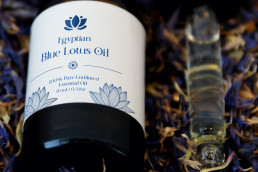
Blue lotus oil has a broader set of health and wellness applications than most aromatics, and a narrower set of legitimate therapeutic claims than the internet usually suggests. This pillar brings the two together. It sets out what blue lotus oil actually does at a mechanism level, walks through each major health territory in which it has a role, and points to the cluster articles that cover each in specific protocol depth. It is designed to be the central reference for anyone building a daily practice with the oil, or trying to decide whether to.
Table of Contents
- How Blue Lotus Oil Works
- Nervous System and Emotional Territory
- Sleep and Circadian Territory
- Pain and Physical Comfort
- Hormonal and Cycle-Linked Territory
- Cognitive and Attention Territory
- Daily Practice Framework
- Blends: An Overview
- Safety at a Glance
- When to Seek Professional Care
- Frequently Asked Questions
- Where to Go From Here
- Begin a Daily Practice
It is written and clinically reviewed by Antonio Breshears, ND, CCA, a Bastyr-trained naturopathic doctor and certified clinical aromatherapist. For the broader context on the flower, the oil, and the tradition it comes from, our complete guide to blue lotus oil is the parent reference.
How Blue Lotus Oil Works
Four mechanisms converge to produce the oil’s effect, and understanding them clarifies what blue lotus can reasonably do.
The alkaloid fraction, particularly aporphine and nuciferine, acts on dopaminergic systems at low intensity. The effect is a gentle quieting of sympathetic arousal rather than a pharmaceutical-grade sedation. Aporphine has a weak dopamine-agonist action; nuciferine a weak antagonist. The combined effect is a modulation rather than a push in either direction, which is part of why blue lotus tolerates daily use without the tolerance or rebound seen with stronger dopaminergic compounds.
The flavonoid fraction, particularly apigenin (also present in chamomile), binds with mild affinity to the central benzodiazepine receptor. This produces the low-level anxiolytic and mildly sedative effect many users recognise, without the pharmaceutical risks that make benzodiazepines a short-term tool rather than a daily one. Quercetin and kaempferol contribute anti-inflammatory and antioxidant support.
The olfactory-limbic pathway is the most immediate of the four. Scent reaches the limbic system without passing through the thalamus, which means it can shift nervous system state within a few breaths, rather than the thirty to sixty minutes oral pharmacology typically takes. This is the mechanism behind most of the acute-relief uses of the oil.
The ritual and conditioning effect is the slowest to build and the most valuable once established. Consistent use of a particular scent in a particular context teaches the nervous system to associate the scent with the desired state, so that subsequent inhalations access that state more quickly and more fully. Much of the long-term benefit of blue lotus use comes through this pathway.
The full molecular picture is covered in our pillar on blue lotus oil chemical composition and therapeutic properties.
Nervous System and Emotional Territory
The oil’s most reliable applications sit in this territory. Blue lotus is genuinely useful for anxiety, stress, and the broad landscape of emotional regulation, and offers modest but real support for more serious mood and trauma-related conditions when used as an adjunct to appropriate clinical care.
For anxiety, blue lotus works well for generalised, anticipatory, and social patterns. It is less useful as a primary intervention for panic disorder, OCD-spectrum anxiety, or PTSD, where clinical care is the appropriate first line.
For stress relief, the oil supports both acute stressor management (a before-during-after protocol) and chronic-stress regulation through rhythmic daily use. The cumulative effect over three to four weeks tends to be substantial.
For depression, blue lotus is positioned strictly as an adjunct to clinical care. It can ease some of the sleep, morning, and daily-scaffolding dimensions of the experience, but it is not an antidepressant and should not be relied on as a primary treatment.
For grief and trauma recovery, the oil plays a supportive role alongside therapy, community, and time. The olfactory-limbic route can help access and move through emotion that has been held, which is part of why blue lotus is used in some contemporary trauma-informed aromatherapy practice.
Sleep and Circadian Territory
The other major area where blue lotus contributes strongly. Sleep, dreaming, and the broader architecture of rest respond well to the oil, and this is also where the ancient tradition (dream work, prophetic sleep, contemplative practice in Egypt) and the modern science align most cleanly.
The sleep and dreams pillar is the central reference for this territory. It covers both sides of the cycle: the practical matter of getting to sleep and staying asleep, and the more evocative territory of what happens inside sleep once it arrives.
For general sleep quality and the practical work of winding down in the evening, our article on blue lotus oil for sleep is the starting point.
For insomnia, blue lotus offers a non-pharmacological option that sits between sleep hygiene and prescription medication, with a useful role for initial (difficulty falling asleep), middle (middle-of-the-night waking), and terminal (early waking) insomnia patterns.
For those interested in dream work, our articles on lucid dreaming and dream recall cover the specific protocols. Blue lotus is an oneirogen, a substance that enhances dreams, and used with the right techniques it supports both recall and lucidity reliably.
Pain and Physical Comfort
Blue lotus is not a primary analgesic. It has a modest anti-inflammatory and antispasmodic effect through the flavonoid fraction, and a significant pain-modulation effect through the nervous-system and distraction pathways. The practical result is that it helps meaningfully with several common pain patterns, while never replacing appropriate pharmacological analgesia where that is needed.
For headaches, blue lotus is particularly useful for tension-type patterns, where stress, posture, and shallow breathing are contributing factors. The topical protocol combined with a warm compress and slow breathing is the reliable framework.
For migraines, a different and more complex neurological condition, blue lotus plays a supportive trigger-management role (stress and sleep being two of the most common triggers) rather than an acute-abortive one. It is most useful in prodrome and postdrome phases.
For menstrual pain, blue lotus pairs well with clary sage, warmth, and gentle movement as part of a layered approach to primary dysmenorrhoea. Secondary dysmenorrhoea (pain driven by underlying pathology) warrants clinical investigation.
Hormonal and Cycle-Linked Territory
The oil has a meaningful role across the hormonal spectrum for women, and in a more limited way for men. It does not alter hormonal levels or act on oestrogen receptors, and it is not a hormonal therapy. What it does is support the nervous-system and sleep dimensions that most commonly interact with hormonal transitions and cycles.
For premenstrual syndrome, a luteal-phase protocol of daily aromatic use (morning diffusion, midday rollerball, evening wind-down) softens the most common features: irritability, sleep disturbance, emotional reactivity, mild breast tenderness.
For menopause, blue lotus supports sleep through night sweats, mood through the broader transition, and the emotional-steadying work that this life phase asks for. It does not replace HRT and is fully compatible with it.
For the intimate and libidinal dimensions, our articles on blue lotus oil as an aphrodisiac, libido in women, and libido in men cover the territory honestly, distinguishing the real contribution (nervous-system conditions for desire) from the overstated (chemical arousal).
Cognitive and Attention Territory
A smaller but real application area. The parasympathetic effect of blue lotus can paradoxically improve sustained attention for some users, because the background arousal that interferes with deep work reduces. This is not a stimulant effect; it is closer to the mental clarity that follows a good rest.
For focus, particularly in the context of stress-impaired attention, blue lotus has a supportive role alongside the usual cognitive-hygiene practices (reduced digital distraction, regular breaks, adequate sleep).
For ADHD, blue lotus is a supportive layer at best, and not a substitute for evidence-based interventions. Its role is most valuable in the evening wind-down and sleep support that people with ADHD often find challenging.
Daily Practice Framework
Most of the benefits above come from a consistent daily practice rather than occasional use. The framework that works for most people is simple and light.
Morning. A brief aromatic presence while getting ready, typically via an ultrasonic diffuser with two to three drops, for ten to fifteen minutes. This seeds the nervous system with a calm baseline for the day.
Daytime. A rollerball (blue lotus at 3 percent dilution in fractionated coconut or jojoba) kept on the person, with deliberate use at two or three natural pause points. Apply to the wrists or pulse points, inhale, take three slow breaths with a lengthened exhale, continue.
Evening. The most important single window. A diffused presence in the bedroom for thirty to forty minutes before sleep, or a pillow spray applied at bedtime. This anchors the sleep conditioning that much of the long-term benefit depends on.
The full equipment detail is in our guide to aromatherapy diffuser techniques, and the carrier-oil and dilution mathematics in our carrier oil pairings pillar.
Blends: An Overview
Blue lotus blends well with a surprising range of other oils, because its floral depth sits comfortably underneath brighter or more assertive aromatics. Four combinations earn their place across the most common applications.
- Blue lotus with lavender, in roughly equal parts, for general evening use and anxious sleep onset. The most forgiving starter blend.
- Blue lotus with bergamot, equal parts, for daytime mood support. Bergamot’s bright citrus lifts the heavier floral.
- Blue lotus with clary sage, 1:1 or 2:1 favouring the lotus, for cycle-linked and menopausal support.
- Blue lotus with frankincense, 2:1 favouring the lotus, for meditative and contemplative integration.
Our dedicated pillar on blue lotus oil blends and recipes covers the wider repertoire in detail.
Safety at a Glance
Blue lotus oil, used at appropriate aromatic and topical doses, has a long record of safe traditional use. A short summary of the key points, with the full detail in our dedicated article on blue lotus oil safety, side effects and precautions.
- Avoided in pregnancy and breastfeeding. Professional caution, not definitive evidence of harm, but the right default.
- Discussed with a prescriber alongside dopaminergic medications (for Parkinson’s or related conditions), MAOIs, and high-dose SSRIs or SNRIs.
- Not for internal use as an essential oil or absolute.
- Diluted appropriately for topical use (2 to 3 percent in carrier is the standard), avoiding the eyes, mucous membranes, and broken skin.
- Patch-tested before wider topical application, particularly in those with sensitive skin.
- Legal restrictions apply in a small number of jurisdictions (currently Russia, Poland, Latvia, the US state of Louisiana, and with some caveats in Australia). Check your local regulations before importing.
When to Seek Professional Care
Blue lotus is a supportive practice, not a clinical intervention. For any of the following, aromatic support should sit alongside, not replace, appropriate medical care:
- Persistent low mood, anxiety, or sleep disturbance lasting more than a few weeks.
- Any thoughts of self-harm or suicide.
- Severe, unusual, or progressive pain.
- Bleeding abnormalities, particularly any postmenopausal bleeding.
- Neurological symptoms accompanying headaches or migraines.
- Significant changes in functional capacity in daily life.
The threshold for speaking to a GP or qualified clinician should be low. Aromatherapy complements good clinical care; it does not replace it.
Frequently Asked Questions
What are the main health benefits of blue lotus oil?
Stress and anxiety reduction, sleep support, mild pain relief (particularly tension headaches and menstrual cramping), emotional steadying through hormonal transitions, and general nervous-system regulation. Each is covered in detail in the cluster articles linked throughout this pillar.
How long does blue lotus oil take to work?
For acute applications (a moment of stress, a tension headache, an anxious wave before a stressful event), within a few breaths of inhalation paired with slow exhale. For cumulative benefits (baseline anxiety, sleep continuity, mood stabilisation), three to four weeks of consistent daily use.
Is blue lotus oil safe for daily long-term use?
Yes. At aromatic and topical doses, there is no known cumulative risk, and long-term daily use is how the olfactory conditioning effect is actually built. Avoided in pregnancy and breastfeeding.
Can blue lotus oil replace medication?
No. Blue lotus is a supportive practice alongside appropriate medical care, not a substitute for prescription treatments. Do not stop prescribed medication without discussing with the clinician who prescribed it.
What is the strongest evidence-backed use of blue lotus oil?
The strongest traditional and practitioner-level evidence sits in the stress, sleep, and dream-work territory. Formal clinical research on blue lotus specifically is limited; the supporting evidence draws on the broader literature for its active compounds (apigenin, aporphine) and for related aromatic practices.
Does blue lotus oil interact with medications?
At aromatic and topical doses, major interactions are uncommon. Caution is warranted alongside dopaminergic medications, MAOIs, and high-dose sedatives. Mention blue lotus use to your prescriber if you are on significant prescription regimens, as a general principle.
Can blue lotus oil be used every day?
Yes, and daily use is the standard pattern. The cumulative olfactory conditioning that much of the benefit depends on requires consistency over weeks.
What is the difference between blue lotus absolute and blue lotus essential oil?
Blue lotus absolute is solvent-extracted (most commonly with hexane), yielding a rich, complex oil that retains most of the flower’s aromatic profile. Blue lotus essential oil, in the technical sense (steam-distilled), is rarer and differently profiled. Most high-quality products sold as blue lotus “essential oil” are actually absolutes. Our article on blue lotus oil extraction and production covers this distinction in depth.
Is blue lotus oil legal?
Legal in most countries, with restrictions in Russia, Poland, Latvia, the US state of Louisiana, and with some regulatory complexity in Australia. Check local regulations before importing or travelling with the oil.
What is the best form of blue lotus for health benefits?
A properly extracted Egyptian blue lotus absolute, in aromatic and appropriately diluted topical use, is the form with the most reliable benefit profile. Avoid fragrance oils, synthetic blends, and products of unclear provenance.
Where to Go From Here
This pillar is the parent reference for the Health and Wellness cluster articles linked throughout. For sleep and dream-work territory, begin at the sleep and dreams pillar. For the chemistry and mechanism detail, see chemical composition and therapeutic properties. For the safety detail, our dedicated safety article. For the broader view, the complete guide covers the oil end to end. Everything on this site is hosted at Pure Blue Lotus Oil.

Antonio Breshears
Antonio Breshears is a renowned expert in holistic medicine and beauty, with over 25 years of research experience dedicated to uncovering the secrets of nature's most powerful remedies. Holding a degree in Naturopathic Medicine, Antonio's passion for healing and well-being has driven him to explore the intricate connections between mind, body, and spirit.
Over the years, Antonio has become a respected authority in the field, helping countless individuals discover the transformative power of plant-based therapies, including essential oils, herbs, and natural supplements. He has authored numerous articles and publications, sharing his wealth of knowledge with a global audience seeking to improve their overall health and well-being.
Antonio's expertise extends to the realm of beauty, where he has developed innovative, all-natural skincare solutions that harness the potency of botanical ingredients. His formulations embody his deep understanding of the healing properties found in nature, providing holistic alternatives for those seeking a more balanced approach to self-care.
With his extensive background and dedication to the field, Antonio Breshears is a trusted voice and guiding light in the world of holistic medicine and beauty. Through his work at Pure Blue Lotus Oil, Antonio continues to inspire and educate, empowering others to unlock the true potential of nature's gifts for a healthier, more radiant life.