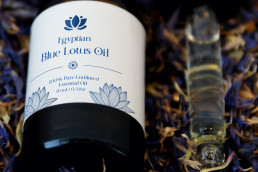
Combination skin is the most common complexion type and, paradoxically, the most frustrating to treat: an oily T-zone that needs clarifying, drier cheeks that need nourishment, and a tendency to react badly to products aimed at either end of the spectrum. This article covers how to use blue lotus oil for combination skin as a balancing, low-intervention addition to a thoughtful routine, including dilutions, application methods, realistic timeframes, and when to look elsewhere.
Table of Contents
- What Combination Skin Actually Is
- How Blue Lotus Oil Helps With Combination Skin
- A gentle anti-inflammatory baseline
- Light texture that does not smother the T-zone
- A scent profile that encourages parasympathetic tone
- Barrier-supportive rather than stripping
- How to Use Blue Lotus Oil for Combination Skin
- Dilution
- Carrier choice matters more than you think
- The zone-aware evening ritual
- Frequency
- Daytime use
- What to Expect: Realistic Timeframes
- When Blue Lotus Oil Is NOT the Right Choice
- Complementary Approaches for Combination Skin
- Cleanse gently, twice a day maximum
- Hydrate before you oil
- Keep actives simple
- Respect sleep and stress
- Sun protection
- Frequently Asked Questions
- Where to Go From Here
- Balance Begins With One Bottle
It is written and clinically reviewed by Antonio Breshears, ND, CCA, a Bastyr-trained naturopathic doctor and certified clinical aromatherapist. For broader context on the oil’s chemistry, extraction, and uses, see The Complete Guide to Blue Lotus Oil, which this article sits alongside as a focused skincare piece.
What Combination Skin Actually Is
Combination skin describes a complexion where sebum production, hydration, and barrier behaviour differ noticeably across facial zones. The classic presentation is an oily T-zone, covering the forehead, nose, and chin, paired with normal-to-dry cheeks, with the jawline and temples falling somewhere in between. Pores appear larger and more active in the central face; the outer face can feel tight, flake occasionally, or show fine dehydration lines.
It is not a disorder. It is a normal anatomical pattern: the centre of the face simply has a higher density of sebaceous glands than the periphery. What turns this ordinary asymmetry into a problem is over-correction. People with combination skin often attack the T-zone with stripping cleansers, acids, or alcohol-based toners, which then dehydrate the cheeks and provoke the T-zone to produce even more oil in response. The result is a complexion that feels both greasy and parched at the same time.
The sensible goal for combination skin is not to eliminate oiliness or force everything into uniformity, but to respect the two zones, support the barrier across the whole face, and let sebum production calm down on its own. This is exactly the kind of problem where a well-chosen botanical can help, and where a heavy-handed approach backfires.
How Blue Lotus Oil Helps With Combination Skin
Blue lotus absolute (from Nymphaea caerulea) is not a medicated treatment, and anyone who tells you otherwise is selling more than they know. What it does offer, within realistic expectations, is a combination of properties that genuinely suit the combination-skin pattern.
A gentle anti-inflammatory baseline
The flavonoid fraction of blue lotus, particularly apigenin, quercetin, and kaempferol, has reasonably well-attested anti-inflammatory activity in topical botanical literature. For combination skin, where mild, low-grade inflammation often drives both T-zone congestion and cheek sensitivity, a calming baseline is more useful than an aggressive one. The oil tends to quiet reactivity rather than provoke it.
Light texture that does not smother the T-zone
Diluted properly in a light, non-comedogenic carrier, blue lotus oil sits on the skin without the heavy occlusive feeling of thicker facial oils. That matters enormously for combination skin, because the usual objection to facial oils (“won’t it make my forehead worse?”) is really an objection to heavy carriers and poor formulation rather than to botanical oils as a category.
A scent profile that encourages parasympathetic tone
This sounds tangential to skin until you realise how much sympathetic stress drives sebum output, flushing, and barrier reactivity. The honeyed-floral, slightly smoky-balsamic scent of blue lotus absolute is consistently reported to induce a calm, inward state through the olfactory-limbic pathway. Using the oil as part of an evening face ritual, rather than as a quick smear, gives you a skincare step that also downregulates the stress physiology feeding into the skin itself.
Barrier-supportive rather than stripping
Combination skin is routinely damaged by the assumption that oiliness means the barrier is intact. It often is not. Blue lotus, used in a gentle carrier, reinforces rather than disrupts the stratum corneum, which over time can quiet the “oily yet tight” paradox many combination-skin readers describe.
How to Use Blue Lotus Oil for Combination Skin
The basic principle for combination skin is zone-aware application rather than uniform slathering. Here is a realistic protocol.
Dilution
Keep blue lotus absolute at 1 to 2 per cent in a facial carrier. For combination skin specifically, a 1 per cent dilution (roughly one drop of blue lotus per teaspoon of carrier, or about nine to ten drops per 30 ml) is the sensible starting point. You can move to 2 per cent after two or three weeks if your skin tolerates it and you want more pronounced scent and activity.
Carrier choice matters more than you think
Combination skin rewards light, non-comedogenic carriers. Jojoba oil is the standout option because its chemistry mimics human sebum, which paradoxically signals to the skin that it already has enough oil and tends to calm T-zone output over time. Squalane (from olive or sugarcane) is a close second, with an even lighter slip. Rosehip seed oil is useful if you want a slight regenerative push on the drier cheeks. Avoid coconut oil, heavy avocado oil, or pure shea for combination skin: they tend to congest the central face.
The zone-aware evening ritual
Cleanse gently. Pat, do not scrub, the skin until just damp. Warm three to five drops of your 1 per cent blend between your palms. Press (do not rub) the blend first onto the cheeks, jawline, and neck, where you want the most nourishment. With whatever residue remains on your fingertips, sweep lightly over the T-zone, rather than adding fresh product there. This keeps your oily zones from being overloaded while still giving them the calming benefits of the blend.
Finish by cupping your hands over your nose and inhaling slowly three or four times. This pulls the olfactory-limbic element into the ritual and takes the whole thing from skincare to a small parasympathetic moment before bed.
Frequency
For most combination-skin readers, nightly use is appropriate from the start, because the blend is low strength. If your T-zone feels congested after a week, drop to every second night for the T-zone only, and continue nightly on the cheeks. This zone-specific rhythm is the whole point: combination skin does not need the same thing on every part of the face every day.
Daytime use
Day use is optional. If you like, press one or two drops of an even lighter (0.5 to 1 per cent) squalane blend onto damp cheeks in the morning, then apply sunscreen on top once it absorbs. Skip the T-zone in the morning; let your sunscreen and any light serums handle that region.
What to Expect: Realistic Timeframes
Blue lotus oil is not a retinoid, a BHA, or an antibiotic. It will not flatten congestion in forty-eight hours, and anyone claiming otherwise is describing a different product. What it does, it does gradually.
In the first one to two weeks, most people notice that the skin feels calmer, less tight on the cheeks, and slightly less reactive overall. The scent becomes an anchor for the evening routine. The T-zone may look unchanged.
Between weeks three and six, the subtler benefits start to show: fewer small dehydration bumps on the cheeks, a more even glow, and often a modest drop in mid-afternoon T-zone shine as the skin stops panicking and producing defensive sebum. Pore appearance may refine slightly, though do not expect dramatic changes.
By the two to three month mark, if the protocol suits you, the overall pattern of the complexion tends to look more coherent. You should not expect combination skin to become uniform; that is not the goal. You should expect the gap between your oiliest and driest zones to feel less severe and more comfortable.
If after six to eight weeks of consistent, sensible use you see no change at all, blue lotus is probably not your answer, and that is worth knowing rather than persisting.
When Blue Lotus Oil Is NOT the Right Choice
Honesty matters here more than marketing.
- Active cystic or nodular acne: blue lotus is supportive, not therapeutic. If you have painful, deep inflammatory lesions, you need a dermatologist and, usually, prescription treatment. Adding a botanical oil on top will not fix it.
- Known fragrance sensitivity or rosacea with aromatic triggers: blue lotus absolute is an aromatic material, and while it is generally well tolerated, some reactive skin types do better with unfragranced regimens.
- Pregnancy and breastfeeding: blue lotus is traditionally avoided during pregnancy and breastfeeding. This applies to facial use as well, even at low dilutions.
- Immediately after aggressive procedures: post-chemical peel, post-laser, or post-microneedling skin should be treated only with what your clinician recommends. Blue lotus can be reintroduced once the barrier is restored.
- If your routine is already crowded: if you are using retinoids, strong acids, and actives alongside each other, adding another variable makes troubleshooting impossible. Strip the routine back before introducing anything new.
If you are taking medications that interact with dopaminergic or sedative pathways and are unsure about topical aromatic use, a brief chat with a prescribing clinician is the right step before starting.
Complementary Approaches for Combination Skin
A balancing facial oil does not work in isolation. The following supporting choices make blue lotus considerably more effective for combination skin.
Cleanse gently, twice a day maximum
Most combination skin is over-cleansed. A pH-balanced, non-foaming or low-foaming cleanser morning and evening is enough. Avoid stripping sulphate-heavy washes, and do not scrub physically.
Hydrate before you oil
Apply your oil blend to damp skin, not dry skin. A simple hydrating toner or essence, or even clean water on the fingertips, gives the blend something to trap. This is particularly important for combination skin because the cheeks are often quietly dehydrated.
Keep actives simple
Combination skin usually does well with one clarifying active (for example, a low-concentration salicylic acid two or three nights a week on the T-zone only) and one supportive active (niacinamide, perhaps, used across the whole face). Blue lotus fits in on alternate nights or on nights when you are not using the acid.
Respect sleep and stress
Sebum output, barrier function, and inflammatory tone all correlate with sleep quality and sympathetic load. This is not wellness-industrial posturing; it is dermatological reality. A calming evening ritual built around your blue lotus blend is both skincare and a small nervous-system intervention. That dual action is quietly one of the oil’s most useful features.
Sun protection
Combination skin often tolerates lightweight mineral or hybrid sunscreens well. Daily SPF is the single highest-return investment in long-term complexion quality, and nothing you do with botanical oils replaces it.
Frequently Asked Questions
Will blue lotus oil make my T-zone more oily?
Used at 1 to 2 per cent in a light carrier such as jojoba or squalane, and applied lightly to the T-zone rather than layered on, blue lotus oil does not typically worsen oiliness. Over time it often reduces defensive sebum production by supporting barrier calm. The usual culprit in “my oil is making me oilier” stories is a heavy comedogenic carrier, not the essential oil.
Is blue lotus oil comedogenic?
Blue lotus absolute itself is used in such small quantities (1 to 2 per cent) that comedogenicity is driven overwhelmingly by the carrier you choose. Jojoba, squalane, grapeseed, and rosehip are all low on comedogenicity scales and work well for combination skin.
Can I apply blue lotus oil directly without dilution?
No. Blue lotus absolute is highly concentrated and expensive, and undiluted application on facial skin is both wasteful and irritating. Always dilute into a carrier oil.
How long until I see results on my combination skin?
Expect early signs of calmer, less reactive skin within one to two weeks, more even texture by weeks three to six, and more coherent overall balance by two to three months. If nothing has shifted by week eight, the oil is probably not the right tool for you.
Can I use blue lotus oil with retinoids or acids?
Yes, but alternate them rather than layering them the same night. A sensible rhythm is retinoid or acid on two or three nights, blue lotus blend on the other nights, with the blue lotus supporting barrier recovery after the active nights.
Should I use it morning or night?
Night is the primary slot, because the ritual element and barrier support are most valuable before sleep. Morning use is optional and should be limited to very light application on the cheeks only, under sunscreen.
Which carrier oil is best for combination skin?
Jojoba is the top choice because its chemistry closely resembles human sebum and tends to normalise oil production. Squalane is an excellent alternative for a lighter slip. Rosehip seed oil is a good add-on if the cheeks benefit from extra regenerative support.
Can blue lotus oil treat acne?
It can help calm low-grade inflammatory congestion and support barrier recovery, which indirectly reduces breakouts in some people. It is not a treatment for moderate-to-severe acne and should not replace dermatological care for those conditions.
Is it safe in pregnancy?
Blue lotus oil is traditionally avoided during pregnancy and breastfeeding, including in topical skincare. Choose a fragrance-free alternative during these periods and return to blue lotus afterwards.
How do I store my blue lotus blend?
Keep it in dark glass, away from heat and direct light. Pre-blended carrier-and-absolute mixtures used within three to six months are ideal. The neat absolute itself, stored properly, holds well for three to four years.
Where to Go From Here
If your skin sits clearly at one end of the spectrum rather than in the middle, focused guidance for oily, dry, sensitive, or mature skin will serve you better than a combination-skin protocol. If you are new to the material as a whole, the complete guide to blue lotus oil gives you the chemistry, sourcing, safety, and usage context in one place. For anyone staying with the combination-skin protocol above: give it a full six to eight weeks of honest, zone-aware use before judging the results, and let the oil do its quiet work rather than demanding more of it than it promises.

Antonio Breshears
Antonio Breshears is a renowned expert in holistic medicine and beauty, with over 25 years of research experience dedicated to uncovering the secrets of nature's most powerful remedies. Holding a degree in Naturopathic Medicine, Antonio's passion for healing and well-being has driven him to explore the intricate connections between mind, body, and spirit.
Over the years, Antonio has become a respected authority in the field, helping countless individuals discover the transformative power of plant-based therapies, including essential oils, herbs, and natural supplements. He has authored numerous articles and publications, sharing his wealth of knowledge with a global audience seeking to improve their overall health and well-being.
Antonio's expertise extends to the realm of beauty, where he has developed innovative, all-natural skincare solutions that harness the potency of botanical ingredients. His formulations embody his deep understanding of the healing properties found in nature, providing holistic alternatives for those seeking a more balanced approach to self-care.
With his extensive background and dedication to the field, Antonio Breshears is a trusted voice and guiding light in the world of holistic medicine and beauty. Through his work at Pure Blue Lotus Oil, Antonio continues to inspire and educate, empowering others to unlock the true potential of nature's gifts for a healthier, more radiant life.