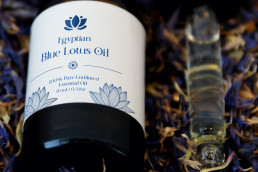
This article is for anyone living with psoriasis who wants to know, honestly, whether blue lotus oil psoriasis protocols are worth adding to their routine. The short answer: it will not clear plaques, and it is not a replacement for dermatological care, but its flavonoid-rich, anti-inflammatory profile can make a genuine supportive contribution to calmer, less reactive skin when used alongside appropriate medical treatment.
Table of Contents
- Understanding Psoriasis Before Reaching for Any Oil
- How Blue Lotus Oil Helps With Psoriasis
- Flavonoid-driven anti-inflammatory activity
- Barrier support and itch reduction
- Stress, sleep, and the flare cycle
- How to Use Blue Lotus Oil for Psoriasis
- Topical application to plaques and surrounding skin
- Inhalation and diffusion for stress-mediated flares
- Bath application
- What to Expect: Realistic Timeframes
- When Blue Lotus Oil Is NOT the Right Choice
- Complementary Approaches That Actually Move the Needle
- A Simple Weekly Routine to Try
- Frequently Asked Questions
- Where to Go From Here
- Calmer Skin Starts With Quality
It is written and clinically reviewed by Antonio Breshears, ND, CCA, a Bastyr-trained naturopathic doctor and certified clinical aromatherapist. For a wider grounding in the oil’s chemistry and uses across skincare and mood, readers may also want to read The Complete Guide to Blue Lotus Oil, which sits alongside this article as a master reference.
Understanding Psoriasis Before Reaching for Any Oil
Psoriasis is not a skin problem in the way that dry skin or contact dermatitis is a skin problem. It is an immune-mediated, systemic inflammatory condition that happens to express itself most visibly on the skin. In plaque psoriasis, the most common form, skin cells turn over at roughly ten times the normal rate, piling up into the thickened, silvery, often itchy plaques that people recognise. Underneath that turnover is a dysregulated immune response involving T-cells and cytokines such as TNF-alpha, IL-17, and IL-23.
That matters when thinking about essential oils. No topical botanical, however elegant its chemistry, is going to switch off a systemic cytokine cascade. What a well-chosen oil can do is reduce some of the downstream inflammation in the skin itself, soothe itch, support the skin barrier, and calm the stress response that so often drives flares. That is a meaningful, but modest, contribution. Anyone promising more is selling something.
Psoriasis also comes in several forms, including plaque, guttate, inverse, pustular, and erythrodermic. This article addresses the everyday reality of mild to moderate plaque psoriasis on the body. Pustular and erythrodermic psoriasis are medical situations requiring urgent dermatological attention, not a home aromatherapy routine.
How Blue Lotus Oil Helps With Psoriasis
Blue lotus (Nymphaea caerulea) earns a place in a supportive skincare routine for psoriasis for three genuinely distinct reasons, each with its own mechanism.
Flavonoid-driven anti-inflammatory activity
The absolute is unusually rich in flavonoids, particularly apigenin, quercetin, and kaempferol. These compounds have been repeatedly shown in vitro and in animal models to modulate inflammatory signalling, including NF-kB activity, which sits upstream of several cytokines relevant to psoriasis. Topically, this does not dismantle the underlying autoimmune process, but it can reduce the local inflammatory “volume” in the skin around plaques, which many people experience as less redness, less heat, and less itch.
Barrier support and itch reduction
Psoriatic skin has a compromised barrier. Transepidermal water loss is elevated, and the skin is both drier and more reactive than healthy skin. Blue lotus absolute, diluted into a suitable lipid-rich carrier such as jojoba or squalane, contributes a small amount of its own emollient character while the carrier restores lipids. The oil’s cooler floral-aquatic top and honeyed heart seem, anecdotally, to reduce the conscious awareness of itch, which matters because scratching drives the Koebner phenomenon, where new plaques form at sites of skin trauma.
Stress, sleep, and the flare cycle
This is arguably blue lotus oil’s most important contribution to psoriasis, and the one most often overlooked. Psychological stress is a well-documented trigger for psoriasis flares. Poor sleep compounds this. Blue lotus is not a strong sedative, but it does have a reasonably well-attested calming effect on the nervous system through its flavonoids acting at central benzodiazepine receptors (apigenin, in particular) and through the olfactory-limbic pathway when inhaled. A nightly ritual that uses the oil to lower arousal before bed is, for many people with psoriasis, as useful as anything they put directly on the plaque.
How to Use Blue Lotus Oil for Psoriasis
Three approaches make sense, and they can be layered.
Topical application to plaques and surrounding skin
Dilute blue lotus absolute at 1 to 2 percent in a rich, non-irritating carrier. Jojoba, squalane, and fractionated coconut are all reasonable choices; for severely dry or cracked plaques, a blend of jojoba with a small proportion of evening primrose or borage seed oil adds gamma-linolenic acid, which has its own modest evidence in inflammatory skin conditions.
A practical starting formulation: 30 ml of jojoba, 10 ml of evening primrose, and 8 drops of blue lotus absolute. That sits at roughly 1 percent dilution, which is conservative and appropriate for compromised skin. Apply a thin layer to plaques and, importantly, to the ring of apparently healthy skin around each plaque, twice daily after bathing while the skin is still slightly damp.
Do not apply to cracked, weeping, or bleeding skin. Do not apply to pustular lesions. Patch test on the inner forearm for 48 hours before using on a larger area, especially if your skin has reacted to other botanical products in the past.
Inhalation and diffusion for stress-mediated flares
Two to four drops in a diffuser in the evening, ideally in the hour before bed, gives the olfactory-limbic effect without any contact with the skin at all. This is often where blue lotus earns its keep in a psoriasis routine. If you notice a clear pattern where your plaques worsen during stressful weeks, the evening diffusion practice is arguably more valuable than any topical.
Bath application
For widespread mild plaques, a lukewarm (not hot) bath with a tablespoon of a carrier oil in which 3 to 4 drops of blue lotus have been pre-dispersed gives gentle, low-concentration contact across a large area. Never add essential oils directly to bathwater without a dispersant. Hot water is a trigger for psoriasis itch and should be avoided regardless.
What to Expect: Realistic Timeframes
This is where honesty matters most. Blue lotus oil is not going to clear a plaque. If you come to it expecting the kind of visible change a potent topical corticosteroid or a biologic produces, you will be disappointed, and you may also stop doing other things that actually work.
What you can reasonably expect, within realistic expectations, is the following. In the first one to two weeks, a reduction in itch intensity and in the subjective reactivity of the skin. Over four to six weeks of consistent use, modestly less redness and heat around plaque edges, and plaques that feel slightly less thickened to the touch. Over two to three months, in combination with the medical treatment your dermatologist has prescribed, a perception that flares arrive less explosively and resolve a little faster.
These are genuinely useful outcomes for a supportive botanical. They are not a cure, and they are not a reason to reduce or stop prescribed treatment without discussion with your clinician.
When Blue Lotus Oil Is NOT the Right Choice
There are situations where this oil should not be part of your psoriasis routine.
Pregnancy and breastfeeding. Blue lotus is traditionally avoided during pregnancy and lactation, and psoriasis in pregnancy should be managed with a dermatologist familiar with pregnancy-safe topicals.
Pustular or erythrodermic psoriasis. These are medical situations. Do not self-treat with essential oils. Seek urgent dermatological care.
Scalp psoriasis where plaques are extensive or bleeding. Scalp skin is sensitive and often broken in psoriasis. Blue lotus in a scalp formulation can be appropriate for mild scalp involvement, but bleeding or heavily crusted plaques need medicated shampoos and clinical input first.
Known sensitivity to floral absolutes. Solvent-extracted absolutes, including blue lotus, occasionally provoke contact reactions in people with a history of fragrance sensitivity. The 48-hour patch test is not optional for this group.
Concurrent use of strong dopaminergic medications, MAOIs, or heavy sedatives. The systemic implications of topical use at 1 to 2 percent are minimal, but anyone on these medications should speak to their prescribing clinician before adding meaningful inhalation practice.
Children under twelve. Paediatric psoriasis needs paediatric dermatology, not adult aromatherapy protocols.
Complementary Approaches That Actually Move the Needle
A blue lotus routine works best when it sits inside a wider approach to psoriasis rather than standing alone. The following are worth attention.
Medical treatment first. Whatever your dermatologist has prescribed, whether that is a topical vitamin D analogue, a corticosteroid, phototherapy, or a systemic or biologic agent, should remain the backbone of your care. Botanicals are adjunctive, not replacement.
Moisturise generously and often. The single most evidence-backed self-care intervention for plaque psoriasis is consistent, generous emollient use. A 1 to 2 percent blue lotus blend in a rich carrier can serve as one of your daily moisturisers, but do not let the oil replace the volume of emollient your skin needs.
Address stress directly. Meditation, yoga, walking, therapy, adequate sleep, whatever works for you. The evening diffusion ritual fits inside this, not instead of it.
Consider diet and alcohol pragmatically. The evidence for specific psoriasis diets is mixed, but alcohol is reasonably well-attested as a flare trigger, and a whole-food, anti-inflammatory-pattern diet seems to help some people. This is individual, and not worth becoming orthorexic about.
Other useful essential oils alongside. Roman chamomile, German chamomile (high in chamazulene and bisabolol), lavender, and helichrysum all have reasonable anti-inflammatory credentials in skincare. Blue lotus blends well with all of them. For a scalp formulation, cedarwood and a small amount of rosemary can be added cautiously.
Tar-based and salicylic-acid-based products from your dermatologist often do the plaque-softening work that essential oils simply cannot do. Do not feel that using pharmaceuticals means you have “failed” at natural care. They are different tools for different jobs.
A Simple Weekly Routine to Try
If you want a concrete starting point, this is a routine that respects both the botanical and the medical side.
Morning: shower in lukewarm water, pat skin dry, apply your prescribed medicated treatment to plaques as directed by your dermatologist, wait the recommended interval, then apply the 1 percent blue lotus blend to the surrounding skin and any areas of dryness. Finish with a thicker moisturiser over the top.
Evening: repeat the shower and medicated step. On evenings when you are not applying a medicated topical, apply the blue lotus blend to plaques and surrounding skin. Diffuse 2 to 4 drops in the bedroom for 30 to 45 minutes before sleep. Keep the bedroom cool, which also helps itch.
Give this eight weeks before judging it. Most botanical interventions for inflammatory skin take that long to show their real contribution, and psoriasis is notoriously variable week to week regardless of what you do.
Frequently Asked Questions
Does blue lotus oil cure psoriasis?
No. Psoriasis is an immune-mediated systemic condition, and no essential oil cures it. Blue lotus oil can make a modest supportive contribution by reducing local inflammation, easing itch, and calming the stress response that often drives flares.
Can I use blue lotus oil instead of my prescribed topical treatment?
No. Treat blue lotus as an adjunct to whatever your dermatologist has prescribed. Stopping effective treatment in favour of a botanical usually results in worse flares.
What dilution should I use on psoriatic skin?
Start at 1 percent in a lipid-rich carrier such as jojoba or a jojoba-evening primrose blend. You can move to 2 percent after a few weeks if your skin tolerates it well, but higher concentrations are rarely worth the risk on compromised skin.
Can I apply blue lotus oil directly to a plaque?
Not neat. Always dilute in a carrier. Apply a thin layer to the plaque and, importantly, to the healthy-looking skin around it, where much of the low-grade inflammation actually sits.
How long until I see results?
Itch and reactivity often reduce within one to two weeks. Visible changes to plaque redness and thickness take four to eight weeks, and only modestly. If you see no benefit at all after eight weeks of consistent use, it probably is not contributing meaningfully for you.
Is blue lotus oil safe for scalp psoriasis?
For mild scalp involvement, a 1 percent blend in jojoba massaged into the scalp an hour before shampooing can help soothe itch. For extensive, crusted, or bleeding scalp psoriasis, see a dermatologist and use medicated shampoos first.
Can I use blue lotus oil alongside coal tar or salicylic acid preparations?
Yes, but not at the same moment. Apply the medicated product first, give it time to absorb, and then apply the blue lotus blend to surrounding skin. Do not layer unknown quantities of active ingredients on the same patch of skin simultaneously.
Will blue lotus oil help with psoriatic arthritis?
Topical essential oil application does not treat joint inflammation of psoriatic arthritis. Inhalation may help with the stress and sleep burden that accompanies the condition, but joint symptoms need rheumatological care.
Can children with psoriasis use this oil?
Paediatric psoriasis should be managed with paediatric dermatology input. The protocols in this article are written for adults.
Is it safe to use during a flare?
On intact, itchy, inflamed skin, yes, at 1 percent dilution. On cracked, weeping, or bleeding skin, no, wait for the skin surface to heal before resuming.
Where to Go From Here
If you have read this far, you are probably looking for a way to add a genuinely useful botanical to an already-thoughtful psoriasis routine. Blue lotus oil earns that place, modestly and honestly, when it is diluted appropriately, used consistently, and kept in its proper role alongside dermatological care. For a wider understanding of the oil’s chemistry, sourcing, and broader applications, The Complete Guide to Blue Lotus Oil remains the best next read. If stress and sleep are clear drivers of your flares, the evening diffusion practice is the piece to prioritise first.

Antonio Breshears
Antonio Breshears is a renowned expert in holistic medicine and beauty, with over 25 years of research experience dedicated to uncovering the secrets of nature's most powerful remedies. Holding a degree in Naturopathic Medicine, Antonio's passion for healing and well-being has driven him to explore the intricate connections between mind, body, and spirit.
Over the years, Antonio has become a respected authority in the field, helping countless individuals discover the transformative power of plant-based therapies, including essential oils, herbs, and natural supplements. He has authored numerous articles and publications, sharing his wealth of knowledge with a global audience seeking to improve their overall health and well-being.
Antonio's expertise extends to the realm of beauty, where he has developed innovative, all-natural skincare solutions that harness the potency of botanical ingredients. His formulations embody his deep understanding of the healing properties found in nature, providing holistic alternatives for those seeking a more balanced approach to self-care.
With his extensive background and dedication to the field, Antonio Breshears is a trusted voice and guiding light in the world of holistic medicine and beauty. Through his work at Pure Blue Lotus Oil, Antonio continues to inspire and educate, empowering others to unlock the true potential of nature's gifts for a healthier, more radiant life.