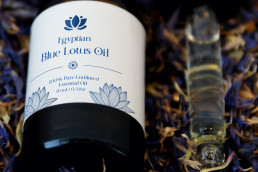
If you work nights, rotating shifts, or on-call rosters, your nervous system is being asked to do something it did not evolve for: sleep when the sun is up, stay alert when it is down, and repeat that pattern often enough that the body never fully catches up. This article is for the nurses, paramedics, pilots, security staff, parents on unusual hours, and anyone else whose sleep is ruled by a roster rather than the sun. It covers, specifically, how blue lotus oil shift workers can use as part of a wind-down and recovery ritual actually behaves in the body, what it is good at, what it is not, and how to build a realistic protocol around it.
Table of Contents
- Understanding Shift Work Sleep Disruption
- How Blue Lotus Oil Helps With Shift Work Recovery
- Parasympathetic Shift After a High-Alert Shift
- Scent-Based Circadian Anchoring
- Rumination and Decompression
- How to Use Blue Lotus Oil for Shift Work
- Post-Night-Shift Wind-Down
- Pre-Shift Rest
- On-Shift Use
- What to Expect: Realistic Timeframes
- When Blue Lotus Oil Is Not the Right Choice
- Complementary Approaches for Shift Workers
- Frequently Asked Questions
- Where to Go From Here
- Rest Better Between Shifts
It is written and clinically reviewed by Antonio Breshears, ND, CCA, a Bastyr-trained naturopathic doctor and certified clinical aromatherapist. If you want broader context on the oil itself before reading this specific use case, the complete guide to blue lotus oil is the best place to start; it covers chemistry, extraction, and general use in detail.
Understanding Shift Work Sleep Disruption
Shift work sleep disorder, as the clinical literature calls it, is not simply being tired. It is a sustained mismatch between your work-rest schedule and your internal circadian clock, which is driven largely by light exposure, core body temperature rhythms, and melatonin release. When you try to sleep during the day, your body is still being told by daylight and cortisol that it is time to be awake. When you try to be alert at 3am, your core temperature is dropping and your brain chemistry is pulling toward sleep. You can learn to function inside this mismatch, but the nervous system pays a tax: shallower sleep, more fragmented sleep, and a persistent low-grade hypervigilance.
The two places where this is most fixable from an aromatherapy perspective are at the edges of the cycle: the wind-down after a night shift when your body is revved but needs to sleep in daylight, and the pre-shift preparation when you need to be calm enough to rest before a long, demanding stretch. Blue lotus oil is well-suited to both of these transitions, though for slightly different reasons.
How Blue Lotus Oil Helps With Shift Work Recovery
Blue lotus absolute is not a sedative in the pharmacological sense. It does not knock you out, and it will not override a body that is flooded with adrenaline and caffeine. What it does, reasonably well, is nudge the nervous system toward parasympathetic dominance, soften the edge of hypervigilance, and create a sensory environment that the brain recognises as “the transition out of work mode.” For shift workers, that last point is arguably the most useful.
Parasympathetic Shift After a High-Alert Shift
Coming off a busy night shift, particularly in acute care, emergency services, or any environment involving constant decision-making, your sympathetic nervous system has been running for hours. Cortisol is elevated, heart rate variability is suppressed, and the brain is still scanning for threat. Inhaled blue lotus, with its aporphine and nuciferine alkaloids acting on dopamine and serotonin pathways, and its apigenin content interacting with central benzodiazepine receptors, produces a modest but real downshift. Nothing dramatic. Just enough, in most people, to make the transition to sleep feasible rather than fought.
Scent-Based Circadian Anchoring
The olfactory system connects directly to the limbic system, bypassing the slower cognitive circuits. If you use the same scent every time you go to sleep, your brain builds an associative link: this smell means rest now. For shift workers whose bodies are getting mixed signals from daylight and social cues, a strong, consistent olfactory anchor is genuinely useful. Blue lotus, with its honeyed, slightly smoky floral profile, is distinctive enough that the brain does not confuse it with perfume, cleaning products, or other household smells. It becomes your sleep cue, regardless of what the sun is doing.
Rumination and Decompression
Many shift workers report that the hardest part of post-shift sleep is not physical tiredness but mental replay: the difficult patient, the close call, the decision you are second-guessing. Blue lotus has a mildly mood-lifting quality, attributable to its flavonoid content and the dopaminergic activity of its alkaloids, that tends to take the sharp edge off rumination without numbing thought entirely. It will not make the day’s events disappear; it will often make them feel less urgent.
How to Use Blue Lotus Oil for Shift Work
The protocol depends on which transition you are targeting. Most shift workers benefit from using it in two distinct contexts: the post-shift wind-down and the pre-shift prep rest. The technique is slightly different for each.
Post-Night-Shift Wind-Down
When you arrive home after a night shift, the goal is to compress a wind-down ritual that would normally take two or three hours into roughly thirty to forty-five minutes, because you need to be asleep before the daylight and cortisol climb pull you past the sleep window.
On arrival home, before eating, before screens, take a short warm shower. This is not optional; body temperature manipulation is one of your strongest sleep tools as a shift worker. Then apply blue lotus oil topically at a 2 to 3 percent dilution in a carrier like jojoba or fractionated coconut: three to four drops of oil per teaspoon of carrier, applied to the inner wrists, the sides of the neck below the jaw, and across the sternum. At the same time, run a diffuser in the bedroom with two to four drops of blue lotus, either alone or with lavender at a similar quantity if you like the combination. Blackout the room fully. Cool it to around 18 degrees Celsius if you can. Eat lightly if at all, and avoid screens.
The total ritual, from shower to bed, should take no longer than forty-five minutes. Done consistently, over a few weeks, the scent will start doing work on its own, triggering the sleep response before you even lie down.
Pre-Shift Rest
If you are trying to sleep in the late afternoon or early evening before a night shift, your body is working against you in a different way. Core temperature is near its daily peak, cortisol may still be elevated, and you are asking for sleep at a biologically awkward time. Here, the oil is used more as a calming cue than a sleep inducer. A drop or two on a tissue placed near the pillow, or a diffuser at two drops, along with eye mask and earplugs, is usually enough. Topical application is optional at this point and lighter if used: 1 to 2 percent dilution on the wrists only.
On-Shift Use
Some shift workers ask whether blue lotus is appropriate during a shift for stress management. The honest answer is: use it sparingly and only at breaks, if at all. The oil has a subtle relaxing quality that you do not necessarily want while operating vehicles, making clinical decisions, or responding to emergencies. A single drop on a tissue during a proper break, inhaled for a minute or two, is reasonable. A full topical application in the middle of a shift is not.
What to Expect: Realistic Timeframes
First use: you will notice the scent and, depending on your sensitivity, a mild sense of settling within ten to twenty minutes of inhalation. Do not expect dramatic sedation. If anything feels dramatic on the first use, it is probably expectation or placebo, which is not nothing but is not what the oil is doing pharmacologically.
First week: the main change most shift workers report is slightly faster sleep onset after a night shift, maybe five to fifteen minutes shorter, and a sense that the wind-down ritual feels more defined. Sleep quality itself may or may not shift noticeably yet.
Two to four weeks: with consistent use, the olfactory conditioning starts to kick in. The scent itself becomes a sleep cue, and you often find you start yawning or feeling heavy-lidded within minutes of the diffuser starting. This is the most valuable effect for shift workers and is worth the wait.
Beyond a month: you will have a realistic sense of how much it helps you specifically. Some shift workers find it becomes an indispensable part of their recovery routine. Others find the effect modest and pleasant but not transformative. Both are honest outcomes; the oil is a supporting tool, not a fix for an unsustainable roster.
When Blue Lotus Oil Is Not the Right Choice
There are situations where this oil is not appropriate or not enough.
- Pregnancy and breastfeeding. Blue lotus is avoided in both, regardless of your shift pattern. This is non-negotiable.
- Dopaminergic medications, MAOIs, heavy sedatives. The alkaloid profile interacts with dopamine pathways. If you are on Parkinson’s medication, MAOI antidepressants, or strong sedatives, consult your prescriber before use.
- Severe shift work sleep disorder. If you are experiencing microsleeps on shift, persistent insomnia of more than three weeks despite good sleep hygiene, or significant mood deterioration, an essential oil is not the answer. You need a sleep physician, and possibly a conversation about whether the roster itself is compatible with your health.
- Safety-sensitive roles without a proper break. Do not use the oil topically in ways that leave a strong scent during alertness-critical work.
- Known allergy to water lily family botanicals. Rare, but do a patch test before first full use.
Blue lotus is a supportive tool. It is not a substitute for clinical care when sleep disruption is genuinely pathological.
Complementary Approaches for Shift Workers
If you want the oil to work as well as possible, pair it with the handful of interventions that the sleep literature actually supports for shift workers. None of these are optional if your roster is demanding.
Light management. On the way home from a night shift, wear dark wraparound sunglasses; this is one of the single most effective things a night worker can do. Your retinas are telling your brain it is day, and the glasses meaningfully attenuate that signal. At home, blackout curtains are non-negotiable. Before a night shift, bright light exposure in the hours beforehand helps you stay alert on the back half.
Caffeine timing. Stop caffeine at least six hours before your target sleep window. For night shift workers, that often means no caffeine after the early hours of the morning.
Temperature. Cool bedroom, warm shower before bed. The drop in core temperature after a warm shower is a genuine sleep signal.
Consistency within the roster. If you work a block of nights, keep the same sleep schedule across your days off for as long as feasible. Every flip between day and night sleep is a circadian reset that takes days to absorb.
Complementary oils. Lavender pairs well with blue lotus for deepening relaxation. Roman chamomile is useful if anxiety is a prominent feature. Vetiver adds grounding for those who feel wired-tired after a long shift. Use these as supporting notes, not replacements.
Clinical care when warranted. If your sleep is genuinely broken, speak to a GP or sleep specialist. Melatonin, prescribed short courses of sleep medication, and cognitive-behavioural therapy for insomnia adapted for shift workers all have evidence behind them. An essential oil ritual sits alongside these, not in place of them.
Frequently Asked Questions
Can blue lotus oil reset my circadian rhythm?
No. Only light, meal timing, and to some extent melatonin can shift your circadian rhythm. Blue lotus oil helps you sleep within whatever rhythm you currently have; it does not move the clock itself.
Is blue lotus oil strong enough to replace melatonin for night shift workers?
For most people, no. Melatonin has direct phase-shifting effects that the oil does not. Blue lotus works on the wind-down and relaxation side of sleep, not the circadian timing side. Many shift workers use both, under guidance.
Will I wake up groggy after using it before daytime sleep?
Unlikely. Blue lotus is not a heavy sedative and does not produce a hangover effect in normal topical or diffused doses. If you do feel groggy, it is almost certainly the underlying sleep debt, not the oil.
Can I use it every day, or should I cycle it?
Daily use is fine for most people. Some practitioners prefer a one-day-per-week break to avoid olfactory fatigue, which is a sensible habit but not strictly necessary.
Does it help with the anxiety of an unpredictable on-call roster?
Modestly, yes. The calming effect applies whether you are about to be called or not. It will not remove the underlying stress of being on-call, but it can make the rest you do get feel more restful.
Can I use it on the plane between shifts if I fly for work?
A drop on a tissue or an inhaler stick is ideal for flights. Avoid diffusing in shared cabin environments and keep topical application light out of courtesy to other passengers.
Will it show up on a drug test?
Standard workplace drug panels do not screen for blue lotus alkaloids, and topical or inhaled aromatic use at normal doses does not produce metabolites that register on common panels. If you are in a safety-critical profession with unusual testing, check with your occupational health provider.
My roster rotates every week. Is there any point using the oil at all?
Yes, because the benefit is largely in the sleep-cue conditioning. If you use the same scent every time you go to sleep, regardless of what time that is, your brain still builds the association. For rapidly rotating rosters, the scent anchor is arguably more valuable than for stable nights.
Can I combine blue lotus oil with prescribed sleep medication?
Speak to your prescriber. The oil’s activity is mild, but if you are on anything stronger than an occasional low-dose hypnotic, it is worth a conversation. In general, aromatic use at standard dilutions is low-risk, but your prescriber has the full picture.
How long does a bottle last for a regular shift worker?
Used nightly at the protocol described, a 10ml bottle of pure absolute lasts roughly two to three months for a typical user. Stored in dark glass in a cool cupboard, the oil itself keeps for three to four years.
Where to Go From Here
If you have read this far, the practical next step is simple: try the post-shift wind-down protocol for two weeks, consistently, and see what you notice. Keep it uncomplicated. A shower, the oil, a dark cool room, the same sequence every time. If you want a fuller understanding of the oil’s chemistry, storage, and broader uses before committing, the complete guide to blue lotus oil will give you that foundation. If your sleep issues extend beyond what a ritual can touch, treat that as the signal it is and speak to a clinician. Blue lotus is a genuinely useful tool within realistic expectations; it is not a workaround for a roster that is breaking you.

Antonio Breshears
Antonio Breshears is a renowned expert in holistic medicine and beauty, with over 25 years of research experience dedicated to uncovering the secrets of nature's most powerful remedies. Holding a degree in Naturopathic Medicine, Antonio's passion for healing and well-being has driven him to explore the intricate connections between mind, body, and spirit.
Over the years, Antonio has become a respected authority in the field, helping countless individuals discover the transformative power of plant-based therapies, including essential oils, herbs, and natural supplements. He has authored numerous articles and publications, sharing his wealth of knowledge with a global audience seeking to improve their overall health and well-being.
Antonio's expertise extends to the realm of beauty, where he has developed innovative, all-natural skincare solutions that harness the potency of botanical ingredients. His formulations embody his deep understanding of the healing properties found in nature, providing holistic alternatives for those seeking a more balanced approach to self-care.
With his extensive background and dedication to the field, Antonio Breshears is a trusted voice and guiding light in the world of holistic medicine and beauty. Through his work at Pure Blue Lotus Oil, Antonio continues to inspire and educate, empowering others to unlock the true potential of nature's gifts for a healthier, more radiant life.