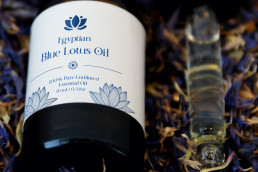
If you have ever paused before adding a bottle of blue lotus absolute to your basket and wondered whether it would actually clear customs, or whether owning it where you live is entirely above board, you are not alone. The question “is blue lotus oil legal” has a genuinely different answer depending on which border you cross, and the regulatory picture around Nymphaea caerulea is more patchwork than most buyers expect. This article gives you a grounded, country-by-country overview so you can order, travel, and use the oil with clarity rather than guesswork.
Table of Contents
- What Actually Gets Regulated (and What Does Not)
- Countries Where Blue Lotus Is Explicitly Restricted
- Russia
- Poland
- Latvia
- United States: State of Louisiana
- Australia
- Countries Where Blue Lotus Is Legal
- Travelling With Blue Lotus Oil
- Ordering Internationally: What to Expect
- Why the Legal Picture Is the Way It Is
- When to Seek Specific Legal Advice
- Frequently Asked Questions
- Where to Go From Here
- Bottled With Care, Shipped Worldwide
It is written and clinically reviewed by Antonio Breshears, ND, CCA, a Bastyr-trained naturopathic doctor and certified clinical aromatherapist. For broader background on the plant, its chemistry, and how it is used, the Complete Guide to Blue Lotus Oil is the best starting point, and this article sits within the Legal, Safety and Travel cluster for readers who want to understand the regulatory landscape specifically.
What Actually Gets Regulated (and What Does Not)
The first thing to understand is that “blue lotus” is not a controlled substance under the major international drug conventions. It does not appear on the 1961 Single Convention on Narcotic Drugs, nor on the 1971 Convention on Psychotropic Substances. That means there is no global scheduling framework the way there is for, say, cannabis or psilocybin. Instead, each country decides for itself whether to regulate the plant, and most have simply not considered it at all.
That regulatory silence is why, in the majority of countries, blue lotus flower, extract, and essential oil or absolute are sold openly in apothecaries, tea shops, and online. The absence of a law is, functionally, permission. A handful of jurisdictions, however, have made specific decisions, usually because the plant’s mild psychoactive reputation caught the attention of a regulator. Those exceptions are what this article focuses on, because they are the ones that matter if you are ordering internationally or travelling with a bottle.
It is also worth distinguishing between three different forms of the plant, because they are sometimes treated differently in practice:
- Dried flower and tea: whole or crushed petals, often sold for infusion.
- Absolute, essential oil, or CO2 extract: the concentrated aromatic oil used in perfumery and aromatherapy, including the product sold on this site.
- Tinctures, wines, and edible preparations: alcohol-based or infused products intended for ingestion.
Where a country does restrict blue lotus, the restriction usually names the plant or its extracts broadly, so absolute and essential oil fall under the same rule as flower. But the enforcement reality, how customs actually treats a shipment, often varies by form. A bottle of aromatherapy oil clearly labelled for external use raises fewer flags than a bag of dried flower labelled as a herbal smoke blend, even under identical laws.
Countries Where Blue Lotus Is Explicitly Restricted
There are, as of the most recent survey, four jurisdictions with clear restrictions on Nymphaea caerulea, and one country where the regulatory environment is complex enough to treat as a special case.
Russia
Russia includes blue lotus on its list of plants prohibited for use in food supplements and herbal products. Possession of the plant or its extracts for personal use exists in a grey area but importation for commercial sale is not permitted. If you are in Russia, ordering internationally is likely to result in the package being intercepted at customs, and the product is not available through domestic retail.
Poland
Poland’s legal framework on psychoactive substances has, at various points, included Nymphaea caerulea among restricted plants. The situation has shifted over the years as the country has updated its “designer drug” legislation, and the practical effect is that blue lotus is difficult to purchase domestically and imports are unreliable. If you live in Poland, assume that ordering from an international retailer carries a meaningful risk of the parcel being stopped.
Latvia
Latvia similarly lists blue lotus under its psychoactive substances legislation, which means sale, distribution, and importation are restricted. Enforcement against small personal-use quantities has historically been limited, but the legal status is clear: it is not a product you can buy or import without legal risk.
United States: State of Louisiana
At the federal level, the United States does not schedule blue lotus. It is legal to buy, sell, own, and use across the country with one notable exception: Louisiana State Act 159, passed in 2005, restricts the cultivation, sale, and possession of a list of psychoactive plants “for human consumption”, including Nymphaea caerulea. The statute specifically exempts ornamental and decorative use, so the plant itself is not outlawed, but products marketed for ingestion or inhalation are.
In practice, this means that if you live in Louisiana, buying a bottle of blue lotus absolute labelled as aromatherapy or perfume oil for external use sits in a different category than buying dried flower for tea. Reputable retailers, this site included, do not market the oil for human consumption, and the law’s “for human consumption” language is the operative phrase.
Australia
Australia is the most complicated case. Apomorphine, a synthetic derivative of aporphine (one of the alkaloids present in blue lotus), is a scheduled prescription medicine. The naturally occurring alkaloids in Nymphaea caerulea are not explicitly scheduled, but the Therapeutic Goods Administration takes a broad interpretive approach, and several herbal plants with similar alkaloid profiles have been swept into restriction over the years.
The practical result is that blue lotus sits in a regulatory grey zone in Australia. Some retailers stock it, customs sometimes lets it through and sometimes does not, and the legal position of a personal shipment is genuinely unclear. If you are in Australia, expect variability, and accept that a seized parcel is a realistic outcome rather than an unusual one.
Countries Where Blue Lotus Is Legal
For most of the world, the answer to “is blue lotus oil legal” is simply yes, within the usual framework that applies to any herbal or aromatic product. This includes:
- United Kingdom: no restriction on blue lotus flower, absolute, or essential oil. The Psychoactive Substances Act 2016 does not apply to substances used in aromatherapy or perfumery.
- European Union (most member states): no restriction in France, Germany, Italy, Spain, the Netherlands, Belgium, Ireland, the Nordic countries, and the majority of the bloc. Poland and Latvia are the exceptions noted above.
- Canada: no restriction on the plant or its extracts for aromatherapy or cosmetic use.
- United States (excluding Louisiana): legal at the federal level and in all other states.
- Most of Asia, Africa, South America: no specific restriction, though product availability varies.
- Egypt: the plant’s historical homeland, where it has been used for thousands of years, and where cultivation and trade continue openly.
Legal status does not mean unregulated in the broader sense. Cosmetic products, including aromatherapy oils intended for skin application, are still subject to the usual cosmetic safety regulations in the UK and EU, including the Cosmetic Products Regulation and REACH. A reputable supplier will have documentation (safety data sheets, allergen declarations, certificate of analysis) that confirms the product meets these standards. That is a separate question from whether the botanical itself is legal, but it is worth mentioning because buyers sometimes conflate the two.
Travelling With Blue Lotus Oil
Carrying a bottle of blue lotus absolute across a border raises two separate questions: the destination country’s legal status, and the practical rules for liquids in hand luggage.
On the legal side, the simple rule is: if the oil is legal where you are going, it is fine to bring. The jurisdictions flagged above (Russia, Poland, Latvia, Louisiana, and the Australian grey zone) are the ones where travelling with a bottle is genuinely risky. For the UK, EU (excluding Poland and Latvia), US (excluding Louisiana), Canada, and most of the rest of the world, a small personal-use bottle in your luggage will not raise any legal issue.
On the practical side, the standard aviation rules for liquids apply. A 5 ml or 10 ml bottle easily fits within the 100 ml hand-luggage limit enforced across most airports, and the oil is not flammable in a way that would trigger dangerous-goods restrictions at normal aromatherapy concentrations. Keep the bottle in its original packaging with the label visible; a clearly marked aromatherapy product is treated differently from an unlabelled bottle of unidentified liquid, even where the law is the same.
Customs declarations generally do not require you to declare aromatherapy oils unless they exceed personal-use quantities. If you are carrying a single bottle for your own use, it falls under the same category as the perfume in your washbag.
Ordering Internationally: What to Expect
If you are ordering blue lotus oil from an international retailer, the destination country’s rules are what determine whether your parcel arrives. Here is the practical picture:
- UK, EU (most), US (most), Canada, Australia (with variability), rest of world: parcels arrive normally, treated as standard cosmetic or aromatherapy imports. Standard duties and VAT may apply depending on the value and route.
- Russia, Poland, Latvia: expect seizure. International retailers generally do not ship to these destinations, and those who do pass the customs risk to the buyer.
- Louisiana (US): parcels arrive, because federal postal routes do not enforce state-level restrictions, but the buyer’s own possession is subject to state law.
A retailer selling a properly labelled aromatherapy product (botanical name, country of origin, intended use as aromatherapy or perfumery) gives you the best chance of a smooth customs experience. Products labelled ambiguously, or marketed explicitly for ingestion or smoking, attract more scrutiny even in countries where the plant itself is legal.
Why the Legal Picture Is the Way It Is
Blue lotus has been used in ritual, medicine, and perfumery for at least three thousand years, and for most of that history no one thought to regulate it. Its mild psychoactive effects, gentle, euphoric, anxiolytic at best, dramatic only in very high ingested doses, simply did not register as a public health concern. The contemporary restrictions in Russia, Poland, Latvia, and Louisiana all emerged within the last two decades, typically as part of broader legislation targeting “legal highs” or designer drugs, where regulators cast a wide net over any plant rumoured to have psychoactive properties.
What this means in practice is that the restrictions are less about evidence of harm and more about regulatory caution in the wake of wider drug-policy debates. Blue lotus, in its aromatherapy form (absolute, essential oil, CO2 extract), is used externally and at concentrations that do not produce psychoactive effects of any meaningful kind. The law, however, tends to treat the plant as a whole rather than drawing fine distinctions between preparations, which is why absolute sometimes falls under rules clearly designed for smoke blends or herbal teas.
When to Seek Specific Legal Advice
This article is a general overview, not legal advice for your specific situation. If you are in one of the grey-zone jurisdictions (Australia, or a country whose laws I have not covered in detail), or if you are planning to import commercial quantities rather than personal-use amounts, or if you have any reason to think customs at your border is particularly strict, the right step is to contact your country’s customs authority directly or consult a solicitor familiar with import regulations.
For personal-use quantities (one or two bottles) in the countries where the oil is clearly legal, no such advice is needed. The product behaves legally the way any aromatherapy oil does.
Frequently Asked Questions
Is blue lotus oil legal in the UK?
Yes. There is no restriction on Nymphaea caerulea, its flower, or its oil in the United Kingdom. The Psychoactive Substances Act 2016 does not apply to substances used in aromatherapy or perfumery, and blue lotus absolute is sold openly by reputable apothecaries and retailers.
Is blue lotus oil legal in the United States?
At the federal level, yes. It is legal to buy, sell, and use in every state except Louisiana, where state Act 159 restricts possession of certain psychoactive plants “for human consumption”. Aromatherapy products not marketed for ingestion sit outside the statute’s operative language, but anyone in Louisiana should be aware of the law.
Is blue lotus oil legal in the EU?
In the majority of EU member states, yes. The exceptions are Poland and Latvia, where Nymphaea caerulea is listed under psychoactive substances legislation. In France, Germany, Italy, Spain, the Netherlands, and most other member states, the oil is sold openly as an aromatherapy product.
Can I bring blue lotus oil on a plane?
Yes, subject to the standard 100 ml liquids rule for hand luggage. A 5 ml or 10 ml bottle in its original labelled packaging is treated as a normal cosmetic or aromatherapy product. The legal status of the destination country matters more than the aviation rules; do not fly into Russia, Poland, Latvia, or Louisiana with a bottle if you want to avoid trouble.
Will customs seize my blue lotus oil?
Only in the countries where the plant is restricted (Russia, Poland, Latvia, and variably Australia). In the UK, most of the EU, the US, Canada, and the majority of the world, a properly labelled aromatherapy oil clears customs as a standard cosmetic import.
Is blue lotus oil legal in Australia?
The position is unclear. Nymphaea caerulea is not explicitly scheduled, but the Therapeutic Goods Administration takes a broad interpretive approach to plants with alkaloid profiles similar to scheduled compounds like apomorphine. Some retailers stock it; parcels sometimes clear customs and sometimes do not. Expect variability.
Is blue lotus oil legal in Canada?
Yes. There is no restriction on the plant or its extracts, and the oil is available through Canadian retailers and international shipment without issue.
Does the legal status differ between flower, tea, and essential oil?
In most jurisdictions the law treats the plant and its extracts identically, so the flower, tea, absolute, and essential oil all share the same legal status. However, enforcement can vary by form: a clearly labelled aromatherapy oil for external use tends to raise fewer customs flags than a bag of dried flower labelled as a smoke blend, even where the underlying law is the same.
Can I order blue lotus oil if I live in Louisiana?
Federal postal routes will deliver the parcel, and the plant itself is not outlawed; the statute specifically targets preparations “for human consumption”. An aromatherapy oil labelled for external use sits outside the operative language of the law. Anyone in Louisiana should be aware of the state statute and make their own judgement.
Is blue lotus oil regulated as a medicine anywhere?
No. It is not approved as a medicine in any jurisdiction, and it is not marketed as one by reputable retailers. It sits within the cosmetic and aromatherapy categories, which means it is subject to the usual cosmetic safety standards (allergen disclosure, safety assessment) but not to pharmaceutical approval requirements.
Where to Go From Here
If you are in one of the countries where blue lotus oil is legal, which is most of them, you can proceed with ordering and using the oil the way you would any premium aromatherapy product, subject to the normal safety considerations around dilution, skin sensitivity, and pregnancy. The broader context for all of that, chemistry, extraction, practical use, and safety, is covered in the Complete Guide to Blue Lotus Oil, which is the right next read if you want to move from “can I buy it” to “how do I use it well”.
If you are in one of the restricted jurisdictions, the honest advice is to hold off. The plant is beautiful, the oil is genuinely lovely, and neither is worth the trouble of a customs seizure or a legal question you did not need to raise.

Antonio Breshears
Antonio Breshears is a renowned expert in holistic medicine and beauty, with over 25 years of research experience dedicated to uncovering the secrets of nature's most powerful remedies. Holding a degree in Naturopathic Medicine, Antonio's passion for healing and well-being has driven him to explore the intricate connections between mind, body, and spirit.
Over the years, Antonio has become a respected authority in the field, helping countless individuals discover the transformative power of plant-based therapies, including essential oils, herbs, and natural supplements. He has authored numerous articles and publications, sharing his wealth of knowledge with a global audience seeking to improve their overall health and well-being.
Antonio's expertise extends to the realm of beauty, where he has developed innovative, all-natural skincare solutions that harness the potency of botanical ingredients. His formulations embody his deep understanding of the healing properties found in nature, providing holistic alternatives for those seeking a more balanced approach to self-care.
With his extensive background and dedication to the field, Antonio Breshears is a trusted voice and guiding light in the world of holistic medicine and beauty. Through his work at Pure Blue Lotus Oil, Antonio continues to inspire and educate, empowering others to unlock the true potential of nature's gifts for a healthier, more radiant life.