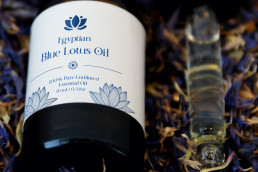
If you have ever stared at a blue lotus oil listing peppered with GC-MS, COA, INCI, CAS, IFRA, and MSDS, and felt that the supplier was speaking a language adjacent to English, this reference is for you. The aromatherapy and botanical-extract world runs on abbreviations, and understanding blue lotus oil acronyms is genuinely useful: it lets you read a lab report, judge a product listing, ask the right questions, and spot when a seller is cosplaying transparency rather than offering it. What follows is a plain-English glossary of the acronyms you will actually encounter when buying, researching, or formulating with Nymphaea caerulea oil.
Table of Contents
- Why Acronyms Matter When Buying Blue Lotus Oil
- Botanical and Product Identity Acronyms
- INCI (International Nomenclature of Cosmetic Ingredients)
- CAS (Chemical Abstracts Service) Number
- EC / EINECS (European Community Inventory)
- HS Code (Harmonised System Code)
- Extraction and Production Acronyms
- EO (Essential Oil)
- ABS (Absolute)
- CO2 (Supercritical CO2 Extract)
- OTTO (Steam-Distilled Essential Oil, Historic Term)
- FCO, MCT, JJO (Common Carrier Oil Acronyms)
- Quality and Testing Acronyms
- GC-MS (Gas Chromatography Mass Spectrometry)
- COA (Certificate of Analysis)
- HPLC (High-Performance Liquid Chromatography)
- TLC (Thin-Layer Chromatography)
- NMR (Nuclear Magnetic Resonance)
- Safety and Regulatory Acronyms
- MSDS / SDS (Material Safety Data Sheet / Safety Data Sheet)
- IFRA (International Fragrance Association)
- GRAS (Generally Recognised As Safe)
- REACH (Registration, Evaluation, Authorisation of Chemicals)
- CLP (Classification, Labelling and Packaging Regulation)
- CPSR (Cosmetic Product Safety Report)
- Organic, Ethical, and Trade Acronyms
- USDA (United States Department of Agriculture)
- EU Organic (Formerly ECOCERT / Cosmos)
- FT (Fair Trade)
- CITES (Convention on International Trade in Endangered Species)
- Aromatherapy and Professional Acronyms
- NAHA (National Association for Holistic Aromatherapy)
- AIA (Alliance of International Aromatherapists)
- IFPA (International Federation of Professional Aromatherapists)
- CCA (Certified Clinical Aromatherapist)
- ND (Naturopathic Doctor)
- Chemistry Shorthand You Will See in Reports
- RI (Refractive Index)
- SG (Specific Gravity)
- FFA (Free Fatty Acids)
- PV (Peroxide Value)
- Decoding a Typical Blue Lotus Oil Listing
- Frequently Asked Questions
- Where to Go From Here
- Buy With Full Transparency
It is written and clinically reviewed by Antonio Breshears, ND, CCA, a Bastyr-trained naturopathic doctor and certified clinical aromatherapist. Think of this as a companion reference to The Complete Guide to Blue Lotus Oil; keep it open in another tab while you compare suppliers and decode certificates.
Why Acronyms Matter When Buying Blue Lotus Oil
Blue lotus oil sits in an awkward regulatory space. It is sold as an aromatherapy ingredient, a perfumery raw material, a cosmetic additive, and in some markets as a herbal novelty. Each of those worlds has its own paperwork culture, and each one has its own preferred abbreviations. A serious supplier will provide documents from several of these systems at once, and the acronyms signal which standards the product has been tested against.
The practical value is simple. If you can read a certificate of analysis, you can verify whether the bottle actually contains what the label claims. If you can read a safety data sheet, you can store and ship the oil responsibly. If you can read an IFRA statement, you know the maximum safe use levels in leave-on skincare. None of this requires a chemistry degree, only a glossary and a little patience.
Botanical and Product Identity Acronyms
INCI (International Nomenclature of Cosmetic Ingredients)
INCI is the standardised naming system used on cosmetic ingredient labels worldwide. For blue lotus, the INCI name you will typically see is Nymphaea Caerulea Flower Extract or Nymphaea Caerulea Flower Oil, depending on the extraction method. If a product lists only “blue lotus essence” or “blue lotus fragrance” without an INCI name, that is a signal the manufacturer either has not registered the ingredient properly or is using a synthetic fragrance dupe.
CAS (Chemical Abstracts Service) Number
A CAS number is a unique numerical identifier assigned to every chemical substance. Blue lotus absolute and its extracts have their own CAS references, as do the individual constituents inside them (apigenin, nuciferine, linalool, and so on). Serious suppliers cite CAS numbers on safety documentation. If you ever need to search a regulatory database, the CAS number is the key that unlocks it.
EC / EINECS (European Community Inventory)
The EC number, sometimes still called EINECS, is the European regulatory identifier for chemical substances placed on the EU market. You will see it alongside the CAS number on European safety paperwork. It matters mainly if you are importing commercially into the EU or UK, but it is a good sign when a supplier has bothered to include it.
HS Code (Harmonised System Code)
The HS code is the international customs classification used for shipping and import duties. Essential oils and absolutes have their own HS chapter. If you are ordering commercial quantities, knowing the correct HS code prevents customs delays. For blue lotus absolute, it usually falls under the essential oils and resinoids classification.
Extraction and Production Acronyms
EO (Essential Oil)
An essential oil is a volatile aromatic extract produced by steam or hydro distillation. True blue lotus EO is rare because the flower yields very little volatile oil under steam. Most products labelled “blue lotus essential oil” in the retail market are actually absolutes or dilutions. If a supplier genuinely offers a steam-distilled EO, they should be able to explain the process and show a distillation report.
ABS (Absolute)
Absolute is the solvent-extracted aromatic concentrate, usually produced using food-grade hexane followed by an ethanol wash. The solvent is removed under vacuum, leaving behind a waxy, deeply coloured material that carries the full olfactory profile of the flower. The overwhelming majority of genuine blue lotus oil on the market is an absolute. It takes roughly 3,000 to 5,000 flowers to produce a single gram.
CO2 (Supercritical CO2 Extract)
Supercritical carbon dioxide extraction uses pressurised CO2 as the solvent, which then evaporates cleanly with no residue. CO2 extracts of blue lotus are premium, preserving a slightly different chemical profile from solvent absolutes. They are more expensive and rarer, but they are chemically cleaner and often preferred by formulators working on sensitive skin products.
OTTO (Steam-Distilled Essential Oil, Historic Term)
Otto is an older term, most often associated with rose oil, meaning the steam-distilled essential oil of a flower. You will occasionally see it used loosely for blue lotus, though strictly speaking a true blue lotus otto is extraordinarily rare and should be viewed with scepticism unless backed by documentation.
FCO, MCT, JJO (Common Carrier Oil Acronyms)
When blue lotus is sold pre-diluted, it is usually carried in FCO (fractionated coconut oil), MCT (medium-chain triglyceride oil, essentially the same as FCO), or JJO (jojoba oil). Each behaves differently on skin and has different shelf-life characteristics. Jojoba is the most stable long term; FCO is lighter and more neutral.
Quality and Testing Acronyms
GC-MS (Gas Chromatography Mass Spectrometry)
This is the single most important acronym in the world of blue lotus oil acronyms. GC-MS is the analytical technique that separates a complex oil into its individual chemical constituents and identifies each one. A GC-MS report tells you what is actually in the bottle: which alkaloids, flavonoids, aromatic compounds, and, crucially, which synthetic markers (if any) are present.
A credible blue lotus supplier provides a batch-specific GC-MS report. Not a generic report. Not a report from three years ago. A report that matches the batch number on the bottle in front of you. If the supplier cannot produce one, assume the worst and move on. For more on reading these reports, keep the master guide handy.
COA (Certificate of Analysis)
A COA is the summary document that accompanies a batch of oil. It collates the GC-MS findings, confirms the botanical identity, and typically lists physical parameters: specific gravity, refractive index, colour, odour profile, and microbial testing results. The COA is what you want to see before purchasing, especially for professional use.
HPLC (High-Performance Liquid Chromatography)
HPLC is a complementary testing method that is particularly good at quantifying non-volatile compounds. For blue lotus, HPLC is used to measure flavonoid content (apigenin, quercetin, kaempferol) and some alkaloids that do not show up cleanly on GC-MS. A supplier offering both GC-MS and HPLC data is operating at a higher standard than most.
TLC (Thin-Layer Chromatography)
TLC is an older, simpler technique used for quick identity checks. It is less informative than GC-MS but cheaper and faster. Some smaller producers use it as a quality-control screen between full analyses.
NMR (Nuclear Magnetic Resonance)
NMR spectroscopy is the gold standard for confirming molecular structure and detecting adulteration. It is expensive and uncommon in small-scale aromatherapy production, but the most rigorous research-grade botanical suppliers will use it to authenticate rare or high-value extracts.
Safety and Regulatory Acronyms
MSDS / SDS (Material Safety Data Sheet / Safety Data Sheet)
The MSDS, now more properly called the SDS under the globally harmonised system, is the safety document that covers hazards, handling, storage, shipping, and first-aid information for the oil. Any professional aromatherapist, formulator, or importer should have the SDS on file. It is also legally required for commercial shipping in most jurisdictions.
IFRA (International Fragrance Association)
IFRA publishes voluntary but widely adopted standards that cap the use of fragrance materials in cosmetic products. An IFRA certificate for blue lotus absolute will tell you the maximum percentage you can safely use in leave-on skincare, wash-off products, fine fragrance, and so on, based on the skin-contact category. If you are formulating skincare, the IFRA statement is essential reading.
GRAS (Generally Recognised As Safe)
GRAS is a US FDA designation indicating a substance is recognised as safe for its intended use, usually in food. Blue lotus itself does not carry a GRAS status for internal use, and that absence matters: it is why reputable suppliers do not market the oil as a food ingredient or dietary flavouring.
REACH (Registration, Evaluation, Authorisation of Chemicals)
REACH is the EU regulatory framework requiring chemical substances placed on the European market to be registered with the European Chemicals Agency. Commercial importers dealing in tonnage quantities of blue lotus absolute need to be REACH-compliant. For retail buyers this is largely invisible, but it is a marker of whether a supplier operates at professional commercial scale.
CLP (Classification, Labelling and Packaging Regulation)
CLP is the EU regulation that governs how hazards are communicated on chemical and cosmetic labels. If you see pictograms and hazard statements on a commercial blue lotus absolute drum, CLP is what dictates those symbols.
CPSR (Cosmetic Product Safety Report)
A CPSR is the safety assessment required before a cosmetic product can be legally placed on the EU or UK market. If you are a formulator making blue lotus skincare commercially, you will need a CPSR completed by a qualified safety assessor.
Organic, Ethical, and Trade Acronyms
USDA (United States Department of Agriculture)
USDA Organic certification indicates the raw material was grown and processed according to US organic standards. Egyptian blue lotus is rarely USDA-certified because the supply chain and farming context does not map cleanly onto US organic frameworks. The absence of USDA Organic on a blue lotus product is not necessarily a red flag; it usually reflects the realities of the growing region.
EU Organic (Formerly ECOCERT / Cosmos)
The EU organic logo and the COSMOS-ORGANIC standard are the European equivalents. Again, rare for blue lotus, and for the same structural reasons.
FT (Fair Trade)
Fair Trade certification addresses grower pay and working conditions. The blue lotus supply chain is small and localised, and formal FT certification is uncommon. Many ethical suppliers operate on a direct-trade basis instead, paying farmers above market rate without a third-party certifier in the middle.
CITES (Convention on International Trade in Endangered Species)
CITES governs international trade in threatened plant and animal species. Nymphaea caerulea is not a CITES-listed species, so no CITES documentation is required for international trade. If a supplier claims CITES certification on blue lotus, that is a sign they do not fully understand what CITES is.
Aromatherapy and Professional Acronyms
NAHA (National Association for Holistic Aromatherapy)
NAHA is one of the leading US professional bodies for aromatherapists, setting educational standards and ethical guidelines. Membership and certification through NAHA-approved programmes indicate a practitioner has met a defined training threshold.
AIA (Alliance of International Aromatherapists)
AIA is another major US professional body, with a slightly different emphasis on clinical and integrative practice.
IFPA (International Federation of Professional Aromatherapists)
IFPA is the UK equivalent, widely recognised across Europe and the Commonwealth.
CCA (Certified Clinical Aromatherapist)
CCA is the professional designation held by clinical aromatherapists who have completed advanced training in therapeutic applications, typically including clinical hours and case study work. It is the qualification behind the author of this site.
ND (Naturopathic Doctor)
ND is the designation for a licensed naturopathic physician. In jurisdictions where naturopathic medicine is regulated, NDs complete a four-year doctoral programme at an accredited school such as Bastyr University. Not all “naturopath” titles carry the same weight; the ND designation from an accredited programme is the professional standard.
Chemistry Shorthand You Will See in Reports
RI (Refractive Index)
The refractive index measures how much light bends as it passes through the oil. Every authentic botanical extract has a characteristic RI range. If a batch falls outside that range, something is wrong: dilution, adulteration, or simple misidentification.
SG (Specific Gravity)
Specific gravity is the density of the oil relative to water. Like RI, it is a quick physical check for authenticity. Blue lotus absolute has a characteristic density range; a number far outside it warrants questions.
FFA (Free Fatty Acids)
FFA content indicates the level of rancidity or hydrolytic degradation in an oil. Low FFA equals fresh oil. Rising FFA signals the oil has been stored poorly or is ageing past its useful life.
PV (Peroxide Value)
Peroxide value measures oxidation. Again, low PV means fresh, high PV means compromised. Combined with FFA, it gives a snapshot of oil condition.
Decoding a Typical Blue Lotus Oil Listing
Put these acronyms together and a well-documented listing starts to make sense. You might see something like: “Nymphaea Caerulea Flower Absolute (INCI); CAS 84696-24-2; solvent-extracted ABS; GC-MS and COA available on request; IFRA 51 compliant; SDS on file.” Each piece of that sentence is doing work. The INCI confirms regulatory identity, the CAS gives the unique chemical reference, ABS specifies the extraction method, GC-MS and COA cover analytical verification, IFRA addresses skincare safety levels, and SDS covers handling and shipping.
A listing that contains none of these markers, or that uses them incorrectly, is telling you something. Either the supplier does not have the documents, does not understand them, or does not think the customer will check. In all three cases, you now have the vocabulary to ask.
Frequently Asked Questions
What is the difference between EO and ABS for blue lotus?
EO (essential oil) is steam-distilled and volatile-only. ABS (absolute) is solvent-extracted and contains a wider range of compounds, including heavier aromatic molecules that do not survive distillation. Most genuine blue lotus oil on the market is ABS, not EO, because the flower yields almost no volatile oil under steam.
Do I need a GC-MS report before buying blue lotus oil?
If you are buying for professional or skincare use, yes. If you are buying for personal diffuser or ritual use from a supplier you already trust, a COA that references GC-MS testing is usually sufficient. The problem is never having the report; the problem is a supplier who cannot produce one at all.
What does IFRA compliance mean for blue lotus?
IFRA compliance means the supplier has an IFRA certificate specifying the maximum safe use percentage of the oil in various product categories, from leave-on facial skincare to fine fragrance. If you are formulating, the IFRA certificate is the document that keeps you on the right side of cosmetic safety standards.
Is USDA Organic blue lotus oil worth seeking out?
USDA Organic certification is rare for blue lotus because of where and how it is grown. Lack of USDA Organic is not a red flag. What matters more is pesticide residue testing on the COA and a supplier who can speak clearly about the farming practices in their source region.
What does INCI tell me that the common name does not?
The INCI name is the standardised regulatory identity of the ingredient. “Blue lotus oil” could mean almost anything, including a synthetic fragrance blend. Nymphaea Caerulea Flower Extract or Nymphaea Caerulea Flower Oil as the INCI pins it to the actual botanical.
Why does my supplier list both CAS and EC numbers?
CAS is the international chemical identifier, EC is the European regulatory identifier. Listing both is a sign the supplier operates across jurisdictions and takes paperwork seriously. It is a positive indicator, not a warning.
Is an SDS the same as an MSDS?
Functionally yes. SDS is the modern term under the globally harmonised system; MSDS is the older term still widely used in casual speech. The document covers the same ground: hazards, storage, handling, shipping, first aid.
Does blue lotus need CITES documentation to ship internationally?
Nymphaea caerulea is not a CITES-listed species, so CITES paperwork does not apply. If a supplier claims otherwise, they are either confused or misrepresenting the regulatory landscape.
What is the most important acronym for an ordinary buyer to know?
GC-MS, followed closely by COA. Between them, these two tell you whether the oil in the bottle matches the claims on the label. Every other acronym matters in specific contexts; these two matter always.
Where can I learn more about reading these reports in practice?
The best starting point is The Complete Guide to Blue Lotus Oil, which walks through authenticity, quality markers, and supplier evaluation in more depth than a glossary allows.
Where to Go From Here
Acronyms are only useful when you use them. Next time you look at a blue lotus oil listing, pull up this reference and check what the supplier provides. INCI name present? CAS number cited? GC-MS and COA offered on request? IFRA compliance declared? SDS on file? The more boxes tick, the more serious the supplier. The fewer, the more questions worth asking. Bookmark this page, keep the master guide open alongside it, and you will read supplier paperwork with considerably more confidence within a few purchases.

Antonio Breshears
Antonio Breshears is a renowned expert in holistic medicine and beauty, with over 25 years of research experience dedicated to uncovering the secrets of nature's most powerful remedies. Holding a degree in Naturopathic Medicine, Antonio's passion for healing and well-being has driven him to explore the intricate connections between mind, body, and spirit.
Over the years, Antonio has become a respected authority in the field, helping countless individuals discover the transformative power of plant-based therapies, including essential oils, herbs, and natural supplements. He has authored numerous articles and publications, sharing his wealth of knowledge with a global audience seeking to improve their overall health and well-being.
Antonio's expertise extends to the realm of beauty, where he has developed innovative, all-natural skincare solutions that harness the potency of botanical ingredients. His formulations embody his deep understanding of the healing properties found in nature, providing holistic alternatives for those seeking a more balanced approach to self-care.
With his extensive background and dedication to the field, Antonio Breshears is a trusted voice and guiding light in the world of holistic medicine and beauty. Through his work at Pure Blue Lotus Oil, Antonio continues to inspire and educate, empowering others to unlock the true potential of nature's gifts for a healthier, more radiant life.