Blue Lotus Oil (Nymphaea caerulea), long prized for its honeyed-floral aroma and gentle psycho‑relaxant properties, is increasingly popular in aromatherapy, skincare, and wellness rituals. However, its rarity and high price point make it a target for adulteration and synthetic substitutes. Knowing how to distinguish genuine steam‑distilled or absolute Blue Lotus Oil from synthetic fragrances or diluted blends is essential for ensuring therapeutic efficacy and safety. This comprehensive guide explores the key differences between authentic and synthetic Blue Lotus Oils, outlines practical sensory and analytical tests, highlights common adulteration tactics, and offers best practices for sourcing and verification.
Table of Contents
- Why Authenticity Matters
- Chemical Composition: Natural vs. Synthetic
- Key Natural Constituents
- Common Synthetic Aroma Chemicals
- Sensory Evaluation Techniques
- Visual Inspection
- Aroma Assessment
- Skin Test
- Analytical Verification Methods
- Gas Chromatography–Mass Spectrometry (GC‑MS)
- High‑Performance Thin‑Layer Chromatography (HPTLC)
- Common Adulteration Tactics
- Dilution with Carrier Oils
- Blending with Other Absolutes
- Synthetic Fragrance Additions
- Packaging and Labeling Clues
- Price vs. Value Considerations
- Best Practices for Purchasing
Why Authenticity Matters
Pure Blue Lotus Oil delivers the nuanced synergy of aporphine alkaloids, flavonoids, and volatile terpenoids that underpin its calming, antioxidant, and skin‑soothing effects. Synthetic or adulterated oils may mimic one or two aroma facets but lack the full chemical profile, resulting in diminished benefits and potential skin irritation. Moreover, undisclosed synthetic additives or residual solvents can pose health risks. Prioritizing authenticity ensures you receive the full spectrum of therapeutic compounds and avoid unwanted side effects.
Chemical Composition: Natural vs. Synthetic
Key Natural Constituents
True Blue Lotus Oil contains a characteristic ratio of:
- Aporphine Alkaloids: Nuciferine, apomorphine, gentle dopamine modulators.
- Flavonoids: Quercetin, kaempferol, potent antioxidants and anti‑inflammatories.
- Monoterpenes & Alcohols: Linalool, limonene, geraniol, floral‑citrus top and heart notes.
- Higher Alcohols & Sesquiterpenes: Nonanol, farnesol, deep honeyed and herbal base notes.
Common Synthetic Aroma Chemicals
Laboratory-made fragrances often rely on one or two components to mimic Blue Lotus, such as:
- Linalool & Linalyl Acetate: Provide generic floral-citrus scent, but lack the alkaloid complexity.
- Ethyl Methylphenylglycidate (Strawberry Aldehyde): Adds sweet top notes rarely found in the genuine profile.
- Phenylethyl Alcohol: Contributes rosy facets but omits the herbaceous‑spice undertones.
Sensory Evaluation Techniques
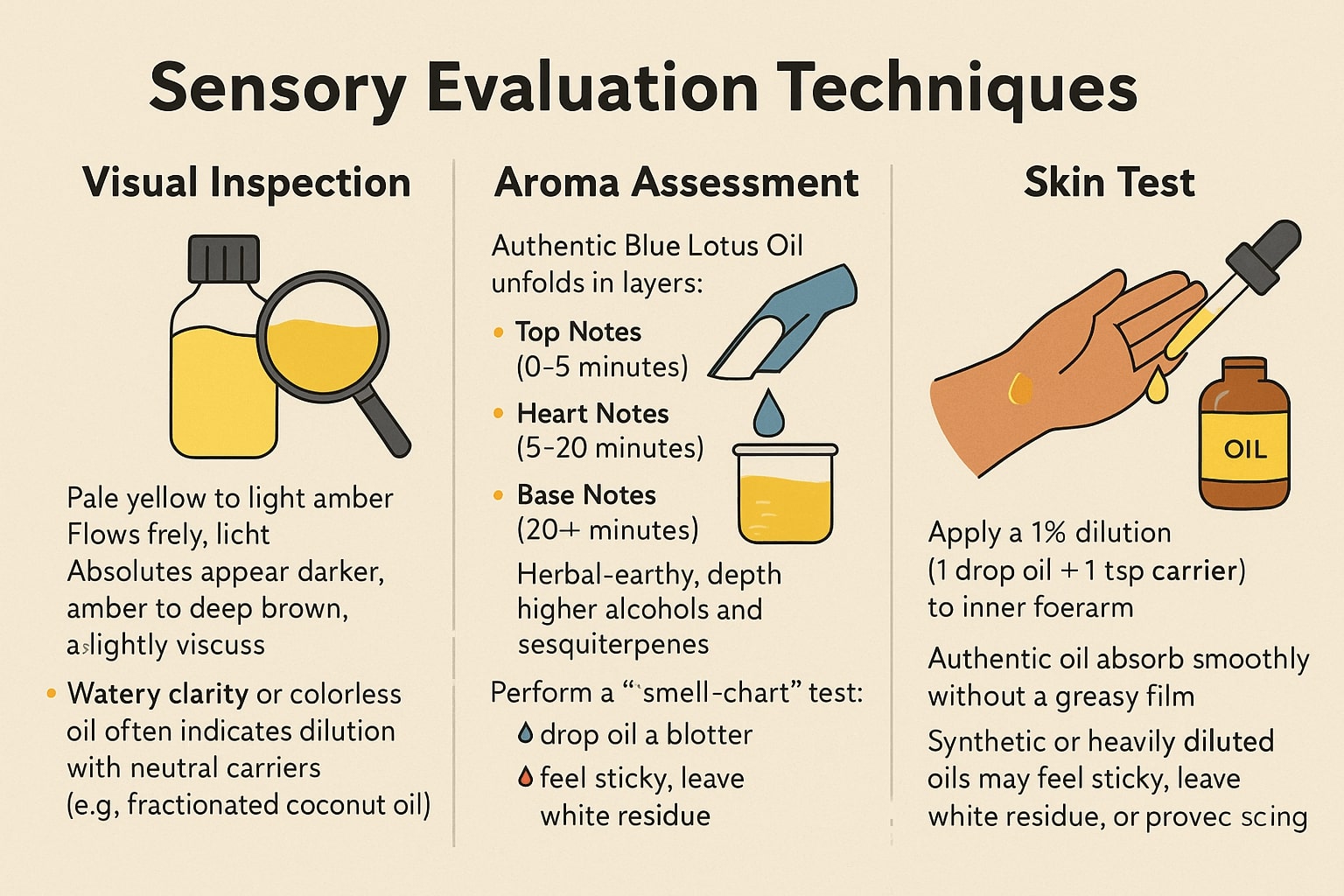
Visual Inspection
Pure steam‑distilled Blue Lotus Oil ranges from pale yellow to light amber and flows freely. Absolutes appear darker, amber to deep brown, and slightly viscous. Beware:
- Watery clarity or colorless oil often indicates dilution with neutral carriers (e.g., fractionated coconut oil).
- Unnaturally bright blue or green hues signal added colorants.
Aroma Assessment
Authentic Blue Lotus Oil unfolds in layers:
- Top Notes (0–5 minutes): Bright floral-citrus, linalool, limonene.
- Heart Notes (5–20 minutes): Honeyed-spice warmth, geraniol, alkaloid nuances.
- Base Notes (20+ minutes): Herbal‑earthy depth, higher alcohols and sesquiterpenes.
Synthetic blends often smell one-dimensional, either excessively sweet or purely citrus, without the evolving complexity. Perform a “smell‑chart” test: place 1 drop on a paper blotter, wait 15 minutes, then re‑evaluate. A genuine oil reveals new facets as it oxidizes.
Skin Test
Apply a 1% dilution (1 drop oil + 1 tsp carrier) to inner forearm. Authentic oil absorbs smoothly without a greasy film. Synthetic or heavily diluted oils may feel sticky, leave a white residue, or provoke mild stinging if chemical additives are present.
Analytical Verification Methods
Gas Chromatography–Mass Spectrometry (GC‑MS)
GC‑MS provides an objective fingerprint of volatile constituents. A legitimate profile will match published reference ranges for:
- Linalool (5–12%)
- Nuciferine and Related Alkaloids (identifiable by specific retention times)
- Monoterpene Alcohols & Sesquiterpenes in balanced proportions
Absence of unexpected peaks, like synthetic esters or high benzyl acetate, indicates purity. Review the Certificate of Analysis (CoA) to confirm that peak areas and retention indices align with authentic samples.
High‑Performance Thin‑Layer Chromatography (HPTLC)
HPTLC offers a rapid qualitative assay. Authentic Blue Lotus Oil produces distinctive bands corresponding to its alkaloid and flavonoid fractions. Weak or missing bands may signify dilution or substitution. Many reputable suppliers include HPTLC plates alongside GC‑MS data.
Common Adulteration Tactics
Dilution with Carrier Oils
Adding inexpensive oils (jojoba, fractionated coconut) reduces costs. Signs include:
- Thin viscosity and low aroma intensity.
- Discrepancies between stated and observed drop counts (e.g., 5 mL bottle with too few drops).
Blending with Other Absolutes
Mixing Blue Lotus absolute with cheaper floral absolutes (jasmine, tuberose) imitates a rich bouquet but obscures the authentic profile. Lab tests will reveal additional marker compounds absent in genuine Blue Lotus.
Synthetic Fragrance Additions
Synthetic molecules may be added to replicate scent cheaply. These often lack therapeutic value and can irritate skin. Sensory cues, flat or overly sweet aroma, and analytical detection of non‑natural esters signal a synthetic blend.
Packaging and Labeling Clues
- Botanical and Latin Name: Authentic labels list Nymphaea caerulea and sometimes chemotype.
- Extraction Method: “100% steam‑distilled” or “absolute (solvent‑extracted).”
- Batch/Lot Number & Harvest Date: Indicates traceability and freshness.
- Certifications: USDA Organic, ISO 9001/GMP, Fair‑Trade marks bolster credibility.
- Dark Glass Bottles: Amber or cobalt‑blue with dropper insert. Avoid clear plastic packaging.
Price vs. Value Considerations
Genuine steam‑distilled Blue Lotus Oil yields are extremely low, 0.01–0.03%, and production is labor‑intensive. Expect premium pricing (often USD 200–400 per 5 mL). If a vendor offers dramatically lower prices, question the oil’s purity. Always weigh cost against verifiable quality markers rather than choosing solely on price.
Best Practices for Purchasing
- Request Analytical Data: Obtain up‑to‑date CoA, GC‑MS, and HPTLC reports.
- Order Samples First: Evaluate sensory attributes and perform patch tests before buying larger volumes.
- Select Reputable Suppliers: Choose brands with transparent sourcing, sustainable practices, and responsive customer service.
- Check Return Policies: Vendors confident in their quality offer satisfaction guarantees or returns.
Distinguishing authentic Blue Lotus Oil from synthetic or adulterated versions requires a combination of sensory awareness, analytical scrutiny, and supplier due diligence. By understanding the natural chemistry of Nymphaea caerulea oil, performing visual and aroma tests, consulting GC‑MS and HPTLC data, and evaluating packaging and provenance, you can confidently select genuine Blue Lotus Oil that delivers its full therapeutic promise. Investing time in verification ensures you honor the ancient lineage of this sacred flower and experience its benefits safely and effectively.

Related Guides
COA Required for Cosmetic Batch Record Blue Lotus Oil: 2026
COA Required for Cosmetic Batch Record Blue Lotus Oil—what to verify: identity,…

Essential Oil Blends 2026: Blue Lotus Recipes & Ratios
Master essential oil blends with Blue Lotus recipes, safe dilution ratios, and…