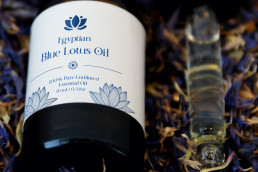
Buying blue lotus oil is not quite like buying any other botanical. The plant, Nymphaea caerulea, is grown in a small number of countries; the true oil is rare and expensive; adulteration is widespread in the mid-market; and a handful of jurisdictions regulate it in ways that quietly catch out buyers who assumed a flower was just a flower. This pillar is a global buyer’s map, honest about where you can order confidently, where you should ask harder questions, and where you may not be able to buy it at all.
Table of Contents
- Why Sourcing Blue Lotus Oil Is Genuinely Harder Than Most Oils
- The Three Things You Are Actually Choosing Between
- Solvent-extracted absolute
- Steam-distilled true essential oil
- Supercritical CO2 extract
- Where Blue Lotus Oil Is Legally Restricted Or Regulatorily Awkward
- How To Buy By Region
- United Kingdom and Ireland
- Continental Europe
- United States and Canada
- Australia and New Zealand
- Middle East and North Africa
- Asia
- Russia, Poland, Latvia, Louisiana
- What Distinguishes A Trustworthy Supplier From A Dubious One
- The Adulteration Problem In More Detail
- Matching Your Purchase To Your Intended Use
- If you want it for aromatherapy and diffusing
- If you want it for skincare
- If you want it for perfumery
- If you want it for ritual, meditation, or anointing
- How To Use It Once You Have Bought It
- Realistic Timeframes For A Buyer
- What Blue Lotus Oil Does Not Do (Buyer Edition)
- Safety Considerations Relevant To Buyers
- Frequently Asked Questions
- Final Thoughts: Where To Go From Here
- Buy Blue Lotus Oil With Confidence
It is written and clinically reviewed by Antonio Breshears, ND, CCA, a Bastyr-trained naturopathic doctor and certified clinical aromatherapist. If you want the full background on the oil itself, extraction methods, and chemistry before you buy, start with The Complete Guide to Blue Lotus Oil, which is the parent reference for the entire site.
Why Sourcing Blue Lotus Oil Is Genuinely Harder Than Most Oils
Most essential oils sit in a mature global supply chain. Lavender, peppermint, frankincense, tea tree: you can pick up a reasonable grade at a high street health shop and a premium grade from a specialist without much drama. Blue lotus oil does not sit in that world. The flower yields an extraordinarily small amount of fragrant material, in the region of 3,000 to 5,000 flowers per gram of absolute, and the plant is grown at commercial scale in only a few countries, principally Egypt and to a lesser extent India and Thailand. That scarcity creates two downstream problems for buyers.
The first is price. A genuine blue lotus absolute or supercritical CO2 extract is not a twenty pound purchase. If you see a small bottle of “pure blue lotus oil” for the price of a supermarket lavender, you are not buying what you think you are buying. The second is adulteration. Because most buyers do not know what genuine blue lotus smells like, unscrupulous suppliers dilute the absolute heavily into jojoba or fractionated coconut, or substitute a synthetic floral accord entirely, and market it as pure. The price point then becomes the clue that something is wrong, and the buyer who chased the bargain ends up with something unrecognisable.
On top of that, a small number of countries and sub-jurisdictions restrict Nymphaea caerulea specifically, which means some readers of this pillar will discover that the oil is not legally available to them at all, or that they need to be careful about how it is sold and labelled. That is a geography problem, not a quality problem, and this guide treats it separately.
The Three Things You Are Actually Choosing Between
Before looking at where to buy, it helps to know what you are buying. “Blue lotus oil” is a loose umbrella term that covers three genuinely different products, and suppliers in different regions lean towards different ones.
Solvent-extracted absolute
This is by far the most common form of real blue lotus oil. The flowers are extracted with a food-grade solvent (typically hexane, then evaporated off), producing a thick, deeply coloured, intensely aromatic absolute. It is not technically an essential oil in the strict distillation sense, but it is the standard article of commerce and what most reputable suppliers sell. A good absolute smells cool and watery at first, then opens into a honeyed floral heart, then settles into a faintly smoky, balsamic base.
Steam-distilled true essential oil
Very rare, very expensive, and produced in small runs by a handful of distillers. The yield is even lower than the absolute, and the aroma is lighter and more ethereal. If a supplier claims to sell a steam-distilled blue lotus essential oil at a budget price, treat that as a red flag; genuine material at that specification does not come cheap.
Supercritical CO2 extract
A premium category, usually sold by specialist apothecaries. CO2 extraction uses pressurised carbon dioxide rather than a chemical solvent, producing an extract closer in profile to the living flower. These are small-batch products and priced accordingly.
Most of the buying-guide decisions in this pillar apply to all three, but the absolute is the default you should assume unless otherwise stated.
Where Blue Lotus Oil Is Legally Restricted Or Regulatorily Awkward
A small but important group of jurisdictions either ban or meaningfully restrict the sale of Nymphaea caerulea and its extracts. These are not rumours; they are real rules, and they change the buying picture for readers in those places. As of current regulations, the notable restrictions are:
- Russia. Nymphaea caerulea is listed on Russia’s controlled plant register, and sale and import of the flower and its extracts is restricted.
- Poland. Blue lotus is controlled under Polish psychoactive substance legislation, and selling the extract for human use is not legal on the open market.
- Latvia. Similar controlled-substance status applies.
- Louisiana, United States. A single state statute restricts the sale of blue lotus for human consumption. The rest of the United States does not restrict it federally, which produces a situation where the same bottle is legal in 49 states and not in one.
- Australia. Not outright banned, but sits in a regulatorily complex space under the Therapeutic Goods Administration, depending on claims made on the label and whether the product is positioned for ingestion.
In other major markets, including the United Kingdom, the rest of the European Union, Canada, New Zealand, most of Asia outside the controlled jurisdictions noted, and most of the Middle East, the oil is not specifically restricted as a cosmetic or aromatherapy product. Customs rules and labelling rules still apply, but the substance itself is not prohibited.
If you are in one of the restricted jurisdictions, please do not attempt to work around the rules. They exist, and being caught on the wrong side of a customs declaration is not worth a bottle of floral oil.
How To Buy By Region
United Kingdom and Ireland
Buying in the UK is straightforward. The oil is not restricted, the Royal Mail and courier networks handle small bottles of oil without difficulty, and several specialist apothecaries ship domestically. The main consideration is quality tier rather than legality. Avoid the very cheapest “blue lotus oil” listings on generic marketplaces; look instead for suppliers who state the botanical name, the extraction method, the country of origin, and ideally offer a certificate of analysis on request. Delivery into Ireland is routine from UK suppliers, though post-Brexit customs paperwork means occasional delays on larger orders.
Continental Europe
For most of the EU, including France, Germany, Italy, Spain, the Netherlands, Belgium, and the Nordics, buying blue lotus oil is legal and practical. Cross-border shipping within the EU is simple. Poland and Latvia are the exceptions noted above; buyers there should not attempt to order. Switzerland is not restricted. For readers in the Balkans and Central Europe, local specialist aromatherapy suppliers sometimes stock it; otherwise UK or German apothecaries are the usual route.
United States and Canada
Federally legal in the United States, with the single exception of Louisiana. Shipping within the lower 48 is straightforward for genuine cosmetic and aromatherapy products. US buyers should be more alert than average to adulteration, because the marketplace there is large and loosely policed; the cheapest listings on mass marketplaces are very often not what they claim. Canada does not restrict the oil, and cross-border shipping from the US or from UK apothecaries is routine, though customs duties apply.
Australia and New Zealand
Australia sits in the regulatorily complex category. The oil itself is not banned, but the way a supplier labels and sells it matters a great deal, particularly if the product is positioned for oral use or for therapeutic claims. Most Australian buyers source from domestic aromatherapy specialists who sell it as a cosmetic-grade or perfumery material and avoid therapeutic claims on the label. New Zealand is simpler and treats it as an ordinary aromatic material.
Middle East and North Africa
Egypt is the principal country of origin for the flower, and good-quality absolute is produced there. Buying directly from Egyptian suppliers is possible but carries the normal risks of long-distance direct-to-farmer purchasing: authentication can be hard, returns are effectively impossible, and the cheap end of the Egyptian market is just as adulterated as anywhere else. Buyers in the Gulf states generally find it easier to order from UK or European specialists with established shipping routes to the region.
Asia
India and Thailand both grow the plant and have small domestic extract markets. For buyers in India, domestic Ayurvedic suppliers sometimes carry it, though the quality varies widely and the absolute is often blended with carrier before sale without clear labelling. In Japan, South Korea, Singapore, and Hong Kong, the oil is not restricted and is usually imported from European or Egyptian sources through specialist retailers. China’s regulatory picture is less clear for cross-border cosmetic imports and can shift; domestic listings on Chinese marketplaces should be treated with caution.
Russia, Poland, Latvia, Louisiana
As noted, these jurisdictions restrict the oil. Readers in these places should treat blue lotus as not practically available, rather than looking for workarounds.
What Distinguishes A Trustworthy Supplier From A Dubious One
Across every region covered above, the signals of a serious supplier are broadly the same. None of them are expensive for the supplier to provide, which is why their absence is informative.
A trustworthy supplier will state the full botanical name, Nymphaea caerulea, on the product page and on the bottle. They will state the extraction method (absolute, steam-distilled, or CO2) rather than hide behind the vague “essential oil” label. They will state the country of origin. They will give a clear indication of purity, either 100 percent pure absolute or, if diluted, the exact carrier and percentage. They will offer a certificate of analysis or gas chromatography report on request for serious buyers. They will price the product in a range that is plausibly consistent with the raw material cost; a 10ml bottle of pure absolute for less than the cost of a restaurant meal is not plausible.
A dubious supplier will describe the oil only as “blue lotus” without Latin binomial, will be silent on extraction method, will offer no country of origin, will price the product implausibly cheaply, and will respond to questions about the certificate of analysis with either silence or a generic stock document that does not match the specific batch.
The Adulteration Problem In More Detail
Blue lotus is adulterated in three main ways, and knowing the pattern makes it easier to spot.
The first and most common is heavy dilution in a neutral carrier, typically jojoba or fractionated coconut oil, sold as if it were pure absolute. The aroma is recognisably blue lotus but thin, and the oil is less viscous than genuine absolute. Price is usually the first clue.
The second is substitution with a synthetic floral accord, a perfumer’s reconstruction that smells vaguely floral and aquatic but lacks the honeyed depth and balsamic base of the real material. Fresh bottles of synthetic accord can smell superficially pleasing but never develop the layered drydown of a genuine absolute.
The third, more sophisticated, is blending with other, cheaper lotus species, particularly Nelumbo nucifera (sacred pink lotus) extract, which is botanically a different plant entirely but often sold under the loose “lotus” label. This is harder to detect by nose alone and is one of the reasons Latin binomials on the label matter.
The practical defence against all three is: buy from a supplier who is willing to be specific, and be sceptical of bargain prices.
Matching Your Purchase To Your Intended Use
One of the reasons buyers end up disappointed is that they buy the wrong format for their purpose. The same oil used differently can be either a beautifully worthwhile purchase or a waste of money.
If you want it for aromatherapy and diffusing
A 5ml or 10ml bottle of pure absolute is plenty. You will use 2 to 4 drops per diffuser session, and a small bottle lasts months. Prioritise aroma quality over everything else; the absolute’s scent profile is what you are paying for.
If you want it for skincare
A pure absolute, diluted by you into a carrier at 1 to 2 percent for face or 2 to 3 percent for body, will go further and cost less per use than a pre-diluted blend. It also gives you control over the carrier, which matters for sensitive skin. Pre-diluted facial serums with blue lotus are convenient but almost always contain only a token amount of the real material.
If you want it for perfumery
A pure absolute is the only sensible option. Diluted products will not hold up in a blend.
If you want it for ritual, meditation, or anointing
Either a pure absolute or a lightly diluted anointing blend works. Pre-made sacred oils with blue lotus in a small percentage of a beautiful carrier (such as jojoba with a trace of beeswax) are legitimate for this use.
How To Use It Once You Have Bought It
Genuine blue lotus absolute is thick, sometimes semi-solid at cool room temperature, and benefits from warming the bottle gently in the hand before use. Standard dilution rates for topical use are 1 to 2 percent on the face, 2 to 3 percent on the body, and up to 3 percent for targeted work. For a diffuser, 2 to 4 drops in the water well is sufficient; more is not better and can become cloying. For perfumery blends, work by fractions in a proper perfumer’s alcohol base.
Store the bottle away from light and heat. A dark glass bottle in a cool cupboard is ideal. A well-kept absolute remains usable for three to four years; the top notes lighten over time, but the honeyed heart holds up well.
Realistic Timeframes For A Buyer
From a fulfilment standpoint, domestic orders within the UK, EU, US, Canada, Australia, and New Zealand typically arrive within a week. International shipping from a UK or European specialist to Asia or the Middle East is usually ten to fourteen days. Direct orders from Egypt can be slower and less predictable.
From an experience standpoint, the aromatherapy effects (mood ease, slight parasympathetic shift when used regularly as part of an evening ritual) develop over days rather than minutes, though the scent itself is immediate. For skincare use, expect a fortnight to a month of daily use before you can reasonably judge whether the oil suits your skin.
What Blue Lotus Oil Does Not Do (Buyer Edition)
This pillar is a buying guide, so the “does not do” section here is framed for buyers specifically. It is worth stating these plainly so that no one spends money expecting something the oil cannot deliver.
- It is not a strong sedative. It is gently calming and supportive of wind-down. It will not knock you out, and a bottle is not a substitute for addressing insomnia properly.
- It is not a recreational psychoactive. Despite internet folklore, the topical and aromatic use of the oil does not produce meaningful intoxication. If that is what you are shopping for, you will be disappointed.
- It is not a clinical treatment. It is a supportive botanical. It is not a substitute for medical care, prescribed medication, or a proper clinician relationship.
- It is not a bargain commodity. If the price is implausibly low, the product is implausibly pure. Pick a tier you are comfortable with and buy once, well.
- It is not universally legal. The jurisdictions listed above genuinely restrict it. The rules do not bend for individual buyers.
- It is not interchangeable with pink lotus. Nelumbo nucifera is a different plant with a different aroma and different chemistry.
Safety Considerations Relevant To Buyers
A few safety points matter at the point of purchase, because they affect who should buy and in what format.
Blue lotus oil is avoided in pregnancy and while breastfeeding, on the general precautionary principle applied to alkaloid-containing botanicals. If you are pregnant, do not buy it for personal use; wait. If you take dopaminergic medications (for Parkinson’s disease, for example), MAOIs, or significant sedatives, the oil’s aporphine and nuciferine content are reason enough to consult your clinician before use, and to err on the side of aromatic rather than topical or ingested use if you proceed. Patch-test any topical blend before widespread use, particularly if you have a history of reactive skin or fragrance sensitivities. Keep the bottle out of reach of children, not because of any specific danger but because any concentrated essential material deserves that basic caution.
Ingestion is a separate question. Some traditions and some modern products do use blue lotus internally in tea or tincture form; the oil itself (absolute or CO2) is not generally intended for ingestion, and no one should swallow an absolute on the strength of an aromatherapy purchase. If you are interested in ingested blue lotus, that is a different product category (dried flower, tea, tincture) and a different risk-benefit conversation.
Frequently Asked Questions
What is the single most reliable indicator that a supplier is selling genuine blue lotus oil?
The combination of the full botanical name (Nymphaea caerulea) on the label, a named extraction method (absolute, steam-distilled, or CO2), a stated country of origin, and a price that is plausibly consistent with the raw material cost. Any supplier unwilling to be specific on those four points is best avoided.
Is blue lotus oil legal in my country?
In most major markets, yes. The specific jurisdictions to be aware of are Russia, Poland, Latvia, and the US state of Louisiana, all of which restrict it, plus Australia, where sale is legal but regulatorily sensitive depending on labelling.
Why is genuine blue lotus oil so expensive?
Because it takes roughly 3,000 to 5,000 flowers to produce one gram of absolute. The raw material cost alone sets a floor price that budget listings cannot meet honestly.
Should I buy the absolute, the steam-distilled oil, or the CO2 extract?
For most buyers, a solvent-extracted absolute is the right default. It is the standard commercial form, the most aromatically complete, and the best value per use. CO2 extracts are excellent but premium. Steam-distilled true essential oil is rare, expensive, and aromatically lighter.
Can I buy blue lotus oil on large marketplaces like Amazon?
You can find listings there, but the adulteration rate is meaningfully higher than on specialist apothecary sites. If you buy on a mass marketplace, look for a seller with a named brand, full botanical labelling, and third-party reviews that specifically discuss aroma quality.
How should I store the oil once it arrives?
In a dark glass bottle, away from light and heat, in a cool cupboard. A well-kept absolute remains usable for three to four years.
Can I buy blue lotus oil for oral use?
The essential oil, absolute, and CO2 extract formats are not intended for ingestion. Internal use of blue lotus is a different product category (dried flower, tea, tincture) with different preparation and dosing, and warrants its own research before purchase.
What is the minimum useful quantity to buy?
A 2ml or 5ml bottle of pure absolute is a reasonable starter size for aromatherapy use. For skincare use where you dilute into a carrier yourself, 5ml to 10ml will last several months.
Is it safe to order internationally?
Yes, from established specialist suppliers shipping into jurisdictions where the oil is legal. Declarations on the customs form should reflect what is in the package (aromatic cosmetic material); misdeclaration to avoid duties is not advisable.
How do I tell if the oil I already have is real?
Smell it at the moment of opening, then smell it ten minutes later, then smell it an hour later. Genuine blue lotus absolute moves: cool and watery at first, honeyed and floral in the heart, balsamic and slightly smoky in the drydown. A synthetic or heavily diluted product is largely static and disappears quickly.
Can I return it if I do not like the scent?
That depends on the supplier, and returns policies for small volumes of aromatic material are variable. The scent is genuinely polarising; some people love it instantly, and others find the honeyed floral heart too heavy. Buying a small size first is sensible if you are new to it.
Is blue lotus oil the same as pink lotus oil?
No. Blue lotus is Nymphaea caerulea, a water lily. Pink lotus is Nelumbo nucifera, a true lotus. Different plants, different aromas, different chemistry, different price points. Suppliers who use “lotus oil” without specifying which one are not giving you enough information.
Final Thoughts: Where To Go From Here
Pulling the threads of this pillar together, the buying picture for blue lotus oil comes down to three intertwined considerations: geography, quality tier, and intended use. Geography tells you whether you can legally buy the oil at all, and from whom; quality tier tells you what you should reasonably expect to pay and what signals to look for on the label; intended use tells you which format (absolute, steam-distilled, or CO2) and what size bottle actually fits your life. Most buyer disappointment traces back to one of these three being misread, usually the second: the bargain bottle that turned out to be a thin dilution or a synthetic accord.
The quiet discipline of buying well is patience. A small bottle of genuine absolute from a supplier who is specific about botanical name, extraction method, country of origin, and purity will give you more real pleasure, more real usefulness, and more real value per drop than any number of cut-price listings from anonymous sellers. If the price looks too good, it is. If the labelling is vague, it is hiding something. If the supplier cannot answer a simple question about extraction, look elsewhere.
If you have read this pillar and you are broadly comfortable with the buying picture in your region, the next step is either a small starter bottle of a genuine absolute from a specialist, or, if you want to understand the oil itself more deeply before spending, a careful read of The Complete Guide to Blue Lotus Oil, which covers the chemistry, the extraction methods, the traditional uses, and the modern evidence in a single long reference. Either route is reasonable. The worst outcome is the impulse purchase of a bargain bottle from a non-specific seller; the best outcome is the deliberate purchase of a small bottle of real material from someone who can tell you exactly what is in it.

Antonio Breshears
Antonio Breshears is a renowned expert in holistic medicine and beauty, with over 25 years of research experience dedicated to uncovering the secrets of nature's most powerful remedies. Holding a degree in Naturopathic Medicine, Antonio's passion for healing and well-being has driven him to explore the intricate connections between mind, body, and spirit.
Over the years, Antonio has become a respected authority in the field, helping countless individuals discover the transformative power of plant-based therapies, including essential oils, herbs, and natural supplements. He has authored numerous articles and publications, sharing his wealth of knowledge with a global audience seeking to improve their overall health and well-being.
Antonio's expertise extends to the realm of beauty, where he has developed innovative, all-natural skincare solutions that harness the potency of botanical ingredients. His formulations embody his deep understanding of the healing properties found in nature, providing holistic alternatives for those seeking a more balanced approach to self-care.
With his extensive background and dedication to the field, Antonio Breshears is a trusted voice and guiding light in the world of holistic medicine and beauty. Through his work at Pure Blue Lotus Oil, Antonio continues to inspire and educate, empowering others to unlock the true potential of nature's gifts for a healthier, more radiant life.