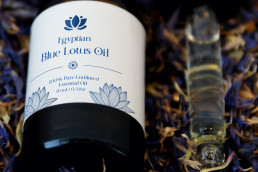
If you are an aromatherapist, natural perfumer, spa owner, formulator, or clinician building a practice that uses blue lotus oil (Nymphaea caerulea), the retail decant you see in luxury apothecaries is not the right purchase format. You need blue lotus oil bulk quantities, a clear sense of fair pricing, a supplier who can demonstrate authenticity, and an understanding of why this particular botanical sits at the expensive end of the essential oil market. This guide walks through what practitioners genuinely need to know before placing a meaningful commercial order.
Table of Contents
- Why Blue Lotus Oil Is Genuinely Expensive
- What "Bulk" Actually Means in This Market
- Fair Pricing Tiers: What to Expect
- What the Price Should Include
- Verifying Authenticity at Bulk Scale
- GC-MS Analysis
- Organoleptic Assessment
- Visual and Physical Cues
- Ethical Sourcing Considerations for Practitioners
- Regulatory Realities Practitioners Must Know
- Storage and Handling at Bulk Volume
- Primary Storage
- Working Decants
- Batch Tracking
- Building a Supplier Relationship
- When Bulk Buying Is NOT the Right Choice
- Frequently Asked Questions
- Where to Go From Here
- Trusted Blue Lotus for Practitioners
It is written and clinically reviewed by Antonio Breshears, ND, CCA, a Bastyr-trained naturopathic doctor and certified clinical aromatherapist. For readers who want a broader orientation before focusing on commercial sourcing, The Complete Guide to Blue Lotus Oil covers chemistry, extraction methods, and clinical uses in depth; this article focuses specifically on the economics and logistics of buying in practitioner quantities.
Why Blue Lotus Oil Is Genuinely Expensive
Before discussing bulk pricing, it helps to understand why the unit economics of this botanical are so different from, say, lavender or tea tree. Blue lotus absolute requires roughly 3,000 to 5,000 hand-harvested flowers to produce a single gram of finished oil. The flowers themselves open only for a narrow window each morning, are picked by hand from shallow Nile-basin waters, and must be processed fresh before the delicate aromatic compounds degrade. Solvent extraction (typically hexane or ethanol), followed by the careful removal of waxes and non-aromatic plant material, yields an absolute rather than a true essential oil, and the process is labour-intensive at every stage.
The practical result: honest wholesale pricing for authentic Egyptian blue lotus absolute generally sits in the range of several hundred to well over a thousand pounds per 100 ml, depending on grade, extraction method (solvent versus supercritical CO2), and the supplier’s position in the chain. If you are being offered “bulk blue lotus oil” at a price that feels suspiciously affordable, you are almost certainly being offered something else: a dilution in carrier oil, a synthetic reconstruction, or an entirely different botanical such as Nymphaea lotus (white) or Nelumbo nucifera (sacred lotus, a different genus altogether).
What “Bulk” Actually Means in This Market
In the blue lotus trade, “bulk” does not mean what it means for more common oils. There is no 5-litre drum of pure blue lotus absolute sitting in a warehouse waiting for your order. Practitioner bulk quantities realistically look like this:
- Entry practitioner volume: 15 to 30 ml. Appropriate for a single aromatherapist formulating bespoke blends for a small client list.
- Small clinic or spa volume: 50 to 100 ml. Appropriate for a multi-room spa, a small natural perfumery, or a clinician using the oil as one modality within a broader practice.
- Commercial formulator volume: 250 ml and above, typically negotiated directly with a supplier and often requiring a deposit and lead time. Appropriate for brands building a product line around the botanical.
If you are purchasing beyond 100 ml, expect the transaction to involve conversation rather than a shopping cart. Reputable suppliers of blue lotus oil bulk quantities will want to understand your intended use, verify that you are a legitimate trade buyer, and often walk you through batch-specific documentation before finalising the order.
Fair Pricing Tiers: What to Expect
Pricing varies across the market, but practitioners can orient themselves around rough benchmarks. Per-ml cost generally decreases as volume increases, though not as dramatically as with cheaper oils, because the underlying flower cost does not scale down. A 50 ml purchase might offer a 10 to 20 percent per-ml reduction against retail decants, while a 250 ml commercial order might reach 25 to 35 percent below retail unit pricing. Anyone offering 70 or 80 percent discounts on “bulk” blue lotus is not selling the same product as the retail apothecary down the road.
What the Price Should Include
When evaluating whether a bulk quote is fair, look beyond the per-ml figure. A credible practitioner supply relationship should include:
- Certificate of analysis (COA) specific to the batch you are receiving, ideally including GC-MS profile
- Country of origin documentation (authentic Nymphaea caerulea is Egyptian)
- Extraction method stated clearly (absolute, steam-distilled essential oil, or CO2 extract)
- Harvest and extraction dates, since absolute quality shifts over a multi-year shelf life
- Proper packaging for the quantity ordered (dark amber or violet glass, appropriate closures, usually with a nitrogen flush for larger volumes)
If a supplier cannot provide these, the low price is not a bargain; it is a warning.
Verifying Authenticity at Bulk Scale
At practitioner volumes, the financial stakes of adulteration are significant. A single compromised 100 ml purchase could represent several thousand pounds of loss and, more importantly, months of formulation built on a false foundation. Verification at this scale should be rigorous.
GC-MS Analysis
Gas chromatography-mass spectrometry remains the standard for verifying essential oil and absolute identity. For blue lotus, the analytical profile should show the characteristic alkaloid signatures (including aporphine and nuciferine, though these are often present in trace quantities in the absolute), along with the flavonoid-associated compounds such as apigenin, quercetin, and kaempferol derivatives. The aromatic profile should include the expected terpenoid and phenolic markers consistent with authentic Nymphaea caerulea. Many suppliers will provide a COA; fewer will tolerate independent third-party re-testing, and willingness to do so is itself a quality signal.
Organoleptic Assessment
No laboratory test replaces a trained nose. Authentic blue lotus absolute presents a characteristic three-stage olfactory profile: a cooler floral-aquatic top note, a deep honeyed-floral heart with distinct tea-like and slightly anisic undertones, and a balsamic, softly smoky base that can persist for hours on a smelling strip. Synthetic reconstructions tend to lack the depth of the base and the subtle shift through the heart phase. Dilutions in jojoba or fractionated coconut oil betray themselves through thinness and a more linear, less evolving scent.
Visual and Physical Cues
Authentic absolute is viscous, deeply coloured (ranging from rich amber to a greenish-brown depending on extraction specifics), and tends to thicken noticeably at cooler temperatures. A thin, pale, free-flowing liquid marketed as pure blue lotus absolute is almost certainly diluted.
Ethical Sourcing Considerations for Practitioners
Practitioners who build a public-facing practice or product line around blue lotus should think carefully about sourcing ethics, both because clients increasingly ask and because the answers matter. The Egyptian blue water lily has cultural and historical significance reaching back to pharaonic ritual practice; its contemporary cultivation and wild harvesting sit within a small network of Nile-delta growers and extractors. Key questions to ask your supplier include:
- Is the flower cultivated or wild-harvested, and if wild-harvested, what population management practices are in place?
- Are the harvesters paid fairly, and is the chain of custody traceable?
- What solvents are used in extraction, and how are residual solvents managed?
- Is the supplier compliant with CITES and relevant export regulations?
A supplier who answers these questions substantively, rather than with marketing language, is the kind of partner worth building a commercial relationship with.
Regulatory Realities Practitioners Must Know
Blue lotus exists in a more regulated grey zone than most essential oils, and practitioners purchasing blue lotus oil bulk quantities have a professional obligation to understand the legal landscape before formulating or selling.
The botanical is explicitly restricted or controlled in Russia, Poland, and Latvia, and in the US state of Louisiana. Australia maintains a regulatory complexity around the plant that practitioners should verify with current guidance before importing or selling. Most of the rest of the world permits trade in the absolute for aromatic and cosmetic use, but ingestible or therapeutic claims carry significant regulatory weight in the UK, EU, US, and elsewhere. Building a practice around blue lotus means staying current on this landscape, since positions can shift.
For clinical practitioners, this also means being cautious about what is claimed to clients. The oil is best positioned as an aromatic and topical adjunct within a broader protocol, not as a treatment in itself.
Storage and Handling at Bulk Volume
Once a practitioner-scale quantity is in your possession, protecting the investment becomes central. Blue lotus absolute is relatively stable, with a working shelf life of three to four years when stored properly, but that assumes proper handling.
Primary Storage
Keep bulk stock in its original dark amber or violet glass, in a cool, dark, temperature-stable location. A dedicated cabinet away from direct sunlight, kitchen heat, and temperature fluctuations is ideal. Refrigeration is optional but beneficial for very long-term storage of larger quantities; if refrigerated, allow the bottle to reach room temperature before opening to avoid condensation inside the container.
Working Decants
Never formulate directly from your primary stock bottle. Decant smaller working quantities (10 to 30 ml) into fresh dark glass, and return to the master bottle only when necessary. Each opening of the primary bottle introduces headspace oxygen, which slowly degrades the absolute. Some commercial buyers request a nitrogen-flushed primary container for this reason.
Batch Tracking
For any practitioner selling formulated products, batch tracking of your raw material into your finished goods is essential, both for regulatory traceability and for quality control should a client report a sensitivity or issue. Keep your COAs filed, log batch numbers against formulation dates, and maintain a simple record system.
Building a Supplier Relationship
For most practitioners, the best long-term outcome is a stable, named relationship with one or two suppliers rather than shopping each order on price. This is particularly true for blue lotus, where batch variation is real and the market contains more questionable offerings than reliable ones. A good supplier relationship typically develops through:
- An initial small order (retail decant or entry bulk volume) to assess the product itself
- A direct conversation with the supplier about your practice and intended use
- A mid-size order with full documentation review
- Ongoing orders at increasing volumes as trust develops
Suppliers worth cultivating will engage with this process rather than pushing large first orders. If pressure is applied to buy at volume without the relational groundwork, treat it as a signal to look elsewhere.
When Bulk Buying Is NOT the Right Choice
Not every practitioner who uses blue lotus needs to buy at bulk volume. If your practice uses the oil in only a handful of formulations per month, a series of smaller retail-scale purchases may serve you better than a large bulk order that sits for a year and loses its edge. Bulk purchasing genuinely benefits practitioners who:
- Use blue lotus in a consistent, named product line with predictable monthly volume
- Formulate for a client base large enough to move the stock within 12 to 18 months
- Have the storage infrastructure to protect the investment
- Have verified a supplier through smaller orders first
If you are still exploring whether the oil belongs in your practice at all, stay at retail volume until the answer is clear.
Frequently Asked Questions
What is a fair per-ml price for bulk blue lotus absolute?
Authentic Egyptian blue lotus absolute at bulk practitioner volumes (50 to 250 ml) typically costs in the range of several pounds to well over ten pounds per ml, depending on extraction method, batch, and supplier. Anything dramatically cheaper is almost certainly diluted, synthetic, or a different botanical.
What is the minimum order quantity for bulk blue lotus oil?
Most reputable suppliers begin bulk pricing tiers at 15 to 30 ml for individual practitioners, with more substantial discounts appearing at 100 ml and above. True commercial volumes (250 ml and up) are typically arranged directly with the supplier.
How do I verify a bulk batch is authentic before committing to a large order?
Request the batch-specific certificate of analysis including GC-MS profile, evaluate an organoleptic sample personally, check viscosity and colour against the known profile of authentic absolute, and ideally re-test independently if the order size justifies it.
Can I get blue lotus essential oil rather than absolute in bulk?
True steam-distilled blue lotus essential oil is rare and commands a significant premium; the vast majority of the market is solvent-extracted absolute. Supercritical CO2 extracts sit between the two in both profile and price. Clarify which you are purchasing in any bulk conversation.
How long will bulk blue lotus absolute remain usable?
Stored properly in dark glass in a cool, dark, temperature-stable environment, authentic blue lotus absolute has a working shelf life of three to four years. Working decants degrade faster because of repeated headspace exposure.
Is it legal to import blue lotus oil in bulk?
Blue lotus is restricted in Russia, Poland, Latvia, and the US state of Louisiana, and carries regulatory complexity in Australia. Most other jurisdictions permit trade for aromatic and cosmetic use, but practitioners should verify current guidance for their own region before bulk import, and should be cautious about therapeutic claims regardless of location.
Do I need to be a registered practitioner to buy bulk?
This varies by supplier. Many reputable bulk suppliers prefer to work with registered practitioners, formulators, or brands and may ask for verification of trade status before confirming larger orders, partly for regulatory reasons and partly as a quality filter.
What packaging should bulk blue lotus oil arrive in?
Dark amber or violet glass is standard. Larger volumes (100 ml and above) often arrive with nitrogen-flushed headspace. Plastic packaging is a warning sign, as is clear glass, which allows light degradation.
Can I dilute bulk absolute to resell in smaller retail bottles?
Legally and ethically, this is possible if properly labelled (including the carrier oil, the dilution percentage, and batch traceability) and compliant with cosmetic and aromatic product regulations in your jurisdiction. Selling diluted product as “pure” is both unethical and, in most jurisdictions, unlawful.
What carriers work best if I plan to pre-dilute bulk stock for my practice?
Jojoba is the most widely used carrier for blue lotus absolute because of its stability and skin compatibility. Fractionated coconut oil is a neutral alternative. Avoid heavier oils that dominate the aromatic profile, unless that is the intended formulation direction.
Where to Go From Here
If you are establishing or expanding a practice that uses blue lotus, the next steps are straightforward: orient yourself on the botanical’s chemistry and clinical applications through The Complete Guide to Blue Lotus Oil, begin a supplier conversation with a small retail or entry-bulk order to assess both the product and the relationship, and build from there. Bulk purchasing is a genuinely useful tool for the right practice, but it is a tool that rewards patience and due diligence rather than urgency.

Antonio Breshears
Antonio Breshears is a renowned expert in holistic medicine and beauty, with over 25 years of research experience dedicated to uncovering the secrets of nature's most powerful remedies. Holding a degree in Naturopathic Medicine, Antonio's passion for healing and well-being has driven him to explore the intricate connections between mind, body, and spirit.
Over the years, Antonio has become a respected authority in the field, helping countless individuals discover the transformative power of plant-based therapies, including essential oils, herbs, and natural supplements. He has authored numerous articles and publications, sharing his wealth of knowledge with a global audience seeking to improve their overall health and well-being.
Antonio's expertise extends to the realm of beauty, where he has developed innovative, all-natural skincare solutions that harness the potency of botanical ingredients. His formulations embody his deep understanding of the healing properties found in nature, providing holistic alternatives for those seeking a more balanced approach to self-care.
With his extensive background and dedication to the field, Antonio Breshears is a trusted voice and guiding light in the world of holistic medicine and beauty. Through his work at Pure Blue Lotus Oil, Antonio continues to inspire and educate, empowering others to unlock the true potential of nature's gifts for a healthier, more radiant life.