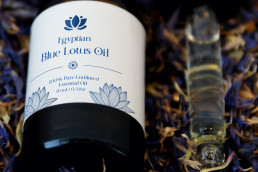
If you are searching for blue lotus oil in Canada, you are in one of the more straightforward markets in the world for sourcing this particular botanical. Unlike the regulatory tangle seen in Russia, Poland, Latvia, or the US state of Louisiana, Canada has no specific prohibition on Nymphaea caerulea as an aromatic material. That said, not every supplier selling “blue lotus oil” to Canadian customers is offering the real thing, and the difference between a genuine Egyptian absolute and a synthetic fragrance oil with a blue label is substantial. This guide walks through the legal position, the import practicalities, what to look for in a reputable source, and what to realistically expect to pay.
Table of Contents
- Is Blue Lotus Oil Legal in Canada?
- What Canadian Buyers Are Actually Choosing Between
- The Synthetic Fragrance Oil
- The Diluted or Adulterated Oil
- The Genuine Absolute or Distilled Oil
- Import, Customs, and Shipping to Canada
- Duties and GST/HST
- Shipping Times and Customs Holds
- CITES and Restricted Species
- What to Look for in a Canadian-Facing Supplier
- Transparent Sourcing
- Batch Testing and Documentation
- Sensible Pricing
- Clear Usage Guidance
- Realistic Pricing in the Canadian Market
- Domestic Retail Versus Direct Import
- Common Mistakes Canadian Buyers Make
- Safety Considerations Specific to Canadian Buyers
- Frequently Asked Questions
- Where to Go From Here
- Ship Pure Blue Lotus to Canada
It is written and clinically reviewed by Antonio Breshears, ND, CCA, a Bastyr-trained naturopathic doctor and certified clinical aromatherapist. For broader context on the oil itself, its chemistry, and how it is used, readers may want to start with the complete guide to blue lotus oil, which provides the background this buying guide assumes you already have.
Is Blue Lotus Oil Legal in Canada?
The short answer is yes. Nymphaea caerulea, the Egyptian blue water lily, is not a controlled substance under the Canadian Controlled Drugs and Substances Act. It does not appear on Health Canada’s Prescription Drug List, nor is it scheduled under the Food and Drugs Act in a way that restricts possession or personal use. You can legally purchase, own, and use blue lotus oil in Canada for aromatherapy, perfumery, skincare, and personal ritual.
A few caveats are worth noting. First, any product making explicit therapeutic or medicinal claims must be licensed with Health Canada’s Natural Health Products Directorate, and most blue lotus oils sold in Canada are marketed as cosmetic or aromatic ingredients rather than as licensed natural health products. This is a labelling issue, not a legality issue: the oil itself is lawful, but a supplier promising it will “cure anxiety” or “treat insomnia” on the label is running into regulatory territory they likely have not cleared. Reputable sellers describe the oil in aromatic and cosmetic terms and leave the clinical framing to independent educational material.
Second, ingesting blue lotus oil is not advisable regardless of where you live, and Canadian food regulations would not support internal consumption of an absolute extract. Aromatic and topical use are the appropriate applications.
What Canadian Buyers Are Actually Choosing Between
Once you start searching for blue lotus oil canada, you will find listings across a broad price range, from around fifteen Canadian dollars for a small bottle on marketplace sites up to several hundred dollars for a curated artisan offering. This spread is not coincidental. It reflects genuine and significant differences in what is actually in the bottle.
The Synthetic Fragrance Oil
At the bottom of the price range sit products labelled “blue lotus fragrance oil” or simply “blue lotus oil” that are, in practice, synthetic aroma compounds blended to approximate a floral, slightly aquatic scent. These have their uses in candle-making and soap formulation, but they contain no actual Nymphaea caerulea. They will not deliver the alkaloid and flavonoid chemistry (aporphine, nuciferine, apigenin, quercetin, kaempferol) that makes the real oil interesting for aromatherapy or ritual use. The tell is usually the price, the phrase “fragrance oil” in the listing, and often a bright blue tint that real blue lotus absolute does not have.
The Diluted or Adulterated Oil
In the middle of the price range, you will find products sold as genuine blue lotus oil but which are in fact heavily diluted in jojoba, fractionated coconut, or grapeseed oil without this being disclosed. A one to five percent dilution of real absolute in a carrier is not a scam per se, it can be a legitimate ready-to-use format, but it should be clearly labelled as such. Problems arise when a diluted product is priced as though it were a pure absolute. Look for explicit percentage disclosure.
The Genuine Absolute or Distilled Oil
At the upper end are true blue lotus absolutes (solvent-extracted, the most common authentic form), rare steam-distilled essential oils, and the premium supercritical CO2 extracts. These cost more for a straightforward reason: roughly three thousand to five thousand flowers are required to produce a single gram of absolute. The scent profile is distinctive, a cooler floral-aquatic top opening into a deep honeyed-floral heart, then settling into a balsamic, slightly smoky base. Colour ranges from deep amber to olive brown to almost black-green, never a bright blue.
Import, Customs, and Shipping to Canada
Because very little blue lotus oil is produced within Canada itself (there is no meaningful domestic cultivation of Nymphaea caerulea, the plant being native to the Nile), virtually every bottle on the Canadian market has been imported, usually from Egypt, occasionally via a European or American reseller. For Canadian buyers, this raises a few practical questions.
Duties and GST/HST
Essential oils and aromatic extracts are generally classified under HS code 3301 when imported commercially. For personal-scale purchases from international sellers, you may be charged GST or HST on the declared value at the point of entry, along with a small handling fee from the courier. Orders under twenty Canadian dollars typically clear without charges, but anything above this threshold is subject to sales tax collection. Duties on essential oils themselves are usually zero or very low under most-favoured-nation tariff classifications, but the tax treatment varies by province.
Shipping Times and Customs Holds
Ordering directly from an Egyptian producer can mean shipping windows of two to four weeks depending on carrier, with occasional customs inspections. Ordering from a supplier with Canadian or US-based fulfilment shortens this considerably. For most Canadian customers, a reputable supplier that ships from within North America or holds stock in Europe with expedited courier service offers the best balance of authenticity and delivery reliability.
CITES and Restricted Species
Nymphaea caerulea is not listed under CITES (the Convention on International Trade in Endangered Species), so there are no species-level trade restrictions on importing the oil into Canada. This is worth knowing because some other botanicals (sandalwood, rosewood, certain agarwoods) do require CITES permits and can be delayed or seized at the border. Blue lotus does not have this complication.
What to Look for in a Canadian-Facing Supplier
The Canadian market has its share of both genuine artisan sellers and opportunistic listings. A few criteria help separate the two.
Transparent Sourcing
A reputable supplier will tell you where the flowers were grown (Egypt, for authentic material), what extraction method was used (solvent-based absolute, steam-distilled essential oil, or supercritical CO2), and whether the final product is pure or pre-diluted in a carrier. Vagueness on any of these points is a warning sign. “Exotic origin” or “ancient recipe” without specifics usually means the seller either does not know or does not want you to know.
Batch Testing and Documentation
Gas chromatography-mass spectrometry (GC-MS) reports are the gold standard for verifying essential oil and absolute composition. Not every small supplier will have these on every batch, but a serious vendor will have them available on request or published on their site. The report should show the characteristic constituent profile, not a generic floral aromatic signature.
Sensible Pricing
If someone is offering a ten millilitre bottle of “pure blue lotus essential oil” for twenty dollars, the arithmetic does not work. The raw material cost alone exceeds that. Pricing that is dramatically below the market midpoint almost always indicates synthetic fragrance, heavy dilution, or an entirely different plant being substituted (some cheap “blue lotus” products are actually made from blue water lily varieties grown in Southeast Asia, which lack the traditional Egyptian chemistry).
Clear Usage Guidance
A supplier who tells you to use the oil neat on skin, ingest it, or apply it without dilution is either uninformed or unconcerned with your safety. Proper guidance recommends dilution in a carrier oil at one to two percent for facial use, two to three percent for body application, three percent for targeted spot use, and two to four drops in a diffuser for aromatic inhalation. A seller who communicates these boundaries is demonstrating basic competence.
Realistic Pricing in the Canadian Market
For genuine, well-sourced blue lotus absolute delivered to Canadian customers, expect to pay in the following general ranges, though exchange rates and shipping fluctuate:
- A small sample vial (around 1 ml) of authentic absolute: roughly thirty to sixty Canadian dollars.
- A standard 5 ml bottle of pure absolute: roughly one hundred fifty to three hundred Canadian dollars.
- A 10 ml bottle of premium CO2 extract or verified steam-distilled essential oil: typically three hundred to six hundred Canadian dollars or more.
- A pre-diluted 10 ml rollerball (around 2 to 5 percent absolute in jojoba): roughly forty to eighty Canadian dollars.
These are not bargain-basement figures. They reflect the labour-intensive reality of an absolute that requires thousands of flowers per gram. If a product is priced far below these ranges, the most charitable interpretation is that it is pre-diluted without adequate disclosure. The less charitable interpretation is that it is not the botanical it claims to be.
Domestic Retail Versus Direct Import
Canadian buyers have three broad pathways.
The first is purchasing from a Canadian aromatherapy retailer or apothecary. This is the most convenient, usually ships within a few business days, and avoids the complexity of international shipping. The downside is that the Canadian aromatherapy retail market is comparatively small, and genuine blue lotus absolute is not commonly stocked. Many retailers who do carry it are reselling imported material, which is fine but does add a layer of markup.
The second is ordering from an international supplier with transparent Canadian-friendly shipping. This is often the best balance for those seeking verified authenticity, particularly when the supplier specialises in blue lotus rather than carrying it as one of hundreds of SKUs. Specialist suppliers tend to know their material, have closer relationships with producers, and offer better documentation.
The third is direct import from an Egyptian producer. This can yield the lowest unit cost on large quantities but introduces shipping delays, customs paperwork, language barriers, and (critically) no recourse if the product arrives adulterated or mislabelled. For most personal buyers, the direct-import pathway is more trouble than it is worth.
Common Mistakes Canadian Buyers Make
A few patterns recur often enough to be worth flagging.
Assuming “organic” means authentic. Organic certification speaks to growing practices, not to species identity or extraction integrity. A synthetic fragrance oil cannot be organic because it is not an agricultural product at all, but an adulterated natural product can still carry partial organic claims about some of its ingredients. Read past the label.
Chasing the bluest oil. Real blue lotus absolute is not blue. The pigments responsible for the flower’s blue petal colour do not carry through into the solvent extraction. Colour ranges from deep amber through olive to a very dark green-brown. A bright blue oil in the bottle is either synthetically dyed, a fragrance compound, or extracted from a different plant entirely.
Buying large volumes on first order. Blue lotus absolute is idiosyncratic in its scent, and not every batch or producer will appeal to every nose. A small sample first, before committing to a larger bottle, saves both money and disappointment. Reputable suppliers generally offer sample sizes precisely for this reason.
Neglecting storage. Properly stored in dark glass, in a cool and dark location, blue lotus absolute has a shelf life of roughly three to four years. Stored in clear glass on a warm shelf in direct light, it can degrade noticeably within months. Canadian summers in uninsulated storage can accelerate this. If you are investing in a good bottle, store it accordingly.
Safety Considerations Specific to Canadian Buyers
The general safety profile of blue lotus oil applies regardless of location: avoid during pregnancy and breastfeeding, exercise caution if you are taking dopaminergic medications, MAOIs, or heavy sedatives (given the weak D-agonist activity of aporphine and the 5-HT2A/2C activity of nuciferine), and patch test before first topical use. Canadian buyers should also be aware that Canadian product liability and consumer protection frameworks do not extend to unlicensed imports in the same way they do to domestically regulated products. If a direct-import bottle arrives adulterated, your recourse is limited to the seller’s own refund policy.
This is a further argument for buying from a transparent specialist rather than a generic marketplace listing. The extra cost of a reputable supplier is partly the cost of accountability.
Frequently Asked Questions
Is blue lotus oil legal to buy and own in Canada?
Yes. Nymphaea caerulea is not a controlled substance in Canada and can be legally purchased, owned, and used for aromatic, cosmetic, and personal ritual purposes. It is not scheduled under the Controlled Drugs and Substances Act.
Can I import blue lotus oil to Canada from Egypt directly?
Yes, it is legal to import. You may be charged GST or HST on the declared value, along with a courier handling fee. The species is not CITES-listed, so no special permits are required. Shipping times typically run two to four weeks.
How much should genuine blue lotus absolute cost in Canada?
Expect roughly thirty to sixty Canadian dollars for a 1 ml sample, one hundred fifty to three hundred for a 5 ml bottle of pure absolute, and considerably more for premium CO2 extracts. Prices significantly below these ranges usually indicate synthetic fragrance or undisclosed dilution.
Why is real blue lotus oil not actually blue?
The blue pigments in the flower petals are water-soluble and do not transfer into the solvent extraction process. Authentic absolute ranges from deep amber to olive brown to dark green-brown. A bright blue oil is either dyed, synthetic, or from a different plant.
Are there Canadian-made blue lotus oils?
Not meaningfully. Nymphaea caerulea is native to the Nile and is not commercially cultivated in Canada. Any blue lotus oil available to Canadian buyers has been imported, usually from Egypt directly or via a European or American intermediary.
Does Health Canada regulate blue lotus oil?
Health Canada regulates cosmetic and natural health product claims, not the possession of blue lotus oil itself. Products making therapeutic claims require licensing under the Natural Health Products Regulations. Most blue lotus oil sold in Canada is marketed as a cosmetic or aromatic ingredient rather than as a licensed natural health product.
Can I bring blue lotus oil across the Canadian border in my luggage?
For personal use in reasonable quantities, yes, though essential oils are subject to airline liquid restrictions on carry-on luggage. Declare any purchased goods as required at customs. Commercial quantities would require different documentation.
What is the difference between absolute, essential oil, and CO2 extract?
Absolute is solvent-extracted and the most common authentic form, rich and dense in scent. True steam-distilled essential oil is rare and lighter in character. Supercritical CO2 extract uses pressurised carbon dioxide as the solvent and is considered premium, retaining a broader constituent profile without residual solvent concerns.
How long does blue lotus oil last once opened?
Properly stored in dark glass in a cool and dark location, roughly three to four years. Exposure to heat, light, and air accelerates degradation. Keep the cap tightly closed between uses and avoid storing near windows or heat sources.
What should I do if my imported blue lotus oil seems fake?
Contact the seller first to request a refund or a GC-MS batch report. If the supplier cannot produce documentation or refuses resolution, escalate through your payment provider’s dispute process. This is where buying from a reputable specialist rather than an anonymous marketplace listing pays off: accountability is part of what you are paying for.
Where to Go From Here
If you are newer to the material and want a fuller grounding in the chemistry, history, and usage patterns before committing to a purchase, the complete guide to blue lotus oil is the natural next read. It covers the botanical background, the three main extraction methods in more depth, and the broader safety landscape that applies wherever you live. For Canadian buyers specifically, the practical summary is this: the legal framework is permissive, the market is small but accessible, prices reflect the genuine labour of producing an absolute from thousands of flowers per gram, and the most reliable purchases come from transparent specialist suppliers who can document what is in the bottle.

Antonio Breshears
Antonio Breshears is a renowned expert in holistic medicine and beauty, with over 25 years of research experience dedicated to uncovering the secrets of nature's most powerful remedies. Holding a degree in Naturopathic Medicine, Antonio's passion for healing and well-being has driven him to explore the intricate connections between mind, body, and spirit.
Over the years, Antonio has become a respected authority in the field, helping countless individuals discover the transformative power of plant-based therapies, including essential oils, herbs, and natural supplements. He has authored numerous articles and publications, sharing his wealth of knowledge with a global audience seeking to improve their overall health and well-being.
Antonio's expertise extends to the realm of beauty, where he has developed innovative, all-natural skincare solutions that harness the potency of botanical ingredients. His formulations embody his deep understanding of the healing properties found in nature, providing holistic alternatives for those seeking a more balanced approach to self-care.
With his extensive background and dedication to the field, Antonio Breshears is a trusted voice and guiding light in the world of holistic medicine and beauty. Through his work at Pure Blue Lotus Oil, Antonio continues to inspire and educate, empowering others to unlock the true potential of nature's gifts for a healthier, more radiant life.