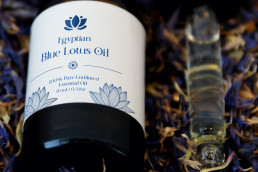
Breathwork asks the nervous system to do something unusual: shift state on command. Whether you practise slow coherent breathing, box breathing before meditation, or longer conscious-connected sessions, the body needs a cue that tells it the work is beginning and another that tells it the work is done. This is where blue lotus oil breathwork pairings become genuinely useful, not as a pharmacological agent, but as an olfactory anchor that helps the parasympathetic branch engage more quickly and, later, helps the practitioner return to baseline with a little more ease.
Table of Contents
- What Breathwork Actually Is (And Why Scent Matters)
- How Blue Lotus Oil Helps With Breathwork
- Priming the Parasympathetic Shift
- Anchoring the State
- Supporting the Return
- Reducing Pre-Practice Anxiety
- How to Use Blue Lotus Oil for Breathwork
- Method One: Diffuser (Most Common)
- Method Two: Personal Inhaler or Cotton Pad
- Method Three: Pulse-Point Application
- Session Protocols by Breathwork Style
- What to Expect: Realistic Timeframes
- When Blue Lotus Oil Is NOT the Right Choice
- Complementary Approaches
- Frequently Asked Questions
- Where to Go From Here
- Deepen Your Breathwork Practice
It is written and clinically reviewed by Antonio Breshears, ND, CCA, a Bastyr-trained naturopathic doctor and certified clinical aromatherapist. For the broader context on the oil’s chemistry, traditional use, and safety profile, see the complete guide to blue lotus oil, which functions as the reference companion to this more focused piece on breathwork applications.
What Breathwork Actually Is (And Why Scent Matters)
Breathwork is a broad term covering any deliberate manipulation of breath rate, depth, or pattern to influence physiological and psychological state. It ranges from the gentle (box breathing, 4-7-8, coherent breathing at roughly six breaths per minute) to the intense (holotropic, conscious-connected, Wim Hof style hyperventilation cycles). The common thread is that the breath becomes a lever on the autonomic nervous system.
Scent matters here because olfaction is the only sense with a direct, unmediated pathway into the limbic system. When you inhale an aromatic compound, it reaches the amygdala and hippocampus before the thinking brain has a chance to intervene. This is why a familiar smell can collapse a decade of memory into a single instant, and it is why deliberately pairing a scent with a practice can, over weeks, create a conditioned response. The scent becomes shorthand for the state.
Blue lotus oil is particularly suited to this role for two reasons. Its aromatic profile is complex enough to hold attention without being sharp or stimulating, and its traditional associations (Egyptian temple use, contemplative ritual, altered states) predispose many practitioners to approach it with receptive intention. Whether that second factor is pharmacological or purely expectancy is debatable. In practice it does not matter much; both contribute to the same outcome.
How Blue Lotus Oil Helps With Breathwork
Priming the Parasympathetic Shift
Most breathwork practices aim, at some point, to move the practitioner out of sympathetic dominance (the alert, vigilant state most of us carry into the session) and into parasympathetic dominance, where heart rate slows, digestion resumes, and the mind becomes quieter. The transition can be slow if the nervous system is heavily primed for threat; a few minutes of slow breathing may not be enough to move the needle.
Olfactory input helps because it offers the limbic system a signal of safety that is not dependent on cognition. The warm, honeyed-floral top notes of blue lotus absolute, followed by its deeper balsamic base, tend to read to the nervous system as non-threatening and enveloping. This does not sedate the practitioner in any pharmacological sense; it simply makes the parasympathetic shift that the breath is asking for a little easier to access.
Anchoring the State
After several sessions using the same oil at the same point in the practice, a conditioned association forms. The scent becomes a reliable cue: this smell means the work is starting, or this smell means we are coming back. Experienced meditators and breathwork practitioners use this deliberately because it shortens the time needed to drop into practice on days when conditions are against them (a stressful morning, poor sleep, ambient distraction).
Supporting the Return
Intense breathwork sessions (particularly those involving sustained hyperventilation) can leave practitioners in a slightly dissociated or raw state for fifteen to thirty minutes afterwards. A grounding olfactory cue at the end of the session, used consistently, supports the return to ordinary consciousness and helps integrate whatever arose during the practice.
Reducing Pre-Practice Anxiety
For those newer to breathwork, particularly more activating styles, there is often a small spike of apprehension before beginning. The flavonoids in blue lotus (apigenin in particular, which has demonstrable affinity for central benzodiazepine receptors, and quercetin) contribute to a mild anxiolytic quality in the aroma experience. This is not dramatic, it will not override a genuine panic response, but it can take the edge off pre-session nerves enough to let the breath do its work.
How to Use Blue Lotus Oil for Breathwork
Method One: Diffuser (Most Common)
For a breathwork space, two to four drops of blue lotus absolute in a cool-mist ultrasonic diffuser is ample. Start the diffuser ten to fifteen minutes before the session so the scent has time to distribute through the room and reach a gentle equilibrium rather than hitting the practitioner as a concentrated cloud on arrival. Run it throughout the session if the room is well ventilated; in a smaller or more enclosed space, switch it off at the start of the session so the scent remains as a background presence rather than intensifying.
Method Two: Personal Inhaler or Cotton Pad
If you practise without a diffuser, or if you want a portable option, a personal aromatherapy inhaler (available from most aromatherapy suppliers) with eight to ten drops of blue lotus absolute on the wick works well. Alternatively, one or two drops on a cotton pad placed near the practice space offers a similar effect without any active dispersal.
Inhale through the nose from the inhaler two or three times at the beginning of the session, before the formal breath pattern starts. This serves as the opening anchor. Return to it briefly at the end, after the practice is complete but before standing up, as the closing anchor.
Method Three: Pulse-Point Application
For a more continuous presence, blue lotus absolute diluted to two percent in jojoba or fractionated coconut oil (roughly twelve drops of absolute per 30 ml of carrier) can be applied to the wrists, the hollow of the throat, or the space just below the sternum before the session. The warmth of the skin activates the scent gently throughout the practice without it ever becoming overwhelming.
This method is particularly useful for breathwork done on the move (walking meditation with breath awareness, for example) or in settings where a diffuser is not practical.
Session Protocols by Breathwork Style
For slow coherent breathing or box breathing (gentle styles, typically ten to twenty minutes): diffuser on low, scent used throughout, no active re-dosing needed.
For 4-7-8 or pranayama (moderate intensity, often shorter): personal inhaler at the start, pulse-point application if the session runs longer than fifteen minutes.
For conscious-connected or holotropic-style sessions (intense, typically thirty to sixty minutes or longer): diffuser running before the session to prime the room, switched off during the main activation phase so olfactory input does not interfere with the intensity of the work, then reactivated (or a personal inhaler used) during the integration phase.
What to Expect: Realistic Timeframes
On the first session using blue lotus oil with breathwork, expect very little specific effect beyond the pleasantness of the scent. The oil is not a sedative and is not going to dramatically alter the experience on its own. What it offers is a subtle shift in the ease of the transition into and out of the practice, and that shift is real but modest.
By the third or fourth session, if you are using the oil consistently at the same point in your practice, you may start to notice that the scent itself begins to initiate a small shift in state. This is the conditioning at work. By six to eight sessions, the association is usually well-established, and the scent functions as a reliable anchor.
Over the longer term (months rather than weeks), regular pairing of the oil with breathwork tends to deepen the sensory-somatic memory of the practice. Practitioners often report that encountering the scent outside the practice context (opening the bottle casually, for example) produces a brief, involuntary settling of the breath. This is exactly what a well-conditioned anchor is meant to do.
Importantly, the oil will not produce visions, will not induce altered states on its own, and will not compensate for a poorly structured practice or for practising in unsuitable conditions. It is a support, not an intervention.
When Blue Lotus Oil Is NOT the Right Choice
There are contexts where blue lotus oil is not appropriate for breathwork pairing:
- Pregnancy and breastfeeding. The safety data for blue lotus in these states is insufficient, and the oil should be avoided. Breathwork itself should also be modified during pregnancy, with no intense or breath-retention practices.
- Use alongside dopaminergic medications, MAOIs, or heavy sedatives. The alkaloid profile of blue lotus (aporphine, nuciferine) interacts with dopaminergic and serotonergic pathways in ways that are not well-characterised. Anyone on psychiatric medication should speak with their prescriber before adding the oil to any regular practice.
- Known sensitivity to floral absolutes. Blue lotus is a solvent-extracted absolute (in most cases) and those with reactive skin or respiratory sensitivity to jasmine, rose, or similar absolutes may have a similar response here.
- Breathwork for trauma processing without professional oversight. Intense breathwork can surface difficult material. The oil will not help contain or integrate that material; a trained facilitator will. If you are using breathwork as part of trauma work, any adjunct should be discussed with the facilitator first.
- Regulatory restrictions. Blue lotus is legally restricted in Russia, Poland, Latvia, the US state of Louisiana, and faces regulatory complexity in Australia. Check your jurisdiction before ordering.
Complementary Approaches
Scent is one input among several that shape the quality of a breathwork session. A few others worth considering alongside:
Environmental consistency. Practising in the same space, at roughly the same time, with the same ambient conditions (low light, cool temperature, quiet) amplifies the conditioning effect of any olfactory anchor. The nervous system learns the whole gestalt, not just the scent.
Posture and ground contact. A stable seated position (cushion on the floor, or a firm chair with feet flat) gives the diaphragm room to move and signals to the body that this is practice, not ordinary activity. Lying down is appropriate for some styles but invites drowsiness in others.
Hydration before, not during. Drink water in the hour before a session rather than during. Sipping interrupts the breath pattern and breaks the state.
Journaling after. For more intensive sessions, five to ten minutes of unstructured writing afterwards helps integrate whatever arose. The blue lotus scent used during this integration phase tends to keep the practitioner in a receptive, reflective mode rather than bouncing straight back into task-mode.
Other supportive oils. Frankincense and sandalwood both pair well with blue lotus for contemplative practices, particularly for those who find blue lotus alone too sweet or too floral. A blend of two parts blue lotus to one part frankincense, or two parts blue lotus to one part sandalwood, in a carrier works well for pulse-point application.
Clinical care when warranted. If breathwork is being used to address clinical anxiety, panic disorder, PTSD, or any significant mental health concern, it belongs inside a treatment relationship, not as a solo self-help project. The oil is an adjunct to practice, and the practice itself benefits from professional structure when the stakes are high.
Frequently Asked Questions
Can I apply blue lotus oil directly under the nose before breathwork?
No. Undiluted absolute is far too concentrated for direct skin application, particularly on the sensitive tissue around the nostrils, and can cause irritation or sensitisation. Use a properly diluted (two percent) blend on pulse points, or use a personal inhaler instead.
Will blue lotus oil make me hallucinate or produce visions during breathwork?
No. Blue lotus is not psychedelic in any meaningful sense. The alkaloid content, while interesting pharmacologically, is nowhere near the threshold required for visionary experiences, and the aromatic route of administration delivers vanishingly small quantities of those compounds to the bloodstream anyway. Any shifts in perception during breathwork come from the breath, not the oil.
How many drops should I use in a diffuser for a breathwork session?
Two to four drops in a standard 100 to 200 ml ultrasonic diffuser is appropriate for most rooms. More than this tends to create olfactory fatigue, where the nose adapts and the scent stops registering.
Should I inhale deeply from the bottle before starting?
A single gentle inhale from a distance of six to eight inches away from the open bottle is fine as an opening cue. Deep, direct inhalation from an open bottle of absolute is overwhelming and tends to produce a minor headache rather than a calming effect. A personal inhaler is much better suited to repeated direct inhalation.
Can I use blue lotus oil for Wim Hof style breathing?
Yes, with a caveat. Wim Hof style practice involves sustained hyperventilation followed by breath retention, and is quite activating. Using the oil as a pre-session primer (in a diffuser before starting) and as a closing anchor after the retention phases is more useful than having it active throughout, because the intensity of the practice itself becomes the primary focus during the activation phase.
How does blue lotus oil compare with lavender for breathwork?
Lavender is more straightforwardly sedative-leaning and works well for gentle, sleep-adjacent practices. Blue lotus is more complex aromatically, holds attention better in contemplative and longer sessions, and carries a traditional association with meditative practice that some practitioners find meaningful. For active breathwork with an integration phase, blue lotus tends to serve the full arc better. For purely calming, sleep-oriented breath practice, lavender is equally good and considerably cheaper.
Can I blend blue lotus with frankincense for breathwork?
Yes, and the combination works particularly well. Two parts blue lotus to one part frankincense in a diffuser, or at the same ratio diluted to two percent in a carrier oil for pulse-point application, produces a warmer, more grounding aromatic profile than either oil alone. Frankincense adds a resinous base that many find conducive to longer sessions.
How long does the conditioning effect take to establish?
For most practitioners, six to eight consistent pairings (same oil, same practice, same approximate setting) are enough to establish a noticeable conditioned response. For some it happens faster, for others more slowly. The key variable is consistency, not the absolute number of sessions.
Is blue lotus oil safe to use daily for breathwork?
Yes, at the dilutions and quantities described in this article. The total quantity of oil actually reaching the body via olfactory and diluted topical routes is very small. That said, if you notice olfactory fatigue (the scent stops registering) or any skin reaction, taking a week off restores sensitivity and serves as a useful reset.
Does the oil work equally well for solo practice and group breathwork?
Solo practice tends to benefit more directly because the practitioner controls the entire olfactory environment. In group settings, the diffuser approach works, but the conditioning effect is diluted by the many other sensory variables present (other people, facilitator’s voice, music). The oil still adds value, just less sharply than in a consistent solo context.
Where to Go From Here
If this is your first time considering an olfactory anchor for breathwork, start simply: one method (diffuser or personal inhaler), one breathwork style, one consistent time of day, for two weeks. Resist the urge to experiment with blends and protocols until the base pairing has had time to establish itself. Once the anchor is in place, you have something stable to build from, and additions (frankincense, sandalwood, a pulse-point blend for travel) can be tested one at a time against that baseline.
For the broader context on the oil’s chemistry, sourcing, and full safety profile, the complete guide to blue lotus oil is the reference companion to this article and covers the ground that sits underneath every specific application, including this one.

Antonio Breshears
Antonio Breshears is a renowned expert in holistic medicine and beauty, with over 25 years of research experience dedicated to uncovering the secrets of nature's most powerful remedies. Holding a degree in Naturopathic Medicine, Antonio's passion for healing and well-being has driven him to explore the intricate connections between mind, body, and spirit.
Over the years, Antonio has become a respected authority in the field, helping countless individuals discover the transformative power of plant-based therapies, including essential oils, herbs, and natural supplements. He has authored numerous articles and publications, sharing his wealth of knowledge with a global audience seeking to improve their overall health and well-being.
Antonio's expertise extends to the realm of beauty, where he has developed innovative, all-natural skincare solutions that harness the potency of botanical ingredients. His formulations embody his deep understanding of the healing properties found in nature, providing holistic alternatives for those seeking a more balanced approach to self-care.
With his extensive background and dedication to the field, Antonio Breshears is a trusted voice and guiding light in the world of holistic medicine and beauty. Through his work at Pure Blue Lotus Oil, Antonio continues to inspire and educate, empowering others to unlock the true potential of nature's gifts for a healthier, more radiant life.