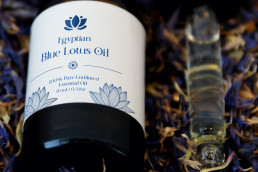
If you are reading this, you probably have skin that has done some living. Perhaps you are in your fifties or sixties, perhaps you have navigated menopause, perhaps you have simply watched your complexion change in ways that expensive creams have not fully answered. This article is about whether blue lotus oil mature skin protocols are genuinely worth your time, and if so, how to use the oil properly rather than dabbing it on hopefully. The short version: blue lotus absolute has a legitimate, if modest, role in a mature skincare routine, primarily as a calming, antioxidant-rich, barrier-soothing ingredient. It is not a retinoid. It will not erase decades. But used well, it adds something that most anti-ageing routines neglect entirely.
Table of Contents
- Understanding Mature Skin: What Is Actually Happening
- How Blue Lotus Oil Helps Mature Skin
- Antioxidant protection at a cellular level
- Barrier soothing and anti-inflammatory action
- Support for sluggish, dull skin
- The olfactory-limbic factor
- How to Use Blue Lotus Oil for Mature Skin
- Choosing the right carrier
- Dilution ratios
- An evening facial oil ritual
- Frequency and timing
- What to Expect: Realistic Timeframes
- When Blue Lotus Oil Is NOT the Right Choice
- Complementary Approaches
- Frequently Asked Questions
- Where to Go From Here
- Begin Your Evening Skin Ritual
It is written and clinically reviewed by Antonio Breshears, ND, CCA, a Bastyr-trained naturopathic doctor and certified clinical aromatherapist. For foundational context on the oil itself, its chemistry and its broader uses, see The Complete Guide to Blue Lotus Oil, which this cluster sits beneath.
Understanding Mature Skin: What Is Actually Happening
Before we discuss what the oil does, it helps to be clear about what mature skin is physiologically. “Mature” is not a euphemism for “wrinkled”. It describes a set of predictable biological changes that begin in the mid-thirties and accelerate around menopause or andropause. Understanding these changes is what separates useful skincare from expensive placebo.
Collagen production declines by roughly one percent per year after thirty, and women lose around thirty percent of skin collagen within the first five years of menopause. Sebum output drops, which is why skin that was oily in your twenties can feel papery by your sixties. The stratum corneum (the outermost barrier layer) becomes less efficient at holding water, so transepidermal water loss increases. Cellular turnover slows, meaning dull, uneven tone becomes more common. Cumulative UV exposure manifests as pigmentation, laxity and texture change. And oxidative stress, from decades of sun, pollution, stress and metabolic activity, has accumulated in the dermis.
Mature skin, then, is typically drier, thinner, less elastic, more reactive, and carrying more oxidative damage than younger skin. A useful skincare ingredient for this stage of life should address at least one of those issues without triggering the reactivity that comes with a compromised barrier. This is where blue lotus earns its place.
How Blue Lotus Oil Helps Mature Skin
Blue lotus absolute (from Nymphaea caerulea) contains a rich blend of flavonoids including apigenin, quercetin and kaempferol, along with trace alkaloids and aromatic compounds. For mature skin specifically, four mechanisms matter.
Antioxidant protection at a cellular level
The flavonoid content, particularly quercetin and kaempferol, contributes genuine antioxidant activity. Oxidative stress is one of the primary drivers of skin ageing at the cellular level: free radicals damage collagen fibres, accelerate pigmentation irregularities and undermine barrier function. Topical antioxidants cannot reverse decades of accumulated damage, but they can reduce the daily oxidative load your skin is carrying. Blue lotus oil, used alongside other antioxidants like vitamin C serum or vitamin E, contributes to this protective layer rather than replacing it.
Barrier soothing and anti-inflammatory action
Mature skin is often reactive skin. Barrier dysfunction means irritants penetrate more easily, and the inflammatory response is more persistent. Apigenin in particular has reasonably well-attested anti-inflammatory properties, and the overall profile of blue lotus absolute tends to calm rather than stimulate. For skin that flushes easily, feels tight after cleansing, or stings when a new product is introduced, a correctly diluted blue lotus blend can be genuinely comforting.
Support for sluggish, dull skin
The aromatic compounds in blue lotus appear to support local microcirculation when massaged into the skin, though this is more about the act of massage with a well-formulated oil than the oil alone performing magic. Regular, gentle facial massage with a blue lotus blend can help mature skin look less sallow, less drawn, simply because you are moving lymph and bringing blood flow to tissue that has become lazy.
The olfactory-limbic factor
This one is often overlooked in skincare writing, but it matters for mature skin routines specifically. Stress, particularly chronic low-grade stress, accelerates skin ageing through cortisol-mediated collagen breakdown and impaired barrier repair. Blue lotus has a quietly sedating, parasympathetic-leaning aromatic profile. Applying it to your face before bed is, in effect, a dual-channel intervention: the oil works on the skin, and the scent works on the nervous system that governs the skin. This integrated effect is part of why apothecary-grade botanicals feel different from synthetic skincare, even when the actives overlap.
How to Use Blue Lotus Oil for Mature Skin
Blue lotus absolute is a concentrated material. It must be diluted in a carrier before it touches your face. The right carrier does more than half the work here, so do not skimp on this step.
Choosing the right carrier
For mature skin, the best carrier oils are ones that themselves contribute to barrier support and antioxidant activity. Consider:
- Rosehip seed oil for its vitamin A content and support of tone and texture
- Jojoba oil for its similarity to skin sebum and excellent tolerability
- Squalane (olive-derived) for lightweight, non-comedogenic barrier support
- Marula oil for omega-9 content and a luxurious feel
- Argan oil for vitamin E and fatty acid profile
A blend of two or three of these tends to outperform a single carrier. Avoid mineral oil and cheap grapeseed for facial use on mature skin, these feel adequate but contribute little.
Dilution ratios
For daily facial use on mature skin, aim for a 1 percent dilution of blue lotus absolute in your carrier. That works out to roughly one drop of blue lotus per teaspoon (5ml) of carrier. For a targeted night treatment, you can go to 1.5 percent, but 2 percent is the upper comfortable limit on facial skin and not necessary for most users.
If you are trialling the oil for the first time, start at 0.5 percent and do a patch test on the inner forearm for 48 hours. Mature skin that has reacted to products before should be treated as reactive until proven otherwise.
An evening facial oil ritual
The single most useful application of blue lotus oil for mature skin is as an evening facial oil, applied after cleansing and any water-based serums. Here is a workable protocol:
- Double cleanse, first with an oil or balm cleanser, then with a gentle cream cleanser
- Apply any water-based serum you use (hyaluronic acid, peptides, niacinamide) and let it absorb
- Warm three to four drops of your blue lotus blend between clean palms
- Press, do not rub, the oil into the skin starting at the centre of the face and working outward
- Spend sixty to ninety seconds with gentle upward strokes along the jaw, cheeks and brow bone
- Inhale the residual scent from your palms before sleep
This takes about three minutes once it becomes habit. It is the combination of the massage, the aroma and the actives that makes the ritual work; any one of those elements alone is less effective.
Frequency and timing
Evening use, five to seven nights a week, is ideal. For very dry or reactive mature skin, a small amount can be added to a morning moisturiser, but avoid applying a scented oil directly under sunscreen, which can sometimes reduce the sunscreen’s film stability. Keep morning applications lighter.
What to Expect: Realistic Timeframes
This is the part most skincare writing glosses over, so I will be direct. Blue lotus oil is not a retinoid, a peptide serum, or a professional treatment. It works within a narrower envelope.
In the first week, you should notice that your skin feels calmer and more comfortable. Any tightness after cleansing should ease, and the evening ritual itself should become pleasant. This is a real effect and a reasonable first indicator that the blend suits your skin.
At two to four weeks, skin often looks slightly more even in tone and has a subtle glow that was not there before. This is partly barrier improvement, partly circulation, partly hydration. It is not dramatic, but it is visible to you and occasionally to others.
At eight to twelve weeks, if you have been consistent, you may notice that fine lines around the eyes and mouth appear softer, that skin feels more resilient, and that reactivity to the weather and to other products has decreased. Deep wrinkles, significant laxity and sun damage will not change; this is honest. Those require either acceptance, medical-grade interventions, or procedures.
If you are looking for the kind of transformation that justifies skipping retinoids and tretinoin, blue lotus is not that ingredient. If you are looking for a comforting, antioxidant-rich, calming ritual that makes your skin feel looked-after and genuinely improves barrier quality, it does that very well.
When Blue Lotus Oil Is NOT the Right Choice
There are cases where blue lotus absolute should not be part of a mature skincare routine.
Active acne or rosacea flares. While the oil is generally soothing, any new essential oil introduced during an active flare can complicate matters. Wait for stability before adding it.
Post-procedure skin. After laser resurfacing, microneedling, peels or retinoid irritation, stick to the simple bland recovery products your practitioner recommends. Blue lotus belongs in stable, healed skin, not compromised skin.
Fragrance sensitivity. If you genuinely react to fragranced products, including natural ones, blue lotus is fragrance. It is a beautiful fragrance, but it is fragrance. Fragrance-free skincare exists for good reasons and you should not override that for one ingredient.
Pregnancy and breastfeeding. The oil is avoided in these stages regardless of application route, including topical. This is a precautionary stance based on the alkaloid content.
Concurrent retinoid introduction. If you are starting tretinoin or a strong retinol for the first time, that is the sole focus of your routine for the first three months. Do not layer blue lotus oil on newly-retinised skin. Once your skin has acclimated, blue lotus can be reintroduced as an evening soother.
Suspicious skin changes. Any new mole, non-healing lesion, rapidly changing patch or unusual pigmentation warrants a dermatologist, not an essential oil. This cannot be stressed enough for mature skin, where skin cancer risk is elevated.
Complementary Approaches
Blue lotus oil works best as part of a thoughtful mature skincare routine rather than as a standalone hero product. The ingredients that genuinely move the needle for mature skin are, in rough order of evidence: daily broad-spectrum sunscreen, a retinoid (tretinoin or well-formulated retinol), vitamin C in the morning, peptides, and adequate hydration both in the skin and systemically. Blue lotus sits alongside these, not in place of them.
Beyond the bottle, the lifestyle factors that matter most for mature skin are sleep quality, stress regulation, protein intake (often underconsumed in older women), hydration, and sun protection. Blue lotus oil happens to support sleep and stress regulation as a secondary benefit of its aromatic profile, which is a reasonable argument for using it at night rather than in the morning.
For targeted concerns, consider pairing blue lotus with:
- Frankincense (Boswellia carterii) for texture and tone, a classic mature skin oil
- Rose otto for sensitive, reactive mature skin
- Helichrysum for scarring, uneven tone and capillary concerns
- Sandalwood for dry, drawn skin that needs grounding
A blend of blue lotus with one or two of these, in a well-chosen carrier, is often more useful than blue lotus alone.
Frequently Asked Questions
Can I use blue lotus oil around my eyes?
With caution. The under-eye area is thin and sensitive. If you use a blue lotus blend there, keep the dilution at 0.5 to 1 percent, pat rather than rub, and stay on the orbital bone rather than directly under the lash line. If there is any stinging or irritation, stop.
Is blue lotus oil better than rosehip oil for ageing skin?
They do different things. Rosehip contributes vitamin A precursors and essential fatty acids, which support tone and texture directly. Blue lotus contributes antioxidant flavonoids and a calming, parasympathetic scent. The two work beautifully together, with rosehip as the majority carrier and blue lotus as the active aromatic.
How long does a bottle last in an evening routine?
A 5ml bottle of blue lotus absolute, used at 1 percent in carriers, will make roughly 500ml of finished blend. If you use three drops of blend per night, that bottle will support your routine for many months, often over a year for a single user.
Will it help with age spots and pigmentation?
Honestly, very little. Hyperpigmentation responds best to consistent sun protection, vitamin C, retinoids, tranexamic acid and, in persistent cases, professional treatments. Blue lotus oil is not a pigmentation treatment and should not be bought as one.
Can I add blue lotus oil to my existing moisturiser?
Yes, though adding essential oil to a water-based moisturiser is not ideal because the oil does not disperse evenly. It works much better when diluted in a dedicated facial oil and layered on top of your moisturiser, or warmed into the moisturiser drop by drop in your palm just before application.
Does the scent fade over time on the skin?
Yes, the topnotes lift within minutes, and the deeper honeyed-balsamic notes soften into a subtle skin scent over an hour or so. By the time you wake, it is gone. This makes it compatible with most sleepwear and pillow fabrics.
Is the absolute safe for very sensitive mature skin?
Generally yes at low dilutions (0.5 to 1 percent) in a gentle carrier, but sensitive skin should always patch test for forty-eight hours before committing to regular use. If your skin has multiple confirmed fragrance sensitivities, this probably is not the right product for you.
Can I use it if I have had cosmetic procedures like Botox or filler?
Once the treatment area is fully healed (typically two weeks for injectables), there is no issue with resuming a blue lotus facial oil routine. Avoid it on freshly treated skin.
Should I use it morning or night, or both?
Night is where it earns its keep, both for the skin-calming effects and the sleep-supportive scent. Morning use is fine in small amounts but is not where the main value lies.
How long before I know if it is working?
Comfort and calmness within the first week. Visible improvement in glow and evenness within four weeks. Subtle softening of fine lines and improved resilience by twelve weeks. If you notice nothing by week four, the blend or dilution may need adjusting, or blue lotus may simply not be your ingredient.
Where to Go From Here
Mature skin deserves ingredients that respect it, not ingredients that bully it. Blue lotus absolute, used at sensible dilutions in a thoughtful carrier, is a quietly excellent addition to an evening routine for skin that has earned its complexity. It will not do the work of your retinoid, your sunscreen or your hydration, but it will do its own work well, and the ritual itself is one of the rare skincare experiences that feels like genuine self-care rather than maintenance. For the foundational chemistry, safety profile and broader applications of the oil, return to The Complete Guide to Blue Lotus Oil. When you are ready to build your blend, start with a high-quality absolute; the rest follows from there.

Antonio Breshears
Antonio Breshears is a renowned expert in holistic medicine and beauty, with over 25 years of research experience dedicated to uncovering the secrets of nature's most powerful remedies. Holding a degree in Naturopathic Medicine, Antonio's passion for healing and well-being has driven him to explore the intricate connections between mind, body, and spirit.
Over the years, Antonio has become a respected authority in the field, helping countless individuals discover the transformative power of plant-based therapies, including essential oils, herbs, and natural supplements. He has authored numerous articles and publications, sharing his wealth of knowledge with a global audience seeking to improve their overall health and well-being.
Antonio's expertise extends to the realm of beauty, where he has developed innovative, all-natural skincare solutions that harness the potency of botanical ingredients. His formulations embody his deep understanding of the healing properties found in nature, providing holistic alternatives for those seeking a more balanced approach to self-care.
With his extensive background and dedication to the field, Antonio Breshears is a trusted voice and guiding light in the world of holistic medicine and beauty. Through his work at Pure Blue Lotus Oil, Antonio continues to inspire and educate, empowering others to unlock the true potential of nature's gifts for a healthier, more radiant life.