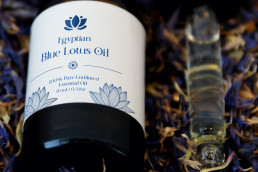
This recipe produces a 30 ml scalp serum built around blue lotus absolute at a 2 percent dilution, designed for adults who want a calming, softly fragrant treatment that supports scalp comfort and hair shine without heavy residue. It is a weekly or twice-weekly ritual rather than a daily drench, and it suits most scalp types including mildly flaky, tight, or stress-reactive scalps.
Table of Contents
- What You Will Need
- Equipment
- Ingredients
- Why This Formulation Works
- Step-by-Step Instructions
- How to Use the Scalp Serum
- Storage and Shelf Life
- Variations
- Sensitive or Reactive Scalp (1 percent)
- Extra Calming Evening Version
- Richer Texture for Very Dry Scalps
- Summer or Warm Climate Version
- Common Mistakes to Avoid
- Frequently Asked Questions
- Where to Go From Here
- Build Your Scalp Ritual With Pure Blue Lotus
It is written and clinically reviewed by Antonio Breshears, ND, CCA, a Bastyr-trained naturopathic doctor and certified clinical aromatherapist. For background on dilution principles, carrier selection, and the pharmacology behind blue lotus absolute, see The Complete Guide to Blue Lotus Oil, which serves as the master reference for every formulation on this site.
What You Will Need
Equipment
- One 30 ml amber or cobalt glass bottle with a dropper or pipette top
- A small glass beaker or measuring jug (50 ml is ideal)
- A clean glass stirring rod or stainless steel mini-whisk
- A funnel that fits the bottle neck
- A label and waterproof pen for the batch date and dilution
- Optional: a 0.1 gram jeweller’s scale for precision
Ingredients
- 15 ml jojoba oil (the primary carrier)
- 10 ml sweet almond oil (softens and extends the serum)
- 5 ml argan oil (adds slip and gloss)
- 12 drops blue lotus absolute (Nymphaea caerulea), roughly 2 percent
- 3 drops rosemary essential oil (optional, for circulatory tone)
- 2 drops cedarwood atlas essential oil (optional, for grounding scent)
The total essential and aromatic oil load stays at or just below 3 percent of the 30 ml carrier volume, which is comfortable for scalp application in adults. If you prefer a single-note serum, omit the rosemary and cedarwood and lean entirely on the blue lotus absolute.
Why This Formulation Works
Jojoba is technically a liquid wax, and its molecular structure is close to the sebum produced by healthy scalp follicles. That closeness matters: it absorbs without sitting greasily on the skin surface, it resists rancidity better than most seed oils, and it tends not to clog follicular openings when applied in modest quantities. For a serum that leaves on the scalp for hours or overnight, jojoba is the sensible backbone. Sweet almond oil extends the serum, improves spreadability, and contributes a little linoleic acid without making the blend feel heavy. Argan oil, in a minority proportion, adds a gentle shine to the hair shaft once the serum is massaged through.
Blue lotus absolute at 2 percent is a considered choice. Higher concentrations are rarely necessary on the scalp, where the skin is well-vascularised and absorbs aromatic compounds efficiently through the follicular route. At this level the scent is present but not overwhelming, and the flavonoid fraction, apigenin, quercetin, kaempferol, contributes mild antioxidant tone. The calming olfactory effect is the most reliable benefit: a scalp massage with this serum before bed tends to shift the nervous system toward parasympathetic dominance, which is useful if scalp tension or evening rumination is part of your pattern. Rosemary and cedarwood are traditional scalp companions with reasonable, if modest, evidence for follicular support and scent grounding.
Step-by-Step Instructions
- Prepare your workspace. Wipe down the beaker, stirring rod, and bottle with isopropyl alcohol and let them air dry. Clean glass and dry surfaces extend shelf life.
- Measure the carrier oils into the beaker. Add 15 ml jojoba, then 10 ml sweet almond, then 5 ml argan. If you are using a scale, weigh to roughly 27 to 28 grams total; small variation is fine.
- Add the blue lotus absolute. Count 12 drops slowly, letting each drop fall cleanly from the orifice reducer. Blue lotus absolute is viscous, so give it time; warm the bottle briefly in your hands if the pour is slow.
- Add the optional supporting oils. Three drops rosemary, two drops cedarwood atlas. Skip if you want a pure blue lotus profile.
- Stir gently for thirty seconds. A slow figure-of-eight motion disperses the aromatics evenly without whipping air into the blend.
- Funnel into the amber bottle. Fit the dropper or pipette, cap firmly, and invert the bottle three or four times to finish mixing.
- Label the bottle. Write the batch date, the contents, and the dilution percentage. This matters for pacing replacement at the end of shelf life.
- Rest for 24 hours. Allow the aromatics to marry with the carriers. The scent will be noticeably rounder on day two than day one.
How to Use the Scalp Serum
This is a leave-in or overnight treatment, not a daily styling oil. Apply once or twice a week depending on scalp type. Oily scalps will prefer the lower end; dry or flaky scalps can tolerate twice weekly without difficulty.
For a standard application, warm four to six drops in the palms. Part the hair in two or three sections and work the serum directly into the scalp skin with the pads of the fingers, not the nails. Spend three to five minutes massaging in slow circles, covering the crown, the temples, the nape, and the hairline. Any excess that remains on the fingers can be smoothed through the mid-lengths and ends of the hair. Leave the serum on for at least thirty minutes before washing out, or leave it overnight on an old pillowcase and shampoo in the morning.
For an overnight treatment, use six to eight drops total. Expect to need two rounds of shampoo the following morning to fully remove the oil; this is normal and not a sign of over-application.
Storage and Shelf Life
Store the finished serum in a cool, dark cupboard, ideally below 22 degrees Celsius. Amber or cobalt glass is essential: clear glass allows oxidative light damage and will shorten the life of the blend significantly. Keep the cap tightly closed between uses and avoid storing it in a steamy bathroom.
Shelf life for this formulation is roughly 6 to 9 months. Jojoba is the most stable component and would last longer on its own, but the sweet almond fraction is the limiting factor; almond oil begins to turn within a year of pressing. If the serum smells sharp, waxy, or reminiscent of old crayons rather than its original soft floral, discard it and make a fresh batch.
Variations
Sensitive or Reactive Scalp (1 percent)
Halve the aromatic load: use 6 drops blue lotus absolute and omit the rosemary and cedarwood entirely. This gives a 1 percent dilution suitable for scalps that react easily to stimulating oils. Patch test on the inner forearm for 48 hours before scalp application.
Extra Calming Evening Version
Keep the 12 drops blue lotus absolute but replace the rosemary with 2 drops Roman chamomile and keep the 2 drops cedarwood atlas. This version leans into the sedative register: chamomile apigenin overlaps with blue lotus flavonoids, and the scent is noticeably softer. Good for the hour before bed.
Richer Texture for Very Dry Scalps
Replace 5 ml of the sweet almond oil with 5 ml castor oil. Castor is heavy, viscous, and slower to absorb, so it coats the scalp and hair shaft more thickly. Use only as an overnight treatment and expect to shampoo twice the following morning. Not recommended for fine or easily weighed-down hair.
Summer or Warm Climate Version
Swap the 15 ml jojoba for 10 ml jojoba plus 5 ml fractionated coconut oil. Fractionated coconut is lighter and non-greasy, which is useful in humid weather when the standard formulation can feel too rich. The scent profile of the blue lotus reads slightly cooler on this base.
Common Mistakes to Avoid
Using too many drops. Blue lotus absolute is potent and the flavonoid fraction is active at low concentrations. More drops do not mean a stronger therapeutic effect; they mean more risk of scent fatigue, more cost per application, and a higher chance of sensitisation over time. Hold the line at 2 percent.
Skipping the patch test. Even gentle aromatics can trigger contact reactions in a small percentage of users. Before the first full scalp application, rub two drops of the finished serum onto the inner forearm and check 24 to 48 hours later for redness or itch.
Applying to broken skin. Active scalp eczema, bleeding scratches, or a freshly treated dermatological area are not appropriate settings for an aromatic serum. Wait until the skin is intact.
Storing near heat. A bathroom shelf above a radiator will age this serum in three months rather than nine. Cool, dark, and dry is the rule.
Using it as a daily leave-in. Daily use on most scalps will accumulate oil faster than the skin can normalise, leading to dullness and a flat, heavy look. Weekly or twice-weekly is the sweet spot.
Frequently Asked Questions
Can I use this scalp serum if I am pregnant?
No. Blue lotus absolute is avoided during pregnancy and breastfeeding as a precaution, because the alkaloid fraction has not been adequately studied in these populations. Use a plain jojoba and argan blend during this period.
Will this help with hair growth?
The honest answer is that blue lotus itself is not a proven hair growth agent. The rosemary fraction in the optional version has modest evidence for scalp circulation, and scalp massage itself is mildly useful. Treat this serum as a scalp comfort and fragrance ritual that supports healthy conditions for hair, not as a replacement for minoxidil or clinical evaluation of hair loss.
How often can I use it?
Once or twice weekly for most people. Oily scalps do better at once weekly; dry or flaky scalps tolerate twice. Daily use is not recommended.
Can I use it on coloured or chemically treated hair?
Yes. The carrier oils are compatible with coloured hair and can actually soften the dryness that often follows chemical treatment. Avoid application in the 48 hours immediately before a colour appointment, because oil residue on the hair shaft can interfere with dye uptake.
Does the scent linger in the hair?
Softly, yes. After shampooing, a trace of the blue lotus and cedarwood often remains on dry hair for the rest of the day. Most people find this pleasant rather than intrusive.
Can children use this serum?
This formulation is designed for adults. For children over six with a scalp concern, halve the blue lotus to 6 drops and omit the rosemary, and consult a qualified practitioner first. Not for use on infants or toddlers.
What if I do not have all three carrier oils?
You can make the recipe with jojoba alone at 30 ml total. The texture will be a little lighter and the shine benefit slightly reduced, but the serum will still function well. Jojoba is the non-negotiable backbone; the others are refinements.
Is the serum safe to use alongside prescription scalp treatments?
If you are using a medicated shampoo, steroid scalp solution, or topical minoxidil, speak to your prescribing clinician before layering an aromatic serum over the same skin. In general, it is sensible to separate applications by several hours and alternate days where possible.
Why does my serum smell different after a few months?
Natural aromatics evolve in the bottle. A slight deepening of the scent over the first three months is normal and usually pleasant. A sharp, waxy, or rancid note indicates oxidation and means the serum should be discarded.
Can I add vitamin E to extend shelf life?
Yes. A single drop of tocopherol (natural vitamin E) added at the end acts as a mild antioxidant and can extend the useful life of the blend by a month or two. It is not a preservative against microbial growth, but this serum is anhydrous (contains no water) so microbial risk is already low.
Where to Go From Here
A scalp serum is one of the gentler ways to bring blue lotus absolute into a regular routine. It rewards patience, restraint on dilution, and clean storage habits. If you are newer to the material and want to understand why the dilution sits at 2 percent, why jojoba is the default carrier, and what the alkaloid and flavonoid fractions actually do, the best next step is The Complete Guide to Blue Lotus Oil, which covers the pharmacology, sourcing, and safety framework that sits behind every recipe on this site. From there, the wider library of formulations, facial serums, bath oils, pulse-point rollerballs, builds on the same principles of modest dilution and carrier-appropriate choices.

Antonio Breshears
Antonio Breshears is a renowned expert in holistic medicine and beauty, with over 25 years of research experience dedicated to uncovering the secrets of nature's most powerful remedies. Holding a degree in Naturopathic Medicine, Antonio's passion for healing and well-being has driven him to explore the intricate connections between mind, body, and spirit.
Over the years, Antonio has become a respected authority in the field, helping countless individuals discover the transformative power of plant-based therapies, including essential oils, herbs, and natural supplements. He has authored numerous articles and publications, sharing his wealth of knowledge with a global audience seeking to improve their overall health and well-being.
Antonio's expertise extends to the realm of beauty, where he has developed innovative, all-natural skincare solutions that harness the potency of botanical ingredients. His formulations embody his deep understanding of the healing properties found in nature, providing holistic alternatives for those seeking a more balanced approach to self-care.
With his extensive background and dedication to the field, Antonio Breshears is a trusted voice and guiding light in the world of holistic medicine and beauty. Through his work at Pure Blue Lotus Oil, Antonio continues to inspire and educate, empowering others to unlock the true potential of nature's gifts for a healthier, more radiant life.