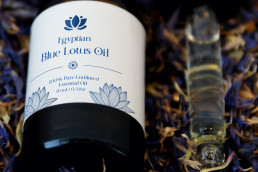
Blue lotus oil is a relatively stable aromatic compared with many essential oils, but its longevity still depends on the conditions in which it is stored. Done well, a good bottle can retain its full scent profile and therapeutic activity for three to four years, sometimes longer. Done poorly, the same bottle can lose much of its character inside twelve months. This article is the practical reference: what determines how long the oil lasts, how to store it properly, how to recognise degradation when it starts, and what to do if it begins. For a broader understanding of the oil’s physical and chemical properties that shape its shelf life, our properties of blue lotus essential oil reference covers the underlying characteristics.
Table of Contents
- How Long Blue Lotus Oil Actually Lasts
- What Actually Degrades Blue Lotus Oil
- Storage Best Practice
- Container
- Location
- Handling
- Temperature Management Across Seasons
- Signs of Degradation
- What to Do When Oil Starts to Degrade
- Storage of Diluted Formulations
- Rollerballs (Oil in Carrier)
- Pillow Sprays (Oil in Water + Solubiliser)
- DIY Skincare Formulations
- Travelling with Blue Lotus Oil
- Buying Fresh Oil
- Frequently Asked Questions
- Where to Go From Here
- Fresh From Our Distillers
It is written and clinically reviewed by Antonio Breshears, ND, CCA, a Bastyr-trained naturopathic doctor and certified clinical aromatherapist.
How Long Blue Lotus Oil Actually Lasts
The realistic shelf life of a genuine Egyptian blue lotus absolute, stored well, is three to four years from the date of bottling. Some bottles retain a recognisable scent for considerably longer (five years is not uncommon), though the brightness and depth slowly diminish over time. Stored poorly, the shelf life can be as short as twelve to eighteen months before noticeable degradation sets in.
The relatively long shelf life reflects two features of the oil’s chemistry. The fatty acid fraction present in absolutes acts as a natural stabiliser, slowing oxidative degradation of the volatile aromatic compounds. The absence of citrus-type monoterpenes (which are the first compounds to oxidise in many essential oils) means blue lotus does not suffer the rapid scent-shift that affects bergamot, lemon, or lime oils within their first year. Blue lotus ages gracefully when the conditions are right.
Steam-distilled blue lotus essential oil, which is rare in the market, has a shorter shelf life than the absolute, typically two to three years, because it lacks the fatty acid stabilisation. CO2 extracts sit between the two.
What Actually Degrades Blue Lotus Oil
Four environmental factors dominate the degradation process, in roughly this order of importance.
Oxygen exposure. The single biggest factor. Air in contact with the oil oxidises the aromatic compounds over time, particularly the lighter top-note molecules. A fresh bottle with very little headspace (air gap between the oil and the cap) degrades slowly; a half-empty bottle with substantial headspace degrades faster, because every time the cap is opened, fresh air enters and old air leaves. This is why decanting to smaller bottles as the level drops is worthwhile for a large container.
Heat. Temperature accelerates all chemical reactions, including oxidative degradation. Every ten degrees Celsius roughly doubles the rate of oxidation. A bottle kept at room temperature (around 20 degrees) lasts substantially longer than one kept in a hot bathroom, near a radiator, or in direct sun.
Light. Particularly UV light (direct sunlight). Light energy drives photochemical degradation of the aromatic compounds, and this is why essential oils come in dark glass. Blue lotus is moderately sensitive to light; prolonged exposure to bright indirect daylight accelerates degradation even when the bottle is not in direct sun.
Humidity and contamination. Less important for an oil in its sealed bottle, but relevant for diluted formulations (rollerballs, pillow sprays) where water or fingers can introduce moisture or bacteria. Any formulation containing water has a shorter shelf life than neat oil, often one to three months rather than years.
Storage Best Practice
Translating the above into practical habits.
Container
Dark glass bottles (amber or cobalt blue) block the UV and visible light that accelerate degradation. Clear glass is poor; plastic is worse still (some plastics interact with essential oils, and most are permeable to gases over time). If you have bought oil in a clear or plastic container, transfer it to a dark glass bottle of appropriate size.
The cap should seal tightly. Orifice reducer inserts (the small plastic fittings with a pinhole that dispense drops) can sometimes compromise the seal over time; check that the cap closes completely and the oil does not weep around the reducer. A bottle with a dedicated dropper pipette stored separately from the bottle is better than a fixed dropper in a rubber bulb, because the rubber degrades over time and can contaminate the oil.
Location
Cool, dark, and consistent. A bathroom is a poor location (temperature swings with showers, humidity, bright lighting). A kitchen counter is similarly poor. A cupboard or drawer in a room with stable room temperature (15 to 22 degrees Celsius) is ideal. A refrigerator is an option for very long-term storage, though the oil will thicken substantially and need to warm before use; for most users this is overkill.
Avoid the temptation to display a pretty bottle on a shelf in sunlight. The aesthetic loss is not worth the accelerated degradation.
Handling
Keep the cap on when not in active use. Even brief open periods (thirty seconds to smell the bottle, a minute while dispensing drops) matter over years of accumulation. The discipline of closing the cap immediately after each use is the single habit that most extends an oil’s life.
Avoid touching the bottle opening with fingers; the skin oils can contaminate the product and accelerate degradation. A glass dropper or a clean pipette is cleaner than tilting the bottle to pour.
When the bottle is less than half full, consider decanting the remaining oil to a smaller bottle to minimise the headspace. A 10 ml bottle with 3 ml of oil left in it contains 7 ml of air that touches the oil each time the cap opens; moving those 3 ml to a 5 ml bottle reduces the air exposure substantially.
Temperature Management Across Seasons
In a UK or northern European climate, room temperature is usually within the safe range year-round. In hotter climates or during summer heatwaves, a cool cupboard away from external walls is better than an open shelf. If you travel with the oil, keep it in your cabin baggage rather than in a hot car boot or a checked suitcase on a tarmac.
If the oil becomes very thick or semi-solid in cold conditions, warm the bottle gently in a cup of warm (not hot) water for five to ten minutes before use. The viscosity is temperature-dependent and reversible; cold-thickened oil is not degraded, just temporarily more viscous.
Signs of Degradation
A bottle that has begun to degrade will show one or more of the following.
- Sharper or sour top notes. The cooler floral-aquatic opening gives way to a harsher, slightly acidic quality on first sniff. This is often the earliest sign.
- Darker colour. The honey-amber colour deepens toward a more opaque brown or near-black. Some darkening over years is normal; rapid darkening within months suggests poor storage.
- Reduced viscosity. The oil becomes thinner and less tacky as some of the heavier components degrade. A bottle that was honey-thick when new but has become olive-oil-thin has lost part of its character.
- Muted or flattened scent. The three-phase top-heart-base development becomes less distinct, collapsing into a single flatter scent that does not evolve on skin. This is a more advanced degradation.
- Rancid or off notes. Any quality that reads as “spoiled” (acrid, sour, reminiscent of old cooking oil). This indicates substantial oxidation and the oil should probably be retired.
- Weaker persistence on skin. A drop that used to last hours now fades within 30 minutes. The base note fraction is the most vulnerable to degradation and often fades first.
A well-stored bottle used over three years typically shows some mild scent shift (slightly less brightness in the top notes, perhaps a touch more warmth in the heart) without the serious signs above. Noticeable degradation within a year suggests the storage conditions need attention.
What to Do When Oil Starts to Degrade
Degradation exists on a spectrum. A bottle that has just started to show the earliest signs can often still be used, though the aromatic experience will be slightly diminished. A bottle that has progressed to rancid or off notes should be retired from therapeutic or aromatic use.
For mildly degraded oil, consider downgrading the use case. A bottle that no longer has the depth for a pillow spray may still work adequately in a diffuser where the lighter top notes are what matter most. A bottle that has lost some of its therapeutic character through flavonoid degradation may still function perfectly well as a room aromatic, since the olfactory-limbic effect depends less on the non-volatile fractions.
For substantially degraded oil, disposal is the honest answer. Oil can be disposed of by wiping it onto a paper towel and placing in household waste; do not pour neat essential oils down the drain (they are poorly water-soluble and can harm aquatic life).
Storage of Diluted Formulations
Rollerballs, pillow sprays, and similar diluted formulations have substantially shorter shelf lives than neat oil, and the rules change.
Rollerballs (Oil in Carrier)
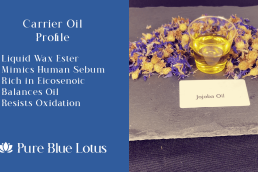
A 10 ml rollerball made with jojoba or fractionated coconut oil and 2 to 3 percent blue lotus absolute is typically good for six to twelve months. Jojoba, which is technically a liquid wax rather than an oil, has an unusually long shelf life (several years) and tolerates the dilution well. Fractionated coconut oil is similarly stable. Sweet almond and apricot kernel oils degrade faster (oxidation of the unsaturated fatty acids), so rollerballs made with these carriers are better used within three to six months.
Keep rollerballs in the same conditions as neat oil (cool, dark, dry). The metal rollerball and stem can sometimes develop an oily film over months of use; this is not a quality issue but warrants cleaning if the appearance is off-putting.
Pillow Sprays (Oil in Water + Solubiliser)
A water-based pillow spray with witch hazel or vodka as the solubiliser has a shelf life of roughly one to three months, depending on formulation and whether a preservative is included. Without a preservative, assume three months maximum; any earlier appearance of cloudiness, separation, or off-smell means discard and make a new batch. Our pillow spray recipe covers formulation detail including preservative options.
DIY Skincare Formulations
Anhydrous (oil-only) formulations such as facial oils last six to twelve months when refrigerated and kept clean. Water-containing formulations (lotions, hydrosol-based mists) require proper preservation systems and have shorter shelf lives regardless. For most users, making smaller batches more frequently is more practical than attempting preservation of large batches.
Travelling with Blue Lotus Oil
For travel, keep the oil in the original sealed bottle in a padded container (a small pouch with foam lining works well). Place it in cabin baggage rather than checked luggage to avoid both extreme cold at altitude and the temperature swings of the hold. A 10 ml or 15 ml bottle is well within the 100 ml liquid limit for cabin baggage; larger bottles may need to be decanted or placed in checked luggage.
Legal considerations for international travel are covered in our safety and precautions reference, but worth mentioning here: blue lotus is legally restricted in Russia, Poland, Latvia, the US state of Louisiana, and with some regulatory complexity in Australia. Check destination regulations before travelling with the oil to a jurisdiction where it may be controlled.
Buying Fresh Oil
The age of the oil at purchase matters. An oil that has already been on a shelf for two years will only have one or two years of useful life left. A reputable supplier will either batch-date their product or supply recent-batch stock; vague labelling without any date information is a minor warning sign.
For users who go through oil slowly (a single 10 ml bottle lasting a year or more), buying the smallest available size more frequently is better value than buying a large bottle that will age past its best before you have used it. Our guide to choosing high-quality blue lotus oil covers supplier evaluation including freshness considerations.
Frequently Asked Questions
How long does blue lotus oil last?
Three to four years from bottling when stored properly (dark glass, cool, dark, cap secured). Sometimes longer. The absolute’s fatty acid fraction provides natural stability that many simpler essential oils lack.
Does blue lotus oil expire?
Yes, though gradually. The oil does not become unsafe in the way food does; it loses scent and potency rather than becoming dangerous. Most users would retire a bottle that has developed sharp, sour, or rancid notes rather than continuing to use it.
How should I store blue lotus oil?
In a dark glass bottle with a tight-sealing cap, in a cool and dark location at stable room temperature (15 to 22 degrees Celsius), away from sunlight, heat sources, and humidity. A cupboard or drawer in a temperature-stable room works well.
Can I store blue lotus oil in the refrigerator?
Yes, though this is usually overkill. Refrigeration extends shelf life by roughly doubling the cool-cupboard lifespan, but the oil will thicken substantially and need warming before use. Most users find cool-cupboard storage sufficient.
How do I know if my blue lotus oil has gone bad?
The early signs are a sharper or sourer top note and reduced persistence on skin. More advanced degradation shows as darker colour, thinner viscosity, a flatter single-phase scent without the top-heart-base development, and eventually rancid or off notes.
Can I still use blue lotus oil that has partly degraded?
Mildly degraded oil is often still usable, though the aromatic experience will be diminished. Downgrading from skincare or pillow spray use to simple diffusion can be a way to continue getting value from an oil that has lost some of its depth. Substantially degraded oil (rancid or off notes) should be disposed of.
Why does blue lotus oil thicken in the cold?
The fatty acid and waxy fraction of the absolute solidifies at cooler temperatures. This is fully reversible: warm the bottle gently in warm water for five to ten minutes and the oil returns to its normal viscosity. Cold-thickening is not degradation.
Does the shelf life shorten once the bottle is opened?
Somewhat. Each opening exposes the oil to fresh air, accelerating oxidation slightly. In practice, a well-managed opened bottle (cap closed promptly, stored properly) still retains most of its shelf life. Frequent, long openings in warm rooms accelerate degradation more noticeably.
Can I store blue lotus oil in a rollerball?
Yes, diluted in a carrier oil. A 10 ml rollerball with 2 to 3 percent blue lotus in jojoba or fractionated coconut typically lasts six to twelve months. Shorter shelf lives apply for rollerballs made with less stable carriers (sweet almond, apricot kernel).
Is a dark blue lotus oil degraded?
Not necessarily. Genuine blue lotus absolute is naturally dark amber to honey-brown, sometimes appearing nearly black in a thick layer. A bottle that has darkened substantially over months or years may be degrading, but a dark colour in a fresh bottle is normal and expected.
Where to Go From Here
For the physical and chemical properties that shape the oil’s shelf life, see our properties of blue lotus essential oil reference. For formulation guidance on rollerballs and other diluted products, the carrier oil pairings pillar. For the pillow spray recipe specifically, our pillow spray recipe. For buying fresh, well-stored product, choosing high-quality blue lotus oil. For the broader introduction, the complete guide. Everything on this site is hosted at Pure Blue Lotus Oil.

Antonio Breshears
Antonio Breshears is a renowned expert in holistic medicine and beauty, with over 25 years of research experience dedicated to uncovering the secrets of nature's most powerful remedies. Holding a degree in Naturopathic Medicine, Antonio's passion for healing and well-being has driven him to explore the intricate connections between mind, body, and spirit.
Over the years, Antonio has become a respected authority in the field, helping countless individuals discover the transformative power of plant-based therapies, including essential oils, herbs, and natural supplements. He has authored numerous articles and publications, sharing his wealth of knowledge with a global audience seeking to improve their overall health and well-being.
Antonio's expertise extends to the realm of beauty, where he has developed innovative, all-natural skincare solutions that harness the potency of botanical ingredients. His formulations embody his deep understanding of the healing properties found in nature, providing holistic alternatives for those seeking a more balanced approach to self-care.
With his extensive background and dedication to the field, Antonio Breshears is a trusted voice and guiding light in the world of holistic medicine and beauty. Through his work at Pure Blue Lotus Oil, Antonio continues to inspire and educate, empowering others to unlock the true potential of nature's gifts for a healthier, more radiant life.