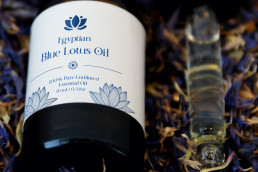
Blue lotus oil sits in a crowded neighbourhood of aromatic materials. Other florals claim similar calming effects; other sacred plants make similar spiritual claims; cheaper oils sit beside it on shelves promising the same results for a fraction of the price. If you are trying to decide whether blue lotus absolute is genuinely worth its cost, or whether something else would suit your needs better, you need honest comparisons rather than marketing copy. This pillar lays out how blue lotus oil actually compares to its most common alternatives, where it wins, where it loses, and how to think about the trade-offs.
Table of Contents
- Why Comparisons Matter More Here Than With Most Oils
- How Blue Lotus Differs Chemically From Its Closest Rivals
- Floral Comparisons: Lavender, Rose, Jasmine, Ylang Ylang, Neroli
- Blue Lotus vs Lavender
- Blue Lotus vs Rose
- Blue Lotus vs Jasmine
- Blue Lotus vs Ylang Ylang
- Blue Lotus vs Neroli
- Sacred and Spiritual Oils: Frankincense, Sandalwood, Myrrh, Palo Santo
- Blue Lotus vs Frankincense
- Blue Lotus vs Sandalwood
- Blue Lotus vs Myrrh
- Blue Lotus vs Palo Santo
- Functional Alternatives: What To Use If You Want The Effect Without The Price
- Comparisons Within Blue Lotus Itself: Absolute vs Essential Oil vs CO2
- Blue Lotus vs Blue Lotus Look-Alikes and Adulterants
- Matching to Your Use Case
- How to Use Blue Lotus Compared to Other Oils
- Realistic Timeframes
- What Blue Lotus Oil Does Not Do
- Safety Considerations Across Comparisons
- Frequently Asked Questions
- Where to Go From Here
- Compare, Then Choose Quality
It is written and clinically reviewed by Antonio Breshears, ND, CCA, a Bastyr-trained naturopathic doctor and certified clinical aromatherapist. For the broader context on the oil itself, pairing this pillar with the Complete Guide to Blue Lotus Oil will give you the foundational chemistry and usage background that these comparisons assume.
Why Comparisons Matter More Here Than With Most Oils
With most essential oils, a comparison article is a pleasantry. You read it, you nod, you carry on. With blue lotus, comparisons matter because the price point forces a real decision. A genuine Egyptian blue lotus absolute costs many multiples of what a typical floral oil costs, and that premium has to be justified by something the reader can actually feel and use. If lavender does most of what you want for a tenth of the price, you should know that. If jasmine gives you a richer, more sensual floral for a similar spend, you should know that too. And if blue lotus genuinely offers something the others do not, that is worth understanding clearly.
The honest picture is that blue lotus has a distinctive profile, cooler, more meditative, more aquatic-floral, with a mild euphoric lift that most other florals do not produce, but it is not universally superior. It is superior for specific purposes. The job of this pillar is to make those purposes clear so you can decide whether you are one of the people for whom it is worth the money, or whether a cheaper alternative will serve you just as well.
How Blue Lotus Differs Chemically From Its Closest Rivals
Most comparisons between essential oils come down to chemistry. Lavender is linalool-dominant with linalyl acetate, producing sedative and anxiolytic effects through GABA-adjacent pathways. Roman chamomile is angelate ester-dominant, producing parasympathetic calming. Rose is citronellol and geraniol with phenethyl alcohol, producing emotional softening. Jasmine is benzyl acetate and indole-rich, producing sensuous warmth.
Blue lotus is chemically unusual because the signature is not a single dominant terpene or ester, it is a combination of aporphine-type alkaloids (aporphine itself, nuciferine) and flavonoids (apigenin, quercetin, kaempferol) alongside a softer aromatic profile. The aporphine alkaloids interact weakly with dopamine receptors, nuciferine has 5-HT2A and 5-HT2C activity, and apigenin binds to central benzodiazepine receptors. This is a genuinely different mechanism from any other common aromatic oil. It is why blue lotus feels, subjectively, less like a sedative and more like a gentle mood lift with a dreamy, meditative edge. It is also why people who have tried many florals often describe blue lotus as the one that felt distinct.
That said, chemistry is not the whole story. The felt experience of an oil depends on dose, delivery, individual sensitivity, context, and expectation. Two people can smell the same bottle and describe it in opposite terms. Comparisons are useful signposts, not verdicts.
Floral Comparisons: Lavender, Rose, Jasmine, Ylang Ylang, Neroli
These are the oils most commonly confused with or substituted for blue lotus, because they share the floral-calming territory.
Blue Lotus vs Lavender
Lavender is the most common point of comparison because it is the world’s default calming oil. Lavender is genuinely sedative through linalool’s effect on GABA signalling; it is well-evidenced for mild anxiety and sleep onset. Blue lotus is less sedative but more mood-lifting, with a mildly euphoric quality lavender does not produce. Lavender is cheap, widely available, and works fast for sleep. Blue lotus is expensive, harder to find in genuine form, and works better for emotional mood states and meditative settings than for acute sleep difficulty. If you primarily want help falling asleep, lavender probably wins. If you want a calming mood shift that leaves you clearer rather than drowsier, blue lotus is the better fit.
Blue Lotus vs Rose
Rose absolute and rose otto are the other premium florals, and they occupy genuinely different emotional territory from blue lotus. Rose is warming, heart-centred, emotionally softening, often associated with grief and self-compassion work. Blue lotus is cooler, more detached, more meditative and dreamlike. Both are expensive; both are beautiful. The choice comes down to whether you are looking for warmth and emotional openness (rose) or meditative lift and mild euphoria (blue lotus). Many people who try both end up keeping both.
Blue Lotus vs Jasmine
Jasmine absolute is sensual, heady, warm, and indolic, with a carnal undertone that blue lotus does not have. Jasmine is stimulating to mood and libido. Blue lotus has a quieter, more introspective quality. Jasmine is roughly comparable in price to a mid-tier blue lotus absolute. For intimate or romantic settings, jasmine often wins. For meditation, dream work, and contemplative practice, blue lotus wins.
Blue Lotus vs Ylang Ylang
Ylang ylang is cheaper than blue lotus, tropical, very sweet, and known for reducing sympathetic nervous system arousal (it has been studied for reducing heart rate and blood pressure modestly). Blue lotus is subtler, less sweet, more mysterious. Ylang ylang is useful if you want a loud, obvious floral that announces itself in a room. Blue lotus is better when you want something that draws people in to find the scent rather than broadcasting it.
Blue Lotus vs Neroli
Neroli (bitter orange blossom) is fresh, green, bright, uplifting, and widely studied for anxiety reduction. It is expensive but not quite at blue lotus prices. Neroli works well in the morning and daytime; blue lotus works better in the evening and in contemplative contexts. If you want a bright, optimistic floral, neroli. If you want something dreamlike and meditative, blue lotus.
Sacred and Spiritual Oils: Frankincense, Sandalwood, Myrrh, Palo Santo
Blue lotus is often placed alongside these oils because of its ceremonial history in ancient Egypt. The overlap is real but partial.
Blue Lotus vs Frankincense
Frankincense is resinous, slightly citrusy, grounding, and widely used in meditation across multiple traditions. It slows breathing, supports contemplative states, and has been studied for modest anti-inflammatory effects. Blue lotus is floral rather than resinous, lighter, dreamier. For meditation, frankincense gives you groundedness and stability; blue lotus gives you lift and reverie. Many serious meditators blend the two.
Blue Lotus vs Sandalwood
Sandalwood is woody, creamy, deeply grounding, and helps anchor attention. It pairs with blue lotus beautifully rather than competing with it. If you can only afford one, sandalwood is more versatile as a daily meditation support; blue lotus is more specialised for dream work and mood elevation.
Blue Lotus vs Myrrh
Myrrh is bitter, earthy, and heavy, associated with grief, funeral rites, and deep inner work. Blue lotus is gentler and more buoyant. These serve very different emotional purposes and should not be thought of as substitutes.
Blue Lotus vs Palo Santo
Palo santo essential oil is sweet, woody, and energetically clearing in folk practice. It is cheaper than blue lotus and used differently, for space-clearing and refreshing environments rather than introspective work. Different tool for a different job.
Functional Alternatives: What To Use If You Want The Effect Without The Price
Be honest: a lot of the time, someone is drawn to blue lotus because they want calm, mood lift, and better sleep. If that is the goal and the price is painful, there are reasonable alternatives.
For calm, lavender does most of the job at a fraction of the cost. For mood lift, bergamot (properly bergapten-free for skin use) is well-studied and cheaper. For sleep, Roman chamomile or lavender will usually outperform blue lotus directly. For meditation, frankincense and sandalwood are less expensive per drop and last longer on the skin. Blue lotus earns its premium when you want the specific combination of mild euphoria, dreamlike quality, and ceremonial resonance that nothing else quite replicates. If that combination is not what you are looking for, you do not need to pay for it.
Comparisons Within Blue Lotus Itself: Absolute vs Essential Oil vs CO2
One of the most common points of confusion is the difference between the three extraction methods used to produce blue lotus oil.
Solvent-extracted absolute is the most common form and what most reputable suppliers sell. It captures the full aromatic profile including heavier waxy compounds and has a rich, honeyed, floral depth. It is thick and dark, often needing gentle warming before it pours.
Steam-distilled essential oil is rare because blue lotus is a delicate flower and steam distillation destroys some of the subtler aromatic molecules. True steam-distilled blue lotus essential oil exists but is uncommon and often pale and lighter in scent than the absolute.
Supercritical CO2 extract is the premium form. It uses pressurised carbon dioxide as a solvent, leaves no residue, and captures a profile somewhere between the absolute and the essential oil. It is the most expensive and arguably the most complete representation of the flower’s aromatic character.
For most practical purposes, a well-sourced absolute from a reputable supplier is the right choice. CO2 is a connoisseur’s option. Steam-distilled is rarely worth seeking out unless you specifically want a lighter, less tenacious scent.
Blue Lotus vs Blue Lotus Look-Alikes and Adulterants
The market contains several products sold as “blue lotus oil” that are not what they appear to be. Pink lotus and white lotus are related water lilies with different aromatic profiles; they are sometimes sold as blue lotus because the buyer does not know the difference. More problematic are synthetic fragrance oils in jojoba, dilute absolute stretched with fractionated coconut oil at undisclosed ratios, and outright fake products with no real blue lotus content.
Real Egyptian blue lotus absolute is dark, viscous, deeply honeyed and floral, and costs what it costs because it takes three to five thousand flowers to yield a single gram. If you see a product labelled “blue lotus essential oil” at a price that would be reasonable for lavender, it is almost certainly not real. This is one area where price really is a signal: the flower is genuinely scarce and labour-intensive, and no legitimate supplier can undercut the real cost by an order of magnitude.
Matching to Your Use Case
Rather than trying to pick a winner in the abstract, it is more useful to match the oil to what you are actually trying to do. Here is how the main use cases break down.
Daily calm and sleep support: Lavender first, Roman chamomile second. Blue lotus is an upgrade, not a starting point.
Mood lift during low periods: Bergamot, neroli, or blue lotus. Blue lotus has the edge for subtle euphoric quality; bergamot has the edge on evidence base and cost.
Meditation and contemplative practice: Frankincense and sandalwood are the foundation. Blue lotus is the specialty addition for dream work, lucid dreaming practice, and deeper inner journeys.
Intimate and romantic settings: Jasmine, ylang ylang, or rose for warmth. Blue lotus for something subtler and more mysterious.
Skincare: Blue lotus has genuinely useful antioxidant and soothing properties, but so does rose, so does chamomile, and they cost less. Blue lotus in skincare is a luxury rather than a necessity.
Perfumery and personal fragrance: Blue lotus is prized by natural perfumers precisely because of its distinctive cool-floral-aquatic character. Here, it genuinely has few substitutes.
How to Use Blue Lotus Compared to Other Oils
Because blue lotus absolute is thick and expensive, it is used differently from lighter, cheaper oils. A drop goes a long way. In a diffuser, two to four drops is typical, whereas you might comfortably use six to eight drops of lavender. On the skin, a two to three percent dilution in a good carrier is standard for body application; one to two percent for the face. In perfumery, blue lotus sits as a heart or base note and holds a blend together for hours.
The absolute can be stiff at room temperature. Warming the bottle gently in your hands or in a bowl of warm water before dispensing makes it pour smoothly. Never apply undiluted to skin.
Realistic Timeframes
Comparisons become clearer when you know what to expect over time. In a meditative or ceremonial setting, the effect of blue lotus is usually felt within ten to twenty minutes of exposure, and it tends to linger longer than brighter oils like bergamot. For sleep onset, lavender is faster-acting; blue lotus is better suited to a wind-down ritual begun an hour or more before bed.
For skincare, noticeable improvements in tone and texture from any floral oil, blue lotus included, take four to six weeks of consistent use. No essential oil works overnight in this respect, and anyone who tells you otherwise is selling you a story.
What Blue Lotus Oil Does Not Do
Pillar honesty requires naming the limits plainly. Here is what blue lotus oil cannot do, regardless of what you may read elsewhere.
- It does not produce strong or reliable psychoactive effects when inhaled or applied topically in normal doses. The romantic literature around blue lotus often overstates this.
- It is not a substitute for clinical treatment of anxiety, depression, or insomnia. It can support a sensible routine; it cannot replace therapy or appropriate medication.
- It is not a stronger sedative than lavender. If acute sleep onset is your only goal, you are probably paying too much.
- It does not have the antimicrobial potency of tea tree, oregano, or thyme. It is not the oil for skin infections or surface cleansing.
- It is not an anti-ageing active in the way retinoids or peptides are. It supports skin health mildly; it does not rebuild it.
- It does not smell exactly the way most people expect from reading poetic descriptions. The real scent is more complex, earthier, and less sweet than marketing copy suggests.
None of these limits make blue lotus less valuable. They simply locate it correctly among its peers so you can decide whether it is the right purchase for you.
Safety Considerations Across Comparisons
Blue lotus is generally well-tolerated in normal aromatherapy use, but a few points are worth noting, especially when comparing it to other oils.
It should be avoided during pregnancy and breastfeeding; many florals share this caution, but blue lotus’s alkaloid content makes the caution firmer. It should be used with care alongside dopaminergic medications, MAOIs, and heavy sedatives, because the aporphine alkaloids interact weakly with these pathways. Always dilute before skin application. Patch test before regular use.
Blue lotus is restricted in Russia, Poland, Latvia, and the US state of Louisiana, and has regulatory complexity in Australia. Most other oils in this comparison are not restricted anywhere. If you travel, this matters.
Stored in dark glass, cool, and away from light, a quality blue lotus absolute will last three to four years without meaningful degradation. Lighter essential oils like citrus peel oils often degrade faster, within one to two years. This longevity is one of the quiet advantages of investing in a premium absolute.
Frequently Asked Questions
Is blue lotus oil really worth the price compared to cheaper alternatives?
It depends on what you want. For general calm or sleep, cheaper oils like lavender perform similarly. For the specific meditative, dreamlike, mildly euphoric quality blue lotus offers, nothing else quite replicates it. Pay the premium only if that specific character is what you are after.
What is the closest smelling oil to blue lotus?
Nothing is a close match. Pink lotus shares some DNA but is warmer and sweeter. Water lily absolutes are in the same broad family but lighter. Blue lotus has a cooler, more aquatic-meditative profile that is genuinely distinctive.
Is lavender a good substitute for blue lotus?
For sleep and general calm, yes, and it is better-evidenced for those specific purposes. For mood lift, meditation, and ceremonial use, no, they produce quite different felt experiences.
Can I mix blue lotus with other oils to save money?
Absolutely. Blue lotus blends beautifully with sandalwood, frankincense, jasmine, rose, and vetiver. Using it as one note in a blend rather than on its own stretches it considerably and often produces more interesting results.
What is the difference between blue lotus absolute and blue lotus essential oil?
Absolute is solvent-extracted and captures the full aromatic profile; it is what most reputable suppliers sell. True steam-distilled essential oil is rare, lighter in scent, and often less representative of the flower’s character. CO2 extract is the premium option.
Is blue lotus stronger than rose or jasmine?
Not stronger, different. Rose is emotionally warming, jasmine is sensual and heady, blue lotus is cooler and more meditative. Strength is not really the right frame.
How do I know if my blue lotus oil is real?
Real Egyptian blue lotus absolute is dark, viscous, deeply honeyed and floral, and priced to reflect the three to five thousand flowers needed per gram. Suspiciously cheap products, thin consistencies, and generic “lotus essential oil” labels without botanical specificity are red flags.
Is blue lotus legal everywhere?
No. It is restricted in Russia, Poland, Latvia, and Louisiana, with regulatory complexity in Australia. Most other jurisdictions allow it without issue, but check before travelling or ordering internationally.
Can blue lotus replace my medication?
No. No essential oil replaces clinical treatment. Blue lotus can support a sensible wellbeing routine alongside appropriate medical care.
What is the best blue lotus alternative for anxiety?
Lavender has the strongest evidence base and is inexpensive. Neroli and bergamot are also well-studied. Blue lotus can help with the mood component of anxiety but is not a first-line choice based on evidence.
Does blue lotus work better in a diffuser or on skin?
Both work, for different purposes. Diffusion affects mood through the olfactory-limbic pathway quickly and is ideal for meditation and sleep preparation. Topical application is better for sustained scent in perfumery and for skincare benefits. Most serious users do both.
How long does blue lotus oil last compared to other oils?
Stored properly in dark glass, cool and dark, a quality blue lotus absolute will last three to four years. This is considerably longer than citrus peel oils (one to two years) and comparable to other premium absolutes.
Where to Go From Here
If this pillar has helped you think more clearly about where blue lotus sits among its peers, the next step depends on your specific interest. If you want the full foundational overview of the oil itself, the chemistry, history, sourcing, and practical use, the Complete Guide to Blue Lotus Oil is the right starting point. From there, you can explore specific application categories, skincare, sleep, meditation, perfumery, depending on what drew you here in the first place.
The honest summary is this: blue lotus oil is a distinctive, genuinely beautiful material that earns its premium when you want exactly what it offers, and does not when you want something else. Good comparisons let you make that call for yourself, which is the whole point of writing them.

Antonio Breshears
Antonio Breshears is a renowned expert in holistic medicine and beauty, with over 25 years of research experience dedicated to uncovering the secrets of nature's most powerful remedies. Holding a degree in Naturopathic Medicine, Antonio's passion for healing and well-being has driven him to explore the intricate connections between mind, body, and spirit.
Over the years, Antonio has become a respected authority in the field, helping countless individuals discover the transformative power of plant-based therapies, including essential oils, herbs, and natural supplements. He has authored numerous articles and publications, sharing his wealth of knowledge with a global audience seeking to improve their overall health and well-being.
Antonio's expertise extends to the realm of beauty, where he has developed innovative, all-natural skincare solutions that harness the potency of botanical ingredients. His formulations embody his deep understanding of the healing properties found in nature, providing holistic alternatives for those seeking a more balanced approach to self-care.
With his extensive background and dedication to the field, Antonio Breshears is a trusted voice and guiding light in the world of holistic medicine and beauty. Through his work at Pure Blue Lotus Oil, Antonio continues to inspire and educate, empowering others to unlock the true potential of nature's gifts for a healthier, more radiant life.