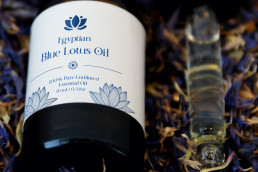
This is a practical guide for qualified massage therapists and bodyworkers who want to introduce blue lotus oil into their treatment rooms intelligently. If you are weighing whether this expensive, aromatic absolute has a genuine place alongside your existing carrier blends, how to dilute it for client safety, how to talk about it without overclaiming, and how to price it into your services, the following covers what matters. The phrase blue lotus oil massage therapists often search for is “is it worth it?”, and the honest answer is: yes, for specific clients and specific treatments, when used correctly.
Table of Contents
- What Blue Lotus Oil Actually Offers a Massage Practice
- How Blue Lotus Oil Helps in the Treatment Room
- Parasympathetic Induction
- Emotionally Resonant Treatments
- Skin Feel and Finish
- Differentiation and Positioning
- How to Use Blue Lotus Oil in Massage: Dilutions and Protocols
- Standard Dilution for Full-Body Massage
- Face and Scalp Work
- Targeted Blends and Rollerballs
- Diffusion in the Treatment Room
- Building a Signature Blend
- Client Communication: What to Say and What to Avoid
- Pre-Session Consent and Screening
- Pricing and Positioning Blue Lotus Treatments
- What to Expect: Realistic Client Responses
- When Blue Lotus Oil Is NOT the Right Choice
- Complementary Practices and Treatment Design
- Frequently Asked Questions
- Where to Go From Here
- Professional-Grade Blue Lotus for Your Practice
It is written and clinically reviewed by Antonio Breshears, ND, CCA, a Bastyr-trained naturopathic doctor and certified clinical aromatherapist. For foundational chemistry and safety context that underpins everything here, readers should review The Complete Guide to Blue Lotus Oil alongside this article.
What Blue Lotus Oil Actually Offers a Massage Practice
Blue lotus oil, extracted from Nymphaea caerulea, is almost always an absolute rather than a true steam-distilled essential oil. This matters for your practice because absolutes are thicker, darker, and far more concentrated in aromatic character than most of the oils in your usual kit. A single drop will perfume an entire treatment room, and a properly diluted blend will hold its scent on the client’s skin long after they leave.
Chemically, the oil contains aporphine and nuciferine alkaloids alongside flavonoids such as apigenin, quercetin, and kaempferol. The practical relevance in a bodywork context is twofold. First, apigenin has documented affinity for central benzodiazepine receptors, which contributes to the calming, parasympathetic-leaning effect clients describe as “sinking into” the table. Second, the aporphine alkaloids engage dopaminergic pathways weakly, producing a subtle mood-lift rather than sedation. In combination with the olfactory-limbic effect of the scent itself, this makes blue lotus particularly well-suited to treatments where the intent is nervous system downregulation: slow-paced Swedish, lymphatic drainage, craniosacral, myofascial release, and any hybrid sensory or ritual-based massage.
It is not a strong analgesic, not an anti-inflammatory of any clinical significance, and not a substitute for your deeper therapeutic oils (arnica, St John’s wort infused oils, menthol blends). Position it as a nervous system and experience-layer addition, not a workhorse.
How Blue Lotus Oil Helps in the Treatment Room
Parasympathetic Induction
The fastest clinically useful effect of blue lotus in massage is olfactory. Clients who arrive tense, mentally preoccupied, or braced for touch tend to transition into parasympathetic dominance more quickly when the scent is present in the room before they lie down. You can use this deliberately: diffuse two to three drops in the twenty minutes before the session, or place a single drop on a tissue tucked under the face cradle cover. Many therapists report that stiff, guarded clients breathe more deeply within the first five minutes when blue lotus is part of the environment.
Emotionally Resonant Treatments
For clients working through grief, chronic stress, trauma-informed bodywork, or post-illness recovery, the oil’s limbic signature, deep, honeyed, slightly smoky, tends to open something that neutral oils do not. This is not mystical language; olfactory input bypasses the thalamus and lands directly in emotional processing regions of the brain. A scent that registers as beautiful, rare, and sacred influences the session in ways that unscented jojoba simply cannot. Therapists who offer heart-centred, ritual, or ceremonial massage find blue lotus particularly well-placed here.
Skin Feel and Finish
When properly diluted into a quality carrier, blue lotus gives the finished massage a luxurious, slightly rich scent profile that lingers on the client’s skin without being cloying. Clients frequently comment on the smell of their own skin hours after leaving, which is a retention and referral asset worth recognising. The oil itself is not a skin treatment in the clinical sense, but it contributes to the sensory completeness of a premium service.
Differentiation and Positioning
On a business level, blue lotus oil allows you to construct a genuinely distinctive signature treatment rather than adding “lavender relaxation massage” to a market saturated with them. Clients searching for something unusual, a Blue Lotus Ceremony Massage, an Egyptian Ritual, a Dream Journey Session, will pay more and refer more readily when the central element is rare, well-sourced, and properly explained.
How to Use Blue Lotus Oil in Massage: Dilutions and Protocols
Standard Dilution for Full-Body Massage
For a sixty to ninety minute full-body massage on a healthy adult, dilute blue lotus oil to 1 to 2 percent in a carrier of your choice. In practical terms, that is roughly 6 to 12 drops per 30 ml (one ounce) of carrier oil. Good carriers for this purpose include jojoba (which matches skin sebum and will not go rancid quickly), fractionated coconut (light, clean, easy to launder), sweet almond (warm, slightly nutty, classic), and grapeseed (light and affordable for larger volumes). Avoid heavy, strongly scented carriers such as unrefined avocado or extra-virgin olive, which will compete with the lotus aroma.
Face and Scalp Work
For any treatment involving the face, scalp decolletage, or other sensitive-skin areas, reduce the dilution to 1 percent maximum. This means roughly 6 drops per 30 ml. The scent at this level is softer but still distinctly present, and it protects clients with reactive skin from unnecessary exposure.
Targeted Blends and Rollerballs
For take-home products or targeted pulse-point application during a session (inner wrists, behind ears, nape of neck), 3 percent is reasonable, around 18 drops per 30 ml. Some therapists keep a pre-blended rollerball in each treatment room and offer clients a single application as part of the closing ritual of the session.
Diffusion in the Treatment Room
Two to four drops in an ultrasonic diffuser, run for fifteen to twenty minutes before the session, is sufficient. Do not run the diffuser continuously throughout the day; olfactory fatigue in your own nose will cause you to progressively oversaturate the room. Let the scent settle before the client arrives and rely on the carrier blend applied to skin to carry it through the treatment.
Building a Signature Blend
Blue lotus pairs beautifully with several oils commonly found in a therapist’s kit. For relaxation-focused work, consider blending with small amounts of Roman chamomile, sandalwood, or ylang ylang. For uplifting treatments, pair with bergamot (keeping in mind photosensitivity if the client will be in sun), neroli, or rose. For grounding, ritual-feeling work, frankincense and vetiver complement the base notes of blue lotus without masking its character.
Client Communication: What to Say and What to Avoid
How you describe the oil to clients matters as much as how you use it. Overclaiming erodes professional credibility and, in some jurisdictions, attracts regulatory attention. Underclaiming wastes the genuine distinction the oil offers.
Useful, defensible language: “Blue lotus oil is a rare Egyptian floral absolute I use in my signature relaxation treatments. It has a soft, honeyed scent that most clients find deeply calming, and it pairs well with slow-paced bodywork.” You can mention that traditional Egyptian cultures used the flower ceremonially, which is historically accurate, without suggesting the oil cures, treats, or diagnoses anything.
Language to avoid entirely: any claim of euphoria, psychoactivity, sedation as a medical effect, or therapeutic action on specific conditions such as depression, anxiety disorders, or insomnia. These claims cross into medical territory you are not licensed to occupy and are not supported by clinical-grade evidence in the massage context. They also tend to set client expectations the session cannot meet.
Pre-Session Consent and Screening
Add blue lotus oil to your intake form alongside your other oils. Ask specifically about pregnancy (avoid), breastfeeding (avoid), current use of dopaminergic medications or MAOIs (caution, consider omitting), and known sensitivities to florals or absolutes. A simple patch test on the inner forearm before first use is prudent for clients with reactive skin histories.
Pricing and Positioning Blue Lotus Treatments
Pure blue lotus oil is expensive. It takes between 3,000 and 5,000 flowers to produce one gram of absolute, and legitimate suppliers price accordingly. If you are paying anything suspiciously cheap, you are almost certainly buying diluted, adulterated, or synthetic product, which will not deliver the effects described above and may damage client trust.
Factor the real cost into your pricing. A ninety minute massage using a 1.5 percent blue lotus blend consumes roughly 0.5 to 1 ml of the pure oil in blended form, depending on application generosity. Most therapists who offer blue lotus treatments charge a premium of 20 to 40 percent over their standard rate for equivalent session length, which is defensible given ingredient cost, differentiation, and the genuine sensory quality of the treatment.
Offer it as a named signature service rather than an add-on. “Blue Lotus Ritual Massage, 90 minutes” communicates more value and is easier to book than “add blue lotus oil for ten pounds”.
What to Expect: Realistic Client Responses
Within the session, expect clients to settle more quickly, breathe more deeply, and often drift into a light, dreamy state in the second half of the treatment. Some clients report unusually vivid imagery or emotional surfacing, which is consistent with the oil’s historical reputation and its olfactory-limbic effect. A small minority feel nothing particular beyond enjoying a pleasant scent, which is also normal and worth acknowledging honestly in your intake conversations.
Post-session, the most commonly reported effects are a prolonged sense of calm for the remainder of the day, lingering pleasant scent on the skin, and sometimes unusually restful sleep the night following. These are real but modest effects, not dramatic transformations, and setting that expectation with clients protects both your credibility and their experience.
Clients with severe anxiety, depression, chronic insomnia, or trauma histories should not be told that blue lotus will address these. It may contribute to a supportive, calming session that forms part of a wider self-care or clinical picture, but it is not a treatment for any of those conditions.
When Blue Lotus Oil Is NOT the Right Choice
There are clear cases where blue lotus should not appear in the session:
- Pregnancy and breastfeeding. Insufficient safety data and traditional caution make this a firm no. Use your standard pregnancy-safe oils instead.
- Clients on dopaminergic medications (Parkinson’s medications, certain antipsychotics) or MAOIs. The interaction risk is theoretical rather than well-documented, but the prudent professional position is to omit.
- Known floral or absolute sensitivities. Absolutes contain residual solvent traces and complex aromatic compounds that can provoke reactions in sensitive clients.
- Deep tissue or sports massage where the primary intent is mechanical. Blue lotus does not contribute meaningfully to pain modulation or muscle recovery, and its scent profile is poorly matched to the context. Stick to your arnica, menthol, or infused oils.
- Clients who simply dislike the scent. This happens. The aroma is distinctive and not universally loved. Always offer an alternative without fuss.
- Jurisdictions with legal restrictions. Blue lotus is restricted or controlled in Russia, Poland, Latvia, the US state of Louisiana, and has regulatory complexity in Australia. Verify your local position before advertising the oil by name.
Complementary Practices and Treatment Design
Blue lotus is strongest when woven into a treatment rather than bolted on. Consider designing the full sensory arc of the session around it: dim, warm lighting; slow-paced music without strong melodic hooks; a grounded, unhurried opening where the client is invited to breathe a few times before touch begins; slow, rhythmic strokes through the first twenty minutes; an optional hot towel over the face during the latter part of the session that carries a trace of the blend; and a closing ritual such as a single drop of the diluted blend applied to the wrists or heart centre as the client sits up.
Other oils that complement the intent without competing include sandalwood (grounding base), frankincense (meditative lift), Roman chamomile (softening for anxious clients), and small amounts of rose (for heart-centred work). For evening sessions, small additions of lavender are congruent; avoid stimulating oils such as peppermint or rosemary in blue lotus blends, as they pull against the parasympathetic intent.
Encourage clients who respond well to take home a small rollerball blend for evening use, nighttime wind-down, or their own meditation practice. This extends the therapeutic arc of the session beyond the table and supports retention.
Frequently Asked Questions
Is blue lotus oil safe to use as a massage oil?
Yes, when properly diluted to 1 to 2 percent in a suitable carrier for healthy adults without contraindications. It should not be used on pregnant or breastfeeding clients, clients on dopaminergic medications or MAOIs, or clients with known absolute sensitivities.
What percentage dilution should I use?
1 to 2 percent (6 to 12 drops per 30 ml of carrier) is standard for full-body massage. Reduce to 1 percent for face and scalp work. Up to 3 percent is reasonable for targeted pulse-point application or take-home rollerballs.
Can I charge more for a blue lotus massage?
Yes, and you should. The ingredient cost is genuinely high, and the treatment is distinctive. Most practitioners charge 20 to 40 percent above their equivalent standard rate for a named blue lotus signature service.
How do I describe the oil to clients without making medical claims?
Describe it as a rare Egyptian floral absolute with a soft, honeyed scent that clients find deeply relaxing, traditionally used in Egyptian ceremonial contexts. Avoid claims of sedation, euphoria, or therapeutic effect on specific conditions.
What carrier oil works best?
Jojoba, fractionated coconut, sweet almond, and grapeseed all work well. Jojoba is often the premium choice because it matches skin sebum and has excellent shelf stability. Avoid heavy or strongly scented carriers that compete with the lotus aroma.
Will clients actually feel something different compared to a standard massage?
Most will report a deeper, faster transition into relaxation, sometimes accompanied by vivid imagery or emotional openness. A minority will simply enjoy a pleasant scent without noting anything unusual. Both responses are normal.
Can I use blue lotus oil for deep tissue or sports massage?
It is not well-suited to either. Blue lotus does not contribute meaningfully to pain modulation or tissue recovery, and its scent profile is mismatched with that intent. Use your standard therapeutic oils for those sessions.
How do I store blue lotus oil in a busy practice?
Keep the pure undiluted oil in its original dark glass bottle, tightly sealed, in a cool, dark cupboard away from treatment room heat. Properly stored, a high-quality absolute will hold its character for three to four years. Pre-mixed carrier blends should be made in smaller batches and used within six to twelve months for freshness.
Do I need any special certification to use blue lotus oil in my practice?
In most jurisdictions, no additional certification beyond your existing massage credentials is required. However, a certified aromatherapy qualification substantially strengthens your ability to blend responsibly, communicate confidently, and defend your practice if questioned. Check your local licensing board for any restrictions on aromatic adjuncts.
What if a client has a reaction?
Discontinue use immediately, remove residual oil with a gentle cleanser, and document the reaction in your notes. Recommend the client consult their GP if the reaction is more than mild skin sensitivity. A patch test before first use on sensitive-skin clients substantially reduces this risk.
Where to Go From Here
If you are ready to introduce blue lotus oil into your practice, the next sensible steps are sourcing a verifiably pure product, familiarising yourself with its scent and viscosity through personal use before offering it clinically, and designing one clearly named signature service that showcases it properly rather than scattering it thinly across your menu. Review The Complete Guide to Blue Lotus Oil for the full chemistry, sourcing, and safety context that underpins everything in this article, and consider building a small testing and training block into your schedule before launching the service publicly.

Antonio Breshears
Antonio Breshears is a renowned expert in holistic medicine and beauty, with over 25 years of research experience dedicated to uncovering the secrets of nature's most powerful remedies. Holding a degree in Naturopathic Medicine, Antonio's passion for healing and well-being has driven him to explore the intricate connections between mind, body, and spirit.
Over the years, Antonio has become a respected authority in the field, helping countless individuals discover the transformative power of plant-based therapies, including essential oils, herbs, and natural supplements. He has authored numerous articles and publications, sharing his wealth of knowledge with a global audience seeking to improve their overall health and well-being.
Antonio's expertise extends to the realm of beauty, where he has developed innovative, all-natural skincare solutions that harness the potency of botanical ingredients. His formulations embody his deep understanding of the healing properties found in nature, providing holistic alternatives for those seeking a more balanced approach to self-care.
With his extensive background and dedication to the field, Antonio Breshears is a trusted voice and guiding light in the world of holistic medicine and beauty. Through his work at Pure Blue Lotus Oil, Antonio continues to inspire and educate, empowering others to unlock the true potential of nature's gifts for a healthier, more radiant life.